01How to Sell Transformer Equipment Without Missing Key Details
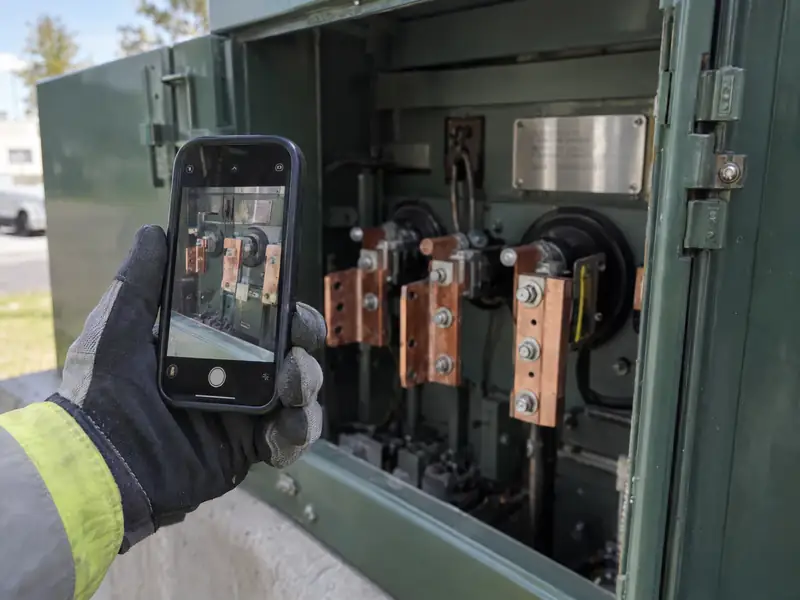
The transformer selling process separates equipment review from the work needed to release and transport it. Photos establish what you have; records help assess condition; written terms establish responsibilities before pickup.
California Transformer Buyer reviews used, removed, surplus and new-surplus units, from a single transformer to a full yard. Reviewing your transformer costs nothing and there is no obligation. Purchase depends on the equipment and the proposed transaction—not simply whether a transformer is available.
02Step 1: Contact Rocky and Confirm Authority to Sell
Call or text Rocky at (951) 403-5738, or use the transformer offer request form. Start with the quantity, California location, transformer type and whether the equipment is operating, stored or already removed. An exact site location is needed to evaluate access and pickup.
Identify the owner and your authority to sell. Equipment on your property may belong to the serving utility; a property owner cannot sell utility-owned equipment. If a utility release is applicable, provide that documentation for review.
- Give your name, role and contact information.
- State the quantity and exact equipment location.
- Describe energized status and disconnected condition separately.
- Explain any project deadline or site-access restriction.
03Step 2: Send Readable Nameplate and Exterior Photos
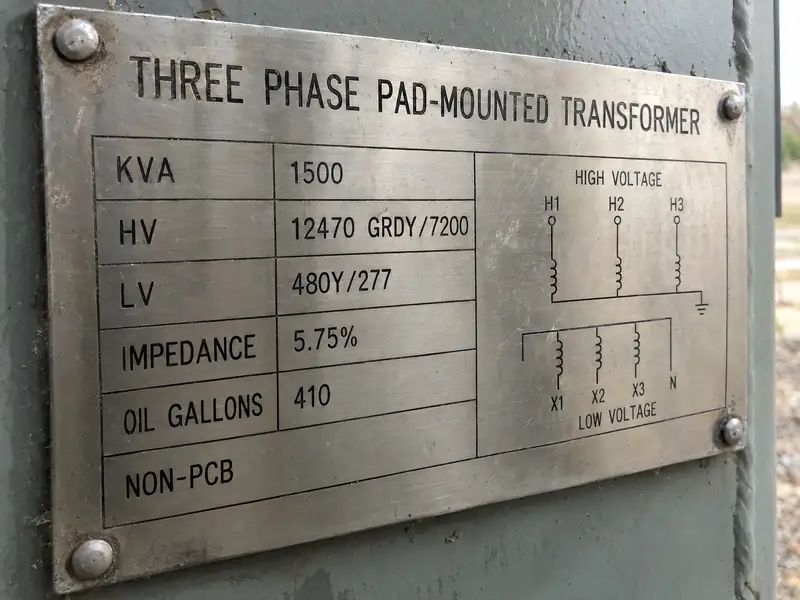
Text photos to Rocky or submit them through the website form. Take pictures only from a safe position where you are authorized to be. A readable, straight-on nameplate image is more useful than a distant picture with glare or cropped ratings.
Include exterior views of all safely accessible sides, radiators, bushings, valves, cabinet exterior and ground-level clearances. Photograph accessible accessory or control plates without opening compartments. If a plate cannot be photographed safely, explain that limitation rather than trying to reach it.
The nameplate should identify manufacturer, serial number, year, kVA or MVA, phase, HV/LV voltages, connections, taps, impedance, BIL, cooling class and weight. Include fluid type, gallons and PCB labels where shown. The guide to transformer voltages explains why actual ratings matter more than a general description such as “12 kV transformer.”
- List included and missing accessories.
- Report dimensions and operating or shipping weight, if documented.
- For multiple units, match each nameplate to its exterior photos.
- Keep all cooling-stage ratings visible on MVA nameplates.
04Step 3: Answer Condition, Testing and Access Questions
Rocky reviews the information and asks follow-up questions where details are missing. Describe storage conditions, leaks, corrosion, damaged bushings, repairs, date last operated and known overload, fault or flood exposure. A unit being disconnected does not establish its electrical condition.
Send existing factory and service reports when available: turns ratio, winding resistance, insulation and appropriate dielectric tests, plus liquid dielectric, PCB and dissolved gas analysis records where applicable. This is a document checklist, not a testing procedure or a request for you to sample equipment.
Configuration also affects review. A pad-mounted transformer review may focus on cabinet condition and accessories, while a station-class transformer review may require more detail about cooling equipment, tap changers, weights and transport dimensions.
- Identify documented lift or rigging points.
- Describe forklift or crane access and overhead obstructions.
- Disclose removal obligations imposed by the site owner.
- Flag missing records rather than guessing their contents.
05Step 4: Review the Written Offer Before Accepting
If the equipment is suitable for purchase, you receive a written offer stating price, what is included, loading and rigging responsibilities, freight responsibilities, and payment terms and timing. Confirm that the offer identifies the correct units and accessories, particularly for mixed lots.
Resolve unclear responsibilities before pickup. Electrical disconnection, site preparation, loading and freight are separate tasks; do not assume one party handles all four. Payment follows the written terms, not an assumed cash-on-pickup or same-day arrangement.
For unused equipment, describe whether it has ever been energized and include available factory records. The new-surplus transformer selling guide explains the distinction between never-energized stock and previously operated equipment.
- Verify quantity and equipment identification.
- Confirm included versus excluded accessories.
- Check who handles rigging, loading and freight.
- Confirm payment timing and any agreed conditions.
06Step 5: Coordinate Removal, Pickup and Payment
After agreement, removal is scheduled around equipment readiness and site access. The owner’s qualified electrical contractor or serving utility handles de-energizing and disconnecting. Only qualified personnel may open electrical compartments after proper isolation, lockout, voltage verification and grounding as applicable; possible backfeed must be considered.
The transformer pickup process also depends on dimensions, weight, lifting provisions and the route out of the site. Large loads may require transport permits or specialized preparation. Those requirements should be addressed by the responsible qualified parties, not treated as an improvised loading task.
Pickup and payment proceed as stated in the written terms. Use the transformer removal and pickup guide to understand the access details that should be discussed before scheduling.
07Missing PCB Records or Leaks Need Additional Review
A “non-PCB” label does not mean zero PCBs. Unknown status may require assumptions under federal rules until testing or qualifying documentation establishes concentration. California has stricter rules for PCB-containing oil, and the correct management pathway depends on testing, documentation and equipment condition.
A working transformer sold for reuse is equipment, but leaking units, failed units and drained oil require proper determination. Rely on qualified environmental professionals for testing and handling decisions; this page is not legal advice. See the seller FAQ for additional transaction questions.
FAQFrequently Asked Questions
Can I start the process without a readable nameplate?
Yes. Send safe exterior photos, the location, quantity and any existing records that identify the equipment. Explain why the nameplate is unavailable. Rocky may need additional documentation before making an offer because appearance alone cannot reliably establish voltage, capacity, connections or weight. Do not open a compartment or enter an unsafe area to obtain a picture.
Should I pay for new testing before contacting Rocky?
Start by sharing the reports you already have and describing the unit’s operating history. Additional testing needs depend on the transformer, its condition and the available documentation. Discuss those needs during review before commissioning work. Any electrical testing or fluid sampling should be handled by appropriately qualified professionals, not performed by the seller as part of intake.
Can I request an offer while the transformer is still energized?
You can begin the review while equipment is operating, provided you disclose that status and use only safely available photos and records. An offer review is not permission to disturb energized equipment. Any eventual release from service must be coordinated with the owner’s qualified electrical contractor or serving utility, with responsibilities settled before pickup.
Does California Transformer Buyer buy equipment outside Southern California?
Yes. California Transformer Buyer is based in Riverside County and reviews equipment throughout California, not just the Inland Empire or Southern California. Sellers must be located in California. Provide the exact equipment location early because distance, site access, dimensions and freight requirements are part of evaluating the proposed transaction.
What if the unit’s condition changes after I receive an offer?
Tell Rocky before scheduling or proceeding with pickup. New damage, a leak, missing accessories or a different equipment count may affect the original review and written terms. Describe the change and provide updated photos from a safe position. Confirm any revised agreement in writing rather than assuming the earlier offer covers a materially different unit.