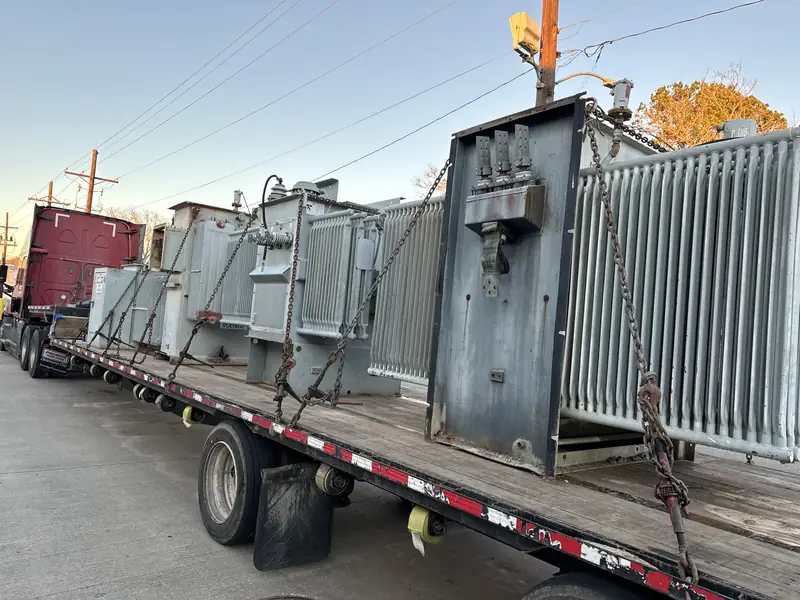
01What a Scrap Transformer Buyer Needs to Evaluate
A scrap transformer buyer needs more than the unit’s total weight. The first question is whether the transformer has a credible rebuilding or component-recovery path, or whether its remaining value is primarily in recoverable materials. A failed unit is not automatically worthless, but it is not automatically economical to purchase either.
California Transformer Buyer reviews single units and mixed lots throughout California. Describe whether you have a pad-mounted distribution transformer, a dry-type unit, a unit substation or a larger station-class transformer. Include its kVA or MVA rating and exact location, even when the equipment no longer operates.
Before you sell scrap transformers, confirm ownership or authority to sell. Utility-owned equipment on your property is not yours to sell; a utility release may be needed where applicable. The general transformer selling checklist explains the information needed to begin a review.
- Quantity, exact location and seller authority.
- Manufacturer, serial number and readable nameplate.
- Known failure, damage, leaks and missing parts.
- Current electrical status and access limitations.
- Available service, fluid and PCB records.
02Rebuild Candidates, Usable Components and Recoverable Metals
A failed transformer buyer evaluates the assembly, not just its scrap designation. A unit removed because of a damaged bushing or accessory presents a different repair question from one with extensive winding damage. The core and coil, tank, radiators and accessories may have different levels of recoverability.
Copper versus aluminum windings matter when assessing material recovery. Neither the enclosure’s appearance nor the transformer’s weight reliably identifies the winding metal. Use the nameplate, factory records or other reliable documentation; if those records do not identify it, report the material as unknown.
The steel core and tank contribute recoverable material, but total shipping weight is not the same as recoverable metal weight. Liquid, insulation, contamination, missing components and processing requirements affect the assessment. For equipment that remains serviceable, the used transformer purchase page addresses a different evaluation path.
| Potential path | What matters | Main uncertainty |
|---|---|---|
| Rebuilding | Core-and-coil condition, ratings and tests | Extent of internal damage |
| Component recovery | Tank, radiators, bushings and accessories | Condition and compatibility |
| Material recovery | Documented winding metal and steel | Fluid, contamination and processing |
| Regulated disposal | Waste determination and PCB classification | Authorized destination and handling |
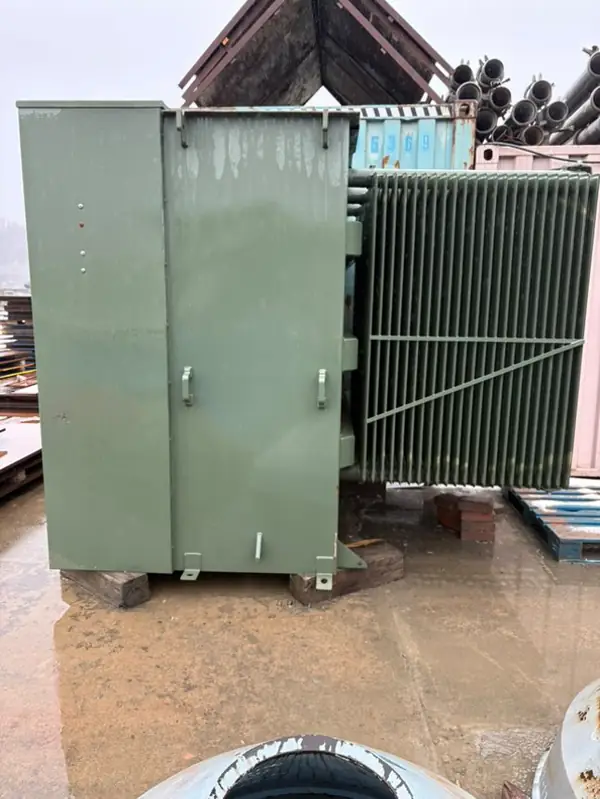
03How to Describe Burned, Flooded or Electrically Failed Units
Describe what happened without guessing at a diagnosis. State when the transformer last operated, what event led to its removal and whether a qualified service provider identified a cause. An overload, external fault, internal fault, fire or flood can affect different parts of the equipment.
For fire damage, identify visible affected areas and provide any contractor or incident reports already available. For flood exposure, describe the reported water level, exposure duration and whether contamination was documented. Surface appearance alone does not establish that insulation or internal components remain usable.
Existing test reports help distinguish a suspected failure from a documented condition. Useful records can include turns ratio, winding resistance, insulation and appropriate dielectric tests, plus dissolved gas analysis and liquid dielectric results where applicable. This is a records checklist, not a test procedure or a request for sellers to perform testing.
- Failure date and date last operated.
- Reported fault, overload, fire or flood history.
- Repairs attempted and components replaced.
- Oil leaks, corrosion and physical damage.
- Storage indoors, outdoors or exposed to weather.
- Known missing gauges, fans, fuses or other accessories.
Separate Observations From Confirmed Findings
Use descriptions such as “would not energize,” “bushing visibly cracked” or “contractor reported winding failure” when those are the facts available. Avoid labeling a unit repairable, contamination-free or ready for reuse without supporting documentation. Clear uncertainty is more useful than an unsupported conclusion.
04Fluid and PCB Status Can Determine the Available Path
For liquid-filled equipment, identify the fluid type and nameplate volume: mineral oil, natural ester, silicone or another documented liquid. Include laboratory reports, manufacturer records and service history. The liquid-filled transformer page explains the equipment information that matters alongside fluid condition.
Federal PCB classifications under TSCA and 40 CFR 761 distinguish concentration levels shown below. “Non-PCB” does not mean zero PCBs, and a manufacturing label may not establish current condition after years of servicing. Sellers should rely on testing, documentation and qualified environmental professionals.
Unknown status requires care. Pre-July 2, 1979 mineral-oil equipment with unestablished concentration, or mineral-oil equipment with an unknown manufacturing date, must be assumed PCB-contaminated. Pre-July 2, 1979 transformers containing at least three pounds of non-mineral fluid with unestablished concentration must be assumed PCB transformers; unknown date and fluid type also trigger the PCB-transformer assumption.
Section 761.2 permits a non-PCB assumption for equipment manufactured after July 2, 1979, but valid testing and complete records are preferable and may reveal later contamination. A unit’s age alone does not prove its fluid is uncontaminated. See the California PCB transformer seller guide for additional context.
| Classification | PCB concentration | Important qualification |
|---|---|---|
| Non-PCB | Below 50 ppm | Not equivalent to zero PCB |
| PCB-contaminated electrical equipment | At least 50 and below 500 ppm | Use exact laboratory values |
| PCB transformer | 500 ppm or more | Special regulatory provisions may apply |
05Transformer Recycling in California Requires a Waste Determination
Transformer recycling in California is not simply a metal-weight transaction when fluids, leaks or contamination are involved. California Health & Safety Code 25250.1 excludes oil containing 5 ppm or more PCBs from the state’s “used oil” category. That does not mean every transformer at 5 ppm is automatically hazardous waste; the correct pathway depends on testing and documentation.
Under HSC 25250.4, California generally manages used oil as hazardous waste unless an exclusion or recycling pathway applies. When regulated used oil or waste is hauled, DTSC requires registered hazardous-waste transporters and manifests. A working transformer sold for reuse is equipment, while failed units, leaking equipment and drained oil need an appropriate determination.
Do not assume that equipment at or above 50 ppm is freely resalable, or that every existing PCB unit is categorically barred from transfer. Federal sections 761.20 and 761.30 contain exceptions and conditions. Classification, leak status, authorized use, destination, marking and transport must be assessed before acceptance.
Draining, diluting or retrofilling alone does not automatically establish lawful reclassification. California and local waste and spill requirements also need separate review. This information is not legal advice; qualified environmental professionals should determine the appropriate handling and destination.
06Photos, Nameplates and Site Access for Damaged Equipment
Send a readable, straight-on nameplate photo and external photographs from positions you are authorized to access safely. Useful views show all sides, radiators, bushings, valves, the cabinet exterior and visible accessory or control plates. Do not open electrical compartments to obtain pictures.
The nameplate should show manufacturer, serial number, year, phase, kVA or all MVA cooling stages, primary and secondary voltages, connections and taps. Include impedance, BIL, cooling class, fluid volume and listed weights where readable. A 1000 kVA pad mount and a multi-stage substation transformer require different loading plans even if both are described as damaged.
Report whether the unit is energized, de-energized and disconnected; these are separate facts. Only the owner’s qualified electrical contractor or serving utility should handle isolation and disconnection. Backfeed from solar, batteries or generators must be considered by qualified personnel.
Provide dimensions, operating or shipping weight, documented lifting points, ground-level clearances and forklift or crane access. Describe gates, overhead obstructions and removal obligations. The transformer removal and pickup guide explains why these details belong in the written terms.
07Request a Review From Rocky Before Arranging Removal
Call or text Rocky at (951) 403-5738, or use the transformer offer request form. Start with the quantity, California location, nameplate photos, overall pictures and a short damage description. Reviewing your transformer costs nothing and there is no obligation.
Rocky reviews the information and may request test reports, PCB records, ownership documentation or additional site details. A damaged transformer buyer cannot responsibly settle the handling path from a single exterior photograph. Missing information may need resolution before an offer or acceptance decision.
If a purchase is offered, the written terms state what is included, who handles loading or rigging and freight, and payment terms and timing. Removal is scheduled according to those terms, not an assumed promise of free removal or immediate payment.
For a shutdown involving both failed and serviceable units, identify each transformer separately. The transformer liquidation page covers mixed inventories and larger groups, where one unit’s condition should not be applied to the entire lot.
FAQScrap & Failed Transformer FAQ
Can I request an offer if I have no test reports?
Yes. Start with the nameplate, safe exterior photos, location and an honest account of the failure. Tell Rocky which records are unavailable rather than treating missing results as proof of good condition. A review may identify additional documentation needed, particularly for fluid-filled equipment with unknown PCB status. Lack of reports can limit the available purchase path.
Does calling a transformer “scrap” mean it must be dismantled before sale?
No. “Scrap” is often a seller’s description of equipment that no longer works, not a complete technical or regulatory determination. Keep the description factual and discuss the intact unit first. Do not dismantle, drain or move it yourself to prepare it for an offer. Qualified personnel and environmental professionals should address any required handling.
Will copper-wound equipment always be accepted?
No. Documented copper windings are relevant, but they do not override contamination, severe damage, uncertain ownership or difficult removal. The complete unit and its handling requirements determine whether a purchase makes sense. Aluminum-wound equipment can also merit review. Neither winding material establishes a guaranteed offer, and exterior appearance is not reliable evidence of the metal inside.
Can a burned or flooded transformer be sold as working equipment?
Do not represent it as working solely because it operated before the incident or appears intact afterward. Disclose the exposure and provide available inspection, repair and test records. Qualified evaluation is needed to establish whether reuse is appropriate. California Transformer Buyer can review the documented condition, but a sales description should never substitute for a technical assessment.
Should I drain the oil to make transportation easier?
No seller-directed draining is needed to start a review. Fluid removal can create additional waste-management, contamination and transportation obligations, and it does not automatically change PCB classification. Send existing fluid records and the nameplate volume instead. Any required fluid handling must be determined and performed by qualified personnel under the applicable requirements.
Can I include failed units with unused spares from the same site?
Yes, mixed lots can be submitted for review. List each unit’s rating, condition, quantity and identifying serial number where available. Keep never-energized spares separate from used, failed or damaged equipment in the inventory. Shared site access may simplify planning, but acceptance and handling requirements still depend on each transformer’s documentation and condition.