01How a transformer buyer in Sacramento & Northern California reviews equipment
California Transformer Buyer considers transformers owned by sellers in Sacramento, Placer, Shasta and Butte counties. Equipment may be used, removed, decommissioned, spare, project surplus or new-surplus that has never been energized. Sellers can ask about a single unit or a mixed lot; whether a unit is a fit depends on its specifications, condition, documentation and site logistics.
To start, call or text Rocky at (951) 403-5738, or use the website contact form. Send clear nameplate and overall photos taken from a safe position, along with the quantity, location and known condition. You can also review the broader process for [selling your transformer near me](selling your transformer near me).
- Used and removed transformers
- New-surplus units on skids or in crates
- Spare equipment and project leftovers
- Single units and mixed lots
DIRCities in This Region
- Sacramento, CASacramento owners can submit transformer details, records and site information to request a written offer and plan pickup terms.
- Roseville, CALearn how to sell used, surplus, or new-surplus transformers in Roseville, with practical guidance on nameplates, utility context, and pickup planning.
- Redding, CALearn what transformer details matter in Redding and how to request a written offer for used or surplus equipment.
- Chico, CAChico sellers can submit transformer details, photos and site information to request a written offer from California Transformer Buyer.
02Industrial facilities and transformer types across the four-county region
The region has several distinct industrial and commercial centers. Sacramento includes the Power Inn industrial district, while Roseville has semiconductor, medical-device, machinery and specialized-materials manufacturing. Redding has industrial development at Stillwater Business Park, and Chico has industrial facilities and a recycling-market development program.
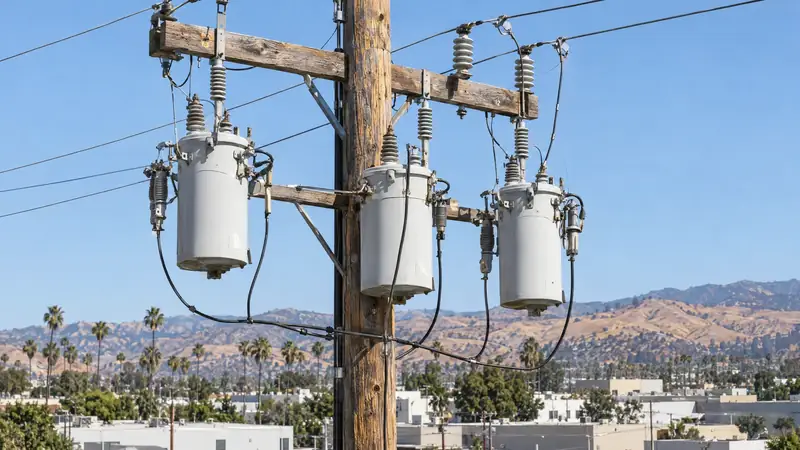
Those settings can involve pad-mounted distribution units, pole-mount equipment, dry-type transformers, unit substations and larger station-class equipment. A facility may also have standby or spare transformers that were purchased for a project and never installed. The actual application and nameplate matter more than an assumed industry match; California Transformer Buyer does not assume a unit is suitable based on its location alone.
- Manufacturing and industrial business districts
- Medical-device and semiconductor facilities
- Business and airport-related sites
- Recycling and material-recovery operations
Distribution units and larger station equipment
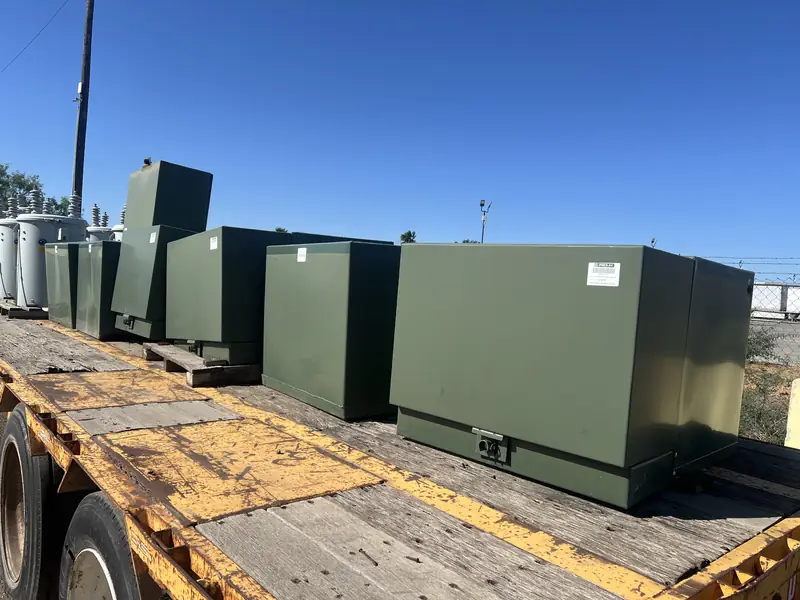
A [pad-mount transformer](pad-mount transformer) may serve an outdoor commercial or industrial load, while dry-type units are commonly installed indoors. Larger facilities or utility projects may have a [substation transformer](substation transformer) with radiators, fans, tap equipment or other accessories. Include photos of the whole unit and its accessories when available.
03Utility service areas and primary voltages to verify
The serving utility varies by city: Sacramento is served by Sacramento Municipal Utility District (SMUD), Roseville by Roseville Electric, Redding by Redding Electric Utility (REU), and Chico is in PG&E territory. Do not infer a transformer’s voltage from the city alone. Confirm it from the nameplate and, where needed, with the serving utility or the owner’s qualified electrical contractor.
| City or territory | Utility | Documented primary-voltage information |
|---|---|---|
| Sacramento | SMUD | 12 kV and 21 kV distribution |
| Roseville | Roseville Electric | 12 kV distribution |
| Redding | Redding Electric Utility | 12,000 V standard primary |
| Chico | PG&E | Rule 2 lists several primary configurations |
Why the nameplate takes precedence
PG&E Rule 2 includes primary configurations such as 4,160 V, 12,000 V, 17,200 V and 20,780 V. These are not a guarantee of service at a particular property. Provide the exact high- and low-voltage ratings, connection and tap information shown on the transformer.
04Nameplate details that help assess Sacramento-area surplus transformers
A readable nameplate helps identify the unit and compare its configuration with potential uses. Photograph it from a safe position and include the manufacturer, serial number, year, kVA or MVA rating, phase, frequency, primary and secondary voltage, taps, impedance and cooling class where those fields are shown.
For liquid-filled units, include fluid type and gallons if listed, plus any available PCB label or records. For dry-type units, note insulation and temperature-rise information shown. Photos of bushings, switches, gauges, fans, radiators, cabinets and visible damage help document what is included and the condition; do not open compartments or handle equipment to get additional pictures.
- All kVA stages and voltage ratings
- Phase, taps and connection diagram
- Fluid type, gallons and PCB records
- Accessories, condition and test reports
- Quantity, ownership and site access
05Pickup and hauling from Sacramento, Roseville, Redding and Chico
Pickup is planned after the equipment and site details have been reviewed and the written terms are agreed. The offer states what is included, who handles loading or rigging, who arranges freight and the payment terms and timing. A transformer’s weight, dimensions, access, location and condition all affect the removal plan, so provide accurate information and photos of the approach when safely available.
The region has major highway access through I-5 and I-80 around Sacramento, I-80 and SR-65 near Roseville, I-5 and SR-44/SR-299 around Redding, and SR-99/SR-32 around Chico. These corridors do not remove the need to assess local access. Oversize or overweight equipment may require Caltrans permits on state highways and separate local approvals; the applicable hauling plan depends on the load and route. See how [transformer removal and pickup](transformer removal and pickup ) is addressed before agreeing to a sale.
06Safe sale preparation and equipment ownership
Only the owner or a person authorized to sell the transformer should submit it for review. Utility-owned equipment located on private property cannot be sold by the property owner. If ownership is unclear, resolve that question before proceeding.
Do not de-energize, disconnect, move, open or drain a transformer to prepare it for sale. The owner’s qualified electrical contractor or serving utility handles isolation and disconnection. Solar, batteries and generators can create backfeed hazards, so qualified personnel must account for them. Send only photos you are authorized to take from a safe position.
07PCB records, testing and environmental review
For oil-filled equipment, share available PCB test results, labels and fluid records; do not assume that an old unit is non-PCB because of its appearance or age. Under federal TSCA categories, non-PCB oil is below 50 ppm, PCB-contaminated oil is 50 to below 500 ppm, and a PCB Transformer is 500 ppm or more. “Non-PCB” does not mean zero PCBs.
California has stricter rules for PCB-containing oil, and the proper handling pathway depends on testing and documentation. Sellers should rely on records, appropriate testing and qualified environmental professionals for determinations and handling decisions. This information is general and is not legal advice. Leaking, drained or failed equipment may need a different assessment from a working transformer offered for reuse.
08Cities served in Sacramento and Northern California
California Transformer Buyer serves sellers across the four counties listed on this page. For city-specific information, see the pages for [Sacramento, CA](Sacramento, CA), [Roseville, CA](Roseville, CA), [Redding, CA](Redding, CA) and [Chico, CA](Chico, CA). These city pages provide local context; the transformer’s actual utility, voltage and site conditions still need to be confirmed.
To request a review, text nameplate and overall photos to (951) 403-5738 or submit the details through the contact form. Reviewing the information costs nothing and creates no obligation. Before pickup, the written offer will state the agreed scope and terms.
FAQSelling a Transformer in Sacramento & Northern California: FAQ
What kinds of transformers can I offer from this region?
California Transformer Buyer reviews used, pulled, decommissioned, spare, surplus and new-surplus electrical transformers from California sellers. Equipment may include pad-mounted or pole-mounted distribution units, dry-type transformers, unit substations and larger power or station-class units. Share the nameplate, condition, quantity and location so Rocky can determine whether the specific equipment is a fit for review.
Can I sell a transformer that belongs to the utility?
No. A property owner cannot sell equipment owned by the serving utility merely because it is installed on the property. The seller must own the transformer or have clear authority to sell it. If ownership is uncertain, check the property, purchase or project records and contact the relevant utility or responsible owner before submitting the equipment for sale.
What if the nameplate is missing or unreadable?
Send safe-position photos of the complete transformer and any remaining labels, plus the facility location, quantity, known voltage, application, age and condition. Include test reports or purchase records if available. Missing information can make identification and evaluation harder, so do not guess at ratings or open the equipment to look for hidden markings.
Does California Transformer Buyer purchase leaking or failed transformers?
Condition is reviewed case by case, and a review does not guarantee that a unit will be purchased. Tell Rocky about leaks, damage, missing parts, test results and known fluid or PCB records. Leaking, drained or failed equipment can involve different environmental and handling requirements from a working unit offered for reuse; use qualified environmental professionals for those determinations.
How is the removal responsibility decided?
Removal details are set out in the written offer before pickup. It identifies what is included and who handles loading or rigging and freight, along with payment terms and timing. The equipment’s dimensions, weight, condition, site access and route can affect the plan. Do not disconnect or move the transformer yourself; qualified personnel handle electrical isolation and disconnection.
What should I send to request an offer?
Send clear photos of the nameplate and the overall unit, along with the number of transformers, the site location and a description of condition. Include available test reports, fluid or PCB records, accessories and information about site access. Call or text Rocky at (951) 403-5738, or submit the information through the website contact form.