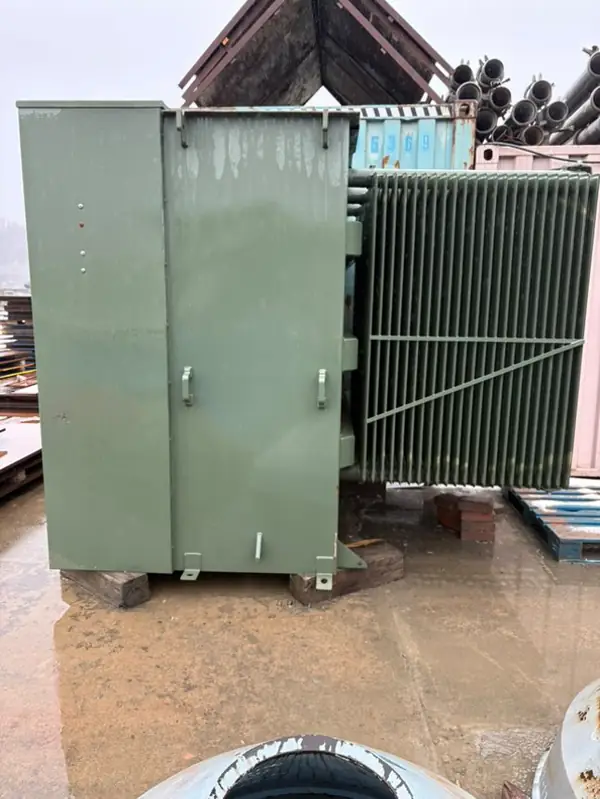
01Which 300 kVA Transformer Types Are Common?
A 300 kVA transformer is a recognized preferred three-phase rating in the verified IEEE C57.12.00-2015 rating series. The capacity alone does not identify its construction: an outdoor liquid-filled cabinet and an indoor ventilated dry-type unit can carry the same rating while serving different installations.
A 300 kVA pad mount transformer commonly serves underground commercial distribution. Indoor building distribution often uses a low-voltage dry-type transformer, while unit-substation transformers are arranged to connect with associated switchgear.
- Three-phase padmount: outdoor liquid-filled distribution equipment.
- Low-voltage dry-type: commonly used for building voltage conversion.
- Cast resin: solid-insulation construction for specified installations.
- Network: specialized equipment requiring configuration details.
- Pole-mounted banks: verify individual ratings and total bank capacity.
FLAFull-Load Amps for a 300 kVA Transformer
Rated full-load current at common California voltages. Single-phase: amps = kVA × 1000 ÷ volts. Three-phase: amps = kVA × 1000 ÷ (1.732 × volts). Use the nameplate voltage of your unit.
| Phase | Voltage | Full-load amps |
|---|---|---|
| Three-phase | 208 V | 833 A |
| Three-phase | 480 V | 361 A |
| Three-phase | 600 V | 289 A |
| Three-phase | 4.16 kV | 41.6 A |
| Three-phase | 12 kV | 14.4 A |
| Three-phase | 12.47 kV | 13.9 A |
| Three-phase | 20.78 kV | 8.34 A |
| Three-phase | 34.5 kV | 5.02 A |
02Voltage Combinations That Matter in California
Typical low-voltage dry-type combinations include 480 V primary to 208Y/120 V secondary. Medium-voltage liquid-filled units may step down a 12 kV-class primary to 480Y/277 V or 208Y/120 V. These are examples, not interchangeable specifications.
California pad-mounted equipment also appears with 16 kV-class, 21 kV-class and 34.5 kV primaries. PG&E and SMUD territories include nominal 21 kV distribution; SCE documents 16 kV distribution. The actual nameplate voltage, connection and taps govern compatibility—not the city or utility name alone.
For a three-phase pad-mounted transformer, include loop-feed or radial-feed configuration if documented. A grounded-wye primary designation such as 12,470GrdY/7,200 V contains connection information that should not be shortened to just “12 kV.”
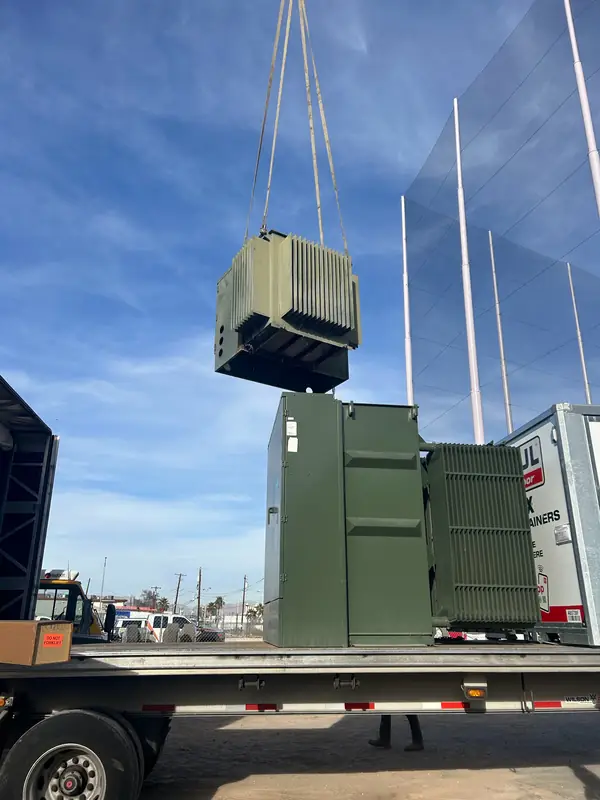
03Commercial and Factory Loads at 300 kVA
This rating fits medium commercial service and factory or building distribution. Loads may include lighting, receptacles, HVAC equipment, pumps and production machinery. A warehouse might use a dry-type unit to supply 208Y/120 V loads from a 480 V building system.
The rating is apparent power, not a promise of 300 kW of usable load. Power factor affects real power, while motor starting, harmonics, ambient conditions and load growth affect suitability. EV charging or other new loads require an engineering review rather than a capacity match alone.
04How to Read the Full-Load Amps Chart
The full-load amps chart on this page shows calculated three-phase current at each listed voltage for 300 kVA. Choose the row matching the winding’s line-to-line voltage. Primary and secondary currents differ because the same apparent power is transferred at different voltages.
For three-phase equipment, current equals kVA × 1,000 divided by the square root of three times line-to-line volts. Use the guide to transformer kVA and amp calculations for the relationship between these ratings.
The chart is not a breaker, fuse or conductor sizing schedule, and it does not list every available voltage combination. A 600 V row is a calculation reference; 600 V secondary equipment is uncommon in California. Protective-device selection also considers inrush and applicable electrical requirements.
05What Affects a Used 300 kVA Transformer’s Value?
A used 300 kVA transformer is evaluated by its electrical configuration, condition and documentation—not capacity alone. Commonly needed voltages can improve resale suitability, but winding connections, impedance and accessories must also fit the receiving installation.
New-surplus equipment should be identified as never energized, with storage history and factory records where available. Previously energized units benefit from relevant test reports and maintenance information. The guide to used transformer value factors explains why otherwise similar units can receive different evaluations.
- Primary and secondary voltages, taps, phase and connection diagram.
- Impedance, BIL, cooling class and temperature rise.
- Copper or aluminum windings, when documented.
- Leaks, corrosion, damaged bushings or missing components.
- Factory reports, turns-ratio results and available fluid records.
- Quantity, location, loading access and removal complexity.
06Physical Size, Weight and Site Access
Dimensions and weight vary by manufacturer, enclosure, insulation system and voltage class. A ventilated indoor unit may have a substantially different footprint from a liquid-filled pad-mount cabinet or a close-coupled substation assembly. Do not estimate lifting requirements from 300 kVA alone.
Send documented dimensions and the nameplate weight when available, plus photos showing the surrounding access area. Identify indoor rooms, stairs, narrow gates or attached switchgear. The transformer removal and pickup guidance explains the access information needed to define responsibilities.
Only the owner’s qualified electrical contractor or serving utility should handle isolation and disconnection. Solar, batteries and generators can create backfeed hazards. Take photographs only from a safe position where you are authorized to be.
07Send These Details for a 300 kVA Transformer Offer
To sell a 300 kVA transformer, text Rocky at (951) 403-5738 or use the transformer offer request form. Reviewing your transformer costs nothing and there is no obligation. Start with existing records and safely accessible photographs; do not open compartments to obtain details.
Rocky reviews the information and may request clarification about tests, ownership or access. Any written offer states the agreed amount, what is included, who handles loading or rigging and freight, and payment terms and timing before pickup.
- Clear nameplate photo showing manufacturer, serial number and year.
- Full voltage ratings, connections, taps and 60 Hz frequency.
- Overall exterior photos and photos of visible damage.
- Quantity, California location and current operating status.
- Available test reports, fluid identification and PCB documentation.
- Ownership authority and any site removal restrictions.
kVANearby Transformer Sizes We Buy
FAQ300 kVA Transformer FAQ
Can I sell the transformer outside my commercial building?
Only if you own it or have authority from its owner to sell it. A transformer serving your property may belong to the utility, even when it sits on private land. Check ownership records before requesting an offer. California Transformer Buyer cannot treat a property owner’s access to utility equipment as permission to sell it.
Is a 300 kVA bank the same as one three-phase transformer?
Not physically. A bank of single-phase transformers may provide a combined three-phase capacity, but it consists of separate units with their own nameplates and connections. Send every nameplate and identify the documented bank arrangement. Do not describe each individual transformer as 300 kVA unless its own plate states that rating.
Does an older oil-filled unit need PCB records?
Available PCB labels, fluid records and laboratory reports are important to review. Under federal classifications, non-PCB means below 50 ppm, not zero PCBs. California has stricter rules for PCB-containing oil, and the correct management pathway depends on testing and documentation. Rely on qualified environmental professionals for determinations; this is not legal advice, and sellers should not sample or drain equipment themselves.
Can a failed or leaking 300 kVA unit still be reviewed?
Yes, you can submit its details for review, but purchase is not guaranteed. Describe the failure, visible leakage and missing parts accurately, and provide existing reports. A failed or leaking unit may require a different environmental determination than working equipment sold for reuse. Its condition also affects transport, handling and whether reuse is practical.
Do efficiency rules prohibit selling an older transformer?
DOE distribution-transformer efficiency standards apply to manufacture; they do not make existing used or surplus units illegal to resell simply because newer standards exist. Manufacturing date, transformer category and the receiving project’s specifications still matter. Provide the original nameplate and factory documentation so the unit can be assessed without assuming it meets a newer efficiency requirement.
Should I include switchgear attached to a unit-substation transformer?
Identify exactly what you are offering: the transformer alone or an assembly including primary and secondary equipment. Send existing equipment lists and safely obtained exterior photos, with separate nameplate images where available. Attached switchgear affects the scope, dimensions and removal planning. The written terms should clearly identify included components and responsibility for separating or handling them.