01How to Identify a Substation Power Transformer
A substation power transformer changes voltage between parts of a utility or industrial power system. Station-class is a market term, not a single rating cutoff. It often describes larger MVA equipment, but substation installations also include smaller distribution-substation transformers. A station service transformer, which supplies auxiliary loads at a station, is a separate duty and should not be confused with every transformer located there.
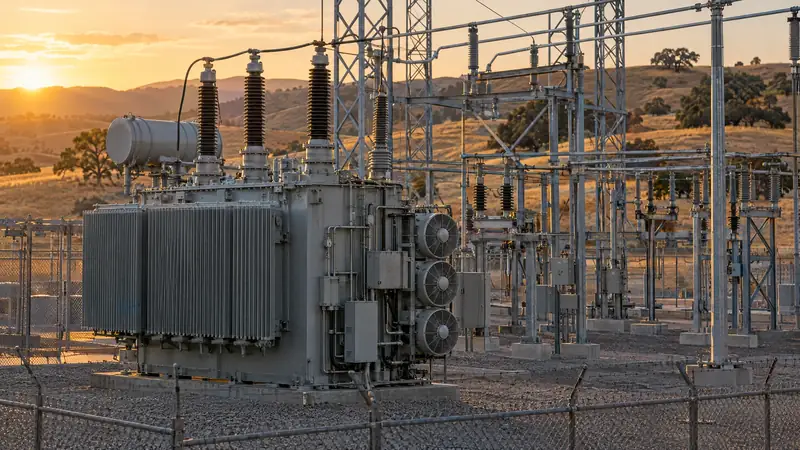
Look from a safe position for a large tank, radiators, and possibly cooling fans. Bushings may be on top or at the sides; other visible features can include a control cabinet, conservator, sealed tank, or separate load-tap-changer compartment. Do not open compartments or approach equipment unless you are authorized and it is safe to do so. See other equipment in the broader transformer types directory.
- Multiple MVA or staged cooling ratings
- Large bushings and radiator banks
- Fan, pump, or control equipment
- LTC compartment or tap controls
- Conservator or sealed/nitrogen system
02What a Substation Power Transformer Does in California
The transformer transfers electrical power between voltage levels through electromagnetic induction. In a substation, it can step transmission or subtransmission voltage down for distribution, or connect a generating source to a higher-voltage system. Industrial facilities may use station-class units to serve large electrical loads. Applications include utility distribution substations, transmission interconnections, and large industrial sites.
California systems are not all built to the same voltage. For example, PG&E lists 115 kV transmission or subtransmission, while SDG&E has 69 kV system supply to substations; these examples do not establish compatibility for a particular replacement. Engineers must verify the actual system and nameplate. Utilities and municipal providers are among the sellers and equipment owners covered in our utilities and municipal utilities information.
kVACommon Substation & Power Sizes We Buy
03Substation Power Transformer Sizes, Voltages, and Ratings
Distribution substations often use units roughly from 0.5 to 10 MVA. Station power units commonly fall around 5 to 100+ MVA, while utility transmission designs can reach several hundred MVA or more. These are broad market ranges, not a standard that determines whether a unit is station class. A project’s system requirements and transformer nameplate govern.
High-side voltages commonly include 34.5, 44, 66/69, 115, 138, or 230 kV and higher. Low-side ratings can include 4.16, 12, 13.8, 16, 21, 33/34.5, or 69 kV, depending on the application. Browse examples such as 7,500 kVA transformers and 15 MVA transformers, but confirm all rating stages and voltages from the actual nameplate.
| Equipment context | Typical capacity | Common nameplate detail |
|---|---|---|
| Distribution substation | Roughly 0.5–10 MVA | System-specific HV and LV |
| Station power unit | Commonly 5–100+ MVA | Multiple cooling stages possible |
| Transmission-class design | Several hundred MVA or more | Higher system voltages |
| Cooling stages | Example: 12/16/20 MVA | ONAN/ONAF/ONAF |
04Cooling, Tap Changers, and Other Construction Variations
Many large substation units are liquid-filled, commonly using mineral oil or ester fluid. Cooling may be natural oil and natural air (ONAN), or use fans and sometimes pumped oil for higher stages. The nameplate can show several ratings—for example, a lower ONAN rating followed by higher ONAF ratings—so report every stage rather than only the largest number. Our guide to ONAN and ONAF cooling classes explains the abbreviations.
Tap changing can be on-load (LTC), allowing voltage adjustment while energized within the equipment’s design, or de-energized (DETC), which requires the appropriate outage and qualified procedures. Other differences include conservator versus sealed-tank construction, radiator and fan arrangements, bushing layout, winding connection, and control systems. These details affect both application fit and the work needed to inspect, prepare, and ship the transformer. More on liquid-filled transformer construction is available.
05What Affects Used Substation Power Transformer Resale Value
A buyer evaluates whether the unit’s ratings and condition suit a potential reuse or resale application. Relevant nameplate details include MVA stages, phase, primary and secondary voltages, taps, connection, impedance, BIL, cooling class, and temperature rise. Winding material, manufacturer, year, fluid type and quantity, and total shipping weight can also help establish what the equipment is and where it may fit.
Condition and documentation matter alongside electrical specifications. Factory and service test reports, dissolved-gas analysis and other fluid tests, insulation-resistance and turns-ratio results, LTC service history, fault exposure, bushing condition, leaks, corrosion, and missing accessories all inform an evaluation. Resale can also be limited by transport and installation costs, and a technically similar replacement is not automatically compatible. Assessment is unit-specific; it is not based on MVA alone.
- Test records and fluid documentation
- LTC condition and service history
- Bushings, radiators, fans, and controls
- Completeness, leaks, and corrosion
- Dimensions, weight, access, and quantity
06Information to Send a Substation Power Transformer Buyer
To start an evaluation, send clear photos of the complete nameplate and the transformer from several safe viewing angles. Include the quantity, California location, condition, and whether the unit is used, spare, decommissioned, or new-surplus. You can call or text Rocky at (951) 403-5738, text photos, or use the get an offer contact form. Only photograph equipment you are authorized to access.
If available, share factory test reports, recent service test results, oil or dissolved-gas reports, PCB records, and information about faults, repairs, or LTC maintenance. Helpful nameplate fields include all kVA/MVA and cooling stages, voltage and tap data, serial number, year, impedance, BIL, fluid, and weight. The more complete the information, the less likely the initial review will need basic follow-up.
- Nameplate and overall equipment photos
- Quantity, location, and condition
- Test reports and fluid records
- PCB documentation, if available
- Dimensions, weight, and access details
07Removal, Rigging, and Heavy-Haul Planning
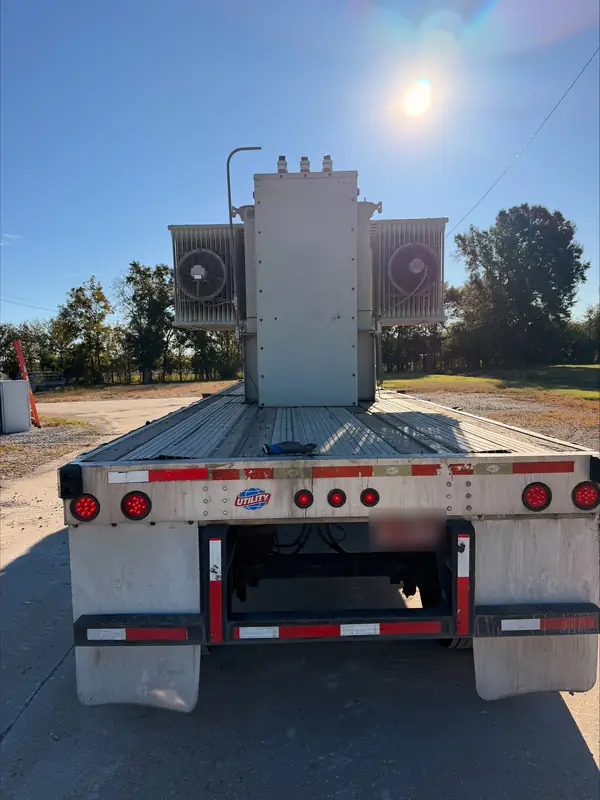
A large transformer may require specialized rigging and transport planning. Weight, dimensions, route limits, site access, crane or lifting needs, and whether radiators or bushings need to be removed can affect the plan. Large units may ship with some accessories removed and may require a nitrogen or dry-air fill during transport preparation; qualified parties determine the appropriate requirements.
Do not attempt to de-energize, disconnect, open, drain, sample, or move the transformer. The owner’s qualified electrical contractor or serving utility handles isolation and disconnection. California heavy-haul permits may apply when loads exceed common state-highway limits, and local roads can require separate approvals. Review transformer removal and pickup planning before setting a schedule.
08How California Transformer Buyer Reviews a Unit
California Transformer Buyer buys used, pulled, surplus, and new-surplus transformers from sellers located in California. Rocky reviews the submitted photos and equipment details, then may ask about testing, fluid or PCB records, ownership, and site access. If the unit is a fit, the written offer states the price, what is included, who handles loading or rigging and freight, and payment terms and timing.
The seller should own the transformer or have authority to sell it; equipment owned by a utility cannot be sold by a property owner. Terms are provided in writing before pickup. Reviewing a transformer costs nothing and carries no obligation. For general selling steps, see how to sell your transformer.
FAQSubstation & Power Transformer FAQ
Is there a fixed MVA rating that makes a transformer station class?
No single cutoff defines station class. The term is used in the market for transformers installed in substations, including smaller distribution-substation units and much larger transmission-class equipment. A rough range can help describe the category, but application, construction, ratings, and the nameplate are more useful than a label alone when identifying a unit for sale.
Can I sell a transformer that has been in service?
Yes, California Transformer Buyer considers used and previously energized equipment from California sellers. The evaluation depends on the actual unit, including its condition, ratings, available test history, fluid and PCB documentation, and accessories. Send the nameplate and overall photos with the location and condition so Rocky can review it; an evaluation is not a commitment to buy.
Do you consider spare or new-surplus substation transformers?
New-surplus equipment that has never been energized, including units stored crated or on skids, can be submitted for review. Spare, project-leftover, and decommissioned equipment may also be considered. Include storage condition, packaging status, quantity, and any factory test documents, then identify whether the unit has ever been installed or energized.
What if the transformer has unknown PCB status?
Do not assume PCB status from appearance or age alone. Share existing labels, test results, and records, and rely on appropriate testing, documentation, and qualified environmental professionals to determine status and handling. Rules depend on the material and circumstances, and this information is not legal advice. Avoid sampling or draining the equipment yourself.
Can you tell from a nameplate whether a transformer will fit my project?
A nameplate provides essential specifications, but it cannot by itself confirm replacement compatibility. Voltage, connection, taps, impedance, BIL, cooling stages, system grounding, protection, physical dimensions, and project requirements may all matter. A qualified engineer or system owner should verify application fit. For a sale review, send the complete nameplate even if you do not know the intended reuse application.
Who disconnects the transformer before pickup?
The equipment owner’s qualified electrical contractor or the serving utility handles de-energizing, isolation, testing, grounding, and disconnection as applicable. A seller should not open compartments or attempt to disconnect or move the unit. Before pickup is arranged, the written terms specify who is responsible for loading or rigging and freight, so responsibilities are clear in advance.