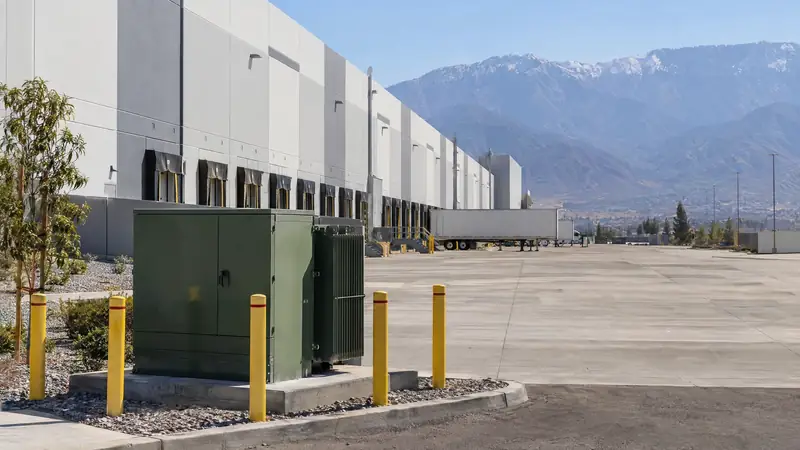
01A Transformer Buyer Serving the Inland Empire
If you need a transformer buyer in the Inland Empire, California Transformer Buyer reviews equipment from businesses, contractors, property owners and other authorized sellers in Riverside and San Bernardino counties. Rocky considers used and removed units, surplus inventory, new-surplus equipment, spare transformers and project leftovers. Single units and mixed lots can be submitted for review.
The region’s freight connections and broad spread of industrial properties mean equipment may be located at a warehouse, manufacturing site, business park or utility-related facility. Share the city, site access details and equipment location when you call or text. To see the broader service area and process, visit California transformer buying near you.
California Transformer Buyer is based in Riverside County and serves California sellers statewide. Local city pages include Riverside transformer buying, Corona transformer buying, Moreno Valley transformer buying, San Bernardino transformer buying, Fontana transformer buying, Ontario transformer buying and Victorville transformer buying. The wider area also includes Temecula, Murrieta, Rancho Cucamonga, Palm Springs and Indio.
DIRCities in This Region
- Riverside, CASell a transformer in Riverside with nameplate-based review, utility ownership checks and written pickup terms.
- Corona, CAA practical guide to selling used, surplus and new-surplus transformers from Corona facilities.
- Moreno Valley, CALearn what transformer details to provide and how to arrange a review and pickup in Moreno Valley, California.
- Temecula, CASell used or surplus transformers in Temecula with nameplate review, ownership checks and written pickup terms.
- Murrieta, CAHow Murrieta owners can submit transformer details, receive a written offer and plan pickup around site access and equipment requirements.
- San Bernardino, CAA practical guide to selling used, surplus and new-surplus transformers from San Bernardino sites.
- Fontana, CASell used or surplus transformers in Fontana with nameplate review, written terms and site-specific pickup planning.
- Ontario, CAOntario owners can submit transformer details and photos for review and a written offer with pickup responsibilities set out in advance.
- Rancho Cucamonga, CALearn how Rancho Cucamonga sellers can submit transformer details and plan a documented sale and pickup.
- Victorville, CALearn what transformer details to send, how Victorville pickup is planned, and how to request a written offer.
- Palm Springs, CAPalm Springs transformer sellers can submit equipment details and photos for review and a written offer before pickup is arranged.
- Indio, CAIndio sellers can submit transformer details and photos for a written offer with pickup responsibilities and terms stated in advance.
02Warehousing, Freight and Manufacturing Shape Local Equipment Needs
The Inland Empire is a major warehousing, distribution and freight region connected to Southern California ports, interstate highways, cargo airports and intermodal rail. Manufacturing and research-oriented business parks add other industrial and commercial loads. Victorville has aviation and logistics facilities, while the Coachella Valley combines tourism, manufacturing and distribution.
Those uses can leave sellers with distribution transformers serving buildings or site infrastructure, dry-type units associated with indoor electrical systems, or larger equipment from industrial and utility installations. A property redevelopment, electrical upgrade, facility consolidation or completed project may also leave a spare or new-surplus unit in storage.
The equipment’s actual use and configuration matter more than an assumption based on its location. If a transformer came from a solar, battery, data-center or other specialized project, identify its service and application; do not assume a buyer can determine that from the facility type alone.
03Utility Service and Voltage Depend on the Exact Site
Southern California Edison (SCE) serves much of the Inland Empire, but service boundaries are not uniform. Municipal electric service pockets exist within Riverside, Corona, Moreno Valley, Rancho Cucamonga and Victorville; Riverside Public Utilities serves Riverside, and Imperial Irrigation District (IID) serves Indio. Confirm the serving utility for the specific property rather than relying only on its city name.
The verified distribution-voltage information for SCE includes 4 kV, 12 kV and 16 kV systems, with 25 kV and 33 kV also documented. Riverside Public Utilities has 4 kV and 12 kV systems, including an ongoing conversion from 4 kV to 12 kV. Specific voltage information is not verified here for IID or the municipal service pockets, so do not infer it from a neighboring utility’s system.
For a transformer review, use the nameplate’s actual high- and low-voltage ratings, connection, taps and phase. Common secondary configurations in California include 120/240 V single-phase, 208Y/120 V and 480Y/277 V three-phase, but the equipment nameplate—not a regional generalization—should guide identification.
04Transformer Types That May Come From Inland Empire Sites
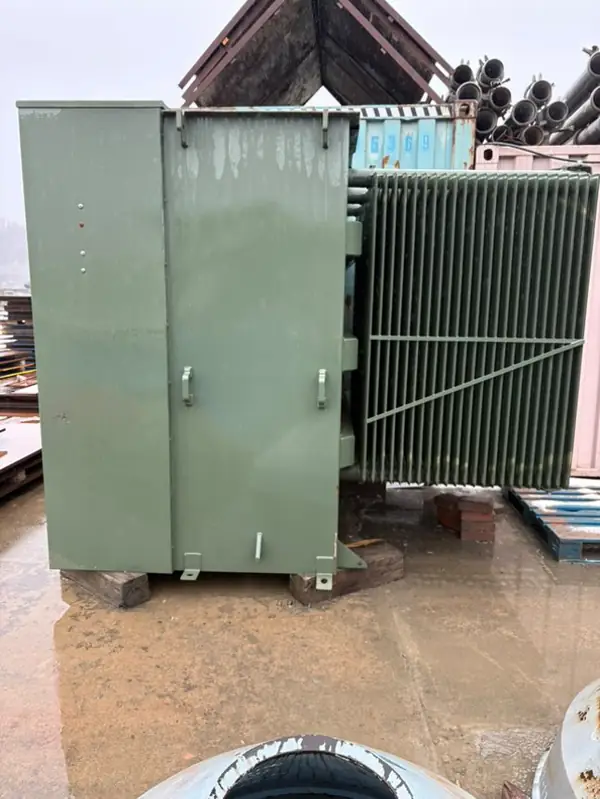
Warehouses and distribution buildings may have three-phase pad-mounted transformers, unit substations close-coupled to switchgear, or low-voltage dry-type units. Manufacturing facilities may use distribution, dry-type or specialty transformers depending on the process and electrical system. The actual equipment should be described by its nameplate and configuration, not by a guessed category.
Larger properties may have station-class or other substation transformers, while aviation, research, healthcare and business facilities can have different combinations of utility and building equipment. Solar or storage projects may involve inverter step-up or battery-energy-storage transformers, but send the nameplate information so the specific type can be assessed.
California Transformer Buyer reviews pad-mount, dry-type, unit-substation, substation and specialty equipment, as well as mixed lots. Include whether the transformer is used, never energized, pulled, stored, incomplete or reported failed. Condition and documentation affect whether a particular unit is suitable for resale or another disposition.
05Nameplate Details That Help Review Inland Empire Surplus Transformers
A clear nameplate photo is often the best starting point for reviewing used transformers in the Inland Empire. Take photos only from a safe position and only of equipment you are authorized to access. Do not open compartments or approach equipment that requires electrical access; a qualified electrical contractor or the serving utility handles that work.
Include overall photos and close-ups of the nameplate, then share the quantity, city, condition and whether the transformer is accessible for a planned removal. If available, provide test reports, fluid or PCB records, ownership information and any details about missing or damaged parts. These records help distinguish a complete, documented spare from equipment with unknown status or additional handling needs.
- Manufacturer, serial number and year
- kVA or MVA rating and phase
- Primary and secondary voltages, taps and connection
- Cooling class, impedance and BIL
- Fluid type, gallons and PCB documentation
- Weight, test reports and condition
06Pickup and Hauling Require a Site-Specific Plan
A transformer’s pickup plan depends on its size, weight, condition, location, access route and loading arrangements. Warehouses and industrial sites can have different access controls and traffic conditions from smaller commercial properties. Share site constraints, such as restricted hours, limited turning space or a required appointment, when requesting a review.
Before pickup, the written offer states what is included, who handles loading or rigging, who handles freight and the payment terms. Removal is scheduled under those written terms. Ask about transformer removal and pickup arrangements when sending the equipment details.
Oversize or overweight loads may need Caltrans permits for travel on state highways, and local roads can require separate approvals. The haul plan depends on the equipment dimensions and route. Do not move, disconnect or prepare the transformer yourself; the owner’s qualified electrical contractor or serving utility is responsible for electrical isolation and safe access.
07Ownership, Condition and Environmental Records Matter
The seller must own the transformer or have authority to sell it. Equipment owned by a utility cannot be sold by a property owner simply because it is located on the property. If ownership is unclear, resolve that question before arranging a sale or removal.
For oil-filled equipment, provide PCB test results and available records rather than making assumptions from age or appearance. Federal categories distinguish non-PCB equipment below 50 ppm, PCB-contaminated equipment from 50 to below 500 ppm, and PCB Transformers at 500 ppm or more. “Non-PCB” does not mean zero PCBs, and unknown equipment may require testing or qualifying documentation to establish its status.
California has specific rules for PCB-containing oil and used oil management; the correct pathway depends on testing and documentation. This is not legal advice. Sellers should rely on records, testing and qualified environmental professionals. Leaking units, drained oil and failed equipment may need a different determination from a working transformer sold for reuse.
08Request a Written Offer for Your Inland Empire Equipment
Call or text Rocky at (951) 403-5738, or submit the website contact form. Send nameplate and overall photos, the number of units, location and known condition. Rocky may ask follow-up questions about test reports, ownership, fluid or PCB records and site access before preparing an offer.
The written offer identifies the price, what is included, who handles rigging and freight, and the payment terms and timing. Review the terms before pickup so responsibilities are clear. Reviewing your transformer costs nothing and creates no obligation to proceed.
FAQSelling a Transformer in Inland Empire: FAQ
Do you buy one transformer, or only large lots?
California Transformer Buyer reviews both single units and larger groups, including mixed lots. Send the quantity and basic details for each unit when possible. A lot with several different ratings or conditions should be described unit by unit, since nameplate information, completeness and documentation can vary. Whether a specific transformer is suitable for an offer depends on its details and the proposed transaction.
Can I sell a transformer that has already been removed?
Pulled and removed transformers can be submitted for review, as can equipment still installed at a site. Explain whether it has been stored indoors or outdoors, whether it is complete, and whether it has visible damage or known test results. Do not move or handle it to take better photos. Share only information and images you can safely and lawfully access.
What if I do not know the transformer’s exact voltage?
Send a clear photo of the nameplate if you can take one safely. The nameplate usually identifies primary and secondary voltage, taps, phase and other key ratings. Do not estimate voltage from the building, nearby equipment or utility territory. If the label is missing or unreadable, report that and provide overall photos and any available records; follow-up questions may help clarify what is known.
Will you review equipment with unknown PCB status?
You can submit the equipment information, but unknown PCB status should not be treated as confirmed non-PCB. Provide available test results, labels, manufacture information and environmental records. Testing and regulatory determinations should be handled with qualified environmental professionals. The proper management path can depend on the transformer’s fluid, records, condition and applicable requirements, so do not rely on an unsupported assumption.
Can a property owner sell a utility transformer on site?
Only the owner or someone with authority to sell the equipment can do so. A transformer located on private property may still belong to the serving utility, so location alone does not establish ownership. Check property and equipment records, or contact the relevant parties, before representing the unit as yours to sell. California Transformer Buyer may ask about ownership during its review.
When are loading and freight responsibilities decided?
They are stated in the written offer before pickup. The offer identifies what is included and who handles loading or rigging and freight, along with payment terms and timing. The actual plan depends on equipment size, condition, site access and route. Review those terms before scheduling removal, and leave electrical work and equipment handling to qualified personnel.