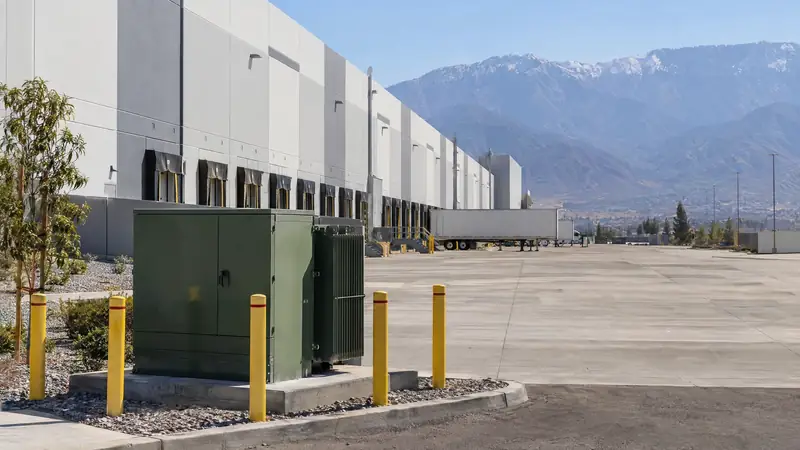
01What a 500 kVA Transformer Usually Is
A 500 kVA transformer is a common three-phase size for commercial and industrial power, although single-phase 500 kVA units also exist. The rating describes apparent power capacity; it does not identify the transformer’s voltage, phase, construction, or suitability for a particular load. Those details are on the nameplate.
The three-phase market includes outdoor pad-mounted units, indoor low-voltage dry types, medium-voltage dry types, cast-resin designs, network transformers, and secondary unit substations. A large single-phase overhead unit or special power transformer may also carry this rating. See our guide to [three-phase pad-mount transformers](three-phase pad-mount transformers) and [dry-type transformer designs](dry-type transformer designs) for configuration differences.
FLAFull-Load Amps for a 500 kVA Transformer
Rated full-load current at common California voltages. Single-phase: amps = kVA × 1000 ÷ volts. Three-phase: amps = kVA × 1000 ÷ (1.732 × volts). Use the nameplate voltage of your unit.
| Phase | Voltage | Full-load amps |
|---|---|---|
| Three-phase | 208 V | 1,388 A |
| Three-phase | 480 V | 601 A |
| Three-phase | 600 V | 481 A |
| Three-phase | 4.16 kV | 69.4 A |
| Three-phase | 12 kV | 24.1 A |
| Three-phase | 12.47 kV | 23.1 A |
| Three-phase | 20.78 kV | 13.9 A |
| Three-phase | 34.5 kV | 8.37 A |
02Common 500 kVA Types and Voltage Combinations
A three-phase pad-mount transformer may have a medium-voltage primary and a low-voltage secondary for a commercial or industrial service. California primary ratings can include 12 kV-class, 16 kV-class, 20.78 kV, or 34.5 kV configurations; actual primary voltage and connection must be confirmed from the nameplate. Common three-phase secondary systems include 208Y/120 V and 480Y/277 V. A 240 V delta secondary is another possible configuration, while 600 V is uncommon in California.
Dry-type and cast-resin units are used in indoor electrical rooms and other installations where a liquid-filled design is not used. Medium-voltage dry-type units may step down to a facility distribution voltage. A secondary unit substation combines a transformer with close-coupled switchgear; a 500 kVA unit is not the same scale as a large station-class power transformer. Read about [medium-voltage dry-type transformers](medium-voltage dry-type transformers) and [cast-resin transformers](cast-resin transformers).
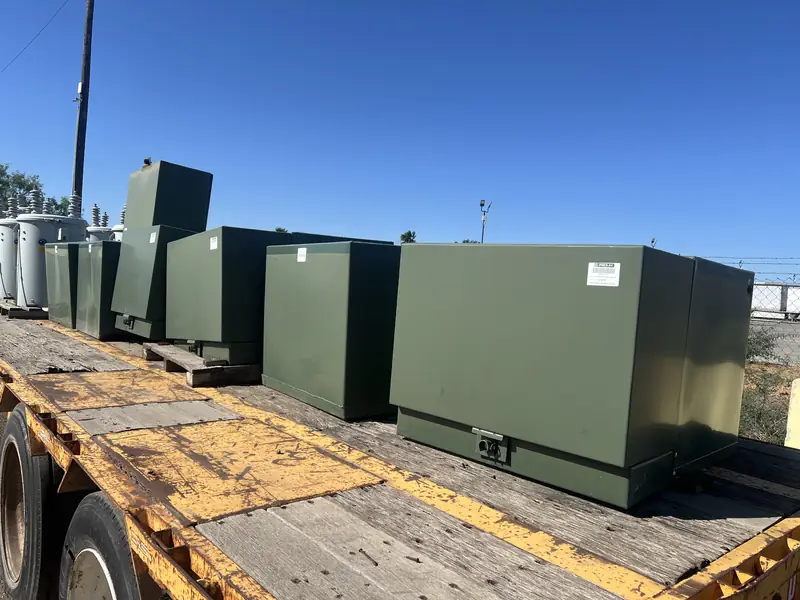
03California Loads That May Use 500 kVA
A 500 kVA three-phase unit may serve a commercial building, industrial process, or a group of facility loads. The suitable capacity depends on the connected equipment, demand, power factor, operating conditions, and the transformer’s voltage and connection—not just the kVA label.
California projects may also use this size in network or unit-substation arrangements. Larger single-phase overhead installations and specialty power applications are possible, but three-phase commercial and industrial service is the main purchasing-market use at this rating. If the transformer came from a solar, storage, or other project, include its original application and any available operating or test records.
04How to Read the 500 kVA Full-Load Amps Chart
The full-load amps chart rendered on this page shows calculated current for a 500 kVA, three-phase transformer at each listed voltage. Find the voltage that corresponds to the winding being considered, then read across to its current. The displayed current is for that side of the transformer; primary and secondary currents differ because voltage changes while the rated apparent power remains the same.
Treat the chart as a reference, not a substitute for the nameplate or engineering review. A single-phase unit uses a different current calculation, and actual connections, rated voltages, and operating conditions matter. For a refresher on rating relationships and current, see [how transformer kVA and amps relate](the transformer kVA and amps guide).
05Physical Size and Weight Depend on the Design
There is no dependable single footprint or shipping weight for every 500 kVA transformer. A liquid-filled pad-mount unit is generally a substantial cabinet-style piece of equipment; a dry-type transformer may have a different profile and installation footprint. Dimensions and weight vary by manufacturer, winding design, enclosure, cooling equipment, accessories, and whether the unit is part of a substation assembly.
Use the nameplate or manufacturer documentation for total weight and, when listed, tank-and-fittings or core-and-coil weight. For an offer, clear overall photos and site-access details help establish what equipment is present and what loading or freight arrangements may be needed. Do not move or open the equipment to obtain information.
06What Affects a Used 500 kVA Transformer’s Value
A buyer evaluates the complete unit, not the kVA rating alone. Voltage and connection, phase, taps, impedance, cooling class, insulation or fluid type, condition, and demand for that configuration can all affect its resale potential. Common California voltages may be easier to place than less common configurations, but no rating or voltage guarantees a purchase.
Age, manufacturer, copper or aluminum windings, missing or damaged components, leaks, rust, and available test records also matter. New-surplus status and original documentation can change an evaluation compared with a previously energized unit. For liquid-filled equipment, provide fluid and PCB records if available; sellers should rely on testing, documentation, and qualified environmental professionals for environmental determinations. Review [factors used to assess a transformer’s value](the used transformer value guide).
07What to Send for a 500 kVA Transformer Offer
California Transformer Buyer is a California-only buyer of used, surplus, and new-surplus transformers. To start an evaluation, call or text Rocky at (951) 403-5738, or use the [contact form to request an offer](contact California Transformer Buyer). Photos should be taken only from a safe position and of equipment you are authorized to access.
Rocky reviews the information and may ask follow-up questions about test reports, fluid or PCB documentation, ownership, and site access. The written offer states the price, what is included, who handles loading or rigging and freight, and payment terms and timing. Terms are provided in writing before pickup; the seller must own the transformer or have authority to sell it.
- Nameplate photo showing rating, phase, voltage, serial number, and year
- Overall photos of the transformer and visible accessories
- Quantity, California location, and known condition
- Available test reports, fluid records, or purchase documents
- Access details and any known loading constraints
08Prepare Safe, Useful Equipment Information
Do not disconnect, open, drain, sample, or move a transformer to prepare an inquiry. The owner’s qualified electrical contractor or serving utility handles isolation and disconnection. A photo of the exterior nameplate and equipment, taken from a safe position, is often the most useful starting point.
Include any known issues or missing parts rather than guessing at a repair. If a transformer is utility-owned, the property owner cannot sell it; confirm ownership or selling authority before requesting an offer.
kVANearby Transformer Sizes We Buy
FAQ500 kVA Transformer FAQ
Is every 500 kVA transformer three-phase?
No. Three-phase is the main purchasing-market use at 500 kVA, but single-phase units at this rating also exist. The phase is stated on the nameplate and affects how the transformer is evaluated and how current is calculated. Do not rely on the enclosure or application alone to identify phase.
Can I sell a 500 kVA transformer that has already been removed?
A pulled or removed unit may be considered, along with operating used equipment, surplus stock, and new-surplus inventory. Its condition, available records, configuration, location, and removal or loading circumstances affect the review. Send photos and disclose known issues; an evaluation does not guarantee that the unit will be purchased.
Does the 500 kVA rating tell me how many amps the unit supplies?
Not by itself. Current depends on the transformer’s phase and the voltage on the winding in question. The chart on this page gives three-phase reference currents for listed voltages, while a single-phase unit requires a different calculation. Confirm the exact winding voltage and configuration on the nameplate before using any current figure.
Do I need a test report to request an offer?
A test report is useful when available, but you can begin by sending the nameplate, overall photos, quantity, location, and known condition. Rocky may ask for factory test results, oil tests or DGA, insulation resistance, turns-ratio results, or other records during review. Do not perform testing or access energized equipment yourself.
What if I cannot read the full nameplate?
Send the clearest photo you can safely take and include any legible fields or manufacturer paperwork you have. Overall photos, serial number, known voltage, phase, and approximate age can help identify follow-up questions, but do not guess at specifications. Do not open a compartment or approach equipment if doing so would be unsafe.
Can a California property owner sell a transformer installed by a utility?
Only if the seller owns the equipment or has authority to sell it. A transformer owned by a utility does not become the property owner’s asset simply because it is installed on the property. Confirm ownership with the relevant parties before offering it, and do not attempt to disconnect or remove utility equipment.