01A Transformer Buyer for the Central Coast and Ventura County
California Transformer Buyer considers equipment from businesses, contractors, property owners, and other authorized sellers throughout California. On the Central Coast and in Ventura County, that can include a single removed unit, spare equipment, project leftovers, or a larger group of transformers from a site or yard.
The cities covered here span several counties and different types of work, from agricultural handling and cold storage to manufacturing, research, and hospitality. If you are looking to sell a transformer near me, share its location and basic details so Rocky can assess whether it fits a current buying opportunity. Equipment must belong to you or you must have authority to sell it; utility-owned equipment cannot be sold by a property owner.
| City | Utility listed | Local industry examples | Main routes |
|---|---|---|---|
| Oxnard, CA | SCE | Manufacturing; produce logistics; cold storage; auto distribution | US-101, SR-1, SR-34 |
| Ventura, CA | SCE | Agriculture-related and oil and gas legacy activity; tourism; export business | US-101, SR-126, SR-33 |
| Santa Barbara, CA | SCE | Technology; aerospace research; biotechnology; tourism | US-101, SR-154 nearby, SR-192 |
| San Luis Obispo, CA | PG&E | Technology; research; agriculture-related business; tourism | US-101, SR-1, SR-227 |
| Salinas, CA | PG&E | Agriculture; produce packing; food handling; distribution | US-101, SR-68, SR-183 |
DIRCities in This Region
- Oxnard, CAOxnard transformer sellers can request a review based on equipment details, condition, ownership, and pickup access.
- Ventura, CALearn what transformer details to send, how Ventura pickup planning works, and how to request a written offer.
- Santa Barbara, CASanta Barbara sellers can submit transformer details and photos for review by California Transformer Buyer.
- San Luis Obispo, CALearn what transformer details matter, how pickup planning works, and how to request a written offer in San Luis Obispo, California.
- Salinas, CAA practical guide to selling used, surplus and new-surplus transformers in Salinas, from nameplate details to pickup planning.
02SCE and PG&E Service Areas: Confirm the Actual Nameplate Voltage
The verified cities in this region are served by Southern California Edison (SCE) or Pacific Gas and Electric (PG&E), as shown above. Typical distribution voltages depend on the specific utility system and site. SCE systems include 4 kV, 12 kV, and 16 kV distribution, with 25 kV and 33 kV also documented. PG&E uses 12 kV and nominal 21 kV distribution; documented primary configurations include 4,160 V, 12,000 V, 17,200 V, and 20,780 V.
These are utility-system references, not a guarantee that a particular service point uses a listed voltage. Never select or identify a replacement unit from a regional average. Send a clear nameplate photo showing primary and secondary voltages, connection, taps, phase, and kVA so the transformer can be evaluated against its actual specifications.
03Transformer Types That May Fit Local Facilities
The region’s mix of food handling, manufacturing, agriculture-related businesses, research, and commercial property creates a range of possible transformer inventories. California Transformer Buyer reviews distribution and power equipment, whether it is installed, removed, stored as a spare, or left over from a project. The equipment’s specifications and condition matter more than assumptions based on its former use.
- Pad-mounted single-phase or three-phase distribution transformers at commercial and industrial properties.
- Dry-type units, unit substations, and medium-voltage equipment associated with buildings, production areas, or facility upgrades.
- Larger station-class or substation transformers, including units with radiators, fans, or tap-changing equipment.
- Solar, battery-storage, or other specialty step-up equipment when present at a site and available for sale.
- Used, decommissioned, spare, pulled, and new-surplus units, including crated equipment that has never been energized.
Pad-Mount and Three-Phase Units
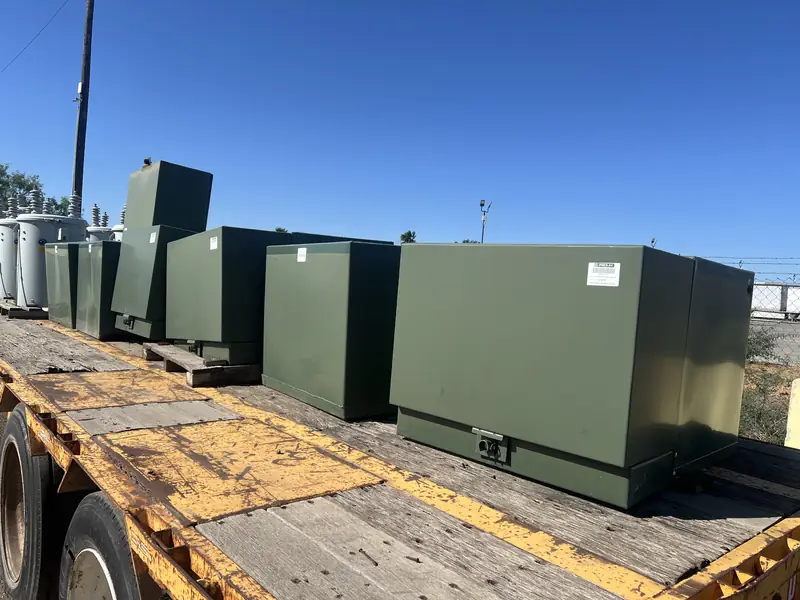
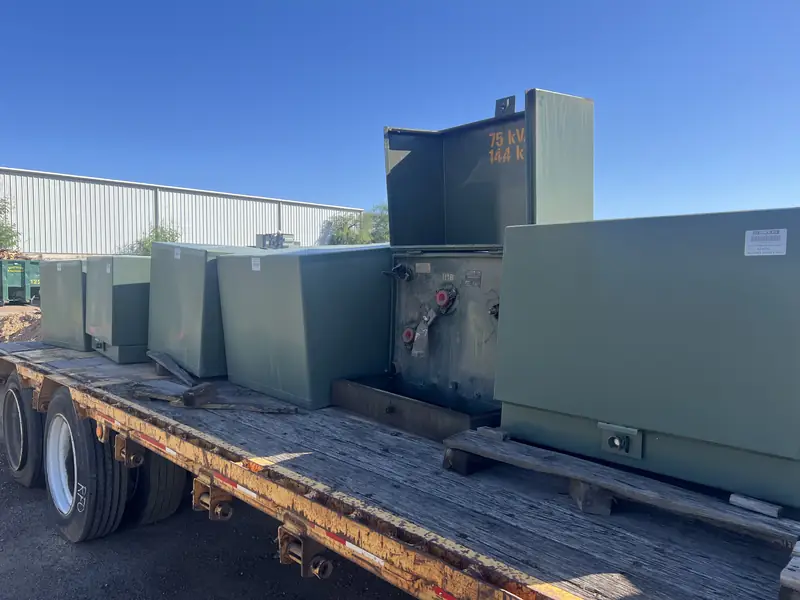
A pad-mounted transformer may be a good fit for review when a facility has surplus equipment or a unit removed during a project. Describe whether it is single-phase or three-phase and provide the kVA rating, voltages, manufacturer, serial number, and condition. See the dedicated pad-mount transformer buying information for the details that help identify this equipment.
04Local Operations and the Equipment They May Leave Behind
Oxnard’s manufacturing, produce logistics, cold-storage, and automobile-processing activity can mean facility distribution equipment, spares, or project-replacement units. Ventura’s documented agriculture-related and oil and gas-related activity is described as legacy activity; it should not be taken to mean a particular site still operates in those sectors. Santa Barbara and San Luis Obispo include technology, research, and hospitality businesses, while Salinas has agriculture, produce packing, food handling, and distribution.
For any of these settings, identify the equipment itself rather than relying only on its former service. A food facility might have dry-type or liquid-filled distribution equipment; a business may also have switchgear-connected unit substations or a spare transformer. Do not assume the transformer is buyer-ready or suitable for reuse based on its industry or appearance. Testing records, condition, configuration, and documentation help establish what it is.
05Information to Send for Central Coast and Ventura County Surplus Transformers
For an initial review, send nameplate photos, overall photos taken from a safe position, the quantity, location, and a short description of the condition. Photograph only equipment you are authorized to access. Do not open compartments or approach equipment that is unsafe to reach; qualified personnel handle electrical access and work.
- Nameplate fields: manufacturer, serial number, year, kVA or MVA, phase, and frequency.
- Electrical details: primary and secondary voltage, connection, tap positions, impedance, and BIL.
- Construction details: cooling class, temperature rise, fluid type and gallons, and winding material if listed.
- Condition and records: visible damage or leaks, test reports, oil or PCB records, and known missing accessories.
- Sale details: your authority to sell, site access considerations, and whether the unit is used or new-surplus.
06Pickup Planning, Rigging, and Freight Are Set Out Before Removal
Pickup is arranged for the specific site and transformer, not assumed from the city name or nearby freeway. US-101 and the listed state routes provide regional context for locations, but access, equipment dimensions, weight, loading arrangements, and local road conditions still need to be reviewed. Large or heavy transformers may have transport requirements that differ from those for a small distribution unit.
After reviewing the information and any follow-up details, Rocky provides a written offer stating the price, what is included, who handles loading or rigging and freight, and payment terms and timing. Removal is scheduled under the agreed written terms. For more information about the process, see transformer removal and pickup planning.
The owner’s qualified electrical contractor or serving utility is responsible for electrical isolation and disconnection. Sellers should not de-energize, disconnect, move, open, drain, or sample equipment themselves. If backfeed from solar, batteries, or generators is possible, qualified personnel must account for it during the work.
07Request a Written Offer for Equipment in the Region
Call or text Rocky at (951) 403-5738, or use the contact form to request an offer. Include your location, quantity, condition, and the clearest nameplate and overall photos you can safely provide. Rocky may ask for test reports, fluid or PCB records, proof of ownership or authority to sell, and details about site access before making an offer.
There is no obligation to accept an offer. Terms are provided in writing before pickup, including what the offer covers and who is responsible for rigging and freight. California Transformer Buyer is not affiliated with SCE, PG&E, or equipment manufacturers. To compare other service areas, see California transformer buying coverage by region.
FAQSelling a Transformer in Central Coast & Ventura County: FAQ
Can I sell a transformer that is still installed?
You can ask for an evaluation while the transformer is still installed. Send photos from a safe position and share the nameplate information, site location, quantity, and known condition. Do not disconnect or move the equipment yourself. If a sale proceeds, the written offer will state who handles loading or rigging and freight, and removal will be scheduled under the agreed terms.
Does California Transformer Buyer buy just one transformer, or only large lots?
Both single units and larger groups can be reviewed. The business considers used, pulled, surplus, new-surplus, decommissioned, spare, and project-leftover transformers, as well as mixed lots. An evaluation is not a promise to purchase every unit. Provide the quantity and specifications for each transformer, especially if a lot contains different ratings, conditions, or types.
What if the transformer’s PCB status is unknown?
Share any existing labels, test results, oil records, and other documentation; do not sample or drain the unit yourself. PCB classification and management depend on testing and qualifying records, and California has additional rules affecting PCB-containing oil. Sellers should rely on testing, documentation, and qualified environmental professionals for decisions. This information is general and is not legal advice.
Will a used transformer be rejected because it has visible damage?
Visible condition is one part of the review, not an automatic answer. Report leaks, rust, damaged bushings, missing parts, and other known issues, and provide available test records. A failed, leaking, or incomplete transformer may require a different evaluation from a tested unit ready for reuse. The offer, if made, will reflect the specific equipment and documented condition.
What records should I send besides the nameplate?
Useful records can include factory test reports, oil tests or DGA, insulation-resistance results, turns-ratio tests, and fluid or PCB documentation. Also share available ownership records and information about accessories such as fans, gauges, switches, fuses, or a load tap changer. Do not delay an initial inquiry if some records are unavailable; state clearly what you have and what is missing.
Can a property owner sell a transformer that belongs to the utility?
No. The seller must own the transformer or have authority to sell it. Equipment located on private property may still be utility-owned, so confirm ownership before representing it for sale. California Transformer Buyer is not affiliated with or approved by SCE, PG&E, or another utility. If ownership is unclear, resolve that question with the responsible parties before proceeding.