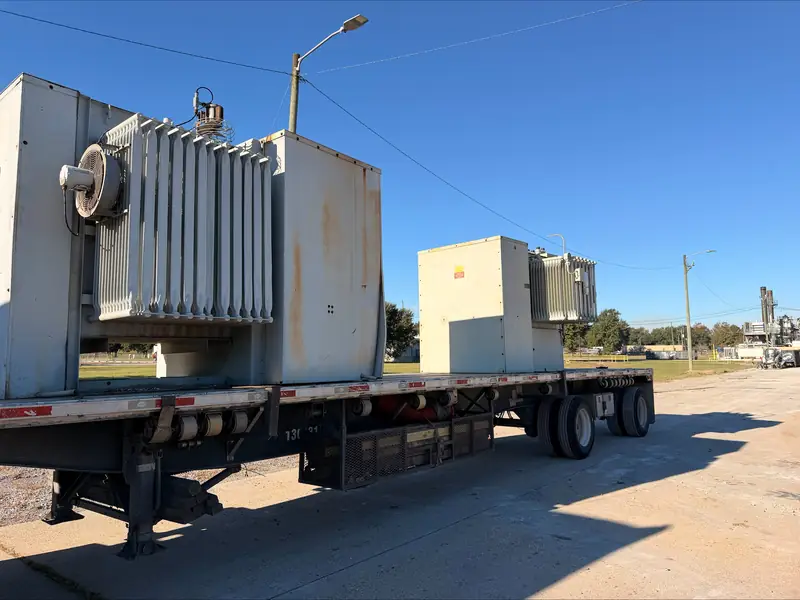
01What a 2000 kVA Transformer Usually Is
A 2000 kVA transformer is a three-phase unit in the standard rating series listed in IEEE C57.12.00-2015, Table 2, for preferred continuous ratings. That is a useful point of reference, not a restriction on custom equipment or a claim that every unit has the same design.
At this capacity, common configurations include three-phase pad-mount, medium-voltage dry-type, cast-resin, unit-substation, and network transformers. The rating also appears in solar inverter step-up, battery energy storage system (BESS), and data-center service applications. See our guides to three-phase pad-mount transformers, medium-voltage dry-type transformers, cast-resin transformers, and unit-substation transformers for configuration details.
FLAFull-Load Amps for a 2000 kVA Transformer
Rated full-load current at common California voltages. Single-phase: amps = kVA × 1000 ÷ volts. Three-phase: amps = kVA × 1000 ÷ (1.732 × volts). Use the nameplate voltage of your unit.
| Phase | Voltage | Full-load amps |
|---|---|---|
| Three-phase | 480 V | 2,406 A |
| Three-phase | 600 V | 1,925 A |
| Three-phase | 4.16 kV | 278 A |
| Three-phase | 12 kV | 96.2 A |
| Three-phase | 12.47 kV | 92.6 A |
| Three-phase | 20.78 kV | 55.6 A |
| Three-phase | 34.5 kV | 33.5 A |
02Voltage Combinations for a 2000 kVA Transformer
The nameplate—not the kVA rating alone—identifies the primary and secondary voltages, winding connection, taps, and other details that determine whether a transformer suits a particular system. Common examples in California include 12 kV-class or 12.47 kV primary service, 20.78 kV grounded-wye primary service in some PG&E and SMUD areas, and 34.5 kV for some industrial or renewable-energy applications.
Secondary voltage depends on the equipment and load. Three-phase examples include 480Y/277 V and 208Y/120 V; 600 V is less common in California. These are examples, not a promise of compatibility with any particular utility or site. Share the full nameplate so a buyer can review the actual ratings, connection, and tap arrangement.
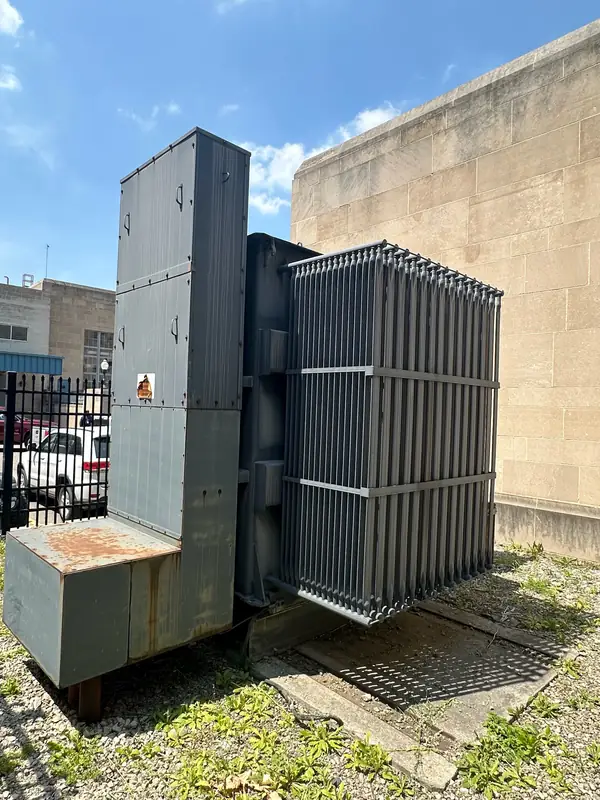
03How to Read the 2000 kVA Full-Load Amps Chart
The full-load amps chart shown on this page pairs selected three-phase voltage ratings with the corresponding current at 2000 kVA. Find the voltage that matches the winding side you are checking, then read across to its listed amps. The chart is a reference for rated full-load current; it does not establish that a transformer can operate at a different voltage or that a site has sufficient capacity.
For a three-phase transformer, rated line current is calculated from apparent power and line-to-line voltage: amps = kVA × 1,000 ÷ (√3 × volts). Primary and secondary currents differ because their voltages differ, although the kVA rating is the same. For more on the relationship between kVA and current, see how to size and read transformer kVA and amps.
04Applications for 2000 kVA Units in California
A 2000 kVA transformer can serve a large facility or a major service block, depending on its voltage, load profile, design, and system requirements. Typical settings include large commercial or industrial facilities, data-center service blocks, and renewable-energy or battery-storage projects. A solar or BESS step-up unit may have a configuration tailored to inverter output and collection-system voltage rather than a general building-service arrangement.
A unit’s original use does not determine whether it has value for another project. Buyers consider its electrical specifications, condition, documentation, and the demand for that configuration. If the transformer is part of a larger station or project package, the substation transformer purchasing guide may also be relevant.
05Physical Size, Weight, and Removal Planning
A 2000 kVA transformer is substantial electrical equipment, but its dimensions and weight vary by manufacturer, insulation and cooling design, enclosure, voltage class, accessories, and construction. A liquid-filled pad-mount unit, indoor dry-type transformer, and unit-substation assembly can have very different footprints and handling requirements at the same kVA rating. Use the nameplate and manufacturer documentation for actual weights and dimensions rather than estimating from capacity.
For an offer, share overall photos from a safe position and describe access constraints, such as indoor placement, narrow routes, or nearby obstructions. Do not attempt to disconnect, open, drain, or move the transformer. The owner’s qualified electrical contractor or serving utility handles electrical isolation and disconnection; any loading, rigging, and freight responsibilities should be stated in writing before pickup.
06What Affects the Value of a Used 2000 kVA Transformer
The rating is only one part of a buyer’s review. Voltage and connection, impedance, BIL, cooling class, temperature rise, winding material, and—in liquid-filled units—fluid type and quantity all help identify the equipment and its potential reuse. Age, condition, completeness, and whether it is used or new-surplus also matter.
Test reports and records can help establish condition and environmental status. Useful documents may include factory test reports, oil test or dissolved gas analysis results, insulation resistance and turns-ratio tests, and PCB records. Missing accessories, leaks, corrosion, bushing damage, or incomplete documentation may affect an evaluation. For more detail, read what affects the value of a used transformer.
07What to Send for an Offer on a 2000 kVA Transformer
California Transformer Buyer reviews equipment located in California, including used, pulled, surplus, and new-surplus units. Send a clear nameplate photo, overall equipment photos, the quantity available, the site location, and a brief description of condition. A written list of test reports, fluid or PCB documentation, included accessories, and known site-access limits can help answer follow-up questions.
Text photos to Rocky at (951) 403-5738 or use the transformer offer request page. You must own the equipment or have authority to sell it; utility-owned equipment cannot be sold by a property owner. Reviewing a transformer costs nothing and creates no obligation. If an offer is made, it will state the price, what is included, who handles loading or rigging and freight, and payment terms before pickup.
kVANearby Transformer Sizes We Buy
FAQ2000 kVA Transformer FAQ
Can I sell a 2000 kVA transformer if it has been removed from service?
Yes, California Transformer Buyer reviews used and pulled transformers located in California. Share its nameplate, condition, location, and any available test or maintenance records. A unit that is out of service is not automatically suitable for resale, so its specifications, condition, documentation, and access for a potential pickup will be considered before an offer is made.
Does a 2000 kVA rating tell me whether the transformer is compatible with my site?
No. The kVA rating describes capacity, but compatibility also depends on voltage, phase, winding connection, taps, impedance, frequency, and the requirements of the electrical system. Compare the complete nameplate with the project specifications and have a qualified electrical professional review the application. Do not rely on a voltage example from this page as confirmation that a unit is suitable.
What if the nameplate is missing or difficult to read?
Send clear photos of the available nameplate area and the overall equipment, taken only from a safe position and where you are authorized to take them. Include any serial number, manufacturer information, drawings, test reports, or purchase records you have. Do not open compartments or disturb the transformer to find information; a buyer can tell you what additional details may be useful.
Will you review a new-surplus 2000 kVA transformer?
Yes. New-surplus equipment can be considered when it has never been energized and is available in California. Include the nameplate and photos, and note whether it remains crated or on skids, along with its quantity, location, condition, and available factory documentation. The buyer reviews each unit and its specific configuration; an offer is not guaranteed.
Do you buy a 2000 kVA transformer with unknown PCB status?
You can submit the available records for review, but do not treat unknown status as a confirmed classification. PCB status should be established from testing and qualifying documentation with guidance from qualified environmental professionals. California and federal requirements can differ in how PCB-containing oil is managed. This information is not legal advice, and sellers should provide existing records rather than sample or drain equipment themselves.
What happens after I send the transformer details?
Rocky reviews the information and may ask for test reports, fluid or PCB records, confirmation of ownership, or details about site access. If the unit is of interest, you receive a written offer describing the price, included equipment, loading or rigging and freight responsibilities, and payment terms. Pickup is scheduled according to the written terms; do not arrange electrical disconnection yourself.