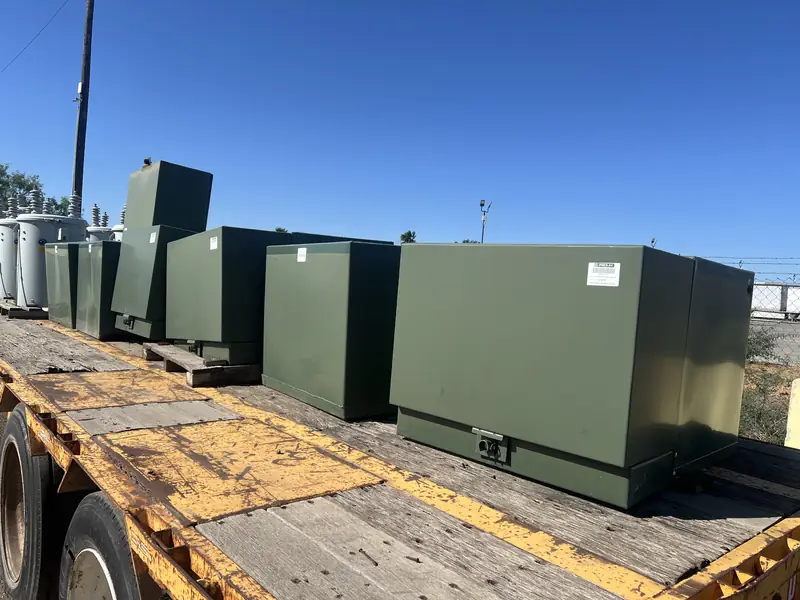
01Sell Your Transformer: Start With Photos and Location
You do not need a complete engineering file to start. If you want to sell your transformer, send the information you already have and identify anything unknown. California Transformer Buyer reviews equipment from sellers throughout California, from a single spare to a yard containing several transformer families.
Call or text Rocky at (951) 403-5738, or use the transformer offer request form. Reviewing your transformer costs nothing and there is no obligation. A readable nameplate and clear exterior photos help determine what follow-up information is needed.
Confirm that you own the equipment or have authority to sell it. A transformer serving your building may belong to the utility; its location on your property does not establish ownership. Include any utility release or other ownership documentation that applies.
- Quantity and exact California location.
- Nameplate photo and overall exterior views.
- Known condition and date last operated.
- Energized status, disconnected condition and site deadline.
- Seller ownership or authorization to sell.
02What We Review: Used Units, Project Surplus and Full Yards
California Transformer Buyer buys used, pulled, decommissioned, spare, surplus and new-surplus electrical transformers. Equipment may have been previously energized, removed from service or never installed. Each unit or lot is reviewed on its specifications, condition and practical resale potential; purchase is not guaranteed.
Relevant families include pad mount distribution equipment, pole-mounted units, dry-type transformers, unit substations and station-class power transformers. Solar inverter step-up, grounding and other specialty configurations need their exact ratings identified. The transformer types guide helps distinguish these families.
For a mixed yard, prepare an inventory with a separate identifier for each unit. Match photos and records to those identifiers rather than assuming similar-looking tanks have identical specifications. See the transformer liquidation page for larger inventories, and identify never-energized new-surplus transformers separately from used equipment.
- One unit, several matching units or mixed lots.
- Crated or skid-mounted project leftovers.
- Removed units with documented service history.
- Installed equipment awaiting qualified disconnection.
- Incomplete or damaged equipment, with limitations disclosed.
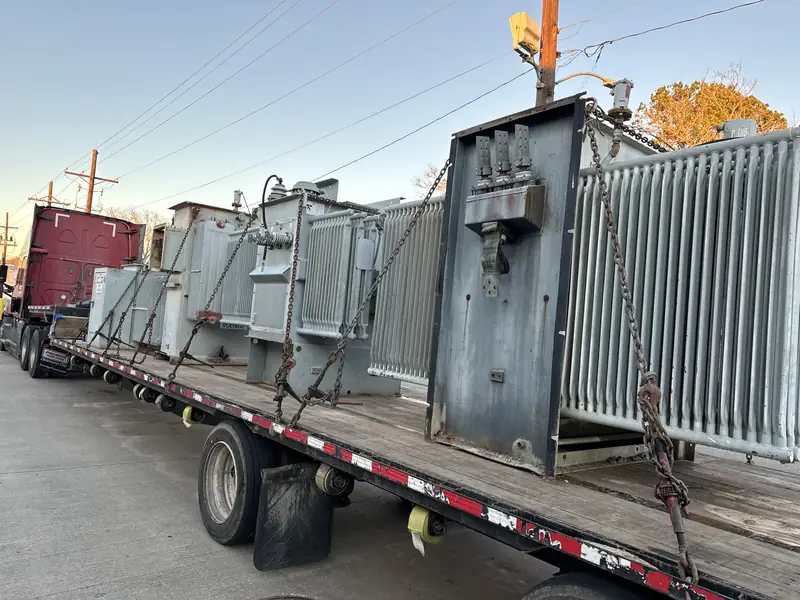
03Nameplate Data and Photos Needed for a Written Offer
Take a straight-on nameplate close-up from a safe, authorized position. Avoid glare and include the entire plate so the rating, connection diagram and weight information remain readable. Do not open electrical compartments to obtain a photo; inaccessible information can be identified as unavailable.
Provide exterior views of all accessible sides, including radiators, bushings, valves, cabinet exterior and accessory or control plates. Ground-level photos should show clearances and the route to the loading area. Photograph visible leaks, corrosion or damage rather than leaving those details out.
For a multi-stage power transformer, report every rating, such as 12/16/20 MVA with ONAN/ONAF/ONAF cooling, rather than only the highest rating. Use the actual nameplate voltage—not an assumed local utility voltage. The transformer voltage guide explains common primary and secondary configurations.
- Manufacturer, serial number and manufacture year.
- kVA or MVA, phase and frequency.
- HV/LV voltages, delta/wye connections and tap positions.
- Impedance, BIL, cooling class and temperature rise.
- Fluid type, gallons and any PCB label.
- Total weight, component weights and winding material if stated.
- Dimensions, lift points and included accessories.
04Condition, Test Reports and PCB Records
Describe storage conditions, repairs and the last known operating date. Disclose oil leaks, bushing damage, missing parts, corrosion, overloads, faults and flood exposure. A unit that operated before removal still needs its present condition evaluated, especially after extended outdoor storage.
Send available factory and recent service reports. Useful records can include turns ratio, winding resistance, insulation and appropriate dielectric tests, plus liquid dielectric results and dissolved gas analysis where applicable. This is a records checklist, not a testing procedure; any additional testing belongs with qualified professionals.
For liquid-filled equipment, provide fluid identification and PCB documentation, including available laboratory results. Under federal TSCA classifications, non-PCB means below 50 ppm—not necessarily zero. PCB-contaminated equipment is 50 to below 500 ppm, and a PCB Transformer is 500 ppm or more.
California has stricter rules for PCB-containing oil, and the correct management pathway depends on testing and documentation. Unknown status may require regulatory assumptions until established otherwise. Sellers should rely on qualified environmental professionals for determinations involving leaks, failed units or oil handling; this information is not legal advice.
05What Drives a Transformer's Value
Capacity matters, but a larger transformer is not automatically more valuable. A buyer must consider whether the primary voltage, secondary voltage, connections, taps and impedance fit an actual application. Common three-phase secondaries such as 480Y/277 V and 208Y/120 V can serve different projects, even at the same kVA.
Age, condition, winding material, fluid type and documentation affect the review. Copper versus aluminum is one factor, not a complete valuation method. A complete, tested transformer suitable for reuse is evaluated differently from damaged equipment with missing bushings or uncertain fluid status.
Accessories also matter: switches, fuses, elbows, gauges, fans and a load tap changer may affect suitability and completeness. Quantity, site access and removal complexity influence the overall transaction. For more detail, read what determines a used transformer's worth.
- Exact kVA/MVA rating and electrical configuration.
- Demand for that configuration.
- Used versus never-energized condition.
- Service history, test reports and PCB records.
- Included accessories and missing components.
- Loading access, weight and removal obligations.
06From Review to Written Offer, Pickup and Payment
The transformer selling process starts with your photos and equipment details. Rocky reviews them and asks follow-up questions about specifications, ownership, records or access. An initial submission may need clarification before an offer can be prepared.
A written offer states the proposed purchase amount, what is included, who handles loading or rigging and freight, and payment terms and timing. Review those terms against your site obligations before accepting. Do not assume disconnection, removal or transportation is included unless the agreement says so.
Once terms are agreed on, removal and pickup are scheduled around equipment readiness and site requirements. The unit is picked up and paid for as stated in the written terms. There is no universal timeline: missing records, utility coordination, difficult access and heavy-haul requirements can all affect scheduling.
- Submit the equipment information.
- Answer review questions and provide available records.
- Review the written offer and responsibilities.
- Coordinate qualified disconnection and loading readiness.
- Complete pickup and payment under the agreed terms.
07Removal Planning Without Unsafe Seller Work
Do not de-energize, disconnect, open compartments, drain, sample or move the transformer yourself. The owner's qualified electrical contractor or serving utility must handle electrical isolation and disconnection. Qualified personnel account for possible backfeed from solar, batteries or generators and perform required clearance, verification and grounding as applicable.
Your role is to describe the site accurately. Identify whether the unit is installed, disconnected or already removed; provide operating or shipping weight, dimensions and documented lift points. Note gates, overhead obstructions, ground conditions and forklift or crane access.
Large substation loads may require transport permits or specialized shipping preparation. Those requirements must be evaluated by the responsible professionals, not assumed from a photo. See transformer removal and pickup planning for the information to gather before scheduling.
- State who controls site access and outage scheduling.
- Identify removal obligations and loading restrictions.
- List accessories included with the sale.
- Provide site deadlines and available loading windows.
- Leave all electrical and equipment-handling work to qualified personnel.
08Send Rocky Your California Transformer Details
Ready to ask, “Can I sell my transformer?” Call or text (951) 403-5738 with the location, quantity and available photos. If the unit is still operating, say so at the start. If you have a shutdown or property handover deadline, include that date without assuming pickup can occur before the required electrical work.
For multiple units, send an inventory and identify which records belong to each transformer. California Transformer Buyer serves California only, with terms in writing before pickup. Whether your goal is to sell a transformer for cash or clear unused equipment, the written agreement—not an informal expectation—sets payment and removal responsibilities.
FAQSell Your Transformer FAQ
Can I request an offer without test reports?
Yes. Send the nameplate, exterior photos and the records you have, and clearly identify what is missing. Rocky may request additional documentation before completing the review. Missing tests do not establish that a transformer is defective, but they leave uncertainty about its condition and may affect whether an offer can be made.
Can I sell a transformer while it is still energized?
You can begin the review while equipment remains in service, provided you own it or have authority to sell it. Explain its operating status and proposed availability. Any sale requiring removal must account for qualified electrical disconnection and site readiness. Do not attempt isolation or compartment access yourself to speed up the review.
Will every transformer in a mixed lot receive an offer?
Not necessarily. Different units can have different resale prospects, documentation gaps or removal requirements. Identify each transformer separately and disclose whether the lot must be sold together. The written offer should make clear which equipment and accessories are included, so there is no confusion about units left on site.
Does a non-PCB nameplate label replace an oil test?
A nameplate label is useful documentation, but it should not be treated as a laboratory measurement of the fluid's current condition. Non-PCB also does not mean zero PCBs. Provide the label, manufacture date and available fluid records. Qualified environmental professionals should determine whether the documentation is sufficient or further testing is needed.
Who pays for the crane, loading and freight?
Those responsibilities are set in the written offer rather than assumed. Supply accurate weight, dimensions and access information so the loading and transportation requirements can be reviewed. Before accepting, confirm who arranges each service, what costs or obligations belong to each party, and whether any site preparation remains your responsibility.
Will older efficiency standards prevent me from selling a used transformer?
DOE distribution transformer efficiency standards apply to manufacture; they do not automatically make existing used or surplus units illegal to resell. That does not establish suitability for every project. Buyers still need to evaluate the transformer's specifications, condition and intended application, including any project-specific requirements that affect reuse.