01A transformer buyer serving the San Francisco Bay Area
The Bay Area’s technology and research base sits alongside advanced manufacturing, maritime logistics and food production. San Jose and Fremont have technology and manufacturing activity; Oakland is a port and distribution center; Hayward has an industrial technology corridor; and Santa Rosa has a varied manufacturing base. These facilities can have operating equipment, replacement units, project leftovers or transformers removed during upgrades.
California Transformer Buyer considers used, pulled, decommissioned, spare, surplus and new-surplus transformers from California sellers. A new-surplus unit has not been energized and may still be crated or on skids. The equipment’s specifications, condition, documentation, quantity and removal requirements all matter; an offer is not automatic.
- Single transformers or mixed lots
- Distribution and pad-mounted units
- Dry-type and unit substations
- Power and station-class equipment
DIRCities in This Region
- San Jose, CAFind out what San Jose transformer sellers can submit, what details affect an offer and how pickup planning works.
- San Francisco, CASan Francisco owners can submit transformer details and site information to request a written offer from California Transformer Buyer.
- Oakland, CAOakland sellers can request a written offer for used, surplus or new-surplus transformers by sharing equipment details and site access information.
- Fremont, CAFremont sellers can submit transformer details and site access information for review and a written offer.
- Hayward, CAFind out how to sell a used, surplus, or new-surplus transformer from a Hayward facility.
- Santa Rosa, CASanta Rosa sellers can submit transformer details for review and receive a written offer with pickup responsibilities set out in advance.
02Utilities and distribution voltages across the Bay Area
Pacific Gas and Electric (PG&E) serves most customers in the six cities covered on this page. There are important exceptions: San Francisco includes SFPUC/Hetch Hetchy public-power service, Oakland has Port of Oakland public-power exceptions, and Santa Clara is served by the municipal utility Silicon Valley Power. Confirm the serving utility at the specific site rather than relying on a citywide assumption.
PG&E’s listed distribution systems include 12 kV and nominal 21 kV. Its Rule 2 configurations include 4,160 V, 12,000 V, 17,200 V and 20,780 V primary arrangements. Silicon Valley Power lists 12 kV distribution and 60 kV transmission. These are reference points, not a substitute for the transformer nameplate or site utility records. Report the actual primary and secondary voltages when requesting an offer.
03Transformer types found in Bay Area facilities
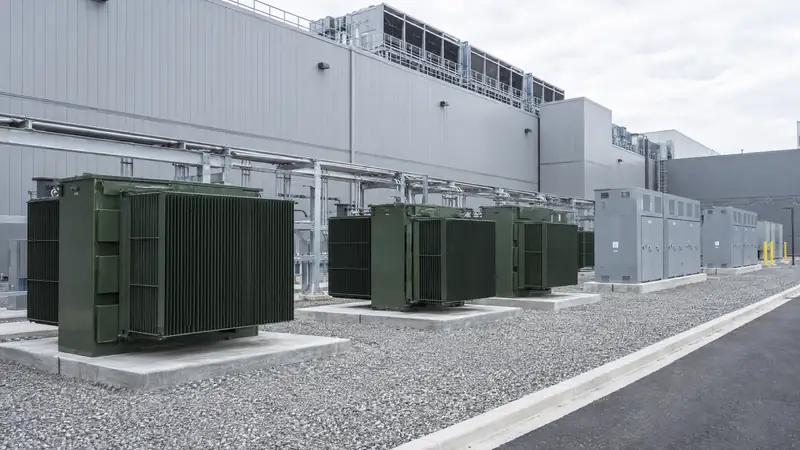
Technology campuses, electronics and advanced manufacturing sites may have dry-type transformers, unit substations and medium-voltage distribution equipment. Data-center facilities may use larger distribution units and power transformers; Santa Clara is a significant data-center location. Silicon Valley Power’s pause on new data-center electrical-load applications remains an important constraint, but it does not determine whether an existing transformer can be considered for purchase.
Port, warehouse and rail-linked distribution operations can have pad-mounted or other distribution transformers, as well as equipment serving specialized industrial loads. Food and beverage production, precision machining, packaging and bioscience facilities may also have dry-type or liquid-filled units. Tell us what the unit served and whether it is installed, removed, spare or new-surplus; do not assume a particular type is accepted without review.
- Data-center distribution and power units
- Pad-mount and pole-mount transformers
- Dry-type and medium-voltage units
- Substation and station-class transformers
Data-center equipment and project changes
A data-center transformer’s rating, voltage, phase, cooling, test records and condition help determine its potential fit. See the guide to data center transformers for equipment details buyers may review.
04Bay Area cities and industrial corridors we cover
Coverage includes the listed cities in Santa Clara, San Francisco, Alameda and Sonoma counties. City pages provide more local context for sellers with a particular facility or transformer location:
- San Jose, CA — technology, hardware, electronics and manufacturing.
- San Francisco, CA — production, food and specialized manufacturing.
- Oakland, CA — port logistics, warehousing and transloading.
- Fremont, CA — advanced manufacturing, electronics and clean technology.
- Hayward, CA — manufacturing, food production, logistics and bioscience.
- Santa Rosa, CA — machining, fabrication, electronics and food processing.
05What to send for a Bay Area transformer review
Start with clear photos of the nameplate and the outside of the equipment, taken only from a safe position and where you are authorized to access it. Include the quantity, facility location and known condition. You can call or text Rocky at (951) 403-5738, or submit the details through the website.
Useful nameplate details include manufacturer, serial number, year, kVA or MVA rating, phase, primary and secondary voltages, taps, impedance, cooling class and fluid type. Test reports, PCB or fluid records, ownership information and site-access details can help answer follow-up questions. If you are comparing equipment by rating, the transformer kVA size guide explains common ratings.
- Nameplate and overall equipment photos
- Quantity and exact site location
- Known operating or storage condition
- Test and environmental documentation
- Confirmation you own or may sell it
06How pickup and hauling work in the Bay Area
Once Rocky has reviewed the equipment and any follow-up details, a written offer states the price, what is included, who handles loading or rigging and freight, and payment terms. If the parties proceed, removal is scheduled under those written terms. Reviewing a transformer costs nothing and creates no obligation.
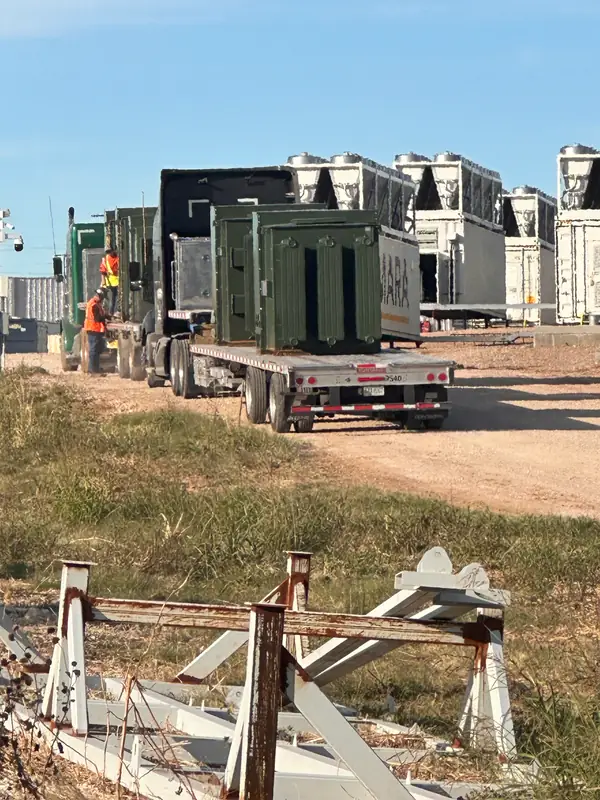
Access and hauling needs depend on the unit’s dimensions and weight, its location, loading conditions and the route. Bay Area sites may be reached through corridors such as US-101, I-880, I-580, I-80 and I-680, but the actual route and site access must be assessed for the specific load. Oversize or overweight moves may require Caltrans permits on state highways and separate local approvals. See transformer removal and pickup planning for more on coordinating these requirements.
- Agree on loading and freight responsibilities in writing
- Coordinate access and removal with site representatives
- Use qualified electrical contractors or the serving utility for isolation and disconnection
07Utility ownership, safety and environmental records
A property owner cannot sell utility-owned equipment simply because it is located on the property. Confirm ownership or authority to sell before requesting an offer. Equipment must be isolated and disconnected by the owner’s qualified electrical contractor or serving utility; sellers should not open compartments, move equipment or attempt electrical work.
For oil-filled transformers, provide available PCB labels, test results and oil or environmental records. PCB status can depend on testing and qualifying documentation, and California has additional rules for PCB-containing oil. Do not infer environmental classification from appearance or age alone. Rely on records, testing and qualified environmental professionals for determinations; this information is general and not legal advice.
FAQSelling a Transformer in San Francisco Bay Area: FAQ
Does California Transformer Buyer purchase one transformer, or only large lots?
A seller can submit one transformer for review; a full yard or mixed lot can also be considered. There is no promise that every unit will receive an offer. Share ratings, condition, quantity and location so Rocky can assess the specific equipment and any removal requirements.
What if my transformer has no readable nameplate?
Send the clearest exterior and label photos available, along with any records that identify the unit, such as purchase documents, drawings, prior test reports or maintenance files. Do not open or access equipment compartments to search for information. Missing specifications may limit what can be established, and the buyer may ask follow-up questions before deciding whether to make an offer.
Can I sell a transformer that is still connected to the utility?
First establish who owns the equipment and who has authority to sell it. A utility transformer on private property may still belong to the utility, in which case the property owner cannot sell it. Any required isolation or disconnection must be handled by the owner’s qualified electrical contractor or the serving utility, not by the seller.
Will a used or damaged Bay Area transformer be considered?
Used equipment is within the types California Transformer Buyer reviews, but purchase decisions depend on the specific unit. Provide an honest description of leaks, corrosion, damaged bushings, missing components, test results and storage conditions. For a failed or leaking unit, environmental status and handling requirements may need review by qualified professionals before a transaction or removal can be planned.
Does Silicon Valley Power’s data-center load pause prevent selling an existing transformer?
The pause concerns new data-center electrical-load applications and is an important planning constraint in Santa Clara. It does not by itself establish the condition, ownership, resale potential or removal requirements of an existing transformer. Submit the unit’s specifications and site details for an individual review, and confirm project or utility requirements with the relevant parties.
How do I start if I am searching for a local transformer buyer?
Call or text (951) 403-5738, or send information through the website form. Include nameplate and exterior photos, the quantity, location and known condition. For a broader guide to the process, visit how to sell a transformer near you. Rocky may request additional ownership, testing, fluid or access records before preparing written terms.