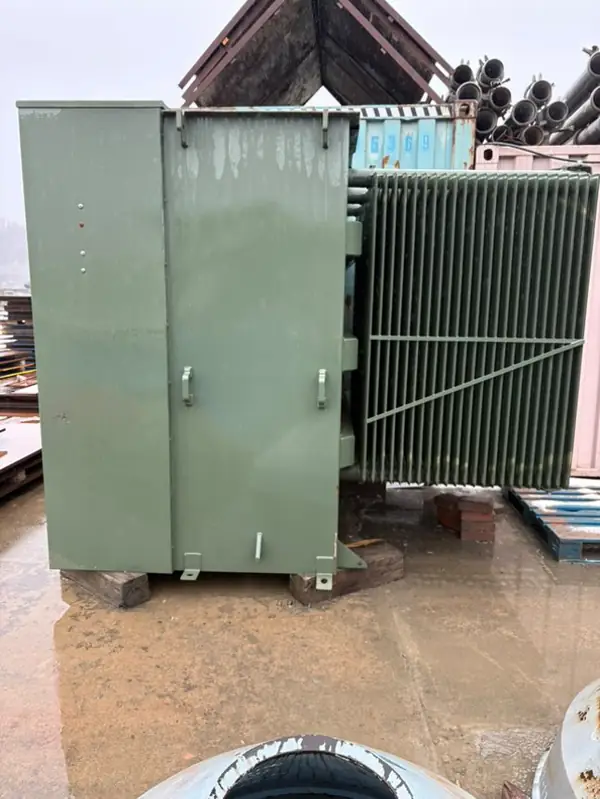
01What a Three-Phase Pad-Mount Transformer Looks Like
A three-phase pad-mount transformer is a ground-mounted unit used on underground electrical distribution systems. Its tank and locked cabinet contain separate primary and secondary cable compartments, keeping the connections enclosed during normal service. California Transformer Buyer reviews used and surplus units of this type throughout California.
Look for a three-phase nameplate and a compartmental cabinet mounted on a concrete pad or similar base. Nameplate fields commonly include kVA, primary and secondary voltage, phase, frequency, impedance, cooling class, fluid type and a connection diagram. Do not open compartments to identify the transformer; take photographs only from a safe position and where you are authorized to access the equipment.
For a broader overview of the equipment category and selling process, see our [Pad Mount Transformer Buyer](/) guide at Pad Mount Transformer Buyer.
02Where These Transformers Serve California Facilities
Pad-mounted three-phase units step medium-voltage underground distribution down to the voltage used by a building, campus, industrial process or other load. Applications include large commercial properties, schools, hospitals, factories, warehouses, renewable-energy collection systems and data centers. They may also serve as spares or project equipment awaiting installation.
Common secondary configurations include 208Y/120 V and 480Y/277 V; 240 V delta and 480 V delta units are also found. Medium-voltage secondaries such as 4.16 kV or 13.8 kV exist for specialized applications. California primary systems vary by service territory and project: 12 kV, 16 kV, approximately 21 kV and 33 or 34.5 kV equipment may be encountered. The actual nameplate and system requirements—not a general regional assumption—determine compatibility.
Solar, battery-storage and other projects may use pad-mounted units as part of collection or service equipment. A transformer’s presence on a property does not establish ownership: utility-owned equipment cannot be sold by the property owner. Qualified electrical contractors handle electrical work and coordination with the serving utility.
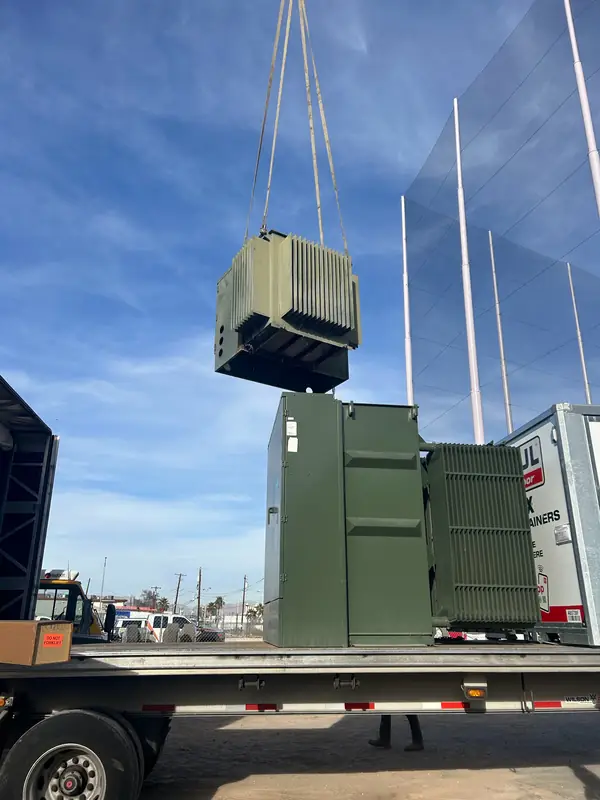
kVACommon Three-Phase Pad-Mount Sizes We Buy
03Three-Phase Pad-Mount Transformer Sizes and Voltages
Common commercial and utility capacities run from about 45 to 2500 kVA. Larger industrial and renewable-energy units are available in ratings such as 3000, 3750, 5000, 7500 and 10000 kVA. Standard three-phase pad-mount scope reaches 10 MVA, with larger custom equipment also possible.
A unit’s capacity alone does not establish whether it fits a project or has resale demand. Buyers compare the complete voltage and connection details, taps, impedance and configuration. For examples at specific ratings, see 500 kVA Transformers, 2000 kVA Transformers, 3750 kVA Transformers and 10 MVA Transformers.
| Capacity group | Typical context | Details to verify |
|---|---|---|
| 45–2500 kVA | Commercial and utility units | Primary, secondary and connection |
| 3000–5000 kVA | Larger industrial or renewable loads | Cooling stages and switching |
| 7500–10000 kVA | Large project or collection service | Dimensions and transport requirements |
| Above 10 MVA | Larger custom equipment may exist | Full configuration and application |
04Loop Feed, Radial Feed, Dead-Front and Live-Front
Feed arrangement and front construction are separate attributes, so report both when you request an offer. A radial-feed unit normally has three high-voltage cable positions, while a loop-feed unit normally has six—two per phase—to allow incoming and outgoing primary cable connections.
Loop feed does not by itself mean the transformer has a loadbreak switch or is a ring-main unit. Dead-front construction uses shielded separable elbows; live-front construction has exposed energized high-voltage bushing or terminal arrangements inside the cabinet. Dead-front does not mean safe to work on energized equipment.
Also report the interface and accessory details shown on the nameplate or records. Units may have 200 A loadbreak or 600 A deadbreak interfaces, along with different switch and fuse arrangements. Do not assume that every dead-front interface is loadbreak; verify the actual ratings and equipment.
05What Affects Resale Value and Buyer Interest
A buyer evaluates the whole unit, not just its kVA rating or brand. Voltage and connection, phase, taps, impedance, BIL, cooling class, temperature rise, winding material and fluid type can all affect its usefulness. Common California voltages and complete documentation may help establish potential applications, but no single feature guarantees an offer.
Condition and completeness matter. Leaks, corrosion, damaged bushings, missing parts, accessories, test results and whether the unit is used or new-surplus all inform the review. For an oil-filled transformer, fluid type and gallons, PCB records and available oil testing are relevant; for any unit, factory reports or field tests can help document condition.
Environmental status should be supported by testing, records and qualified environmental professionals. “Non-PCB” does not mean zero PCBs, and unknown equipment status should not be represented as confirmed. California’s rules for PCB-containing oil can differ from the general federal categories; the appropriate handling depends on documentation and testing. This information is not legal advice.
06What to Send for a Written Offer
To start a review, send clear nameplate and overall photos, the number of units, their California location and a description of known condition. Include the manufacturer, serial number, year, all kVA stages, primary and secondary voltage, connection, taps, impedance, cooling class and fluid details when visible. Never open the cabinet to get a photograph.
Test reports, PCB or fluid records, ownership information, accessories and site-access details help answer follow-up questions. If a field is not known, say so rather than guessing. California Transformer Buyer reviews the information and provides a written offer when the equipment is suitable for consideration.
Call or text Rocky at (951) 403-5738, send photos by text, or use Sell Your Transformer to submit the details. The written offer states the price, what is included, who handles loading or rigging and freight, and payment terms and timing.
07Plan Removal With Qualified Electrical and Hauling Professionals
A pad-mounted transformer can be heavy and may be connected to underground cables, site equipment or utility infrastructure. The owner’s qualified electrical contractor or serving utility must handle de-energizing, isolation and disconnection. Sellers should not disconnect, open, drain, sample or move the equipment themselves.
Before pickup is scheduled, provide accurate site-access information and disclose nearby obstructions, restricted entry, surface conditions and any known rigging constraints. The written terms establish who handles rigging and freight before pickup. Large or unusually wide, tall or heavy loads may require transport permits or local approvals; the hauling professional should assess the route and load.
For details about how responsibilities are set out for pickup, see Transformer Removal & Pickup. Electrical contractors can coordinate the electrical work and utility requirements; our information for Electrical Contractors explains the kinds of equipment they may help a seller document.
08Why Owners, Contractors and Project Teams Sell These Units
A used three phase pad mount transformer may become available when a facility is upgraded, a project changes specifications, a spare is no longer required or equipment is removed from service. New-surplus units may be left over from a project, still unused and stored on skids or in crates. California Transformer Buyer considers used, removed, surplus and new-surplus transformers from sellers located in California.
Sellers may have one unit or a larger group of transformers to report. Reviewing the nameplate, condition, records, quantity and site logistics together helps determine whether a unit or mixed lot can be considered. There is no obligation to accept an offer; terms are provided in writing before pickup.
FAQThree-Phase Pad-Mount Transformer FAQ
Can I sell a transformer that is still connected or in service?
You can ask California Transformer Buyer to review it, but the buyer does not direct electrical work. The owner’s qualified electrical contractor or serving utility must handle any required isolation, de-energizing and disconnection. Do not open the cabinet or attempt to move the transformer to prepare it for sale. Start with photos taken from a safe position and information about ownership, condition and site access.
What if I cannot read the nameplate or it is missing?
Send clear photos of the overall unit and any remaining labels or diagrams, along with the approximate dimensions, known application and available records. Do not remove covers or access restricted compartments to find more information. A missing or unreadable nameplate can limit certainty about voltage, kVA and configuration, so test reports, purchase documents or maintenance records may help identify the equipment.
Does California Transformer Buyer consider new-surplus transformers?
Yes. New-surplus equipment includes transformers that have never been energized and may be crated or stored on skids. Describe the storage condition, packaging, quantity and any factory test documentation. Include photographs of the nameplate and exterior, but do not claim a unit is new-surplus unless its history supports that description. Each unit is reviewed individually.
Can a property owner sell a transformer that belongs to the utility?
No. The seller must own the transformer or have authority to sell it. Equipment located on private property may still be utility-owned, so confirm ownership before requesting an offer. If ownership is uncertain, check the property or project records and contact the serving utility as appropriate. California Transformer Buyer does not claim affiliation with or approval from any utility.
Does loop feed mean the transformer has loadbreak switching?
No. Loop feed describes the primary cable arrangement, which normally provides incoming and outgoing cable positions. It does not guarantee a loadbreak switch, and it does not make the unit a ring-main unit. Report the feed arrangement separately from dead-front or live-front construction, and provide the actual switch, fuse and interface details when available.
Will you review a transformer without test reports or PCB records?
You can submit the equipment information even if reports are unavailable. State clearly which records are missing and whether fluid or PCB status is unknown; do not describe an undocumented unit as tested or confirmed non-PCB. Testing, documentation and qualified environmental professionals are the basis for determining environmental status and appropriate handling. Available reports may help establish condition and suitability.