01Who Buys Transformers—and Which Buyer Fits Your Equipment?
Start by separating a reusable transformer from equipment that may need rebuilding or material recovery. A documented spare with intact accessories belongs in a different sales conversation than a leaking unit with fault damage. Age alone does not settle that distinction.
When deciding where to sell transformers, compare the buyer's intended use and written responsibilities—not just the offer. Buyers evaluate electrical compatibility, condition, transport requirements and whether they can reasonably place the equipment back into service. Our guide to electrical transformer buyers provides another starting point for comparing options.
| Buyer route | Best starting fit | Main tradeoff |
|---|---|---|
| Equipment buyer or dealer | Reusable used or surplus equipment | Demand depends on exact specifications |
| Rebuilder | Repairable units with useful components | Repair scope affects the offer |
| Scrap buyer | Failed or uneconomic equipment | Reusable equipment value may be overlooked |
| Marketplace or broker | Seller seeking wider buyer exposure | Seller must clarify fees and responsibilities |
| Auction house | Mixed lots or scheduled liquidation | Timing, fees and outcome vary |
02Equipment Buyers and Rebuilders Look Beyond Age
Equipment buyers and dealers acquire transformers for resale or placement with another user. They usually want the actual kVA or MVA rating, voltage combination, phase, impedance, cooling class and condition. A 1000 kVA pad-mounted unit with a 480Y/277 V secondary is not interchangeable with every other 1000 kVA transformer.
For sellers asking who buys used transformers, an equipment buyer is often a sensible first conversation when the unit was operating before removal or has credible service records. California Transformer Buyer reviews previously energized units, removed equipment and spares; see our used transformer buying information. Purchase suitability remains unit-specific.
Rebuilders may consider units needing repairs, replacement accessories or more extensive refurbishment. Their evaluation can focus on core-and-coil condition, winding damage, tank integrity and the availability of replacement bushings or controls. Repair costs and testing uncertainty can limit what makes sense to acquire.
Never-energized equipment deserves separate identification. Factory reports, storage records and a complete accessory inventory help distinguish genuine new-surplus transformers from used equipment that has merely been cleaned or repackaged.
03Utilities Are Usually Not a Buyback Route
Utilities generally procure equipment to their own specifications and approved purchasing requirements. Do not assume your serving utility will buy back a privately owned transformer simply because it once served a facility on that utility's system.
First establish ownership. Equipment on your property may belong to PG&E, SCE, SDG&E or a municipal utility; its location does not give you authority to sell it. Obtain ownership records and a utility release if applicable before offering equipment to anyone.
Utility service territory also does not establish the transformer's exact voltage. California systems include different primary configurations, and taps or connections matter. Use the readable nameplate rather than describing a unit only as suitable for a particular utility.
04Scrap Yards, Marketplaces, Auctions and Brokers
These routes serve different purposes. A scrap transaction focuses on material recovery; a marketplace connects parties; an auction sets a sale event; and a broker seeks or negotiates with prospective buyers. None eliminates the need to verify ownership, condition and removal responsibilities.
Scrap buyers for failed or uneconomic units
Scrap buyers may evaluate winding material, recoverable metal, fluid status and handling costs. If you are asking who buys old transformers, do not assume old means scrap: a serviceable configuration can still merit equipment review. For damaged units, our scrap and failed transformer page explains the information to provide.
Online marketplaces and auction houses
Marketplaces can expose equipment to more prospective buyers, but the seller may need to manage technical questions, buyer screening and collection arrangements. Auction houses can fit mixed lots or a scheduled facility clearance. Check commissions, buyer charges, reserve conditions, payment arrangements and deadlines before committing to either route.
Brokers and direct end users
A broker may help locate a project needing your configuration, while a direct end user may already know its required rating and connections. Ask whether the broker is purchasing the unit or representing another party. Put any commission, exclusivity period and responsibility for inspection or freight in writing.
05What Buyers Need to Evaluate Your Transformer
A clear equipment record reduces uncertainty more effectively than a long sales description. Take photographs only from a safe position where you are authorized to be. Do not open compartments to obtain information; compartment access requires qualified personnel and proper electrical safety procedures.
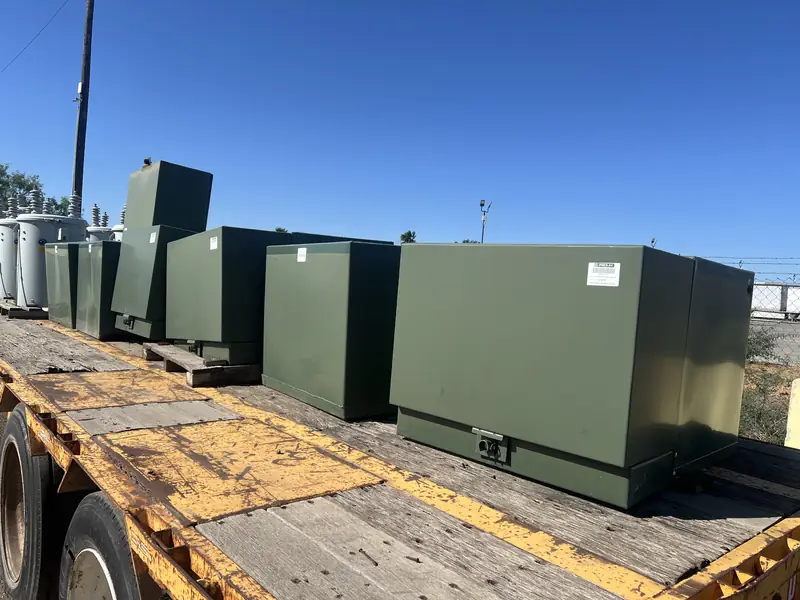
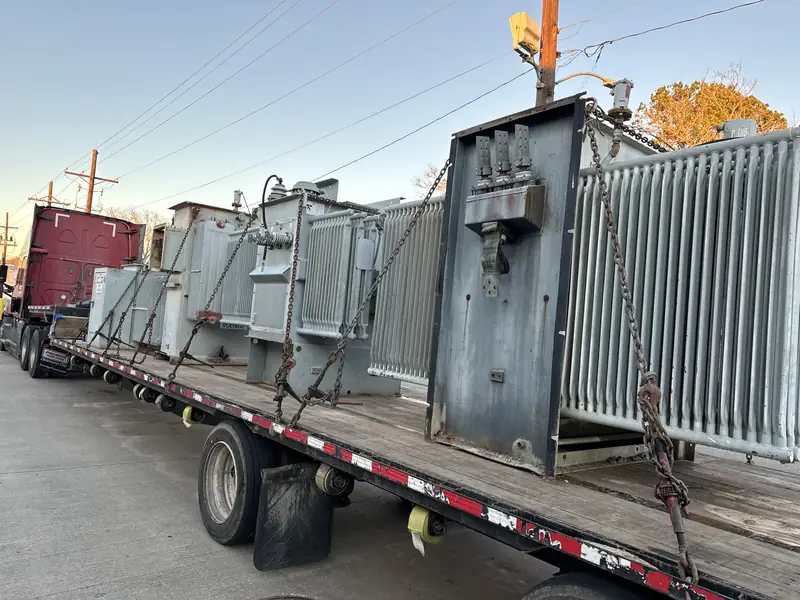
For a pad mount or padmount unit, include the cabinet exterior and accessible nameplate. Larger station-class equipment needs clear identification of each cooling-stage rating, such as 12/16/20 MVA, rather than only the highest number. Our substation transformer buying page addresses these larger assemblies.
- Ownership or authority to sell, utility release if applicable, quantity and exact California location.
- Readable straight-on nameplate photo: manufacturer, serial number, year, kVA/MVA, phase, frequency, HV/LV connections, taps, impedance and BIL.
- External photos of all sides, radiators, bushings, valves, cabinet exterior, accessory plates and ground-level clearances.
- Reported energized or de-energized status, disconnected condition, last operating date and storage conditions.
- Known leaks, corrosion, damage, repairs, missing accessories and overload, fault or flood exposure.
- Available factory and service reports, including turns ratio, winding resistance, insulation, appropriate dielectric tests, and liquid/PCB or DGA records where applicable.
- Dimensions, operating and shipping weights, documented lifting points, crane or forklift access and removal obligations.
06Compare Written Terms, Not Just Buyer Claims
Companies that buy transformers may structure offers differently. One offer may cover the transformer and accessories with clearly assigned freight obligations; another may leave loading, removal or disposal costs unresolved. Compare the complete transaction rather than treating each stated amount as equivalent.
Common California configurations can be easier to place, but specifications and condition still control the evaluation. For example, 12 kV-class equipment with 208Y/120 V or 480Y/277 V secondaries must still match the intended application's connections, impedance and other requirements. Our guide to transformer value factors explains these distinctions.
Red flags are reasons to pause and clarify—not proof that every unfamiliar buyer is dishonest. Verify who is contracting with you and refuse to substitute verbal assurances for written obligations.
- No written offer or unclear payment timing.
- Upfront fees without a defined service, scope or refund policy.
- Vague responsibility for isolation, rigging, loading, freight or site damage.
- Pressure to release equipment before agreed payment conditions are met.
- Claims that missing fluid records or ownership documentation do not matter.
07California Fluid Rules and Heavy-Haul Planning
Fluid documentation can affect both buyer acceptance and the lawful handling pathway. Under federal TSCA classifications, non-PCB means below 50 ppm, PCB-contaminated means 50 to below 500 ppm, and a PCB Transformer contains 500 ppm or more. A non-PCB designation does not mean zero PCBs; unknown-status equipment may require presumptions until testing or qualifying documentation establishes its status.
California has stricter rules for PCB-containing oil. Oil containing 5 ppm or more PCBs is excluded from California's used-oil category under Health and Safety Code 25250.1. That does not mean every transformer at 5 ppm is automatically hazardous waste; the correct pathway depends on testing, documentation and the applicable waste determination.
Used oil is generally managed as hazardous waste in California unless an exclusion or recycling pathway applies. Registered hazardous-waste transporters and manifests are required when regulated used oil or waste is hauled. A working transformer sold for reuse is equipment, but leaking units, drained oil and failed equipment need proper determination. Rely on qualified environmental professionals; this is not legal advice.
Shipping also needs advance planning. Caltrans permits can be required for state-highway loads exceeding common limits such as 8 feet 6 inches wide, 14 feet high or 80,000 pounds gross; local roads may require separate approvals. Review transformer removal and pickup considerations before accepting terms that leave heavy-haul responsibilities uncertain.
08Request an Offer from California Transformer Buyer
Call or text Rocky at (951) 403-5738 with the quantity, California location, condition and available nameplate and overall photos. California Transformer Buyer is based in Riverside County and serves sellers statewide, including single units, project leftovers and mixed lots.
Rocky reviews the information and may request test reports, fluid records, ownership confirmation or access details. Reviewing your transformer costs nothing and there is no obligation. You can also submit transformer details for an offer through the website.
If an offer is made, the written terms identify what is included, who handles loading or rigging and freight, and payment terms and timing. Removal and payment follow those agreed terms. Electrical isolation and disconnection belong to your qualified electrical contractor or serving utility—not an unqualified seller.
FAQWho Buys Transformers? FAQ
Can I sell a transformer while it is still energized?
You can start an evaluation while equipment is still energized, provided you have authority to sell it and accurately report its status. Safe exterior photographs and existing records can support the initial review. Any isolation or disconnection must be handled by your qualified electrical contractor or serving utility, with backfeed from solar, batteries or generators considered.
Will a buyer consider a transformer without recent test reports?
Missing reports do not automatically end the conversation, but they increase uncertainty. Provide the records you have and disclose the last operating date, known problems and storage history. A buyer may request additional documentation or qualified testing before deciding whether to offer. Do not perform testing or fluid sampling yourself to complete a sales inquiry.
Does the manufacturer determine whether my transformer can sell?
The manufacturer helps verify specifications and identify components, but rating, configuration and condition generally matter more. A recognizable brand cannot overcome an unsuitable voltage combination, serious damage or incomplete accessories. Send the serial number and full nameplate rather than relying on the brand alone, especially when comparing apparently similar units.
Should I offer a mixed yard as one lot or separate units?
Start with an inventory identifying each unit's rating, voltage, condition and location within the site. Separate records let buyers distinguish reusable equipment from failed or incomplete units. California Transformer Buyer reviews mixed lots and full yards as well as single units. Ask for written terms that clearly identify every included unit and accessory.
Do newer efficiency rules prohibit selling my older transformer?
DOE distribution-transformer efficiency standards apply to manufacture; they do not make existing used or surplus transformers illegal to resell. Suitability for a particular project remains a separate question involving the equipment's ratings, condition and project requirements. Buyers still need the manufacturing year and actual nameplate information to evaluate the unit accurately.
What if I need the site cleared by a fixed deadline?
Disclose the deadline before requesting an offer, along with access restrictions, contractor schedules and any restoration obligations. A site-clearance deadline can affect which sale route is practical, especially for large units needing permits or specialized rigging. Ask prospective buyers to address scheduling in writing rather than assuming an offer includes removal by your required date.