01How to Sell a Transformer: Start With Ownership and Records
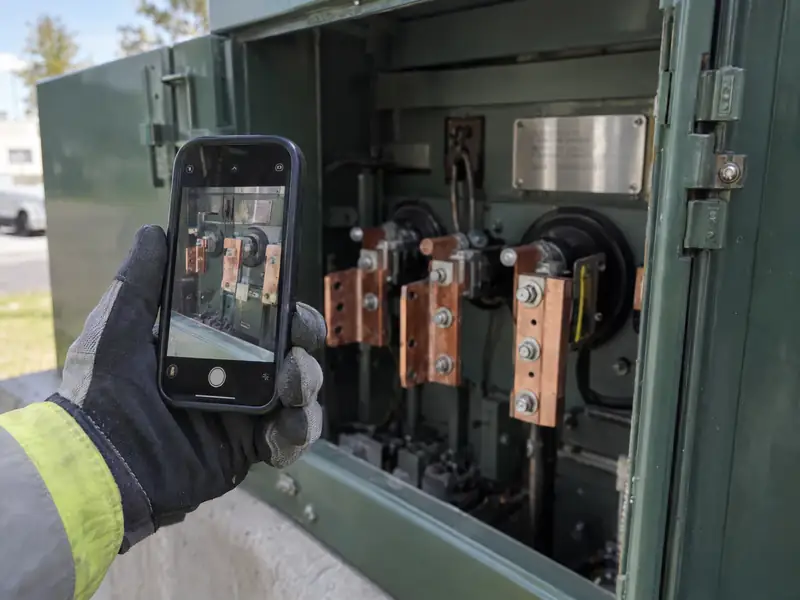
Before requesting an offer, confirm that you own the transformer or have authority to sell it. A transformer serving your building may belong to the utility; its location on your property does not establish ownership.
Next, gather existing records and photos taken from a safe, authorized position. The step-by-step transformer selling guide explains the sequence from initial inquiry through written terms and pickup. You do not need every specification before contacting Rocky, but missing information may require follow-up.
- Provide the California city and quantity available.
- Identify used, never-energized, spare or failed units.
- Describe known damage, missing parts and leaks.
- State whether equipment remains installed or is already removed.
DIRAll Seller Guides
- How to Sell a Transformer: Step-by-StepA California seller’s guide to transformer photos, ownership records, evaluation, written terms, pickup and payment.
- How Much Is My Used Transformer Worth?Learn how transformer ratings, condition, testing, PCB documentation and removal requirements affect resale versus scrap value.
- How to Read a Transformer NameplateA field-by-field nameplate guide for California sellers, covering electrical ratings, cooling, fluid records and shipping weights.
- PCB Transformers in California: What Sellers Should KnowUnderstand PCB classifications, California oil rules and the records buyers need before reviewing a transformer for resale.
- Transformer Oil Testing (DGA) and Resale ValueLearn how DGA, oil-quality tests, and PCB documentation affect a California transformer buyer’s assessment of resale potential.
- What Photos to Send for a Transformer QuoteA practical photo checklist for transformer quotes, covering nameplates, condition, safe compartment access and pickup planning.
- Pad-Mount vs Pole-Mount vs Substation TransformersCompare transformer construction, ratings, connections, and resale considerations before selling equipment in California.
- Dry-Type vs Oil-Filled TransformersCompare dry-type and oil-filled transformer construction, applications, resale factors, documentation and California handling requirements.
- The Transformer Shortage and What It Means for SellersHow transformer supply constraints affect California sellers, equipment demand, documentation and written sale terms.
- Decommissioning a Substation TransformerPlan a California substation transformer retirement with practical guidance on outages, PCB records, transport preparation and sale terms.
- Transformer Removal Checklist for Facility ManagersPlan transformer removal with checks for electrical safety, access, rigging, fluid records, permits and written sale terms.
- Copper vs Aluminum Transformer WindingsLearn how to verify winding material and understand its effect on transformer performance, repair options and resale or scrap value.
- Transformer Cooling Classes Explained (ONAN, ONAF, AA, FA)Decode liquid-filled and dry-type cooling codes, staged kVA ratings, temperature rise and cooling equipment before selling.
- FR3 Natural Ester vs Mineral Oil TransformersCompare FR3 and mineral-oil transformers by fire performance, compatibility, environmental records and California resale requirements.
- DOE Efficiency Standards and Used TransformersUnderstand DOE efficiency dates, covered transformer types and the records California sellers need for used and surplus equipment.
- New vs Used vs Rebuilt TransformersCompare transformer condition categories, testing, warranties and lead times, and learn which records help California sellers.
- Transformer kVA and Amps: How to Size and Read RatingsCalculate transformer amps from kVA, understand nameplate ratings, and prepare accurate specifications for a California sale.
- Can You Sell a Utility-Owned Transformer? Ownership ChecklistCheck transformer ownership, utility records and seller authority before offering equipment for sale in California.
- Selling Surplus Transformers After a ProjectA California contractor’s guide to documenting, storing, and selling project-surplus transformers before closeout costs grow.
02Understand Transformer Value Before Comparing Offers
Transformer value depends on electrical suitability, condition and the cost of getting equipment to its next use. A 1000 kVA pad-mounted transformer with documented ratings and usable accessories presents a different resale opportunity from an incomplete unit with uncertain fluid history.
Buyers consider phase, voltages, connections, impedance, cooling, winding material and test records—not just weight or age. The guide to used transformer value explains these factors. Site access, rigging and freight also affect the transaction, so compare the complete written terms rather than an isolated offer figure.
- New-surplus status should be supported by storage and service history.
- Common configurations may be easier to place, but demand is unit-specific.
- Brand helps verify specifications; rating and condition remain central.
03Read the Nameplate Without Guessing at Ratings
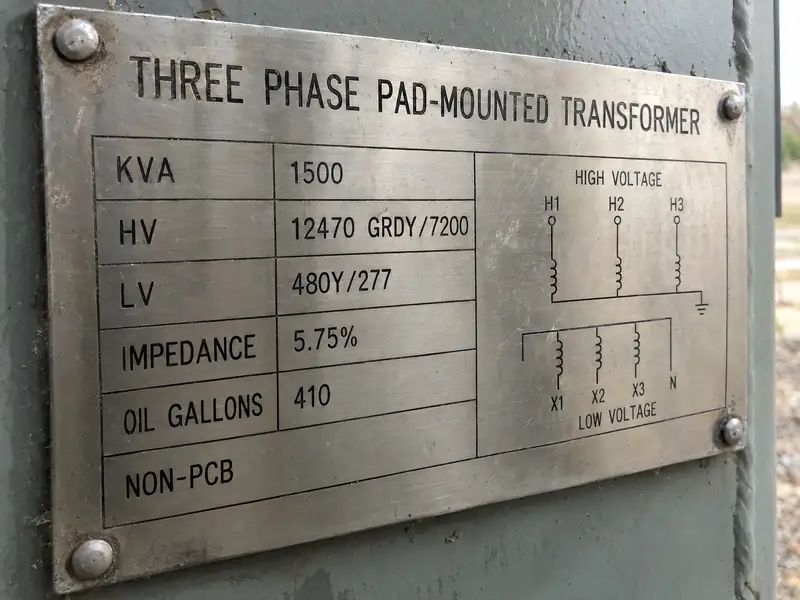
A transformer nameplate establishes much of what a buyer needs to evaluate. Photograph it only if visible from a safe position without opening compartments. Existing drawings or test reports can help when the plate is inaccessible or unreadable.
Use the transformer nameplate reading guide to distinguish primary voltage, secondary voltage, taps and connections. For example, 480Y/277 V describes a wye secondary, while 12,470GrdY/7,200 V identifies a grounded-wye primary rating. Record the actual plate information rather than substituting a local utility's nominal system voltage.
| Field | What to capture |
|---|---|
| Identity | Manufacturer, serial number and year |
| Capacity | kVA or MVA, including all cooling stages |
| Electrical ratings | Phase, HV/LV voltages, taps and connections |
| Design details | Impedance, BIL, cooling class and temperature rise |
| Handling and fluid | Listed weights, fluid type and gallons |
04Prepare Photos That Show Condition and Configuration
Useful photos show the entire unit, readable identification and visible condition. For a pad mount or padmount unit, exterior views help establish cabinet condition; for a substation or station-class transformer, views of radiators, fans and visible accessories help identify what is included.
The transformer quote photo checklist helps organize an inquiry without unnecessary site visits. Include safe views of the surrounding access route when possible, but do not approach exposed equipment or open doors to obtain a better picture.
- Label photos by unit when selling a mixed lot.
- Show visible rust, damaged bushings or missing accessories.
- Include stored parts and packaging if safely accessible.
05Separate PCB Documentation From Electrical Test Results
For a PCB transformer California sellers need testing and documentation, not assumptions based on appearance. Federal classifications distinguish non-PCB equipment below 50 ppm, PCB-contaminated equipment from 50 to below 500 ppm, and PCB Transformers at 500 ppm or more. “Non-PCB” does not mean zero PCBs.
California has stricter rules for PCB-containing oil: oil containing 5 ppm or more PCBs is excluded from the state's used-oil category. That is not a blanket statement that every transformer at 5 ppm is hazardous waste. Read the California PCB transformer seller guide and rely on qualified environmental professionals for the appropriate determination; this is not legal advice.
Electrical condition is a separate question. The transformer oil testing and DGA guide explains how existing reports can inform resale review. Dissolved gas analysis can reveal operating concerns, but it does not establish PCB concentration. Any sampling should be handled by qualified professionals.
06Plan Removal Around Electrical Safety and Site Access
A transformer removal guide should begin with responsibilities, not lifting instructions. The owner's qualified electrical contractor or serving utility handles de-energizing and disconnection. Solar, battery and generator backfeed must also be considered by qualified personnel.
Provide available dimensions, listed weight and known access restrictions. Stairs, narrow gates, overhead obstructions or a below-grade vault can materially change removal planning. Large station-class equipment may need specialized transport planning and permits.
Review transformer removal and pickup considerations before agreeing to a schedule. Written terms should identify who handles rigging, loading and freight. Do not drain, disconnect or move equipment yourself to prepare it for sale.
07Turn Your Records Into a Written Offer Request
California Transformer Buyer reviews single units through full yards of used, removed, decommissioned and new-surplus transformers located in California. Rocky may ask for test reports, fluid records, ownership confirmation or access details before completing the review.
Call or text (951) 403-5738, or submit transformer details for an offer review. Reviewing your transformer costs nothing and there is no obligation. A written offer states the purchase amount, included equipment, loading and freight responsibilities, and payment terms and timing before pickup.
FAQSeller Guides FAQ
Can I request an offer if I cannot read the nameplate?
Yes. Send safe overall photos, the location, quantity and whatever records you have. Purchase documents, drawings or factory test reports may help identify the unit. Explain that the nameplate is unreadable or inaccessible rather than estimating ratings. Rocky can identify what additional information is needed; do not open equipment to find it.
Does an old non-PCB label replace a current fluid test?
A label is useful documentation, but its significance depends on the equipment's history and applicable requirements. Fluid replacement, servicing or incomplete records can leave questions unresolved. Unknown-status equipment may be subject to federal assumptions until testing or qualifying documentation establishes concentration. Have qualified environmental professionals evaluate the records and any testing needs.
Should I repair a leaking or damaged transformer before asking for an offer?
Describe the problem and provide existing records before committing to repairs solely for resale. Repair cost does not necessarily translate into equivalent resale value. Leaking or failed equipment also requires proper environmental determination. Any inspection, containment or repair should be handled by qualified personnel, not performed by a seller to improve an offer.
Are older transformers illegal to resell because of DOE efficiency rules?
DOE distribution-transformer efficiency standards apply to manufacture; they do not automatically make existing used or surplus equipment illegal to resell. Whether a particular unit suits a new project still depends on its ratings, condition and project requirements. Provide its manufacture date and specifications so the buyer can evaluate it accurately.
Can I sell several different transformer types in one inquiry?
Yes. California Transformer Buyer reviews mixed lots as well as single units. Create a simple inventory with a separate identifier for each transformer, then match photos and records to that identifier. List quantities, locations and service status so a never-energized spare is not confused with a previously energized or failed unit.
What if the transformer is still supplying my facility?
State that it remains in service and explain the anticipated replacement or shutdown schedule. An inquiry can begin with available records, but pickup must be coordinated around qualified electrical work and agreed responsibilities. Do not interrupt service or disconnect equipment for an evaluation. Make sure the written terms reflect the actual site schedule.