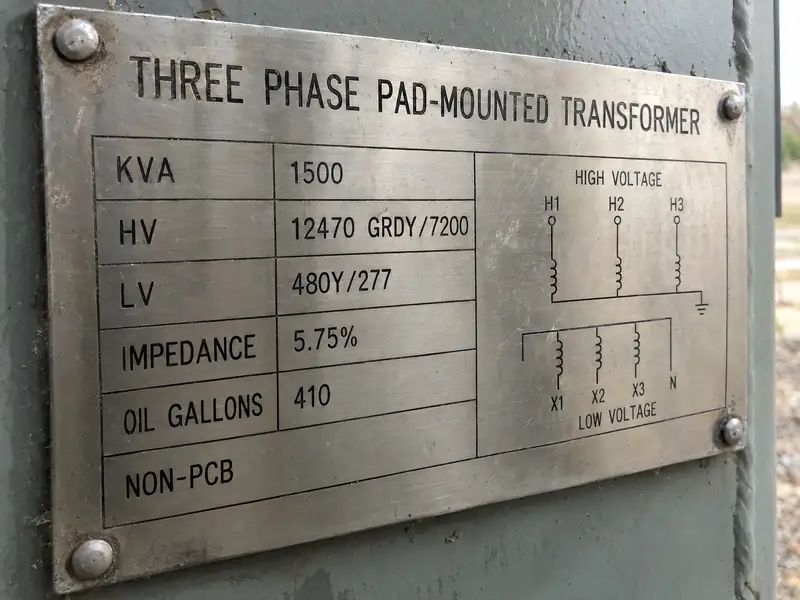
01What Transformer kVA Sizes Actually Measure
Transformer kVA sizes express how much apparent power a unit can carry under its specified operating conditions. They do not tell you tank dimensions, shipping weight or how much real power a connected load consumes.
kVA means kilovolt-amperes; MVA means megavolt-amperes. A 1,000 kVA transformer is rated 1 MVA, while a 50 MVA unit is rated 50,000 kVA. For a load, real power in kW equals kVA multiplied by power factor.
The same capacity can appear in very different equipment. A dry-type indoor unit, outdoor pad-mounted transformer and station-class transformer require different evaluations. Our guide to transformer types explains those differences.
ALLEvery kVA and MVA Size We Buy
Single-phase ratings
- 3 kVA
- 5 kVA
- 10 kVA
- 15 kVA
- 25 kVA
- 37.5 kVA
- 50 kVA
- 75 kVA
- 100 kVA
- 167 kVA
- 250 kVA
- 333 kVA
- 667 kVA
- 833 kVA
- 1667 kVA
- 3333 kVA
Three-phase ratings
- 3 kVA
- 15 kVA
- 30 kVA
- 45 kVA
- 75 kVA
- 112.5 kVA
- 150 kVA
- 225 kVA
- 250 kVA
- 300 kVA
- 500 kVA
- 750 kVA
- 1000 kVA
- 1250 kVA
- 1500 kVA
- 2000 kVA
- 2500 kVA
- 3000 kVA
- 3750 kVA
- 5000 kVA
- 7500 kVA
- 10 MVA
- 12 MVA
- 15 MVA
- 20 MVA
- 25 MVA
- 30 MVA
- 37500 kVA
- 50 MVA
- 60 MVA
- 75 MVA
- 100 MVA
- 3 kVA TransformersLearn which 3 kVA transformers may interest a California buyer, what affects their value and what information to send for an offer.
- 5 kVA TransformersLearn which 5 kVA transformer types may be marketable, how to read the amps chart, and what information to send for an offer.
- 10 kVA TransformersLearn how to identify, value and sell a used or surplus 10 kVA transformer in California.
- 15 kVA TransformersLearn which 15 kVA transformer types fit this rating, what affects resale value and what to send California Transformer Buyer for an offer.
- 25 kVA TransformersLearn which 25 kVA transformers are commonly bought, what affects their value and what information to send for an offer.
- 30 kVA TransformersLearn which 30 kVA transformer types and configurations may fit your equipment, what affects resale value, and what to send for an offer.
- 37.5 kVA TransformersLearn which 37.5 kVA transformer types and nameplate details matter when requesting an offer in California.
- 45 kVA TransformersLearn what affects a 45 kVA transformer’s value and what information to send for an offer in California.
- 50 kVA TransformersLearn which 50 kVA transformer types and nameplate details matter when requesting an offer in California.
- 75 kVA TransformersLearn which 75 kVA transformer types and configurations are common, what affects resale value, and what information to send for an offer.
- 100 kVA TransformersLearn how to identify, evaluate and sell a used or surplus 100 kVA transformer in California.
- 112.5 kVA TransformersLearn how to identify, assess and request an offer for a 112.5 kVA transformer in California.
- 150 kVA TransformersIdentify a 150 kVA unit’s type, voltage, condition and records to request a written offer from a California buyer.
- 167 kVA TransformersLearn which 167 kVA transformer types and configurations are common, what affects resale value, and what information to send for an offer.
- 225 kVA TransformersLearn which 225 kVA transformer types, ratings and details matter when requesting an offer in California.
- 250 kVA TransformersLearn which 250 kVA transformer types and ratings buyers consider, what affects value, and what details to send for an offer in California.
- 300 kVA TransformersSell a California 300 kVA transformer with clear guidance on types, voltages, nameplate details and written offer terms.
- 333 kVA TransformersLearn how to identify, assess and request an offer for a 333 kVA transformer in California.
- 500 kVA TransformersLearn how to identify, evaluate, and offer a used or surplus 500 kVA transformer for sale in California.
- 667 kVA TransformersLearn what to check on a 667 kVA transformer, how its amp chart applies and what information to send for a California offer.
- 750 kVA TransformersLearn how to identify, value and sell a used or surplus 750 kVA transformer in California.
- 833 kVA TransformersLearn what an 833 kVA transformer is, what affects its value and what information to send for an offer in California.
- 1000 kVA TransformersLearn about 1000 kVA transformer configurations, nameplate ratings, value factors and what to send for an offer in California.
- 1250 kVA TransformersLearn how 1250 kVA transformer configurations, nameplate details and condition affect a potential offer in California.
- 1500 kVA TransformersLearn how to identify, assess and sell a used or surplus 1500 kVA transformer in California.
- 1667 kVA TransformersLearn how to identify, evaluate and submit a California-based 1667 kVA transformer for a written offer.
- 2000 kVA TransformersLearn what affects a 2000 kVA transformer's fit and value, and what details to send for a written offer.
- 2500 kVA TransformersLearn how to identify, value and sell a used or surplus 2500 kVA transformer in California.
- 3000 kVA TransformersLearn what affects a 3000 kVA transformer’s resale value and what information to send for a written offer in California.
- 3333 kVA TransformersLearn how to identify, assess and sell a used or surplus 3333 kVA transformer in California.
- 3750 kVA TransformersLearn about 3750 kVA transformer types, applications, nameplate details, value factors, and what California sellers should send for an offer.
- 5000 kVA TransformersLearn what a 5000 kVA transformer is used for, which nameplate details matter, and what to provide when requesting an offer in California.
- 7500 kVA TransformersSell a 7.5 MVA transformer in California with guidance on configurations, voltage ratings, condition records and offer requirements.
- 10 MVA TransformersLearn what affects a 10 MVA transformer’s fit and resale value, and what information to send for an offer in California.
- 12 MVA TransformersLearn how 12 MVA transformer ratings, designs, nameplate details and condition affect a potential sale in California.
- 15 MVA TransformersLearn which 15 MVA transformers are marketable, how to read their amp ratings and what information to send for an offer.
- 20 MVA TransformersLearn which 20 MVA transformer types are marketable, how to read the on-page amps chart, and what information to send for an offer.
- 25 MVA TransformersLearn which 25 MVA transformer types are common, how to read the page’s amp chart and what information to send for an offer.
- 30 MVA TransformersLearn which 30 MVA transformers are bought, what affects their value and what information to send for a written offer.
- 37500 kVA TransformersLearn about 37.5 MVA transformer types, ratings, nameplate details, value factors and what to send for an offer in California.
- 50 MVA TransformersLearn which 50 MVA transformer types are marketable, what affects value and what information to send for a California offer.
- 60 MVA TransformersSell a California-based 60 MVA power transformer with nameplate, testing and transport details that support an informed offer.
- 75 MVA TransformersLearn which 75 MVA transformers California Transformer Buyer considers and what information helps prepare an offer.
- 100 MVA TransformersLearn which equipment uses a 100 MVA rating, how to read its full-load amps chart and what information helps California Transformer Buyer assess your unit.
02Standard Transformer Sizes by Phase
Standard transformer sizes follow different rating series for single-phase and three-phase equipment. IEEE C57.12.00 addresses liquid-immersed distribution, power and regulating transformers; its rating framework is not a universal size list for every dry-type or specialty product.
This transformer size chart groups standard and commonly encountered ratings. Product-specific standards have narrower scopes: single-phase pad-mount standard scope reaches 250 kVA, while three-phase pad-mount scope reaches 10 MVA. Larger ratings can belong to other transformer families.
| Equipment group | kVA ratings |
|---|---|
| Small single-phase units | 3, 5, 10, 15, 25 |
| Single-phase distribution ratings | 37.5, 50, 75, 100, 167, 250 |
| Larger single-phase ratings | 333, 500, 833, 1,250, 1,667 |
| Smaller three-phase ratings | 15, 30, 45, 75, 112.5, 150, 225, 300 |
| Larger three-phase ratings | 500, 750, 1,000, 1,500, 2,000, 2,500 |
| Higher-capacity three-phase ratings | 3,750, 5,000, 7,500, 10,000; higher MVA ratings |
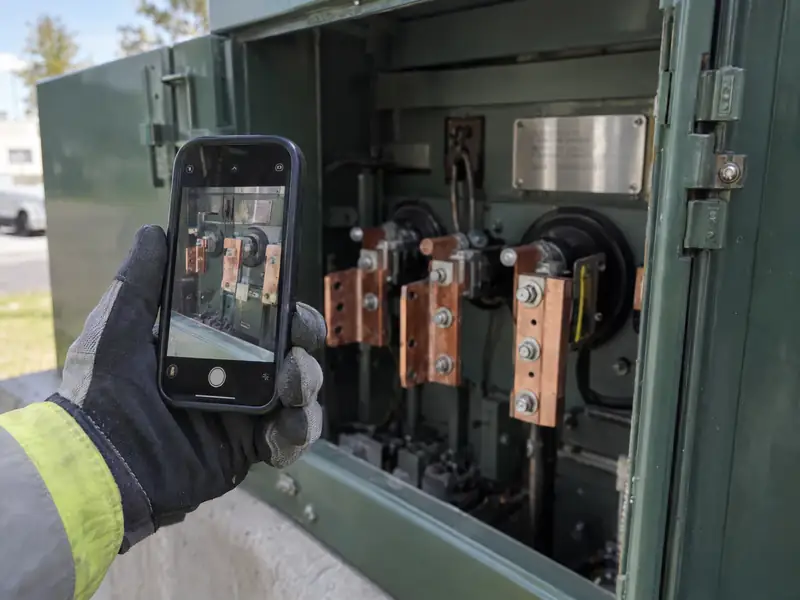
03Read the Complete kVA Rating on the Nameplate
Look for the field marked kVA or MVA, then record phase and the high- and low-voltage ratings. Keep decimal values intact: 37.5 kVA and 112.5 kVA are established ratings, not rounding errors.
A power transformer may show several capacities, such as 12/16/20 MVA with ONAN/ONAF/ONAF cooling stages. Those are different ratings under specified cooling conditions—not three separate transformers. Send all stages and identify whether fans or other cooling equipment are present.
Photograph only equipment you are authorized to access, from a safe position. Do not open compartments to find a plate. The transformer seller guides provide additional preparation information.
- Capture manufacturer, serial number and year.
- Include HV/LV voltages, phase and frequency.
- Show taps, connections, impedance and BIL.
- Include cooling class and temperature rise.
- Record listed fluid, weight and winding material.
04Convert kVA Ratings to Full-Load Amps
For single-phase equipment, full-load amps = kVA × 1,000 ÷ volts. For balanced three-phase equipment, full-load line amps = kVA × 1,000 ÷ (√3 × line-to-line volts). Use the voltage for the winding you are evaluating.
A 75 kVA single-phase unit at 240 V calculates to 312.5 A. A 75 kVA three-phase unit at 480 V calculates to about 90.2 A. Capacity alone therefore cannot establish current.
The transformer kVA chart and full-load amps chart below help compare ratings. These calculations are not breaker, conductor or protection-sizing instructions; those require a qualified electrical professional and applicable code.
05Why Voltage and Configuration Matter Alongside Size
Two 1,000 kVA transformers are not necessarily interchangeable. Primary voltage, secondary voltage, delta/wye connection, impedance, taps and physical arrangement must fit the intended installation.
Common California secondaries include 120/240 V single-phase and 208Y/120 V or 480Y/277 V three-phase. Primary configurations vary by utility territory and site. Use the actual nameplate rather than assuming all equipment in a territory has the same voltage.
Compare these details with our California transformer voltage guide. For outdoor distribution units, the pad-mount transformer buying page explains the configuration details needed for review.
06How Capacity Affects Demand and Resale Potential
A larger transformer does not automatically have greater resale potential. A usable rating with a common voltage combination, complete accessories and documented condition may fit more projects than a larger unit with an unusual configuration.
Buyers also evaluate test reports, winding material, age, leaks, damaged bushings and missing parts. For liquid-filled equipment, fluid and PCB documentation matter; sellers should rely on testing, documentation and qualified environmental professionals. This is not legal advice.
New-surplus status can help establish unused condition, but storage history still matters. See selling never-energized surplus transformers. Large MVA equipment also needs closer review of cooling stages, dimensions and transport access, covered on our substation transformer buying page.
07Send Rocky the Rating, Photos and California Location
California Transformer Buyer reviews single units and mixed lots from California sellers. Call or text Rocky at (951) 403-5738 with safe nameplate photos, overall photos, quantity, condition and location. You must own the equipment or have authority to sell it.
Use the transformer selling checklist to organize the details, or request a transformer offer through the contact form. Reviewing your transformer costs nothing and there is no obligation.
Any written offer states what is included, who handles loading or rigging and freight, and payment terms. Electrical isolation and disconnection belong to the owner's qualified electrical contractor or serving utility—not the seller acting alone.
FAQkVA Sizes FAQ
Can I sell a transformer with a nonstandard kVA rating?
A nonstandard rating is not automatically a reason to reject a unit. Specialty transformers may have capacities selected for a particular load or project. Send the complete nameplate and explain the original application if known. California Transformer Buyer evaluates the rating together with voltage, construction, condition and potential demand; purchase is not guaranteed.
Does a three-transformer bank use each unit's kVA or the total?
Report both the individual nameplate ratings and the bank arrangement, if documented. Three equal single-phase transformers in a conventional closed three-phase bank generally have a combined rating equal to their sum. Open-delta arrangements have different capacity limits. Do not infer bank capacity from the number of tanks alone; connection and engineering records matter.
Is the amperage chart a measurement of my actual load?
No. A full-load amps chart calculates current corresponding to rated apparent power at a stated voltage and phase. Actual operating current depends on the connected load and operating conditions. It also does not predict energization inrush or fault current. Existing load measurements and protection decisions should be reviewed by qualified electrical personnel.
Can a missing nameplate be replaced with dimensions or weight?
Dimensions and weight can help identify equipment, but they do not reliably establish kVA, voltage or connection. Send safely available exterior photos, manufacturer markings and existing purchase or test records. Do not open the transformer to investigate. Missing identification may limit evaluation because a buyer needs dependable electrical specifications.
Should I list a mixed lot by total kVA?
List each unit separately, then provide a lot summary. A combined kVA total hides differences in phase, voltages, condition and construction that affect reuse. Include quantity for identical units and match each nameplate photo to the correct transformer. Note which units were previously energized and which are documented new-surplus.