01What a Substation Transformer Buyer Evaluates
A substation transformer buyer needs more than the largest MVA number on the tank. California Transformer Buyer evaluates electrical compatibility, documented condition, included equipment and the practical cost of moving the unit. A usable transformer can still have a limited resale market if its connection, impedance or transport requirements do not fit another project.
Station-class units commonly connect utility or industrial voltage levels. The category includes smaller distribution-substation equipment around 1 MVA, commonly encountered 5–100+ MVA power transformers, and larger utility designs. “Station class” is market language, not a single rating cutoff.
Rocky reviews single units, spare transformers and mixed lots located in California. Used substation transformers, removed equipment and never-energized surplus need different supporting records. The substation and power transformer guide explains the equipment family in more detail.
02Report Every MVA Stage and the Exact Voltage Pair
Copy every rating from the nameplate rather than describing a transformer only by its maximum forced-air capacity. A 12/16/20 MVA ONAN/ONAF/ONAF plate describes one transformer operating at three specified cooling stages. Those ratings depend on the stated temperature rise, ambient conditions and supplied cooling equipment.
Voltage combinations encountered in California include 12 kV, 12.47 kV, 21 kV, 33 kV, 34.5 kV, 66 kV, 69 kV, 115 kV and 230 kV. These are not interchangeable. Report exact HV and LV voltages, winding connections, available taps, impedance and BIL; nominal system voltage alone is insufficient.
For context, SCE has a 66 kV subtransmission system, while SDG&E and SMUD use 69 kV systems. PG&E has 115 kV transmission/subtransmission. These examples do not establish compatibility or utility acceptance. See the 66 kV, 69 kV and 115 kV transformer guide for seller documentation considerations.
| Nameplate stage | Capacity | Cooling basis |
|---|---|---|
| ONAN | 12 MVA / 12,000 kVA | Natural oil circulation and natural air |
| First ONAF stage | 16 MVA / 16,000 kVA | Natural oil circulation and first fan stage |
| Second ONAF stage | 20 MVA / 20,000 kVA | Natural oil circulation and second fan stage |
03Tap Changers, Bushings and Cooling Equipment Affect Reuse
Identify whether the unit has a load tap changer, a de-energized tap changer, or both. An LTC changes ratio under load within its design limits; a de-energized tap changer requires qualified isolation before adjustment. Sellers should provide existing specifications and service records, not operate either device to demonstrate condition.
For an LTC, useful records include its manufacturer and model, operation count if documented, inspections, repairs and compartment fluid tests where applicable. A power transformer buyer also needs to know whether its controls and drive components are included. Main-tank DGA does not necessarily describe the condition of a separate LTC compartment.
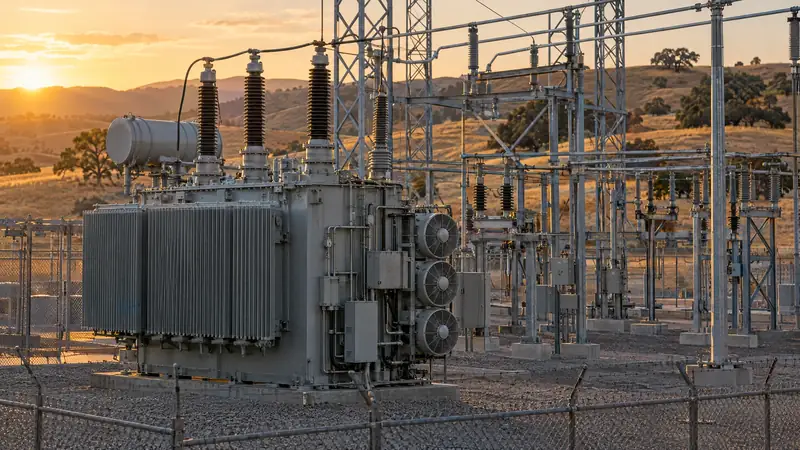
Document bushings, radiator banks, fans, pumps if fitted, gauges, protective relays and current transformers. Identify conservator construction versus a sealed or nitrogen-system tank. Missing cooling equipment can prevent use at advertised forced-air ratings, while damaged bushings or unavailable accessories can complicate replacement.
- Include bushing and accessory nameplates when safely visible.
- List detached radiators, fans and control components separately.
- Record known leaks, corrosion and physical damage.
- Identify available wiring diagrams and accessory manuals.
04Test Reports and Maintenance History Support an Offer
Factory reports establish original characteristics; recent service reports help explain present condition. Send available turns-ratio, winding-resistance, insulation and appropriate dielectric test reports with dates and unit identification. This is a records checklist, not a testing procedure or a requirement for sellers to perform electrical work.
For liquid-filled units, dissolved gas analysis, dielectric strength and moisture results are useful alongside fluid type and maintenance history. DGA can indicate patterns associated with thermal or electrical problems, but interpretation depends on trends, operating conditions and qualified review. A single acceptable result is not a guarantee of winding condition.
Disclose overloads, faults, flooding, repairs and the date last operated. For stored units, describe shelter, preservation records and known changes since removal. The guide to transformer oil testing and resale evaluation explains why dated reports and sampling context matter.
- Match reports to the transformer serial number.
- Provide earlier reports when trend data is available.
- Include LTC and bushing maintenance records.
- State whether the unit is energized, de-energized or disconnected.
05Prepare a Complete Station-Class Seller Package
Start with a readable, straight-on nameplate photograph and full exterior views taken from safe, authorized positions. Include all sides, bushings, radiators, valves, cabinet exteriors and visible accessory plates. Do not open electrical compartments to obtain information; access after proper isolation is work for qualified personnel.
Send the manufacturer, serial number, year, phase, frequency, all kVA/MVA stages, cooling class, temperature rise, fluid type and quantity. Include the connection diagram, winding material if stated, PCB label and operating or shipping weights. Existing drawings are especially useful when nameplate details are incomplete.
Establish ownership or authority to sell, quantity and exact California location. Utility-owned equipment cannot be sold by a property owner simply because it occupies the property. Provide a utility release where applicable, and use the transformer seller intake page to organize the initial submission.
- Identify included versus missing accessories.
- Describe site access, clearances and removal obligations.
- Supply dimensions and documented lifting or rigging points.
- State whether adjacent switchgear or buswork is included.
06Plan Decommissioning and Heavy Haul Before Pickup
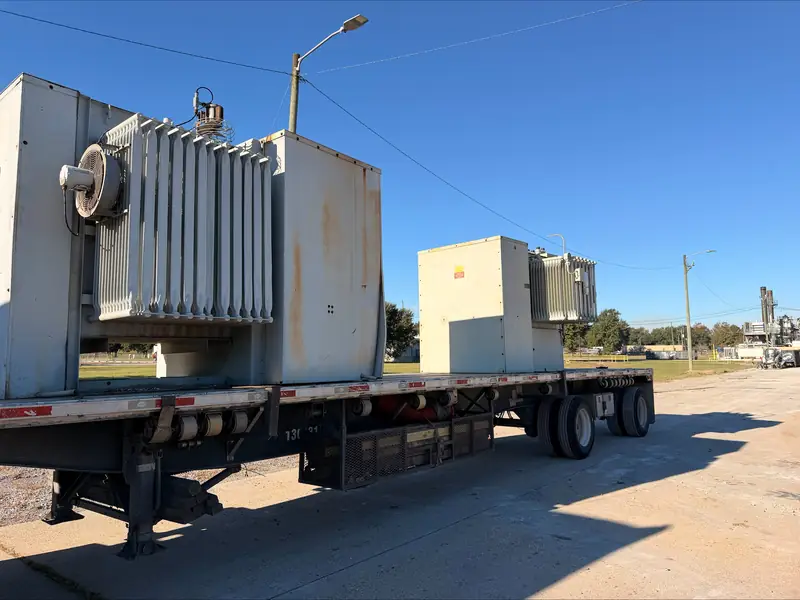
A large transformer’s operating weight may differ substantially from its shipping configuration. Provide both weights when documented, along with overall dimensions and drawings. Crane access, ground-level clearances, gates, overhead obstructions and the route out of the site all affect removal planning.
The owner’s qualified electrical contractor or serving utility handles de-energizing and disconnection. Qualified personnel must account for isolation, voltage verification, grounding as applicable and potential backfeed from solar, batteries or generators. A purchase discussion is not authorization to disturb energized equipment.
Large units may require specialist preparation, including removal of radiators or bushings and a manufacturer-appropriate preservation arrangement. Caltrans oversize/overweight permits may apply above common highway limits such as 8 feet 6 inches wide, 14 feet high or 80,000 pounds gross; local approvals may also be needed. The transformer removal and pickup page explains how responsibilities are addressed in writing.
07Fluid and PCB Documentation Need Separate Review
Provide existing PCB laboratory reports and manufacturer documentation, not just a verbal description of the oil. Under federal TSCA classifications, non-PCB is below 50 ppm, PCB-contaminated is 50 to below 500 ppm, and a PCB Transformer is 500 ppm or more. “Non-PCB” does not mean zero PCBs.
Unknown status requires care: certain older mineral-oil equipment may need to be assumed PCB-contaminated, while equipment with unknown fluid and manufacture date may need to be assumed a PCB Transformer until testing or qualifying documentation establishes concentration.
California has stricter rules for PCB-containing oil. Oil containing 5 ppm or more PCBs is excluded from California’s “used oil” category; this does not mean every transformer at 5 ppm is automatically hazardous waste. A working transformer sold for reuse is equipment, but leaks, drained oil and failed units require proper determination. Rely on testing, documentation and qualified environmental professionals. This is not legal advice.
08Request a Written Offer From Rocky
To sell a substation transformer in California, call or text Rocky at (951) 403-5738 with your nameplate photo, exterior photos, location and condition summary. Send available reports and drawings afterward. Reviewing your transformer costs nothing, and there is no obligation.
Rocky reviews the package and asks follow-up questions about specifications, ownership, fluid records and access. If an offer is made, written terms state the price, included equipment, who handles loading or rigging and freight, and payment terms and timing. Pickup and payment follow those agreed terms.
A station transformer buyer needs to distinguish a complete assembly from a loose transformer. If yours was close-coupled to switching or medium-voltage switchgear, include mating-flange drawings, bus dimensions and phase sequence; the unit-substation transformer guide covers those differences. Submit the package through Contact / Get an Offer when ready.
FAQSubstation Transformer Buyer FAQ
Can I request an offer while the transformer is still operating?
Yes. An initial review can use safely obtained exterior photographs, existing nameplate records, drawings and service reports while the transformer remains in operation. State its energized status and your anticipated project schedule. Any eventual isolation and disconnection must be handled by the owner’s qualified electrical contractor or serving utility; do not change its operating condition for the inquiry.
Will missing test reports prevent a purchase review?
Missing reports do not prevent you from submitting the unit for review, but they leave important condition questions unresolved. Send what you have and clearly identify gaps. Rocky may request additional documentation before deciding whether to offer. Do not arrange intrusive testing on your own; any necessary testing should be scoped and performed by qualified professionals.
Is a station service transformer the same as a station-class power transformer?
Not necessarily. A station service transformer supplies auxiliary loads at a station, such as lighting, controls or other support equipment. A station-class power transformer generally transfers power between system voltage levels. Describe the actual duty, rating and connections rather than relying on the word “station.” Both the application and nameplate help identify the appropriate equipment category.
Can a never-energized spare still have condition concerns?
Yes. New-surplus status is useful, but long storage can introduce moisture, corrosion, damaged seals or missing components. Provide factory test reports, storage and preservation records, shipping history and current exterior photographs. Explain whether accessories remain crated or were installed. Never-energized equipment still needs a unit-specific review of condition, completeness and compatibility.
Can I sell a transformer without its control cabinet or radiator banks?
Submit it with a clear list of missing parts. The absence of controls, radiators, fans or other accessories can limit reuse and may change whether a purchase is practical. Do not advertise the maximum forced-air rating as available capacity without the required cooling equipment. Existing drawings and component identification help establish what restoration would involve.
Does a large MVA rating automatically make a transformer more valuable?
No. A larger unit may serve fewer potential applications and require more expensive transport or installation arrangements. Exact voltage ratio, impedance, connections, documented condition and included accessories matter alongside capacity. Available equipment can be useful to projects awaiting replacements, but size alone does not establish demand or guarantee a purchase offer.