01Who Buys Transformers in California?
California Transformer Buyer is a transformer buyer in California run by Rocky and based in Southern California’s Inland Empire. We serve sellers throughout the state, from Riverside County and San Diego to the Central Valley, Bay Area and Northern California. We do not purchase equipment from sellers outside California.
You can submit a single spare transformer, equipment pulled during an upgrade, unused project inventory or a mixed yard of units. Reviewing your transformer costs nothing and there is no obligation. A purchase depends on the equipment’s specifications, condition, documentation and removal requirements.
If you want to sell your transformer, start with the information already available to you. Call or text Rocky at (951) 403-5738, or use the website form to request a transformer offer. You do not need to know every technical field before making contact.
TYPTransformer Types We Buy in California
- Single-Phase Pad-Mount TransformersIdentify, document, and sell a used or surplus single-phase pad-mount transformer in California.
- Three-Phase Pad-Mount TransformersLearn how to identify, evaluate and sell a used or surplus three-phase pad-mount transformer in California.
- Pole-Mount TransformersLearn how California Transformer Buyer evaluates, offers on, and arranges pickup for used and surplus pole-mounted transformers.
- Substation & Power TransformersLearn how to identify, document, and sell a used or surplus substation power transformer in California.
- Unit Substation TransformersLearn how to identify, document and sell a used or surplus unit substation transformer in California.
- Liquid-Filled (Oil-Filled) TransformersLearn how to identify, document and sell a used or surplus liquid-filled transformer in California.
- Dry-Type TransformersIdentify your dry-type transformer, learn what affects resale value and see what information California Transformer Buyer needs to review it.
- Medium-Voltage Dry-Type TransformersLearn how to identify, document and sell a used or surplus medium-voltage dry-type transformer in California.
- Cast Resin (Cast Coil) TransformersLearn how to identify, document and sell a used or surplus cast resin transformer in California.
- Generator Step-Up (GSU) TransformersLearn how to identify a GSU transformer, what affects resale value, and what California sellers should provide for an offer.
- Solar & Inverter Step-Up TransformersSell a used or surplus California solar inverter step-up transformer with nameplate, configuration, condition, and site details.
- Battery Energy Storage (BESS) TransformersLearn how to identify a BESS transformer, what affects resale value and what California sellers should provide for an offer.
02Pad-Mount, Substation and Dry-Type Transformers We Review
We review oil-filled and dry transformers from 10 kVA distribution units through multi-MVA power equipment. Used means previously energized; new-surplus means never energized, whether still crated, on skids or stored for a canceled project. Decommissioned equipment needs a condition review rather than an assumption that it is ready for reuse.
As a pad mount transformer buyer, we need the electrical configuration as well as the cabinet condition. Our pad-mounted transformer buying guide covers these units in more detail. For station-class equipment, the substation transformer seller guide explains the importance of cooling ratings, accessories and shipping information.
- Single- and three-phase pad mount / padmount distribution transformers.
- Pole-mount units, including conventional and CSP configurations.
- Low-voltage and medium-voltage dry-type transformers.
- Substation / station class power transformers and unit substations.
- Solar inverter step-up, BESS and generator step-up units.
- Spare units, project leftovers and mixed equipment lots.
| Equipment family | Important review details | Accessories to identify |
|---|---|---|
| Pad-mounted | kVA, voltages, phase, feed configuration | Switches, fuses, elbows |
| Dry-type | kVA, voltages, enclosure, temperature rise | Fans, monitoring devices |
| Substation | All MVA stages, cooling class, impedance | Radiators, fans, tap changer |
| Unit substation | Transformer rating and assembly scope | Primary and secondary switchgear |
| Solar or BESS step-up | Winding connections and exact voltages | Controls, protection, monitoring |
03How Selling a Transformer Works
The process starts with a call, text or contact-form submission. Send a readable nameplate photo, overall exterior photos, quantity, California location and an honest description of condition. Rocky reviews the information and may ask about test reports, ownership, fluid records or access.
If the equipment is a fit, you receive a written offer stating the purchase terms, what is included, who handles loading or rigging, freight responsibilities and payment timing. Terms are put in writing before pickup; removal costs and responsibilities are not left to assumption.
After agreement, removal and pickup are coordinated, and payment follows the written terms. The owner’s qualified electrical contractor or serving utility handles electrical isolation and disconnection. See the transformer selling process for the steps from initial review through pickup.
- Contact Rocky and identify the equipment.
- Send photos, nameplate information and available records.
- Answer follow-up questions about condition and access.
- Review the written offer and responsibilities.
- Coordinate pickup and payment under the agreed terms.
kVASizes From 3 kVA to 100 MVA
- 3 kVA
- 5 kVA
- 10 kVA
- 15 kVA
- 25 kVA
- 30 kVA
- 37.5 kVA
- 45 kVA
- 50 kVA
- 75 kVA
- 100 kVA
- 112.5 kVA
- 150 kVA
- 167 kVA
- 225 kVA
- 250 kVA
- 300 kVA
- 333 kVA
- 500 kVA
- 667 kVA
- 750 kVA
- 833 kVA
- 1000 kVA
- 1250 kVA
- 1500 kVA
- 1667 kVA
- 2000 kVA
- 2500 kVA
- 3000 kVA
- 3333 kVA
- 3750 kVA
- 5000 kVA
- 7500 kVA
- 10 MVA
- 12 MVA
- 15 MVA
- 20 MVA
- 25 MVA
- 30 MVA
- 37500 kVA
- 50 MVA
- 60 MVA
- 75 MVA
- 100 MVA
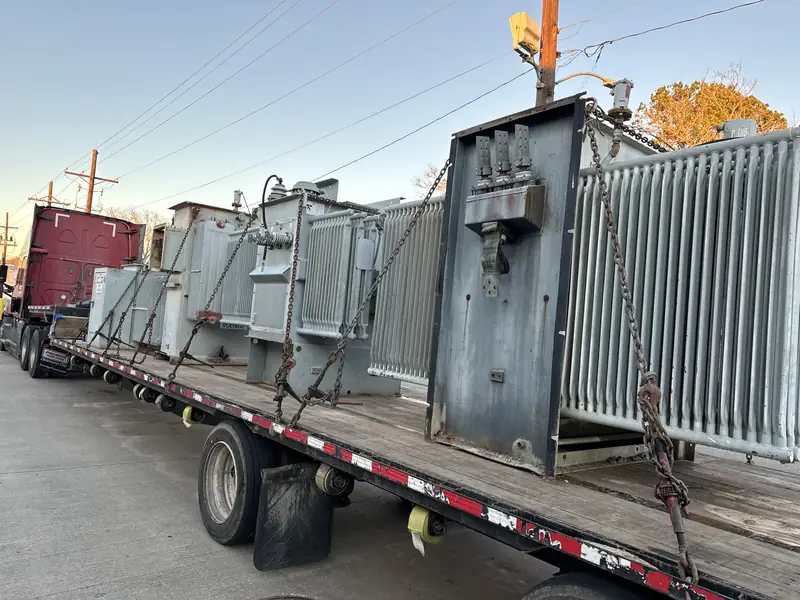
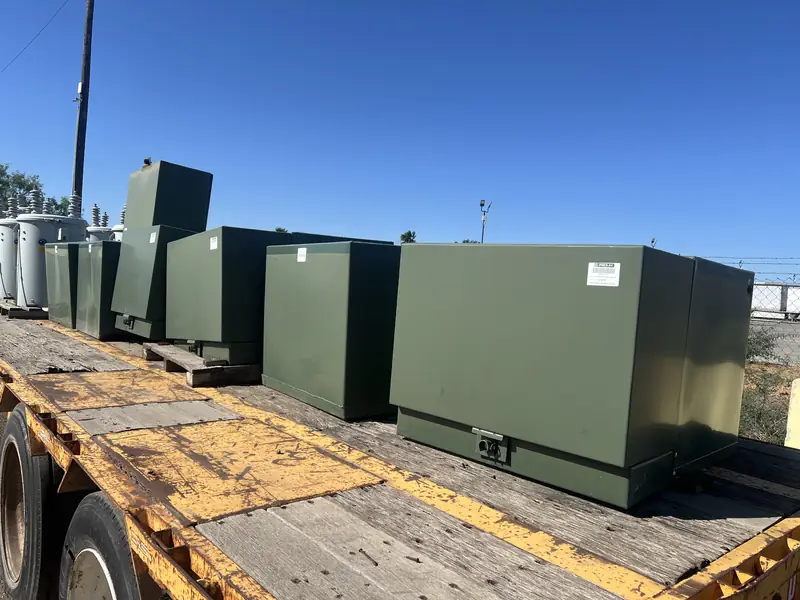
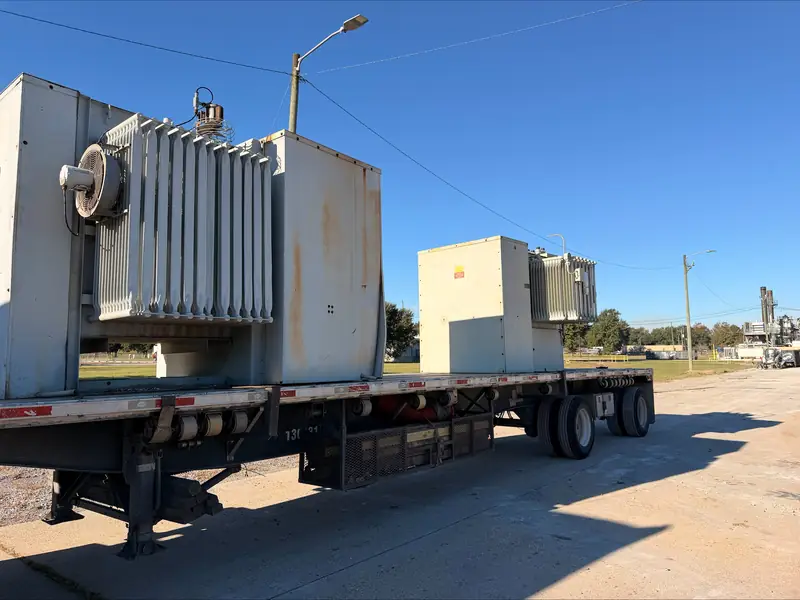
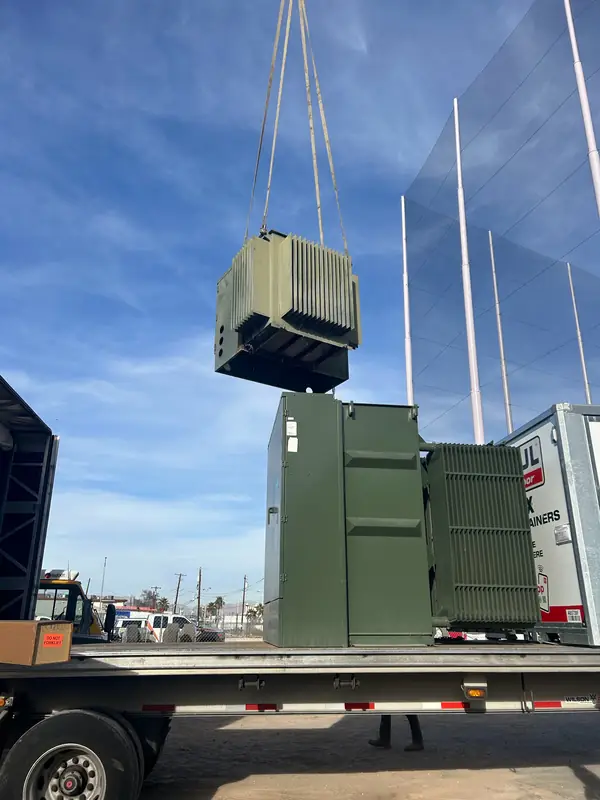
IMGTransformers We Buy and Haul
04Nameplate Photos and Records That Speed Up an Offer
A sharp, straight-on nameplate photo is often the most useful starting point. Buyers need the manufacturer, serial number, year, kVA or MVA rating, phase, frequency, primary and secondary voltages, winding connections and taps. Include every rating stage shown, such as 12/16/20 MVA with its corresponding cooling classes.
Other useful fields include impedance, BIL, temperature rise, fluid type and gallons, weight and winding material when stated. Photograph accessible accessory plates and the cabinet exterior from a safe position. Do not open electrical compartments to obtain information.
Existing factory and service reports help support a condition assessment. These may include turns ratio, winding resistance, insulation and appropriate dielectric tests, plus liquid dielectric, PCB and dissolved gas analysis records where applicable. This is a records checklist, not a test procedure; qualified professionals determine any testing needed.
- Ownership or authority to sell, including utility release when applicable.
- Quantity and exact California location.
- Exterior views of all safely accessible sides, radiators, bushings and valves.
- Known energized/de-energized status and disconnected condition.
- Leaks, corrosion, damage, repairs and last operating date.
- Storage history and known overload, fault or flood exposure.
- Dimensions, operating/shipping weight and documented lifting points.
- Included accessories, missing parts and removal obligations.
05Why California Voltages and Local Logistics Matter
A California-only buyer can focus the review on equipment configurations and site requirements within this state. A general description such as “12 kV transformer” is not enough to establish suitability. Exact voltage, delta or grounded-wye connection, taps and secondary rating affect whether a unit can serve another application.
Common California pad-mounted configurations include 12,000 V delta and 12,470GrdY/7,200 V. Nominal 21 kV systems occur in PG&E and SMUD areas, while SCE documents 16 kV distribution among its system voltages. Common three-phase secondaries include 208Y/120 V and 480Y/277 V. Always use the actual nameplate rather than infer ratings from a utility territory.
Local logistics also matter. A transformer behind a building, in a vault or inside a fenced substation presents different access requirements from a unit already on an accessible skid. Our guide to transformer voltage configurations explains why an exact electrical match matters more than a broad voltage-class description.
CASelling a Transformer Near You in California
Los Angeles County
Orange County
Inland Empire
- Riverside, CA
- Corona, CA
- Moreno Valley, CA
- Temecula, CA
- Murrieta, CA
- San Bernardino, CA
- Fontana, CA
- Ontario, CA
- Rancho Cucamonga, CA
- Victorville, CA
- Palm Springs, CA
- Indio, CA
San Diego & Imperial Counties
Central Coast & Ventura County
San Joaquin Valley
Sacramento & Northern California
San Francisco Bay Area
06Who Sells Used and Surplus Transformers to Us
Electrical contractors may have units removed during service upgrades or left over after a project change. Solar and BESS developers may hold step-up transformers that no longer match a project’s design or schedule. Data centers, industrial plants and property owners may have spares or equipment made unnecessary by facility changes.
Utilities and distributors may submit surplus inventory or mixed lots for review. For multiple units, list each serial number, rating, condition and location separately. A useful inventory distinguishes operating spares, pulled equipment and never-energized stock instead of treating the entire lot as identical.
As a surplus transformer buyer, we review both individual units and larger inventories. Keep purchase records, factory reports and storage documentation for never-energized surplus transformers; those records help establish what is actually being offered.
07Ownership, PCB Documentation and Safe Removal
You must own the transformer or have authority to sell it. Utility-owned equipment does not become the property owner’s equipment simply because it sits on that property. Establish ownership and any required utility release before treating a transformer as available for sale.
For liquid-filled units, provide existing fluid and PCB records. Under federal TSCA classifications, non-PCB means below 50 ppm, not zero PCBs. California excludes oil containing 5 ppm or more PCBs from its used-oil category, and used oil is generally managed as hazardous waste unless an exclusion or recycling pathway applies.
A working transformer sold for reuse is equipment, but leaking units, drained oil and failed equipment require a proper determination. The correct management pathway depends on testing, documentation and qualified environmental professionals. This is not legal advice, and a label alone should not substitute for a review of applicable records.
Take photos only from a safe position where you are authorized to be. Do not de-energize, disconnect, open, drain, sample or move equipment yourself. Qualified personnel must account for isolation requirements and possible backfeed from solar, batteries or generators.
08Request an Offer With Pickup Responsibilities in Writing
Tell Rocky whether the transformer remains installed, has been removed or is stored with other equipment. Include ground-level clearances, gate restrictions, loading access and any site deadlines. For large substation units, shipping dimensions and weight affect transport planning; oversize or overweight loads may require Caltrans permits and separate local approvals.
The offer should identify what travels with the transformer and who handles rigging, loading and freight. Fans, radiators, switches, gauges, controls and associated switchgear can change the scope of a sale. Our transformer removal and pickup guide explains the information needed for planning.
Call or text (951) 403-5738 to begin. For a practical submission checklist, use the guide to selling your transformer. Send what you can safely document now, and Rocky can identify the remaining questions before an offer is finalized.
FAQQuestions California Sellers Ask
Can I submit a transformer that is still operating?
Yes. State clearly that it is operating and provide any existing nameplate information, safe exterior photos and anticipated availability. An initial review does not authorize electrical work or establish that the equipment is ready for pickup. Your qualified electrical contractor or serving utility must handle isolation and disconnection, with responsibilities and scheduling addressed before removal.
Do electrical transformer buyers need test reports before considering a unit?
Existing reports are useful, but you can begin by sending the nameplate, photos and known condition. Rocky may request additional records after reviewing the configuration and history. Do not commission tests or access compartments solely on an assumption about what is required; any necessary testing should be scoped by qualified professionals and discussed during the review.
Is an older transformer worth submitting, or only newer equipment?
Older equipment can be submitted for review. Age is one factor alongside rating, voltage, winding configuration, condition, documentation and removal complexity. A useful configuration with credible operating and test records may warrant consideration, while missing parts or uncertain fluid status can complicate a sale. Manufacture date alone does not establish whether a transformer is suitable for purchase.
Can you review failed transformers or units with oil leaks?
Describe the failure or leak accurately and provide existing records and safely obtained exterior photos. Acceptance is not guaranteed, and failed or leaking units need a different assessment from equipment intended for continued service. Environmental classification, containment and handling questions should be addressed by qualified professionals. Do not drain fluid or attempt repairs to prepare the unit for review.
What affects the offer besides the kVA rating?
Exact voltages, phase, impedance, cooling class, winding material and accessory completeness all matter. Condition, test history, PCB documentation, quantity and access also affect the assessment. Two transformers with the same kVA can serve different applications or require very different removal arrangements. The written offer reflects the specific equipment and scope rather than a standard amount based only on size.
Can I sell several transformers with different ratings in one lot?
Yes, mixed lots can be reviewed. Provide a separate nameplate photo or inventory entry for each unit, along with quantity, condition and location. Identify which accessories belong to which transformer and whether the equipment is installed or stored. Clear unit-by-unit information helps prevent confusion about what is included and allows the written offer to define the purchase scope.