01How to Identify a Liquid-Filled Transformer
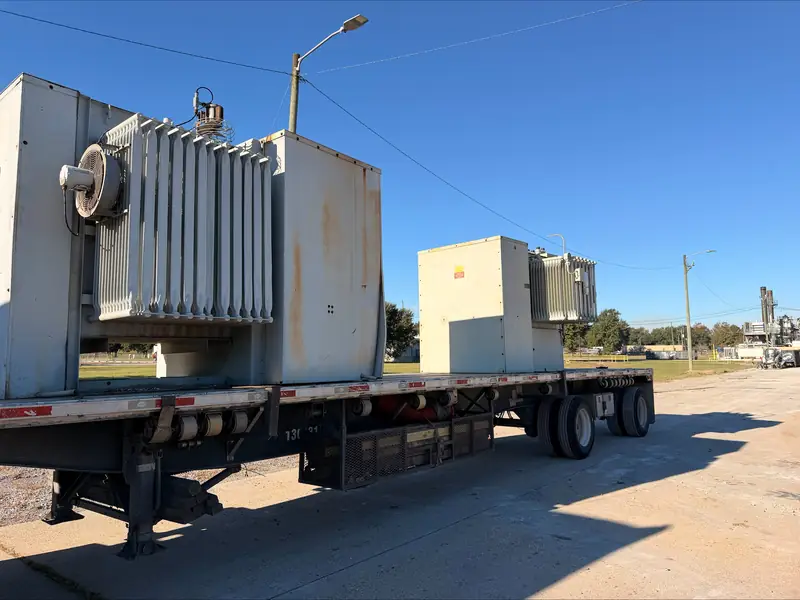
A liquid-filled transformer has a sealed metal tank containing the core and windings immersed in insulating fluid. The liquid provides electrical insulation and carries heat away from the windings. Pad-mounted, overhead, vault, unit-substation and large station-class transformers can all use this construction. For a broader comparison with other equipment families, see the main transformer types and their construction.
Look for a fluid or nameplate plate identifying the liquid and its volume, plus a tank, cooling equipment or liquid-level gauge where fitted. Fill, drain or sample valves and radiators may be visible, but features vary by design. Do not open compartments or handle valves for photos; take pictures only from a safe position and only where you are authorized to be.
- Photograph the full unit and readable nameplates.
- Record manufacturer, serial number and year, if shown.
- Capture kVA/MVA ratings, voltage, phase and cooling code.
- Note visible leaks, corrosion, damaged bushings or missing accessories.
02How Liquid-Filled Transformers Work and Where They Are Used
The transformer core and windings transfer electrical energy between voltage levels through electromagnetic induction. Insulating liquid surrounds the energized internal components and helps remove heat. Cooling codes such as ONAN or ONAF may identify oil-based natural-air or forced-air cooling; KNAN or KNAF may appear on some natural-ester designs. Use the actual nameplate rather than assuming a cooling method from appearance.
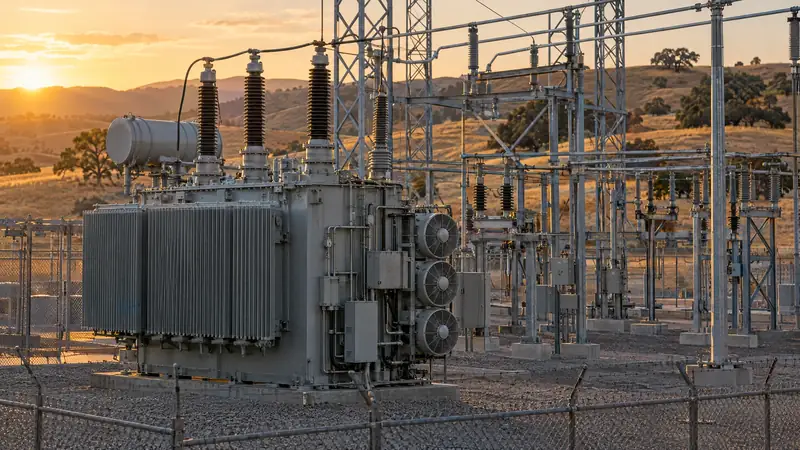
In California, liquid-filled equipment serves utility distribution, commercial and industrial facilities, renewable-energy projects and substations. Depending on design, a unit may supply a building, connect a solar or battery-energy-storage installation, or handle higher-voltage station service. Pad-mounted distribution equipment is one common configuration; larger substation and power units can have radiators, fans, tap changers and other accessories. See information about pad-mounted transformers or substation transformer buying details for those configurations.
03Oil-Filled Transformer Sizes and California Voltage Details
There is no single kVA range for the liquid-filled family. Equipment runs from small distribution ratings through several hundred MVA or larger, with the rating determined by the specific design. Common distribution ratings include 75, 150, 300, 500 and 1,000 kVA; larger units may be rated in MVA. These examples are not a limit on what can be reviewed.
California distribution nameplates may show 12 kV-class, 16 kV-class or 21 kV-class primary configurations, among others. For example, PG&E and SMUD areas include 20,780 V grounded-wye/12,000 V configurations, while SCE has 16 kV-class equipment. Renewable and industrial applications may use 34.5 kV, and substation equipment can operate at transmission or generator-step-up voltages. Common secondary configurations include 208Y/120 V and 480Y/277 V. Confirm the actual HV and LV values, connections and taps on the plate; do not identify compatibility from location alone. See common transformer voltage configurations for more context.
04Fluid Type, PCB Records and Tank Construction Matter
Mineral oil, natural ester (including FR3), synthetic ester and silicone are distinct insulating liquids. The fluid name must be verified from the plate or reliable records, not guessed from the transformer’s age or appearance. FR3 is a branded natural-ester fluid, not a name for every ester. A retrofill may differ from the original fill, so look for conversion records and dates when available.
Fluid branding is not a PCB certificate. PCB status should be supported by test results or qualifying documentation, and older equipment with unknown status may require a determination before it can be managed or transported. Federal classifications distinguish non-PCB below 50 ppm, PCB-contaminated from 50 to below 500 ppm, and PCB Transformers at 500 ppm or more. California has additional rules for PCB-containing oil; the appropriate pathway depends on the test results and records. This is general information, not legal advice. Use qualified environmental professionals and testing or documentation to establish status. Learn how oil testing and records affect resale review.
Tank design is another useful identification detail. A sealed tank is designed to contain the liquid without a separate conservator arrangement. Some larger designs use a conservator tank to accommodate fluid expansion and contraction. Tell the buyer which arrangement is present if known, and photograph the overall equipment without opening it.
05What Affects the Resale Value of a Used Oil-Filled Transformer
A buyer evaluates the complete unit, not just its fluid brand or kVA rating. Rating, phase, primary and secondary voltage, connection, taps, impedance, cooling class and age help establish what applications may fit. Copper or aluminum winding information, available accessories and whether the transformer is used or new-surplus also matter.
Condition and documentation can change the assessment. Leaks, tank corrosion, bushing damage, missing parts and uncertain fluid or PCB status may limit reuse options or create added handling requirements. Oil tests, dissolved-gas analysis, insulation-resistance results, turns-ratio tests and factory reports can help document condition. A standard or sought-after California voltage configuration may be easier to place, but no specific sale outcome follows from one feature.
Site access and removal complexity are also part of the review: quantity, location, loading access and the equipment needed to handle the unit affect logistics. For a used transformer, include any available condition and test records with your inquiry. Details on selling used transformers explain the information that helps a buyer assess previously energized equipment.
06What to Send an Oil-Filled Transformer Buyer
To sell an oil filled transformer, start with clear nameplate photos and overall views of the tank, radiators, bushings and visible accessories. Include the unit count, California location and a brief description of its condition. Rocky may ask for follow-up information about ownership, site access, tests, fluid and PCB records.
Useful nameplate details include manufacturer, serial number, year, kVA or MVA at each cooling stage, phase, frequency, HV/LV voltages, taps, impedance, BIL, cooling code and fluid type and gallons. Total weight and separate tank-and-fittings or core-and-coil weights are useful when listed. Send only information you can access safely; do not open the transformer to find a plate or label.
California Transformer Buyer reviews equipment from sellers located in California, from a single unit to a mixed lot. The process is to send photos and details, answer follow-up questions, then review a written offer covering price, included items, loading or rigging responsibilities, freight and payment terms. Reviewing a transformer costs nothing and creates no obligation. Start through the transformer selling process or contact Rocky to request an offer.
07Removal Planning and Why Sellers Bring These Units to Us
A transformer may need qualified electrical work before it can be removed. De-energizing, isolation, testing and disconnecting are responsibilities of the owner’s qualified electrical contractor or serving utility—not the seller or buyer acting on a photo review. Solar, battery or generator backfeed must also be considered by qualified personnel.
Do not drain, sample, move or open the unit yourself. Leaking equipment, drained oil and failed units may require a specific environmental and waste determination; regulated used oil in California can have additional handling, transporter and manifest requirements. Large substation transformers may involve specialized rigging and heavy-haul planning, and oversize or overweight loads may require permits. Before pickup, the written terms should state who handles rigging and freight. Read about transformer removal and pickup planning.
Facilities contact California Transformer Buyer when replacing equipment, clearing a project site, reducing spare inventory, handling a decommissioned unit or selling new-surplus equipment. The buyer reviews eligible liquid-filled transformers across California, including mineral-oil, ester and silicone designs. Sellers must own the equipment or have authority to sell it; utility-owned equipment cannot be sold by a property owner.
FAQLiquid-Filled (Oil-Filled) Transformer FAQ
Can I sell a transformer if I do not know what fluid is inside?
You can submit the unit for review, but do not guess whether it contains mineral oil, natural ester, silicone or another liquid. Send clear photos of the nameplate and any fluid identification labels, along with available service or conversion records. If the fluid remains unknown, the buyer may ask for additional documentation or testing before determining whether the unit is suitable for an offer.
Does an FR3 or natural-ester label prove the transformer is PCB-free?
No. The fluid type and PCB status are separate questions. FR3 identifies a branded natural-ester fluid, but the label does not establish PCB concentration or prove that the transformer was never retrofilled. Rely on test results, qualifying records and qualified environmental professionals to establish status. Rules for handling PCB-containing oil can depend on the documented concentration and applicable requirements.
What if the transformer leaks or has no recent test reports?
Include the condition accurately when you contact the buyer, and send safe-position photos of visible leaks, corrosion or damage. Lack of recent tests does not by itself answer whether a unit can be reviewed, but it can affect its reuse prospects and the information needed to assess it. Do not sample or drain the fluid yourself; qualified professionals should handle testing and environmental determinations.
Can California Transformer Buyer review a large MVA station-class unit?
Yes, sellers can submit details for liquid-filled equipment across a wide rating range, including large station-class and power transformers. Provide all nameplate rating stages, voltage values, cooling codes, weight information, accessory details and available test records. Location, access, loading requirements and transportation complexity are relevant to the written offer, so include site details and identify any known removal constraints.
Who disconnects and prepares a transformer for pickup?
The owner’s qualified electrical contractor or serving utility handles de-energizing, isolation, voltage testing and disconnection. Sellers should not open, drain, sample or move the equipment. Before pickup is scheduled, the written offer states what is included and who handles loading, rigging and freight. Large units may require added transport planning, and regulated oil or waste needs an appropriate environmental pathway.
Can I sell a transformer owned by the utility at my property?
Only the owner or someone authorized to act for the owner can sell the transformer. A property owner cannot sell utility-owned equipment simply because it is located on the property. If ownership is unclear, check your service or equipment records and confirm authority before submitting the unit for sale. Include ownership information in your inquiry so it can be addressed during the review.