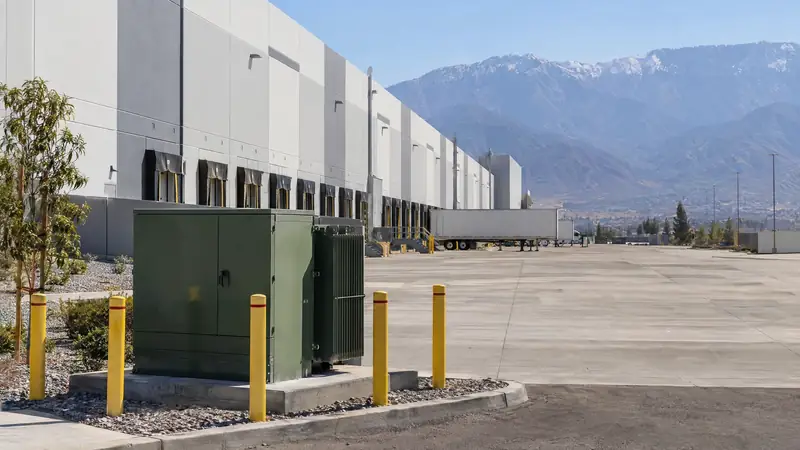
0175 kVA Transformer Types and Typical Uses
A 75 kVA transformer is a standard rating for both single-phase and three-phase equipment. The right style depends on the service, installation and load: a small commercial building may use a three-phase unit, while residential or light-commercial service may use a single-phase transformer.
Common configurations include a single-phase pad-mount transformer for ground-level service, a pole-mount transformer for overhead distribution, a dry-type transformer for indoor building distribution, and a three-phase pad-mount transformer for commercial or light industrial service. A 75 kVA unit is generally a distribution transformer rather than a station-class substation transformer.
| Configuration | Typical application | Example secondary |
|---|---|---|
| Single-phase pad-mount | Residential or light-commercial service | 120/240 V |
| Pole-mount overhead | Overhead distribution service | 120/240 V |
| Three-phase pad-mount | Commercial building service | 208Y/120 V or 480Y/277 V |
| Low-voltage dry-type | Indoor building distribution | 208Y/120 V |
FLAFull-Load Amps for a 75 kVA Transformer
Rated full-load current at common California voltages. Single-phase: amps = kVA × 1000 ÷ volts. Three-phase: amps = kVA × 1000 ÷ (1.732 × volts). Use the nameplate voltage of your unit.
| Phase | Voltage | Full-load amps |
|---|---|---|
| Single-phase | 240 V | 313 A |
| Single-phase | 277 V | 271 A |
| Single-phase | 480 V | 156 A |
| Single-phase | 2.4 kV | 31.3 A |
| Single-phase | 7.2 kV | 10.4 A |
| Single-phase | 12 kV | 6.25 A |
| Single-phase | 19.92 kV | 3.77 A |
| Three-phase | 208 V | 208 A |
| Three-phase | 240 V | 180 A |
| Three-phase | 480 V | 90.2 A |
| Three-phase | 600 V | 72.2 A |
| Three-phase | 4.16 kV | 10.4 A |
| Three-phase | 12 kV | 3.61 A |
| Three-phase | 12.47 kV | 3.47 A |
02Typical 75 kVA Voltages in California
A common three-phase building configuration is 480Δ primary to 208Y/120 V secondary. Other three-phase units may have 480 V or 600 V secondary ratings, depending on the equipment and application. Single-phase units commonly serve 120/240 V loads; their primary voltage depends on the distribution system and transformer design.
California distribution systems vary by service territory. Pad-mounted units may be built for a 12 kV-class primary, while other nameplates show different primary voltages or connections. The exact voltage, connection and tap range matter more than a general area assumption, so use the nameplate when checking whether a unit matches a potential application.
03How to Read the 75 kVA Full-Load Amps Chart
The full-load amps chart displayed on this page is organized by phase and voltage. Find the correct phase first, then match the voltage column to the transformer's rated winding voltage. The chart gives the approximate current at rated kVA and voltage; it does not identify the unit's complete configuration or determine what a particular load requires.
Do not compare a single-phase value with a three-phase value, or use a primary-voltage entry as though it described the secondary. Check the nameplate for phase, high- and low-voltage ratings, connection and taps. For the rating relationship and chart-reading details, see the guide to transformer kVA and amps.
04Physical Size and Weight Depend on the Design
A 75 kVA transformer is a relatively small distribution unit compared with larger pad-mounted or substation equipment, but there is no single size or weight for this rating. Dimensions and total weight vary by manufacturer, phase, enclosure, cooling method, insulation system and included accessories.
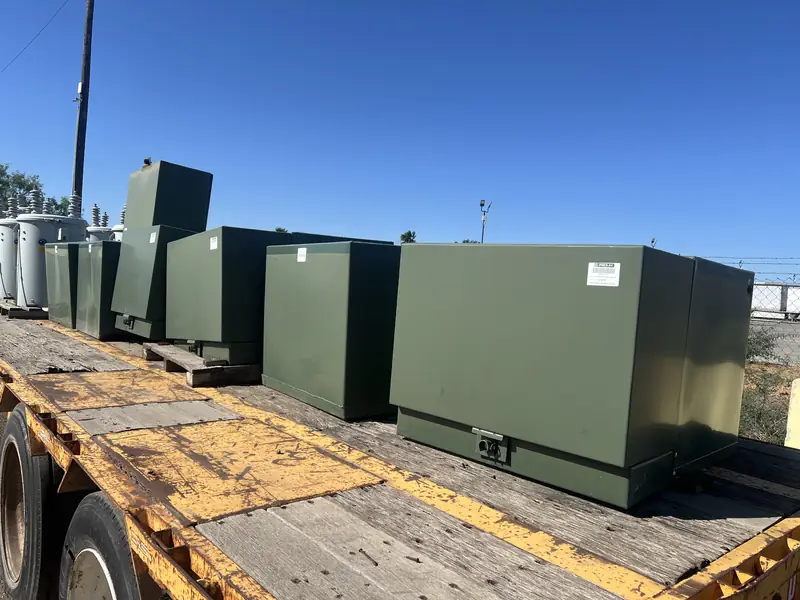
Oil-filled pad-mount and pole-mount units include a tank and fluid; dry-type units use a different enclosure and insulation construction. For an offer, share any nameplate weight information and photos that show the complete unit and its surroundings. Do not attempt to move or open equipment to obtain details.
05What Affects the Value of a Used 75 kVA Transformer
A buyer evaluates more than the kVA rating. Phase, primary and secondary voltages, connection, taps and condition help determine whether the transformer can serve a useful application. Common California voltage configurations may have broader demand, but no rating or configuration guarantees an offer.
New-surplus equipment that has never been energized is different from a used or removed unit, and documentation can help establish its status. Other factors include manufacturer and year, copper or aluminum windings if identified, missing or damaged parts, test reports, fluid and PCB records for liquid-filled equipment, quantity and site access. More detail is available in this guide to factors that affect used transformer value.
06What to Send for an Offer on a 75 kVA Unit
To start a review, send clear photos taken from a safe position of equipment you are authorized to access. Include the full nameplate and overall views of the transformer; if there are several units, identify the quantity and which photos belong to each one.
Rocky may ask for test reports, fluid or PCB records, ownership confirmation, or details about access. Sellers should rely on existing documentation and qualified environmental professionals for environmental determinations; this information is not legal advice. You must own the transformer or have authority to sell it—utility-owned equipment cannot be sold by the property owner.
- Nameplate photo showing rating, phase and voltages
- Overall photos showing condition and configuration
- Quantity, California location and known condition
- Available test reports and fluid or PCB documentation
- Whether the unit is used or new-surplus
07Written Offer and Pickup Terms
California Transformer Buyer reviews used, pulled, surplus and new-surplus transformers from sellers in California. After reviewing the information, Rocky may ask follow-up questions and provide a written offer when the unit is a fit. The written terms state what is included, who handles loading or rigging and freight, and payment terms and timing.
Call or text (951) 403-5738, or use the contact form to request an offer. Reviewing your transformer costs nothing and there is no obligation. Do not de-energize, disconnect, open, drain or move the unit yourself; those tasks are for your qualified electrical contractor or the serving utility. See the surplus transformer buyer information for other surplus equipment.
kVANearby Transformer Sizes We Buy
FAQ75 kVA Transformer FAQ
Is a 75 kVA transformer available in both single-phase and three-phase?
Yes. 75 kVA is a standard rating in both single-phase and three-phase equipment. The available styles include pad-mount, pole-mount and dry-type units. When asking for an offer, share the phase and the primary and secondary voltages from the nameplate; the kVA rating alone is not enough to identify the unit.
Can I sell a 75 kVA transformer that has been removed from service?
California Transformer Buyer considers used and pulled transformers from California sellers. Whether a particular unit is a fit depends on its rating, configuration, condition, available documentation and removal circumstances. Share its photos, location and known condition for review. Only the owner or someone with authority to sell the equipment can request a sale.
Will you consider a 75 kVA transformer that has no test report?
You can still send the nameplate and condition photos if no test report is available. Reports may help establish the unit's condition and specifications, but their absence does not by itself determine whether an offer is possible. Be clear about which records you have, and do not open or test the transformer yourself to create new information.
Does the full-load amps chart tell me whether my transformer is suitable?
No. The chart is a reference for full-load current at a listed phase and voltage, not a substitute for equipment design review. Suitability depends on the nameplate, actual system voltage and connection, load characteristics, protection and installation requirements. Have a qualified electrical professional determine whether a transformer is appropriate for a particular application.
What if the nameplate is hard to read or partly missing?
Send the clearest photo you can safely take, along with overall photos and any other available records. Include the manufacturer or serial number if legible, plus what you know about the unit's phase, voltage, location and condition. Do not open an enclosure or handle the equipment to improve a photo; a qualified professional should address access or safety concerns.
Can I sell a transformer that belongs to the serving utility?
No. A property owner cannot sell utility-owned equipment simply because it is located on the property. Confirm ownership or obtain documented authority to sell before requesting an offer. If ownership is unclear, contact the serving utility or the relevant equipment owner rather than arranging removal or transfer yourself.