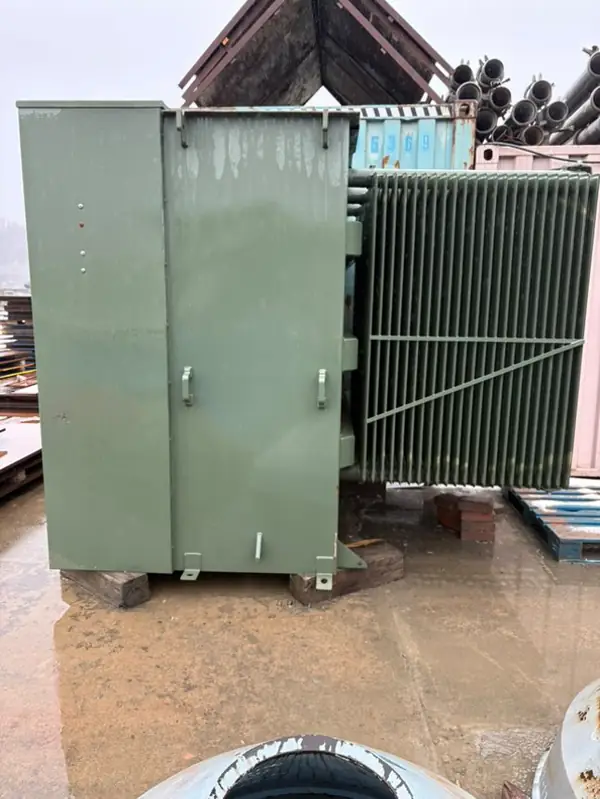
01What to know about a 150 kVA transformer
A 150 kVA transformer is a standard three-phase rating and is commonly used to serve commercial building loads and industrial support loads. The rating describes apparent power capacity; it does not identify the unit’s voltage, phase connections, insulation, or physical arrangement. Those details must be checked on the nameplate.
For a used 150 kVA transformer, confirm that the unit is actually three-phase before comparing it with another listing or buyer request. The 150 kVA rating appears in the standard three-phase rating series; a single-phase unit at this rating would need its own nameplate details reviewed rather than assumed to be interchangeable.
- Check kVA, phase, frequency and year of manufacture.
- Record primary and secondary voltage, connection and tap positions.
- Note impedance, BIL, temperature rise and cooling or insulation type.
FLAFull-Load Amps for a 150 kVA Transformer
Rated full-load current at common California voltages. Single-phase: amps = kVA × 1000 ÷ volts. Three-phase: amps = kVA × 1000 ÷ (1.732 × volts). Use the nameplate voltage of your unit.
| Phase | Voltage | Full-load amps |
|---|---|---|
| Three-phase | 208 V | 416 A |
| Three-phase | 240 V | 361 A |
| Three-phase | 480 V | 180 A |
| Three-phase | 600 V | 144 A |
| Three-phase | 4.16 kV | 20.8 A |
| Three-phase | 12 kV | 7.22 A |
| Three-phase | 12.47 kV | 6.94 A |
02Which 150 kVA transformer types are commonly sold
At this size, common configurations include a low-voltage dry-type transformer, a three-phase pad-mount transformer, and a transformer supplied as part of a secondary unit substation. The installation and enclosure matter: an indoor dry-type cabinet is not the same product as a liquid-filled outdoor pad-mount unit, even when both have the same kVA rating.
For construction details, compare the equipment with our pages on dry-type transformers, three-phase pad-mount transformers and unit substation transformers. Pole-mounted or other specialty configurations should be identified from the actual nameplate and photos; do not infer type from the kVA alone.
03Common voltages and California applications
A 150 kVA three-phase unit may have a medium-voltage primary and a low-voltage secondary. Common secondary systems include 208Y/120 V for commercial building distribution and 480Y/277 V for larger building or industrial loads. Primary voltage varies by utility territory and installation; examples found in California include 4.16 kV, 12 kV-class systems, 12.47 kV grounded-wye systems, and higher-voltage configurations.
These are examples, not a substitute for the nameplate. California utility systems differ, and a transformer intended for one primary voltage or connection may not suit another site. Compare primary and secondary voltages, delta or wye connections, grounding, tap range and frequency before deciding whether a unit is a match.
- Commercial building distribution and support loads
- Industrial facility auxiliary or process-support loads
- Indoor or outdoor installations, depending on unit type
04Typical footprint and weight vary by construction
A 150 kVA dry-type transformer may be a floor-standing indoor cabinet, while a pad-mount unit is generally a compact outdoor enclosure on a base. A secondary unit substation can take up more space because the transformer is assembled with associated primary and secondary equipment. For a rough handling expectation, some dry-type configurations weigh several hundred pounds, while liquid-filled or assembled equipment may weigh several thousand pounds.
These are broad descriptions, not shipping specifications. Dimensions and weight vary by manufacturer, voltage class, enclosure, cooling, accessories and whether switchgear is included. Use the nameplate or manufacturer documentation for actual shipping weight and dimensions. Do not attempt to move the transformer; qualified contractors handle equipment isolation and removal planning.
05How to use the 150 kVA full-load amps chart
The full-load amps chart shown on this page gives calculated three-phase current for 150 kVA at each listed voltage. Find the row that matches the transformer’s rated voltage, then use the amps figure as the corresponding full-load current reference. Do not repeat or estimate a row from memory: the chart on the page is the reference for the listed combinations.
The chart does not confirm that a transformer is suitable for a particular installation or predict the current a site will draw at every moment. Actual load depends on connected equipment and operating conditions. For background on the relationship between kVA, voltage and current, see how to read transformer kVA and amps.
06What affects the value of a used 150 kVA unit
A buyer evaluates more than the kVA rating. Voltage and connection, phase, condition, age, demand for the configuration, and whether the unit is used or new-surplus all affect whether it fits a resale or project need. Common California voltages can make a unit easier to place, but no rating or voltage guarantees an offer.
Condition details matter: leaks, corrosion, damaged bushings, missing accessories or incomplete records can affect review. Test reports and clear documentation may help establish condition and identity. Brand can help verify specifications, but rating and condition are generally more important to the initial review. See what affects a used transformer’s value for more factors.
- Nameplate completeness and readable serial number
- Factory or field test reports, if available
- Fluid type, PCB records or dry-insulation details
- Included accessories and quantity of units
- Site access and removal complexity
07What to send for an offer on a 150 kVA transformer
Send a clear nameplate photo, overall photos from a safe position, the number of units, the California location and a brief condition description. Include available test reports, fluid or PCB documentation, ownership information and notes about access. Only photograph equipment you are authorized to access; do not open compartments or disturb the transformer.
California Transformer Buyer reviews the information and may ask follow-up questions. If the unit is utility-owned, the property owner cannot sell it; you must own the transformer or have authority to sell it. Before pickup, the written offer states the price, what is included, who handles loading or rigging and freight, and payment terms and timing. Call or text Rocky at (951) 403-5738, or use the contact form to request an offer.
- Nameplate and overall equipment photos
- Quantity, location and known condition
- Test, fluid and PCB records, if available
- Ownership or authorization to sell
kVANearby Transformer Sizes We Buy
FAQ150 kVA Transformer FAQ
Is every 150 kVA transformer three-phase?
No. Three-phase is the common 150 kVA configuration covered here, but never identify phase from the rating alone. Read the nameplate and check the connection diagram or manufacturer documentation. Phase affects how the unit can serve a load, so include a clear nameplate image when asking a buyer to review the transformer.
Can I sell a 150 kVA transformer that is still installed?
You can request a review while it is installed, but the owner’s qualified electrical contractor or serving utility must handle isolation and disconnection. Do not disconnect, open, drain, or move it yourself. Share site-access details and photos taken from a safe position so removal requirements can be considered before any pickup is scheduled.
Do you buy a failed or damaged 150 kVA transformer?
California Transformer Buyer reviews used, pulled, surplus and new-surplus equipment, but an offer is not guaranteed and depends on the particular unit. Describe known damage such as leakage, corrosion, missing parts or a failed test, and provide any available records. A failed or leaking transformer may need additional environmental and handling review.
What if the nameplate is missing or unreadable?
Send overall photos and any remaining identification details, such as a serial number, manufacturer label, drawings or maintenance records. Do not remove covers or access restricted compartments to look for information. A buyer may need additional documentation or qualified inspection to identify voltage, phase, configuration and other specifications before evaluating the unit.
Do you need PCB test results for a used transformer?
Provide any PCB labels, test results, fluid records and historical documentation you have. Unknown status should not be treated as proof that equipment is PCB-free; the appropriate determination depends on testing and qualifying records. Sellers should rely on documentation, testing and qualified environmental professionals for handling decisions. This information is general and is not legal advice.
Will the 150 kVA amps chart tell me what size transformer I need?
No. The chart provides full-load current references for the listed three-phase voltages; it is not a complete equipment-sizing recommendation. Selecting a transformer requires reviewing the actual load, voltage, phase, connections, starting demands and applicable design requirements. Have a qualified electrical professional evaluate the installation and confirm the correct equipment.