01How to Identify a Dry Type Transformer Before You Sell
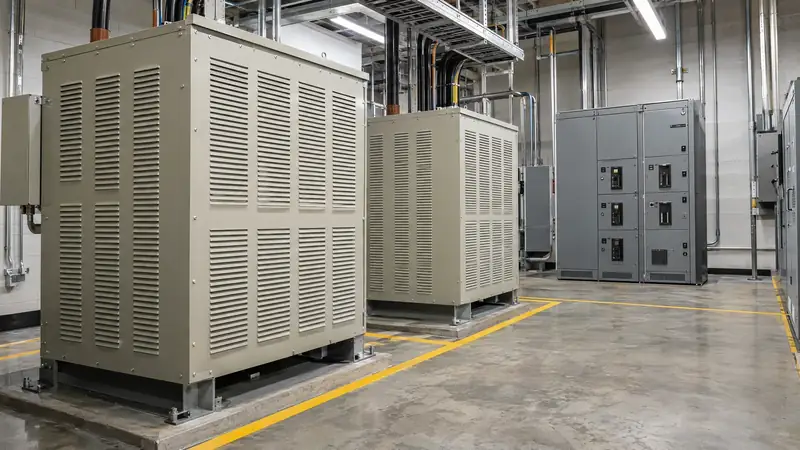
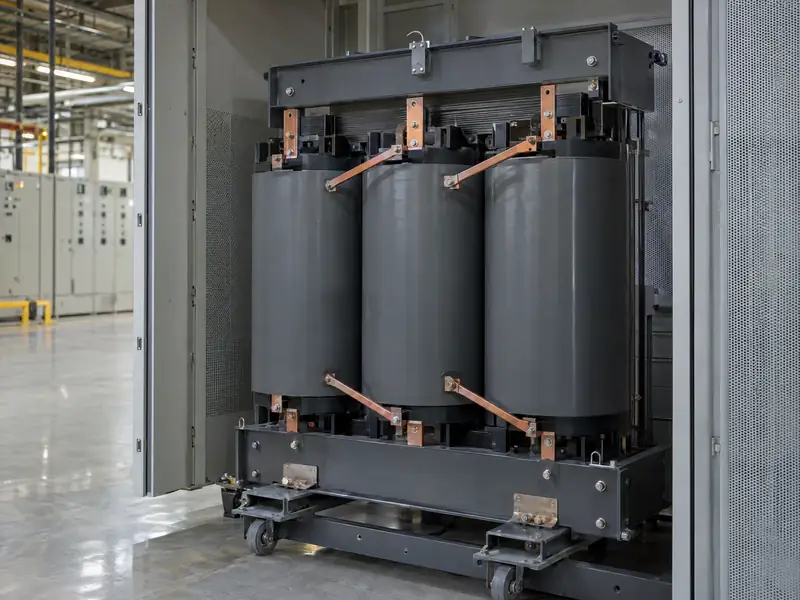
A dry type transformer buyer looks for an air-cooled unit with solid insulation rather than a tank holding bulk insulating liquid. Many low-voltage building transformers sit inside a ventilated metal cabinet. Where the equipment is safely visible, you may see an open core-and-coil assembly behind vents or protective screens.
Read the exterior nameplate from a safe position and photograph it without removing covers or entering restricted areas. Useful cues include the kVA rating, phase, primary and secondary voltage, connection diagram, taps, winding material, temperature rise and enclosure or UL information. Send photos only if you are authorized to access the equipment.
A common building unit is rated 480 V delta primary to 208Y/120 V secondary. That configuration steps down a 480 V distribution supply for 208 V equipment and 120 V receptacle or lighting loads. For help identifying other equipment families, see our guide to electrical transformer types.
02How Low-Voltage Dry-Type Transformers Work in California Buildings
The transformer transfers electrical energy between windings through electromagnetic induction. The turns ratio changes voltage, while the core and winding arrangement, insulation system and rated capacity determine the equipment’s intended operating limits. Air circulates around the assembly to carry away heat; there is no bulk insulating oil to identify or manage inside the transformer.
In California, these units are common in offices, retail properties, schools and other commercial buildings. They can serve lighting and receptacle panels, provide low-voltage conversion for equipment, or isolate one part of an electrical system from another. A building may have several ratings and configurations serving separate panels or loads.
Dry-type construction describes how the transformer is insulated and cooled; it does not exempt the unit from applicable efficiency requirements. Temperature rise is a design rating, not spare capacity: a lower-rise transformer is not automatically authorized for a higher kVA load unless its nameplate and design rate it for that capacity.
kVACommon Dry-Type Sizes We Buy
03Common Dry Type Transformer Sizes and Voltage Configurations
The broad market range for low-voltage general-purpose dry types is about 3 to 1000 kVA and higher. Small units are often encapsulated rather than housed in a large ventilated cabinet. Common three-phase ventilated ratings include 15, 30, 45, 75, 112.5, 150, 225, 300, 500, 750 and 1000 kVA.
Primary voltages may include 208, 240, 480 or 600 V; secondary options include 120/240, 208Y/120, 240 delta, 480Y/277 or 480 delta, depending on the model. The table gives examples, not a substitute for the actual nameplate. See details for 150 kVA transformers and 300 kVA transformers if either rating matches your equipment.
| Rating | Example configuration | Typical application |
|---|---|---|
| 15–45 kVA | 480 V to 208Y/120 V | Smaller building loads |
| 75 kVA | 480Δ to 208Y/120 V | Lighting and receptacle panels |
| 112.5–225 kVA | 480 V to 208Y/120 V | Commercial building distribution |
| 300–500 kVA | Nameplate-dependent | Larger building or equipment loads |
| 750–1000 kVA | Nameplate-dependent | Higher-capacity low-voltage service |
04Ventilated, Encapsulated and Cast-Resin Construction Differences
A ventilated dry-type transformer has air passages and a protective enclosure around its core and coils. The enclosure may carry a NEMA rating or other identification. Temperature-rise values commonly shown on these units are 80°C, 115°C or 150°C; the insulation-system class is a separate nameplate detail and should not be confused with temperature rise.
Smaller ratings may be encapsulated, with windings protected by solid resin rather than arranged as an exposed ventilated assembly. Cast-resin or cast-coil construction is another dry-type variation. Photograph the equipment and nameplate so the construction can be identified accurately; if it is a resin-cast unit, compare it with our page on cast-resin transformers.
Medium-voltage dry types are a different equipment category from the common low-voltage building transformer. If the primary rating is in the medium-voltage range or the unit is part of a larger station arrangement, use the details for medium-voltage dry-type transformers to help classify it.
05What Affects the Resale Value of a Used Dry Type Transformer
Resale interest depends on the combination of rating, voltage configuration, condition and likely reuse demand—not kVA alone. Common configurations such as 480Δ to 208Y/120 V can be easier to match to building needs, while less common voltages, connections or modified equipment may have a narrower market.
Moisture, conductive dust, burned insulation, corrosion, damaged or missing covers, and altered taps can reduce reuse value. Copper or aluminum winding information can help with identification. A new-surplus unit that has never been energized is different from a used unit, so include its storage condition and available records.
Clear photos and documentation help distinguish a reusable transformer from one with unresolved issues. A factory test report or other test records can support review, but do not attempt to inspect internal components yourself. For broader construction comparisons, see dry-type versus oil-filled transformers.
06What California Transformer Buyer Needs to Review Your Unit
To request an offer, send the nameplate and overall photos, the number of units, the California location and a straightforward description of condition. Include whether the transformer is used, pulled, spare, project surplus or new-surplus, and whether you have test reports or purchase and ownership records.
Nameplate details that help include manufacturer, serial number, year, kVA, phase, frequency, primary and secondary voltages, tap positions, connection diagram, impedance and temperature rise. A photo should also show any visible enclosure labels. If a field is unreadable, report that rather than guessing.
Call or text Rocky at (951) 403-5738, or submit the information through our transformer selling page. Reviewing your transformer costs nothing and there is no obligation. If it is a fit, the written offer states the price, what is included, who handles loading or rigging and freight, and payment terms and timing.
07Plan Dry-Type Transformer Removal with Qualified Personnel
Do not disconnect, open, move or otherwise prepare the transformer yourself. The owner’s qualified electrical contractor or serving utility handles isolation and disconnection, including evaluation of possible backfeed from solar, batteries or generators. Take photos only from a safe position and only where you are authorized to be.
Before pickup is scheduled, confirm access, the unit’s approximate size and weight if known, and any building or site restrictions. The written terms identify who is responsible for loading, rigging and freight so responsibilities are clear before removal. See transformer removal and pickup considerations for more on coordinating site logistics.
Facility managers, contractors and property owners contact California Transformer Buyer when a building upgrade, project change or equipment replacement leaves a usable transformer surplus. We review single units as well as larger lots, subject to the equipment and written terms. The seller must own the transformer or have authority to sell it; utility-owned equipment cannot be sold by a property owner.
FAQDry-Type Transformer FAQ
Can I sell a dry-type transformer that has already been removed?
Yes, California Transformer Buyer reviews used and pulled dry-type units from sellers in California. Send photos of the nameplate and exterior, the quantity, location and known condition. Mention whether the unit has been stored indoors or exposed to moisture, dust or physical damage. A review does not guarantee a purchase; any offer and pickup responsibilities are provided in writing.
Do you buy new-surplus dry-type transformers that were never installed?
New-surplus units may be considered, including equipment that has never been energized and remains crated or on skids. Share the nameplate, photos of the packaging and equipment, quantity, location, and any records that establish condition. Tell us whether the packaging is intact and whether the unit has been stored in a controlled or exposed environment.
Should I open the cabinet to photograph the coils?
No. Do not open compartments, remove covers or reach into the equipment to get additional photos. Take exterior and nameplate pictures from a safe position, and only where you are authorized to access the transformer. If internal condition matters, your qualified electrical contractor can advise on an appropriate inspection and provide information for the review.
Does an 80°C temperature rise mean the transformer can carry more load?
No. Temperature rise describes a design characteristic and is not, by itself, permission to increase the transformer’s kVA rating. The unit must be operated within its nameplate ratings and applicable design limits. Send a clear photo showing both temperature rise and kVA so the equipment can be evaluated using its actual specifications.
Can you make an offer if the nameplate is missing or unreadable?
You can still send photos and the information you do have, such as approximate size, visible labels, manufacturer markings, configuration and site location. Missing or unreadable specifications can make identification and resale review more difficult, so do not estimate voltage or kVA as fact. A qualified electrical professional may be able to help establish equipment details.
What if the dry-type transformer is damaged or failed?
Describe the known problem and include exterior photos taken safely; do not open or move the transformer to investigate. Burned insulation, moisture, missing covers or other damage can affect whether the unit has reuse potential. California Transformer Buyer reviews equipment condition, but not every transformer is a fit. Failed equipment may need a separate waste or recycling determination by qualified professionals.