01A transformer buyer in Orange County for industrial and commercial sites
Orange County combines manufacturing and research facilities with major office, healthcare and visitor-serving development. Anaheim Canyon is a significant industrial district; Santa Ana has industrial and research-oriented redevelopment; and Irvine Business Complex includes both office and industrial uses. Those varied facilities can have operating transformers, spare units, project leftovers or equipment being replaced during a site upgrade.
California Transformer Buyer considers equipment from California sellers, including used, pulled, surplus and new-surplus units. A unit does not have to come from a large industrial yard: commercial buildings, healthcare properties, research facilities and contractors may also have equipment worth reviewing. For broader regional guidance, see how to sell a transformer near you in California.
DIRCities in This Region
- Anaheim, CALearn how to sell used, surplus or new-surplus transformers in Anaheim and prepare for a clear offer and pickup plan.
- Santa Ana, CALearn how to sell used, surplus or new-surplus transformers from Santa Ana facilities and prepare for a safe, clearly documented pickup.
- Irvine, CALearn how to sell used, surplus, or new-surplus transformers in Irvine, from nameplate review to written pickup terms.
02Utilities and distribution voltages to check on Orange County equipment
Anaheim has its own electric utility, Anaheim Public Utilities. Its distribution system uses 12 kV, and its transmission system includes 69 kV. Santa Ana and Irvine are primarily in Southern California Edison (SCE) distribution territory. SCE systems include several documented distribution voltages, including 4 kV, 12 kV and 16 kV, with 25 kV and 33 kV also documented; a specific site's service voltage must be confirmed from its equipment and utility records.
SDG&E serves portions of southern Orange County, with 12 kV distribution documented for its system. Do not identify a transformer by city or utility territory alone: adjacent facilities can have different supply arrangements, and older equipment may not match current system standards. The primary and secondary voltage, connection and tap information on the nameplate are the best starting points.
03Transformer types local facilities may have available
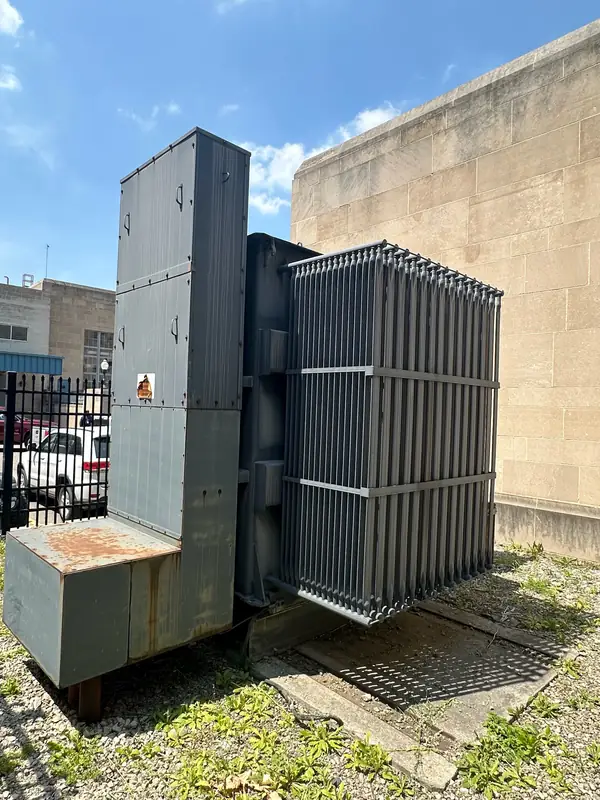
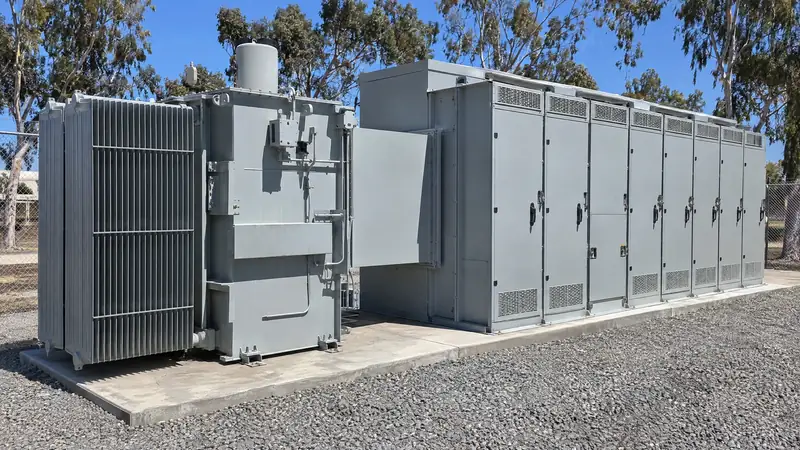
Industrial operations and warehouses may have three-phase pad-mounted units, unit substations close-coupled to switchgear, or medium-voltage dry-type transformers serving interior loads. Office, healthcare and research buildings may use dry-type transformers for building distribution, alongside larger units supplying central plant or site equipment. Manufacturing sites can have distribution equipment, drive-isolation or other specialty transformers tied to particular processes.
The exact equipment depends on the facility, not just its industry. A solar or battery project may have inverter step-up equipment, while a property with ordinary building loads may have pad-mount or dry-type distribution units. California Transformer Buyer reviews the actual configuration and documentation rather than assuming a unit is suitable based on its setting. See details about selling a pad-mount transformer and unit substation transformers.
04Nameplate and condition details that help identify the unit
Send clear photos of the nameplate and the overall transformer, taken from a safe position and only where you are authorized to access the equipment. Include the number of units, facility location and a brief description of known condition. Do not open compartments or touch, disconnect or move equipment to get photos; a qualified electrical contractor or the serving utility handles electrical work.
Useful nameplate details include manufacturer, serial number, year, kVA or MVA rating, phase, high- and low-voltage ratings, taps, impedance, cooling class and fluid type. Photos can also show whether the unit is pad-mounted, dry-type or part of a substation arrangement. Test reports, accessory lists and records about fluid or PCB status may help Rocky assess the equipment. For manufacturing-site equipment, see transformer buying for manufacturing and industrial plants.
- Include quantity and site location.
- Describe visible leaks, rust, damage or missing parts.
- Share available test reports and ownership details.
05How pickup and hauling are planned at an Orange County site
Pickup planning depends on the transformer’s size, weight, condition, site access and the agreed scope of work. A pad-mount unit at a warehouse, for example, may have different access and loading needs from a large substation transformer. Let us know about gates, restricted operating hours, loading areas, overhead or pavement constraints, and any site rules that could affect access.
Before pickup, the written offer states the price, what is included, who handles loading or rigging, who arranges freight and the payment terms. Responsibility for electrical isolation and disconnection stays with the owner’s qualified electrical contractor or the serving utility. Do not try to prepare or move a transformer yourself. Read more about transformer removal and pickup planning.
06Orange County cities and nearby service coverage
California Transformer Buyer serves sellers across Orange County from its Southern California base in Riverside County. Local examples include Anaheim, CA, with manufacturing, distribution, industrial research and visitor-serving businesses; Santa Ana, CA, with manufacturing, warehousing and research-oriented redevelopment; and Irvine, CA, with office, industrial and research facilities.
The city pages provide more location-specific information, but sellers in other Orange County communities can also submit equipment details. Nearby regional pages include Los Angeles County, the Inland Empire and San Diego and Imperial Counties.
07Requesting a written offer for Orange County surplus transformers
Call or text Rocky at (951) 403-5738, or use the contact form to request an offer. You can also text nameplate and overall photos. Include the unit’s quantity, location and condition; Rocky may ask follow-up questions about test reports, ownership, fluid or PCB records, and site access.
California Transformer Buyer reviews used transformers, new-surplus equipment that has never been energized, pulled units, spare transformers and project leftovers. A review costs nothing and creates no obligation. If an offer is made, get the scope and terms in writing before pickup so everyone understands what is included and how removal and payment are arranged.
FAQSelling a Transformer in Orange County: FAQ
Can I sell a transformer that is still installed at my Orange County facility?
It may be possible to review an installed unit, but the equipment must be legally available for sale and the electrical work must be handled by qualified personnel. Do not disconnect or prepare the transformer yourself. Share photos from a safe, authorized location, along with the nameplate, condition and access information. The owner’s qualified electrical contractor or serving utility handles isolation and disconnection.
Will you consider a single transformer, or does it need to be a full lot?
Both single units and larger groups can be reviewed. Send the quantity, ratings and location so the equipment can be assessed as offered. If you have a mixed lot, include photos and a count for each identifiable unit, plus any available test or inventory records. Whether an offer is made depends on the equipment and the information available.
What if the nameplate is unreadable or missing?
Send the clearest available overall photos and explain that the nameplate cannot be read or is missing. Do not remove covers or access restricted areas to find another label. Any records you already have—such as drawings, purchase documents, inspection reports or test reports—may help identify the transformer. The buyer may need to ask additional questions before determining whether it can be evaluated.
Can I sell equipment owned by Anaheim Public Utilities, SCE or another utility?
A property owner cannot sell equipment that belongs to a utility. Before submitting a transformer, confirm that you own it or have written authority to sell it. If the ownership is unclear, check the site’s asset records or contact the responsible organization before representing the equipment as yours. Utility service to a property does not by itself establish equipment ownership.
Do you review transformers with unknown PCB status or fluid records?
You can disclose that the records are unknown and provide any labels, test documents or maintenance history you have. Do not drain or sample oil to answer a buyer’s question. PCB status and oil handling can affect the proper evaluation and management pathway; sellers should rely on testing, documentation and qualified environmental professionals. This information is general and is not legal advice.
Does a transformer have to be operational to be considered?
Not necessarily. The review may include used, pulled, surplus, decommissioned or failed equipment, but condition and documentation matter and an offer is not guaranteed. Describe known problems such as leaks, damaged bushings, corrosion or missing components, and share available test results. Do not energize or operate equipment to demonstrate its condition; use existing records and qualified personnel.