01A Transformer Buyer Serving San Diego & Imperial Counties
If you need a transformer buyer in San Diego & Imperial Counties, California Transformer Buyer reviews equipment from facilities, contractors, utilities and property owners across both counties. We consider used and pulled units, spare transformers, surplus inventory, new-surplus equipment, project leftovers and mixed lots. Equipment may be a single unit or part of a larger group.
San Diego County’s military, manufacturing, international-trade and technology activity creates a different equipment mix from Imperial County’s agricultural, geothermal and solar sectors. The actual transformer, nameplate, condition, records and removal requirements matter more than its location or industry alone. For statewide guidance, see how to sell your transformer near me.
DIRCities in This Region
- San Diego, CASan Diego transformer sellers can submit equipment details and photos for review and a written offer from California Transformer Buyer.
- Chula Vista, CASell used, surplus or new-surplus transformers in Chula Vista with nameplate review and written pickup terms.
- Oceanside, CAOceanside sellers can submit transformer details for review and receive written offer and pickup terms before scheduling removal.
- Escondido, CASell used, surplus, or new-surplus transformers in Escondido with a written offer and pickup terms provided before scheduling.
- El Centro, CALearn how El Centro sellers can document, review, and arrange pickup for used and surplus transformers.
02Regional Industries That Can Leave Transformers Surplus
San Diego County includes manufacturing, life sciences and biotechnology, technology facilities, maritime-related industry and international trade. North County also has industrial business parks. These sites may have pad-mounted distribution units, dry-type transformers serving buildings or production equipment, unit substations, and spare or replacement units left after a project or facility change.
Chula Vista’s waterfront redevelopment, hospitality, convention and marina-related commercial activity can involve building and site distribution equipment. In Imperial County, agricultural production, trade and warehousing sit alongside geothermal and solar generation and transmission infrastructure. A project may have a step-up transformer, substation equipment or a standard distribution transformer to assess. Equipment type and ratings vary; an industry label does not establish the unit’s voltage or value.
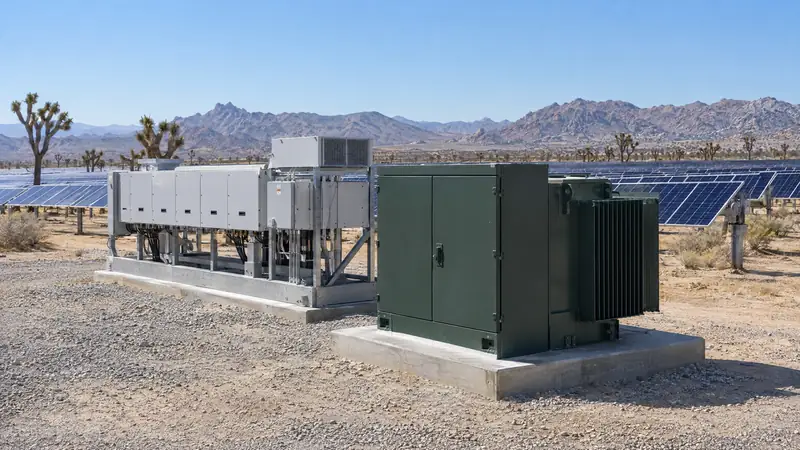
Solar and storage projects may use inverter step-up transformers to connect generation equipment with a collection or distribution system. If that describes your equipment, see solar and inverter step-up transformer types.
03SDG&E and IID Service Areas Have Different Voltage Records
San Diego Gas & Electric (SDG&E) serves the listed San Diego County cities covered here: San Diego, Chula Vista, Oceanside and Escondido. SDG&E’s verified distribution voltage is 12 kV, and 69 kV system supply is documented for substations. Those regional facts are useful context, but they do not confirm the voltage of a particular transformer or its service connection.
Imperial Irrigation District (IID) serves El Centro, and the utility also serves parts of nearby counties. The available information does not verify a specific IID distribution voltage, so do not assume one from a project location. Read the actual transformer nameplate and provide the primary and secondary voltage, connection and tap details when requesting an offer.
California pad-mounted equipment can have different primary configurations, and common secondary configurations include 208Y/120 V and 480Y/277 V three-phase. These are general California examples, not a claim about a specific site or IID service. Use the nameplate rather than a regional rule of thumb.
04Cities Covered in San Diego and Imperial Counties
The region includes five city pages with local industry and utility context. Use the city that best matches the transformer’s physical location when sharing its details:
- San Diego, CA — military and defense, manufacturing, international trade, life sciences and technology.
- Chula Vista, CA — waterfront redevelopment, hospitality, convention facilities and marina-related commercial activity.
- Oceanside, CA — manufacturing, industrial business parks and technology-related facilities.
- Escondido, CA — industrial and manufacturing facilities, commercial districts and business services.
- El Centro, CA — agricultural trade, distribution and warehousing, government and commercial facilities, and nearby military activity.
05Transformer Types to Identify Before Requesting an Offer
Sellers in the region may have pad-mounted single-phase or three-phase units, pole-mounted or dry-type distribution transformers, close-coupled unit substations, and larger station-class transformers. Solar and geothermal generation or transmission work can also involve generator or inverter step-up equipment. These are possible equipment categories based on regional activity, not a promise that every type or condition can be purchased.
A transformer’s kVA or MVA rating, phase, primary and secondary voltages, cooling, condition and accessories help establish what it is. For larger substation units, share all rating stages and cooling designations—for example, an ONAN/ONAF rating—along with available test records. Information on station-class and substation transformers can help identify the relevant fields.
| Equipment | Details to report |
|---|---|
| Pad-mounted distribution | kVA, phase, HV/LV volts, connection |
| Dry-type or unit substation | kVA, volts, impedance, enclosure |
| Solar or generator step-up | MVA, voltage, cooling, test records |
| Station-class substation | All rating stages, taps, accessories |
06Nameplate Photos and Records Help Clarify the Equipment
To start a review, send clear photos of the nameplate and the transformer’s overall exterior, taken only from a safe position and only where you are authorized to access the equipment. Include the quantity, location and known condition. Do not open compartments or handle equipment to get a photo; the owner’s qualified electrical contractor or serving utility handles electrical work.
Useful nameplate fields include manufacturer, serial number, year, kVA or MVA, phase, frequency, HV and LV voltage, taps, connection, impedance, BIL, cooling class, fluid type and weight. If available, include factory test reports, oil or dissolved-gas analysis, insulation-resistance or turns-ratio results, and records for fluid or PCB status. Follow testing and documentation—not assumptions—and consult qualified environmental professionals about environmental questions.
- State whether the unit is used, new-surplus, spare or pulled.
- Note visible leaks, corrosion, damaged bushings or missing parts without touching the equipment.
- Confirm that you own it or have authority to sell it.
07Pickup and Hauling Are Set Out in Writing Before Scheduling
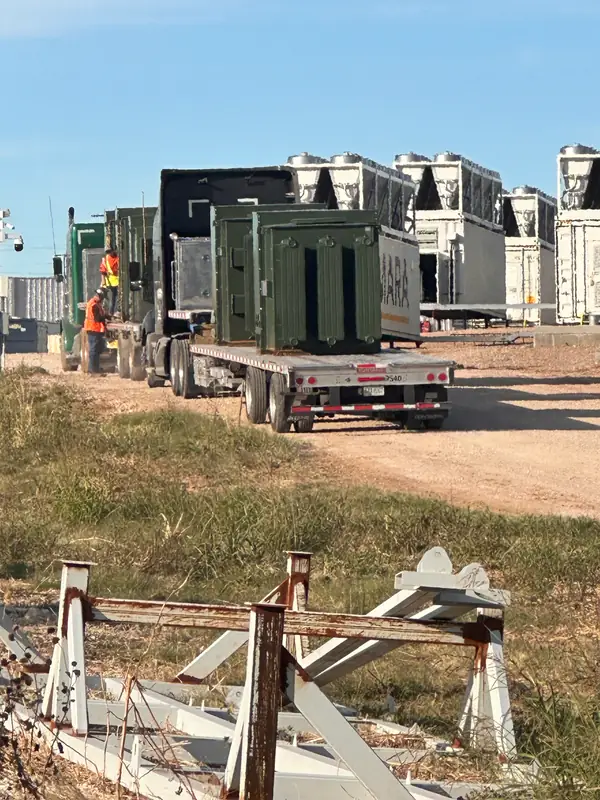
Pickup planning depends on the transformer’s dimensions, weight, condition, site access and the equipment needed to load and transport it. Share the location, access limits and any known lifting or scheduling requirements when requesting an offer. San Diego routes may involve urban or port-area access; Imperial County locations can involve agricultural, generation or transmission sites. Site conditions need to be reviewed individually.
The written offer states what is included, who handles loading or rigging and freight, and the payment terms and timing. Removal is scheduled after the terms are agreed. See transformer removal and pickup planning for more on coordinating the handoff.
Oversize or overweight loads may require Caltrans permits on state highways, and local roads can require separate approvals. Applicable limits depend on the load and route. Do not disconnect, move, drain or prepare a transformer yourself; qualified electrical personnel and the responsible hauling parties handle their respective work.
08Request a Written Offer for Used or Surplus Transformers
Call or text Rocky at (951) 403-5738, or use the contact form to request an offer. Send the photos, nameplate information, quantity, location and condition. Rocky may ask follow-up questions about test reports, ownership, fluid or PCB records, site access and removal needs before preparing a written offer.
Reviewing a transformer costs nothing and carries no obligation. If you are comparing surplus transformer buyer options, make sure the written terms clearly state what is being purchased, who is responsible for rigging and freight, and payment timing before pickup.
FAQSelling a Transformer in San Diego & Imperial Counties: FAQ
Does California Transformer Buyer purchase transformers in both counties?
California Transformer Buyer serves sellers throughout California, including San Diego and Imperial counties. Used, pulled, surplus, new-surplus, decommissioned, spare and project-leftover equipment can be reviewed. Whether a specific unit is suitable for an offer depends on its details, condition, ownership, records and removal requirements. Call or text the unit information and location to begin.
Can I sell a transformer that is still installed at my facility?
A transformer may be reviewed while it remains at its site, but the seller must own it or have authority to sell it. A property owner cannot sell utility-owned equipment located on the property. Do not disconnect or move an installed unit yourself. The owner’s qualified electrical contractor or serving utility is responsible for electrical isolation and related work.
What if I do not know whether the transformer is oil-filled or PCB-free?
Share whatever labels, historical records and test documentation you have, and do not guess about fluid or PCB status. Equipment with unknown status may require a qualified determination. PCB and used-oil requirements depend on applicable testing and documentation, and California has specific rules for PCB-containing oil. Rely on qualified environmental professionals for evaluation and management decisions; this is not legal advice.
Will you review a failed, leaking or incomplete transformer?
You can provide its nameplate, exterior photos, known condition and any available test reports for review. Leaks, bushing damage, missing components and a failed condition can affect whether and how a unit is considered. Do not drain, open or sample it. Any environmental determination or handling of oil and failed equipment should be addressed with qualified environmental professionals.
Can I sell one transformer, or does it need to be a full lot?
A review can cover a single transformer, multiple units or a larger surplus lot. For a mixed group, provide a count and separate photos or nameplate details for each identifiable unit where practical. Ratings, condition, completeness, location and access may differ across the lot, so the written offer should identify the equipment and terms being considered.
How soon will pickup happen after I share the information?
Pickup timing is arranged after the equipment is reviewed, the written terms are agreed and the site and hauling requirements are understood. Timing can depend on access, loading or rigging needs, route considerations and coordination with qualified electrical personnel. The agreed terms state who handles the work and payment timing; no pickup date should be assumed before scheduling is confirmed.