01What Types of 1500 kVA Transformers Are Common?
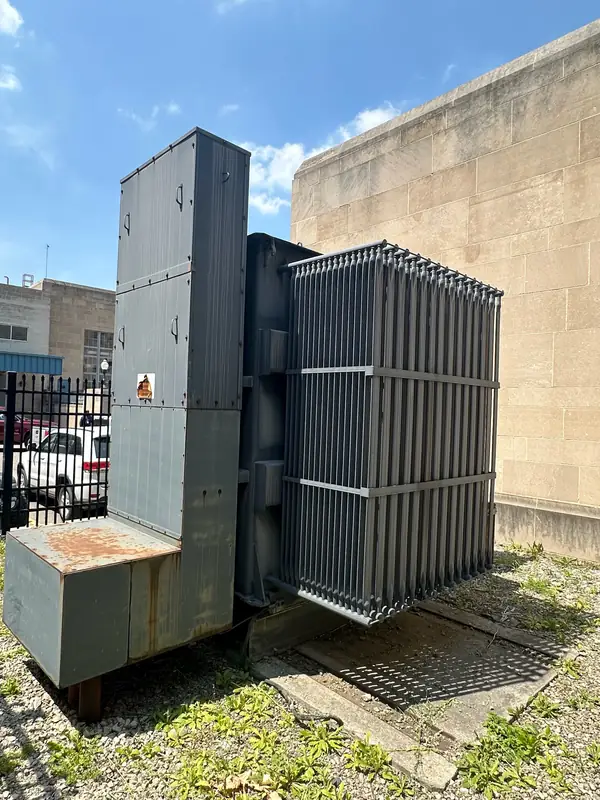
A 1500 kVA transformer is a substantial three-phase unit used where a facility or project needs more capacity than a small commercial distribution transformer can provide. Common configurations include pad-mounted liquid-filled equipment, medium-voltage dry-type and cast-resin units, unit substations, network transformers, solar inverter step-up transformers and battery energy storage system (BESS) transformers.
The enclosure and accessories depend on the installation. A pad-mounted unit is typically enclosed for an outdoor installation; a dry-type transformer is designed for indoor or other specified settings. A unit substation may be close-coupled to switchgear. See our pages on three-phase pad-mount transformers, medium-voltage dry-type transformers, cast-resin transformers and unit substation transformers for configuration details.
FLAFull-Load Amps for a 1500 kVA Transformer
Rated full-load current at common California voltages. Single-phase: amps = kVA × 1000 ÷ volts. Three-phase: amps = kVA × 1000 ÷ (1.732 × volts). Use the nameplate voltage of your unit.
| Phase | Voltage | Full-load amps |
|---|---|---|
| Three-phase | 480 V | 1,804 A |
| Three-phase | 600 V | 1,443 A |
| Three-phase | 4.16 kV | 208 A |
| Three-phase | 12 kV | 72.2 A |
| Three-phase | 12.47 kV | 69.4 A |
| Three-phase | 20.78 kV | 41.7 A |
| Three-phase | 34.5 kV | 25.1 A |
02Typical Voltage Combinations and California Uses
The voltage combination must match the connected system, not just the kVA rating. Common three-phase secondary arrangements include 480Y/277 V for large commercial and industrial service, 208Y/120 V for lower-voltage building loads, and 600 V in some applications. A 1500 kVA unit may have a medium-voltage primary such as a 12 kV-class, 16 kV-class, 20.78 kV or 34.5 kV configuration. These are examples, not a substitute for the actual nameplate or the serving utility’s requirements.
In California, this rating can serve large 480 V commercial or industrial loads and can be used in solar and battery converter blocks. The right design depends on the project’s service voltage, load profile, grounding and connection requirements. If you are comparing adjacent sizes, see 1250 kVA transformers and 1667 kVA transformers.
03Physical Size, Weight and Nameplate Details
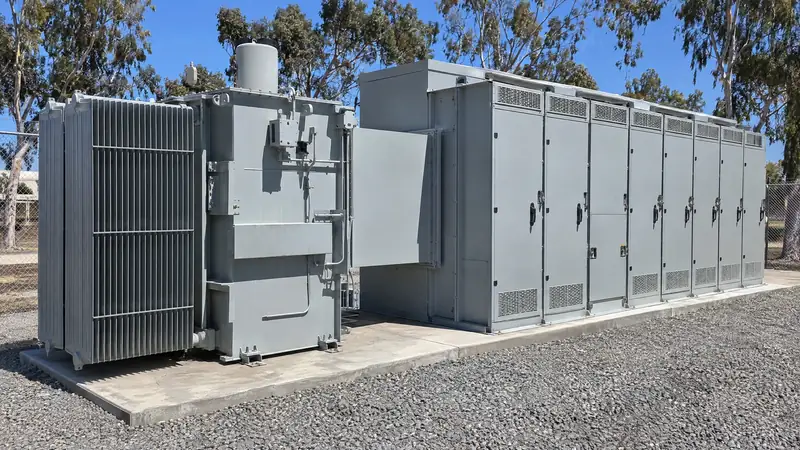
A 1500 kVA transformer is generally a large, heavy piece of electrical equipment, but its dimensions and weight vary by manufacturer, insulation type, cooling design, voltage class and accessories. Liquid-filled pad-mount, dry-type and substation configurations can differ substantially. Use the equipment’s nameplate and shipping or factory documentation for its actual dimensions and weight rather than relying on a typical estimate.
For an evaluation, clear photos of the full nameplate are especially useful. Important fields include manufacturer, serial number, year, kVA, phase, primary and secondary voltage, connection, tap positions, impedance, BIL, temperature rise and cooling class. For liquid-filled equipment, include fluid type, gallons and any PCB label or records. Do not access or open equipment to obtain this information; photograph only equipment you are authorized to access from a safe position.
04How to Read the 1500 kVA Full-Load Amps Chart
The full-load amps chart shown elsewhere on this page gives calculated three-phase current for 1500 kVA at several listed voltages. Find the voltage that matches the transformer winding you are checking. The chart’s current is the approximate line current at rated kVA and voltage; the same transformer has higher current on its lower-voltage winding and lower current on its higher-voltage winding.
For three-phase equipment, the calculation uses kVA × 1,000 divided by √3 and line-to-line voltage. Treat the chart as a reference, not as a breaker, conductor or transformer-sizing instruction. Confirm actual ratings, taps and connections on the nameplate and consult a qualified electrical professional for application decisions. For more on the relationship between capacity and current, see how to read transformer kVA and amps.
05What Affects a Used 1500 kVA Transformer’s Value?
A used or surplus unit’s value depends on whether its specifications fit a current need and what can be verified about its condition. Voltage combination, taps, connection, impedance, BIL, cooling class, temperature rise and winding material all matter. Common California voltages may be easier to place than unusual configurations, but demand varies by equipment type and project.
New-surplus status, test reports and complete documentation can strengthen an evaluation. For used equipment, buyers may ask about leaks, corrosion, bushing damage, missing parts and maintenance or test history. Fluid type, gallons and PCB documentation are relevant for liquid-filled units. Age, quantity, site access and the complexity of loading or freight also affect the assessment. For more detail, see factors that affect a used transformer’s value.
06What to Send for an Offer
California Transformer Buyer reviews used, pulled, surplus and new-surplus equipment from sellers in California. To start an evaluation, send the information below by text or through the website form. A photo of the nameplate is often the quickest way to confirm key specifications; do not guess at details that are unclear.
For liquid-filled or older equipment, include available fluid and PCB records, test reports and ownership information. Records help establish what is known about the unit, but PCB status should be based on testing, documentation and qualified environmental professionals. This information is not legal advice.
- Nameplate photo and overall equipment photos
- Quantity, California location and condition
- Available factory or field test reports
- Fluid, PCB and maintenance documentation, if available
- Site access details and confirmation you own the unit or can sell it
07Written Offer and Removal Planning
Rocky reviews the information and may ask follow-up questions about the transformer, records, ownership or site access. If the unit fits, you receive a written offer that states the price, what is included, who handles loading or rigging and freight, and payment terms and timing. Reviewing a transformer costs nothing and carries no obligation. To begin, use the California Transformer Buyer contact form or call or text (951) 403-5738.
Do not attempt to de-energize, disconnect, open, drain, sample or move the transformer. The owner’s qualified electrical contractor or serving utility handles isolation and disconnection. Only qualified personnel should manage electrical work, and solar, battery or generator backfeed must be considered where present.
kVANearby Transformer Sizes We Buy
FAQ1500 kVA Transformer FAQ
Is a 1500 kVA transformer always three-phase?
Three-phase is the common configuration for 1500 kVA units, especially for large commercial, industrial and renewable-energy applications. Do not assume the phase from the rating alone. Check the nameplate for phase, voltage and connection, and share a clear photo when asking for an evaluation. A buyer needs the actual configuration to determine whether the unit may suit another project.
Can I sell a 1500 kVA pad-mount transformer?
Yes, California Transformer Buyer considers used and surplus three-phase pad-mount units, subject to review of the specifications, condition and sale details. Send photos of the nameplate and exterior, along with the unit’s location and any available records. Do not open compartments or handle electrical connections to take photos; have qualified personnel manage electrical access and work.
Does a 1500 kVA rating tell me the transformer’s output voltage?
No. The kVA rating describes apparent-power capacity, not the primary or secondary voltage. A 1500 kVA transformer can be built with different winding voltages, taps and connections. Confirm both winding ratings and the connection on the nameplate, then check that they match the intended system. A similar kVA rating alone does not make two transformers interchangeable.
What if the 1500 kVA unit has no test reports?
You can still ask for an evaluation, but be clear about which documents are missing. The buyer may ask follow-up questions or request available operating, maintenance, fluid or inspection records. Test information can help establish condition and suitability, but do not arrange testing by opening or working on the transformer yourself. Electrical and environmental work should be handled by qualified professionals.
Can I sell a transformer that belongs to the serving utility?
The seller must own the transformer or have authority to sell it. Equipment located on private property is not necessarily owned by the property owner; utility-owned equipment cannot be sold by the property owner. If ownership is unclear, review the relevant property, project or utility records before requesting an offer. Include any available documentation showing your authority to sell.
What happens after I send the transformer details?
Rocky reviews the photos and specifications and may ask about test reports, fluid or PCB records, ownership, condition and site access. If an offer is made, its written terms identify what is included and who handles rigging and freight, along with payment terms and timing. Removal is scheduled under the agreed terms; do not move or disconnect the equipment yourself.