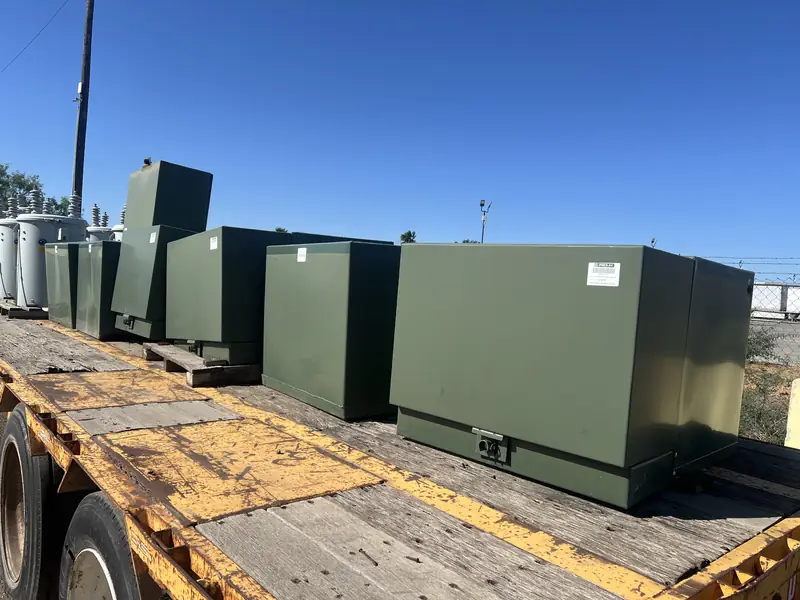
01Sell Your Electrical Transformers as One Documented Lot
A facility cleanout rarely produces a uniform transformer inventory. You may have dry-type units from building renovations, pad-mounted equipment from an abandoned expansion, pole-mount spares and small control transformers left in a contractor warehouse. California Transformer Buyer reviews these mixed inventories, including previously energized equipment and unused project leftovers.
One California buyer can simplify communication by reviewing the inventory together instead of requiring a separate inquiry for every equipment family. That does not mean every item will qualify for purchase. The written offer should identify exactly which transformers are included, which are excluded and what removal responsibilities remain with the seller.
For a plant closure or full-yard disposition, the transformer liquidation page covers the broader project context. Here, the priority is building a reliable lot list that connects each physical unit to its specifications, condition and pickup requirements.
02Build a Spreadsheet That Matches Each Transformer to Its Photos
Assign each transformer a unique inventory ID, such as T-01 or T-02, and use that ID in the spreadsheet and photo filenames. Record the exact location, not just the facility address: building, storage aisle, yard position or equipment pad. Keep the identifier consistent through review and pickup.
Use one row per unit when serial numbers, condition or accessories differ. Identical unused units may be grouped initially, but include the quantity and available serial numbers. Do not group equipment solely because its cabinets look alike; transformers with the same kVA rating can have different voltages, connections and applications.
Transcribe the actual nameplate rather than estimating from enclosure size. Include every kVA or MVA rating shown on a multi-stage unit. If a field cannot be read safely, mark it unknown and provide an external photo rather than guessing.
| Record group | Fields to include | Why it matters |
|---|---|---|
| Identification | Inventory ID, manufacturer, serial, year | Connects records to the physical unit |
| Electrical rating | kVA/MVA, phase, frequency, HV/LV, connection | Establishes application compatibility |
| Additional specifications | Taps, impedance, BIL, cooling, temperature rise | Distinguishes otherwise similar equipment |
| Status and condition | Quantity, operating status, storage, damage | Separates known facts from unknown history |
| Logistics and documents | Location, dimensions, weight, tests, photo links | Supports review and removal planning |
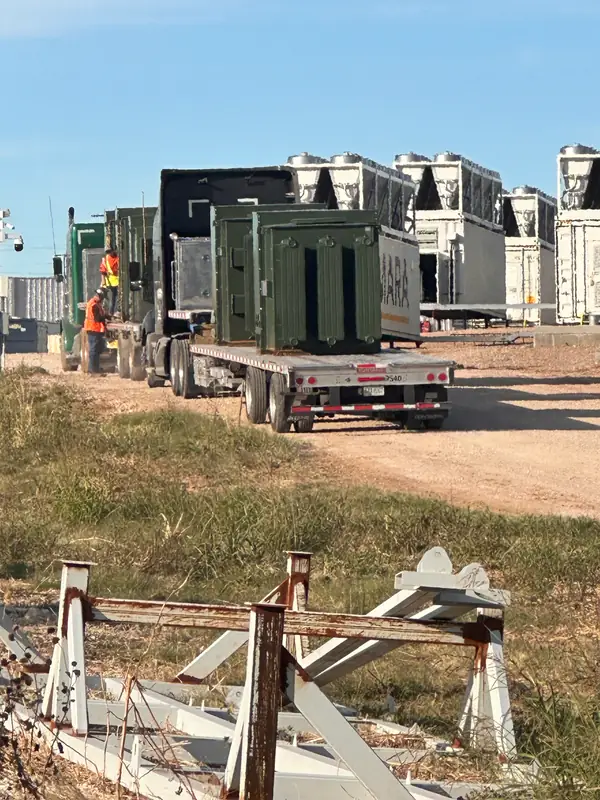
03Separate Dry-Type, Pad-Mount, Pole-Mount and Control Units
Organize the spreadsheet by equipment family while keeping one master inventory. A 75 kVA dry-type transformer with a 480 V primary and 208Y/120 V secondary is not interchangeable with a 75 kVA single-phase liquid-filled distribution unit. Small control transformers also serve a different application from building distribution equipment.
For pad mount and pole-mount units, record fluid type, gallons and available PCB documentation. For dry-type equipment, identify the insulation system and temperature rise where shown. If you are unsure of the family, use the guide to transformer types and let the nameplate establish the specifications.
A padmount inventory should distinguish single-phase from three-phase equipment and show actual primary voltage and secondary connection. See the pad-mounted transformer selling requirements for that equipment group. Keep new-surplus units separate from used units; never energized is a meaningful status, not a synonym for clean-looking.
- Dry-type: note enclosure condition, storage exposure and missing panels.
- Pad-mounted: document cabinet exterior, radiators and accessible external accessories.
- Pole-mount: record conventional or CSP configuration if known.
- Control and specialty: include the application and complete voltage information.
- Station class: retain all cooling-stage ratings and accessory records.
04How Mixed Transformer Lots Are Evaluated and Bundled
Electrical transformer resale depends on the individual equipment, not just the total unit count. Rating, voltage, phase, winding material, age, condition, testing and included accessories all affect review. A mixed transformer lot may contain readily reusable units alongside equipment requiring further assessment.
Common California secondaries include 120/240 V single-phase, 208Y/120 V three-phase and 480Y/277 V three-phase. Primary systems vary across the state, so a nominal voltage description is not enough. For example, 12,000 V delta and 12,470GrdY/7,200 V are distinct nameplate configurations. The transformer voltage guide explains why complete voltage information matters.
When you sell transformers in bulk, matching units can be reviewed as a group, while unusual ratings or uncertain-condition equipment may need separate questions. Shared access and consolidated freight can influence the lot review, but one valuable unit does not make every item suitable for purchase.
Rocky reviews the proposed lot and asks for missing information before preparing an offer. Confirm whether the offer covers the entire inventory or a specified subset. Keep cabinets, gauges, fans, fuses and other included accessories tied to their corresponding units.
05Document Ownership, Operating History and Test Records
The seller must own the equipment or have authority to sell it. A transformer located on your property may belong to the serving utility; property ownership alone does not establish ownership of that transformer. Include utility release documentation when applicable, along with any restrictions on removal.
State whether each unit is energized, de-energized or already disconnected, based on reliable records or qualified personnel. Record the date last operated, repairs, storage conditions and known overload, fault or flood exposure. Describe leaks, corrosion, damaged bushings and missing components without treating appearance as proof of electrical condition.
Available records may include factory reports, turns-ratio and winding-resistance results, insulation and appropriate dielectric tests, and liquid dielectric, PCB or dissolved-gas analysis reports where applicable. This is a document checklist, not a testing procedure. Used equipment and never-energized surplus transformers need accurate histories even when they look similar.
- Provide existing reports with dates and matching serial numbers.
- Distinguish confirmed operating history from an unverified description.
- Identify accessories included, stored separately or missing.
- Disclose known damage rather than leaving the condition field blank.
06Photograph the Lot Without Opening Electrical Compartments
Take photos only from a safe position around equipment you are authorized to access. Useful images include a full external view, a readable straight-on nameplate close-up, all safely accessible sides, radiators, bushings, valves, cabinet exterior and externally visible accessory or control plates. Add wider views showing ground-level clearances and the route to the loading area.
Do not open electrical compartments to complete an inventory. Only qualified personnel may access them after proper isolation, lockout, voltage verification and grounding as applicable. De-energizing and disconnecting are responsibilities of the owner's qualified electrical contractor or the serving utility, with potential solar, battery and generator backfeed considered.
For a large lot, organize photos into folders named by inventory ID. A few clear, matched images are more useful than dozens of unlabelled pictures. If a nameplate is inaccessible, explain that limitation so the review can proceed with known information.
07Plan Mixed-Lot Pickup Around Weight, Access and Fluid Status
A warehouse pallet and an installed station-class transformer have different handling requirements. Provide dimensions, operating and shipping weights, documented lifting or rigging points, forklift or crane access and site restrictions. Note narrow gates, overhead obstructions, loading-area limitations and removal deadlines before terms are finalized.
The written offer establishes who handles loading, rigging and freight. A mixed lot may require coordinated pickup stages rather than one load, especially when installed equipment and stored units are involved. Use the transformer removal and pickup guide to organize the site information; do not move equipment yourself to prepare for an offer.
Fluid condition and documentation also affect planning. Under federal TSCA classifications, non-PCB means below 50 ppm, not zero PCBs. California has stricter rules for PCB-containing oil, including excluding oil with 5 ppm or more PCBs from its used-oil category. Unknown status may require assumptions until testing or qualifying documentation establishes concentration.
A working transformer sold for reuse is equipment, but leaking units, drained oil and failed equipment require an appropriate determination. Rely on testing, documentation and qualified environmental professionals to establish the correct handling pathway. These points are general information, not legal advice.
08Request a Written Offer for Your California Inventory
Call or text Rocky at (951) 403-5738, or use the transformer inventory and offer request form. Send the spreadsheet if available, nameplate and overall photos, quantity, California location and condition. Reviewing your transformer inventory costs nothing and there is no obligation.
Rocky may follow up about ownership, tests, fluid records or site access. Before pickup, the written offer states the equipment included, loading and freight responsibilities, and payment terms and timing. Removal is then scheduled, with pickup and payment handled as stated in those terms.
California Transformer Buyer is based in Riverside County and buys from sellers throughout California only. Whether you have one unit or a full contractor yard, start with an accurate inventory rather than waiting for every record to be perfect.
FAQSell Your Electrical Transformer FAQ
Can I submit a mixed lot before I have a complete spreadsheet?
Yes. Start with the approximate quantity, California location, equipment families and available nameplate photos. Explain which details are missing. An incomplete list can start the discussion, but unit identification, ownership, condition and access information will still be needed to define an offer. Do not guess ratings or enter assumed voltages just to fill empty spreadsheet cells.
Will California Transformer Buyer purchase every transformer in my cleanout?
Purchase is subject to review; submitting a full inventory does not guarantee acceptance of every item. Specifications, condition, documentation and removal requirements can differ substantially within one yard. If your project requires the entire lot to leave, state that requirement early. Check the written offer for the exact included equipment and any exclusions before arranging the rest of the cleanout.
Can small control transformers be included with larger distribution units?
You can include control transformers in a mixed-lot submission, with their quantities, ratings, voltages and condition clearly listed. Keep them in a separate inventory group so they are not confused with distribution transformers. Their inclusion in a purchase depends on review of the proposed lot; size alone does not establish resale suitability or guarantee that they will be accepted.
Does an old transformer need to meet current DOE efficiency standards before resale?
DOE distribution-transformer efficiency standards apply to manufacture; they do not make existing used or surplus units illegal to resell simply because newer manufacturing standards exist. A buyer still needs the manufacture date, specifications and condition to assess suitability. Separate project requirements, installation considerations and equipment compatibility can also affect whether an older transformer fits a prospective reuse application.
What if several transformers are stored at different California locations?
Identify each site separately and assign every unit to its actual location. Include a site contact, access restrictions and whether the equipment is installed or stored. Multiple locations change pickup planning, even when one seller owns the entire inventory. The proposed arrangement and written terms should make clear which locations are covered and who handles loading and freight at each.
Should I repair or test every unit before asking for an offer?
Submit the existing information first and disclose known defects. There is no need to assume that every transformer requires the same additional testing or repair for initial review. Rocky may request specific records or clarification after examining the inventory. Any testing, electrical work or environmental assessment should be handled by appropriately qualified professionals, not performed by the seller to complete a sales checklist.