01Sell New Transformer Inventory Left Over From a Project
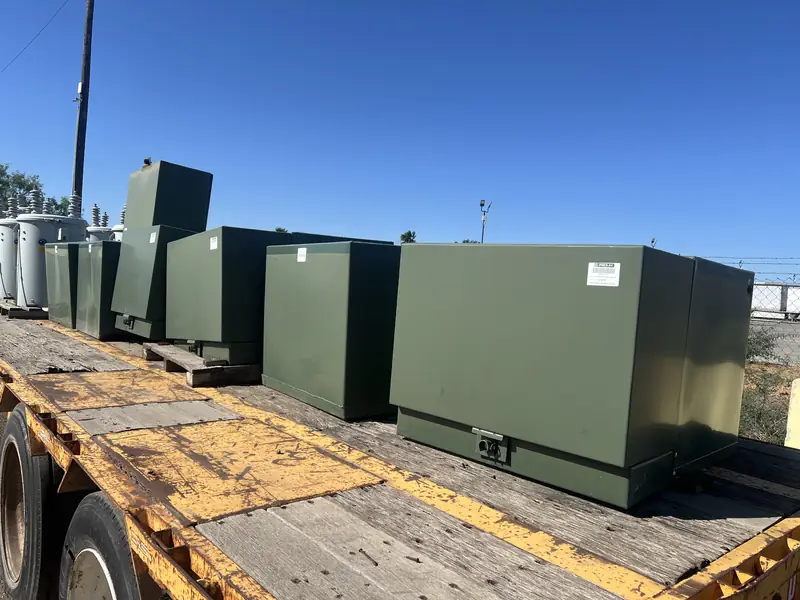
A canceled project, revised electrical design or duplicate order can leave a perfectly usable transformer taking up storage space. California Transformer Buyer considers never-energized equipment still in its crate, secured on a skid or held as a spare. The starting point is its actual specification and condition—not simply whether the packaging looks new.
New-surplus means the transformer has not been energized. It can include older warehouse inventory, an unused replacement or equipment delivered to a jobsite but never placed in service. Tell Rocky whether it was ever installed, connected, filled or otherwise handled after delivery, and provide the available history.
If your inventory includes both unused and previously operated equipment, identify them separately. Our surplus transformer buying page covers broader excess inventory, including spares and mixed lots.
- Project over-orders and equipment left after design changes
- Unused facility or utility spares you are authorized to sell
- Crated dry-type transformers and liquid-filled units on skids
- Multiple transformers from canceled or completed projects
02Why Available New-Surplus Units Can Hold Strong Value
A documented, available transformer may help a project avoid waiting for a newly manufactured unit. NREL reported in 2024 that distribution transformer lead times reached up to about two years, roughly four times pre-2022 levels. Those figures describe a dated market condition, not a delivery forecast for every transformer today.
For a new surplus transformer buyer, availability matters only when the electrical configuration fits another application. A never-energized transformer with unusual voltages, missing accessories or uncertain storage history can be harder to place than a complete unit with commonly requested specifications. Strong potential value is not a guaranteed offer.
Read our guide to transformer shortages and seller opportunities for the market context. For your unit, the more useful question is whether its rating, connections, documentation and physical condition support a practical reuse application.
- Exact kVA or MVA rating and all cooling stages
- Primary and secondary voltages, phase and frequency
- Impedance, BIL, taps and winding connections
- Fluid or insulation type and complete accessories
- Storage condition, test history and transport requirements
03Build a Documentation Packet for Each Serial Number
Start with a readable, straight-on nameplate photo and available factory paperwork. Match the serial number on each report to the actual transformer. For a package of identical-looking units, separate records prevent confusion about ratings, manufacture dates and included accessories.
Purchase records help establish the original order configuration and your authority to sell. Include warranty documents, but do not assume an original manufacturer's warranty transfers to a second owner. Warranty status should be supported by the applicable terms or manufacturer confirmation.
Existing service or storage inspection records are useful too. Relevant reports may include turns ratio, winding resistance, insulation and appropriate dielectric tests; liquid-filled equipment may also have dielectric, PCB or dissolved gas analysis records where applicable. This is a document checklist, not a testing procedure.
- Manufacturer, serial number and year of manufacture
- Factory test report and original specification sheet
- Purchase records and proof of ownership or sale authority
- Warranty terms and any documented transfer conditions
- Efficiency compliance documentation, when applicable
- Accessory list, drawings and available inspection records
DOE Efficiency Rules Depend on Manufacture and Coverage
Covered distribution transformers manufactured from January 1, 2016 must meet DOE efficiency levels under 10 CFR 431 Subpart K. A 2024 final rule sets new levels for units manufactured on or after April 23, 2029 and expands coverage up to 5,000 kVA. These standards apply to manufacture; they do not make existing used or surplus units illegal to resell. Supply available compliance records rather than assuming every transformer falls within the same requirements.
04Read the Electrical Configuration, Not Just the kVA
Two 1,000 kVA transformers are not necessarily interchangeable. A three-phase pad-mounted unit rated 12,470GrdY/7,200 V to 480Y/277 V differs from one with a 12,000 V delta primary or a 208Y/120 V secondary. Connections, impedance, BIL, taps and the cabinet arrangement all affect suitability.
California includes several distribution voltage classes. Common pad-mount configurations include 12 kV class, 16 kV class in SCE territory and 21 kV class in PG&E and SMUD areas. These regional patterns do not establish approval for a particular installation; always use the actual nameplate voltage.
For cabinet-style inventory, see our three-phase pad-mount transformer specifications. Larger station-class units require additional attention to staged MVA ratings, cooling equipment, controls and shipping configuration; our substation transformer buying page explains that equipment category.
| Equipment | Electrical details | Completeness checks |
|---|---|---|
| Three-phase pad mount | HV/LV connections, taps, impedance and BIL | Switches, fuses and specified termination accessories |
| Low-voltage dry type | kVA, voltage, phase and temperature rise | Enclosure, mounting provisions and identification |
| Substation or station class | All MVA stages, cooling class and tap changer | Radiators, fans, gauges and control equipment |
| Solar or BESS step-up | Actual inverter-side and system-side ratings | Project drawings and specified accessories |
05Storage History Matters Even When the Crate Is Intact
Never energized does not mean unaffected by time or handling. Outdoor exposure, moisture, corrosion, damaged bushings, oil leaks or shipping impacts can change a unit's condition. A crate may protect against some handling damage without proving that the transformer was stored correctly.
Describe whether the unit was stored indoors or outdoors, how long it has been there and any known flooding, repairs or handling incidents. Send safe exterior photographs of the packaging and accessible equipment, including radiators, bushings, valves, cabinet exterior and accessory plates where visible. Do not open compartments or disturb packaging to obtain inaccessible information.
For liquid-filled units, provide the fluid type and available PCB documentation. A “non-PCB” label does not mean zero PCBs, and California has stricter rules for PCB-containing oil. Any uncertain fluid status, leak or waste determination should rely on testing, documentation and qualified environmental professionals; this is not legal advice.
- Photograph from a safe position within authorized access.
- Report visible damage rather than attempting repairs.
- Identify missing, separately stored or loose accessories.
- Provide available storage instructions and inspection logs.
- Leave electrical access and equipment handling to qualified personnel.
06Offer Single Spares or a Full Project Package
You do not need a yard full of equipment to request a review. California Transformer Buyer considers single unused spares as well as multi-unit packages from California sellers. For a larger lot, provide an inventory showing each serial number, rating, status, exact location and associated paperwork.
Keep included equipment clearly identified. List separately packed radiators, fans, control cabinets, termination accessories and other components that belong with each transformer. If the package also contains used units, identify their operating history rather than describing the entire lot as new.
Our transformer liquidation page addresses larger inventory dispositions. For either a single unit or a package, confirm ownership before requesting an offer: equipment belonging to a serving utility cannot be sold merely because it is located on your property. Provide a utility release when applicable.
07Get Written Purchase and Pickup Terms Before Equipment Moves
Call or text Rocky at (951) 403-5738, or use the transformer offer request form. Send the quantity, California location, nameplate photos, overall photos and condition summary first. Reviewing your transformer costs nothing and there is no obligation.
Rocky reviews the information and may ask for factory reports, fluid records, ownership details or access measurements. A written offer states the purchase terms, included equipment, responsibility for loading and rigging, freight arrangements and payment terms and timing. Pickup and payment follow those written terms.
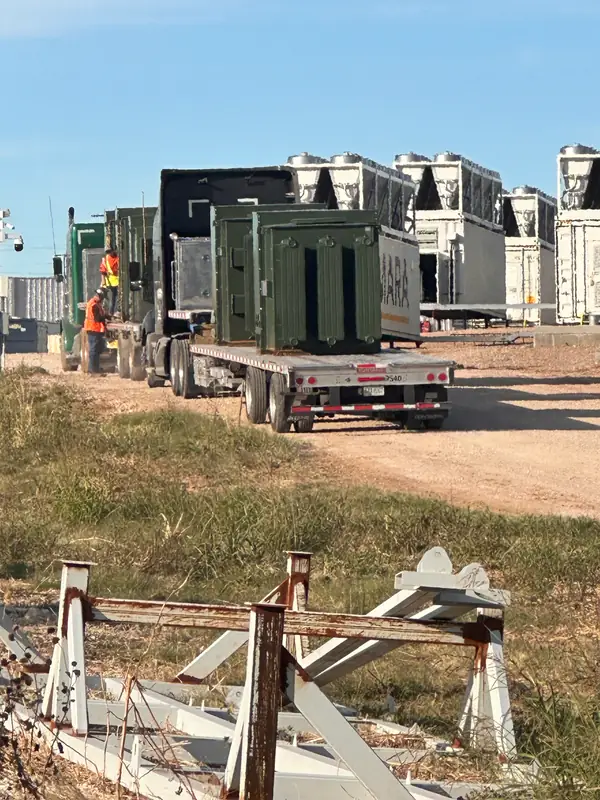
Access planning needs dimensions, operating and shipping weights, lift or rigging information and ground-level clearances. Describe forklift or crane access and any removal obligations, without moving equipment yourself. Our transformer removal and pickup guide explains the planning considerations; electrical isolation and disconnection remain the responsibility of qualified personnel or the serving utility.
FAQSell New Surplus Transformer FAQ
Can I sell a transformer still in its crate without unpacking it?
You can request a review using accessible identification, shipping records, factory reports and exterior packaging photos. Explain what is visible and what remains concealed. Rocky may need additional information before an offer can be finalized. Do not unpack, open electrical compartments or move the unit yourself to obtain photos; any necessary access or handling should be arranged with qualified personnel.
Does an old manufacture date prevent a never-energized transformer from being considered?
Not automatically. Age is one part of the review alongside electrical configuration, storage conditions, completeness and documentation. An older unused spare should not be represented as recently manufactured, and its original warranty may no longer apply. Provide the actual manufacture date and known storage history so the unit can be evaluated on accurate information.
What if I cannot find the factory test report?
Send the nameplate and whatever records you do have. Missing factory documentation does not establish that the equipment is defective, but it leaves less evidence of its original tested condition. Rocky can review the available information and explain what else is needed. Any additional testing should be addressed by qualified professionals, not attempted by the seller.
Is a transformer that was installed but never powered still new-surplus?
Describe it as installed but never energized rather than simply calling it factory-new. Installation may have changed its condition, packaging or accessory completeness. Explain whether it remains connected and provide the installation and handling history. Any required isolation, verification or disconnection must be handled by your qualified electrical contractor or the serving utility, even if you believe it was never powered.
Will a custom-built transformer be harder to sell than a standard unit?
It may have a narrower reuse market, but custom equipment can still merit review. Unusual secondary voltages, impedance requirements, enclosure designs or project-specific controls can limit compatible applications. Include the original drawings and specification sheet so those differences are clear. An unused transformer buyer needs the complete configuration, not just the manufacturer and headline kVA rating.
Can I offer only part of my spare inventory?
Yes. Identify the units you are authorized and prepared to sell, and distinguish them from equipment you intend to retain. For shared accessory packages, specify which components belong to the offered units. California Transformer Buyer reviews the selected inventory, and any written offer should clearly identify the equipment and accessories included so there is no ambiguity at pickup.