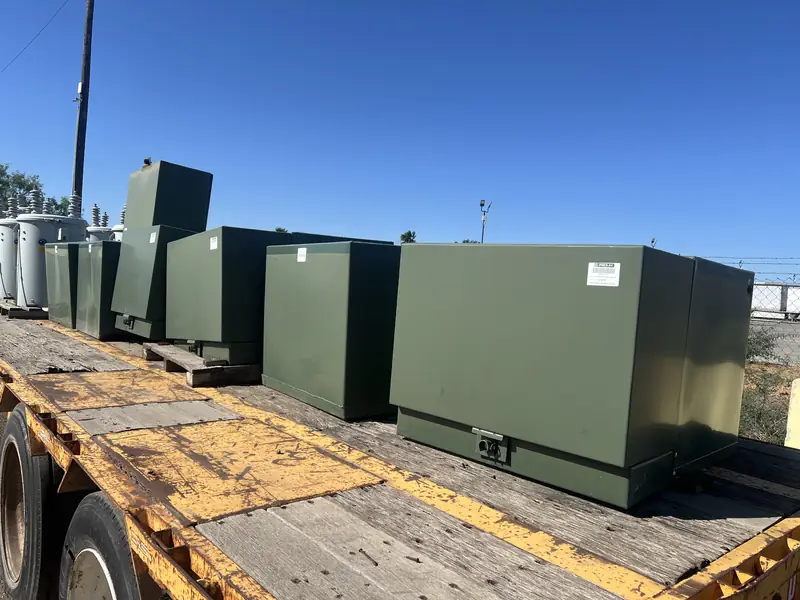
01The Transformer Shortage and What Sellers Should Expect
A shortage creates interest in equipment that is already available, but it does not make every transformer interchangeable. A buyer still needs the correct voltage, capacity, connections and physical configuration. A used transformer that fits a specific project may be more useful than a never-energized unit with incompatible specifications.
For California owners, the practical opportunity is to identify equipment that no longer serves a planned purpose and document it before requesting an offer. Canceled projects, facility upgrades, retired substations and excess spare inventories can all leave transformers available for review.
California Transformer Buyer buys used, removed, surplus and new-surplus equipment from California sellers, from single units to full yards. The surplus transformer buying page explains the types of excess equipment sellers can submit. Market pressure is a reason to seek a unit-specific review, not a reason to assume a purchase or a particular value.
02What the 2022–2026 Supply Reports Actually Show
The strongest way to describe the shortage is with dated evidence, rather than a blanket claim about current delivery schedules. In 2024, NREL reported distribution transformer lead times reaching about two years, roughly four times pre-2022 levels. DOE has also described long lead times and component shortages.
Wood Mackenzie's August 2025 estimates put U.S. supply deficits at 30% for power transformers and 10% for distribution transformers. Its October 2025 update reported Q2 2025 average lead times of about 128 weeks for power transformers and 143 weeks for generator step-up units.
These reports describe different equipment categories and should not be treated as delivery quotes for every manufacturer or order. They explain why buyers consider alternatives, but a seller should not tell a prospective buyer that every new transformer takes two or three years to obtain.
| Source and date | Equipment category | Reported finding |
|---|---|---|
| NREL, 2024 | Distribution transformers | Lead times up to about two years |
| Wood Mackenzie, August 2025 | U.S. power transformers | Estimated 2025 supply deficit: 30% |
| Wood Mackenzie, August 2025 | U.S. distribution transformers | Estimated 2025 supply deficit: 10% |
| Wood Mackenzie, October 2025 | Power transformers | Q2 2025 average: about 128 weeks |
| Wood Mackenzie, October 2025 | Generator step-up units | Q2 2025 average: about 143 weeks |
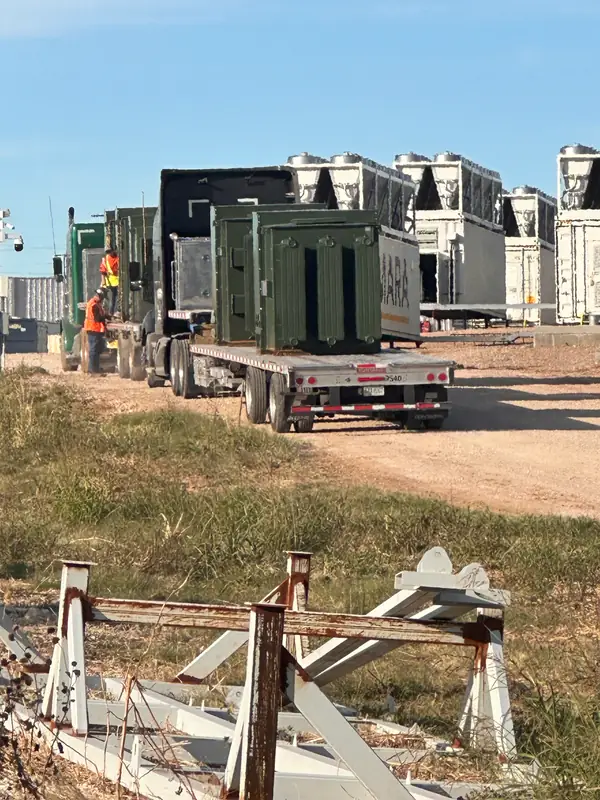
03Why California Projects Need More Than One Transformer Type
California demand comes from several directions: utility work, commercial construction, solar generation, battery storage, data centers and EV charging. Those projects require different transformer families. A solar inverter step-up unit, a three-phase pad mount and a low-voltage dry-type transformer cannot simply substitute for one another.
The CEC counted 201,180 public and shared EV charging ports in September 2025. EIA reported in June 2026 that CAISO utility-scale solar grew 19% to 25 GW and battery storage grew 79% to 16 GW between April 2024 and April 2026. These figures illustrate expanding electrical infrastructure, not a purchase forecast for any individual transformer.
Data-center planning also adds pressure. The CEC's 2024 draft forecast modeled roughly 6.0%–8.7% annual data-center demand growth for 2024–2040. Separately, SCE's 2025 Altadena/Malibu rebuild plan proposed 153 circuit miles of undergrounding. Both help explain why capacity and availability matter, while final equipment selection remains project-specific.
- Commercial distribution: often three-phase pad-mounted or unit-substation equipment.
- Solar and storage: application-specific step-up and interconnection requirements.
- Industrial facilities: distribution, station-class and specialty transformers.
- Utility replacement work: system-specific ratings, construction and accessories.
04Electrical Fit Matters More Than the Shortage Headline
Start with the actual nameplate, not a shorthand description such as “12 kV transformer.” Common California padmount configurations include 12,000 V delta and 12,470GrdY/7,200 V, but those are not identical connections. Buyers also need the secondary voltage, phase, taps, impedance and insulation ratings.
Regional systems differ. SCE documents 4 kV, 12 kV and 16 kV distribution; PG&E uses 12 kV and nominal 21 kV distribution; LADWP documents 4.8 kV and 34.5 kV systems. A location alone does not establish a unit's rating or whether a utility will accept it.
Common three-phase secondaries include 208Y/120 V and 480Y/277 V. Even when kVA and voltages match, winding connection, BIL, temperature rise, cooling and accessories can prevent a direct substitution. Use the transformer voltage guide to understand the information buyers compare, and the three-phase pad-mount transformer page for that equipment family.
- Record every capacity stage, such as 12/16/20 MVA with its cooling designation.
- Include the connection diagram and tap positions when available.
- Identify dead-front or live-front construction from existing records or safe exterior information.
- List switches, fuses, fans, gauges and load tap changers.
- Provide dimensions and nameplate weight if available.
05New-Surplus and Used Units Need Different Evidence
New-surplus means never energized, whether the unit remains crated or sits on a skid. That status can be useful, but storage conditions, missing accessories, damage and available factory records still matter. Never energized is not the same as verified ready for service.
Used equipment needs an accurate service history. Existing factory reports, insulation-resistance results, turns-ratio reports and oil tests or dissolved-gas analysis can help establish condition. Not every unit will have every report; tell the buyer what exists and what is unknown rather than making a broad “tested good” claim.
A new-surplus transformer review should include storage and handling history. For a used transformer review, include the reason for retirement, last known operating condition and any known leaks, faults or repairs. These details help distinguish a potential reuse candidate from equipment requiring further evaluation.
- Clear nameplate and overall photos taken from an authorized, safe position.
- Manufacturer, serial number, year and winding material if stated.
- Existing test reports with dates and unit identification.
- Known missing parts, bushing damage, rust or fluid leaks.
- Quantity, California location and ownership authorization.
06PCB Records and California Oil Rules Still Apply
Supply constraints do not override environmental requirements. Federal TSCA classifications distinguish non-PCB equipment below 50 ppm, PCB-contaminated equipment from 50 to below 500 ppm, and PCB Transformers at 500 ppm or more. “Non-PCB” does not mean zero PCBs.
Unknown status requires care. Pre-July 2, 1979 mineral-oil equipment with unknown concentration may need to be assumed PCB-contaminated, while unknown fluid and an unknown manufacture date may require a PCB Transformer assumption until testing or qualifying documentation establishes concentration.
California has stricter rules for PCB-containing oil. Health & Safety Code 25250.1 excludes oil containing 5 ppm or more PCBs from the state's used-oil category; that is not a rule declaring every transformer at 5 ppm hazardous waste. California generally manages used oil as hazardous waste unless an exclusion or recycling pathway applies.
A working transformer sold for reuse is equipment, but leaking units, drained oil and failed units require an appropriate determination. Sellers should rely on testing, documentation and qualified environmental professionals. This transformer guide is not legal advice, and sellers should not drain or sample equipment themselves.
07Availability Includes Safe Release and Realistic Pickup
An installed transformer is not immediately available merely because the owner plans to replace it. The facility may still depend on it, the replacement may not have arrived, or the equipment may belong to the serving utility. Confirm ownership and describe the expected release date without promising a removal schedule that has not been approved.
Only the owner's qualified electrical contractor or serving utility should handle de-energizing and disconnection. Isolation must account for possible backfeed from solar, batteries or generators. Sellers should not open compartments or move equipment to improve a sales photo.
For larger substation transformers, nameplate weight, access routes and transport dimensions affect feasibility. Oversize or overweight highway loads may require Caltrans permits, with separate local-road approvals. The facility manager's transformer removal checklist helps organize the site information needed before pickup terms are agreed.
- State whether the unit is operating, disconnected or already removed.
- Describe gates, indoor access, overhead obstructions and loading constraints.
- Identify site contacts and any outage or access restrictions.
- Do not assume rigging, freight or environmental work is included.
08Request a Written Offer Based on Your Actual Equipment
To sell a transformer, call or text Rocky at (951) 403-5738, or use the transformer offer request form. Send nameplate photos, overall photos, quantity, California location and an honest condition description. Reviewing your transformer costs nothing and there is no obligation.
Rocky reviews the information and may ask about test reports, fluid and PCB records, ownership or site access. If an offer is made, the written terms state the price, what is included, who handles loading or rigging and freight, and payment terms and timing.
Keep the shortage in perspective: it can make available equipment worth reviewing, but specifications and execution determine whether a transaction works. Agree on responsibilities in writing before pickup, and update the buyer if the equipment's condition, availability or site requirements change.
FAQThe Transformer Shortage and What It Means for Sellers FAQ
Does the transformer shortage mean I should hold onto surplus equipment?
Not necessarily. Holding a transformer can preserve a useful spare, but it also leaves you responsible for storage, condition and records. Consider whether the unit still matches your facility's future needs and whether its release is authorized. Shortage reports do not predict future resale value. Requesting a review can help you assess an actual sale opportunity without committing to sell.
Can a buyer evaluate my transformer if I do not have test reports?
Yes, an initial review can begin with nameplate photos, overall photos and a clear description of known condition. Missing reports may limit what can be established and lead to follow-up questions or a need for qualified testing. Do not present an untested unit as verified operational. California Transformer Buyer reviews the available information but does not guarantee purchase.
Do newer DOE efficiency rules make older transformers illegal to resell?
No. DOE efficiency standards apply to manufacture, so they do not make existing used or surplus transformers illegal to resell. Distribution transformers manufactured from January 1, 2016 must meet applicable DOE efficiency levels. The 2024 final rule sets new levels for units manufactured on or after April 23, 2029 and expands coverage up to 5,000 kVA. A project's own specifications may still restrict acceptable equipment.
Can I sell the pad-mounted transformer outside my building?
Only if you own it or have authority to sell it. A transformer located on your property may belong to the serving utility, and location does not establish ownership. Check ownership records or confirm with the utility before offering it. Do not access locked compartments, remove labels or disturb connections to investigate ownership or specifications.
Will a buyer accept a transformer that was removed after a fault?
A fault history does not establish the same condition as normal retirement. Describe the event, known damage and any existing inspection or test results accurately. The unit may need technical and environmental evaluation before a reuse or other disposition pathway is determined. Demand for available equipment does not make a damaged transformer suitable for service or guarantee an offer.
Should I offer several transformers together or individually?
You can submit a single unit or a mixed lot. For multiple transformers, identify each unit by serial number or another clear inventory reference and pair its photos with its records. Include quantity, location and condition for each group. Different ratings and conditions can lead to different evaluations, so do not assume every unit in a lot has equal resale potential.