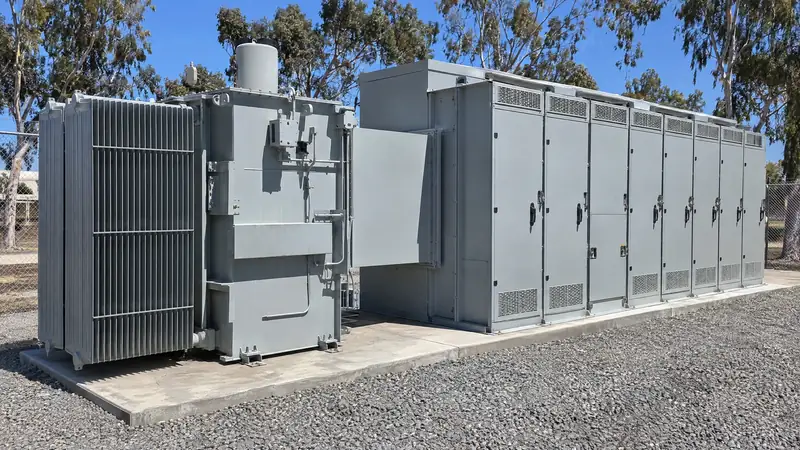
01Roseville transformer buyer for local manufacturing equipment
Roseville's manufacturing base includes semiconductors, medical devices, machinery manufacturing, and specialized materials. Those operations can have distribution transformers, dry-type units, unit substations, or project-spare equipment as electrical systems change. The exact equipment on a property depends on its installation; industry alone does not establish a transformer's size, voltage, ownership, or condition.
Roseville's May 2026 manufacturing profile describes an established and diverse sector. Planned expansion is not the same as operating capacity, so a seller should describe the equipment actually on site rather than assume a future project has created a surplus unit.
- Factory or facility upgrades may leave an owned spare or removed transformer.
- Machinery changes can make a unit's voltage or capacity no longer fit the installation.
- Project leftovers may include unused, crated new-surplus equipment.
02Roseville Electric voltage context for transformer nameplates
Roseville Electric serves the city. Verified system information lists 12 kV distribution and 60 kV. This helps frame a nameplate review, but it does not mean every Roseville site or transformer uses those voltages. Compare the actual primary and secondary ratings, connections, and tap positions on the unit with its records.
Three-phase facility equipment may have secondary ratings such as 480Y/277 V or 208Y/120 V; these are common configurations in California, not a substitute for reading the nameplate. For more on equipment classes and ratings, see the guides to transformer kVA sizes and transformer voltages.
- Capture primary and secondary voltage and connection.
- Record kVA or MVA rating, phase, impedance, and tap information.
- Include cooling class, fluid type, and year if shown.
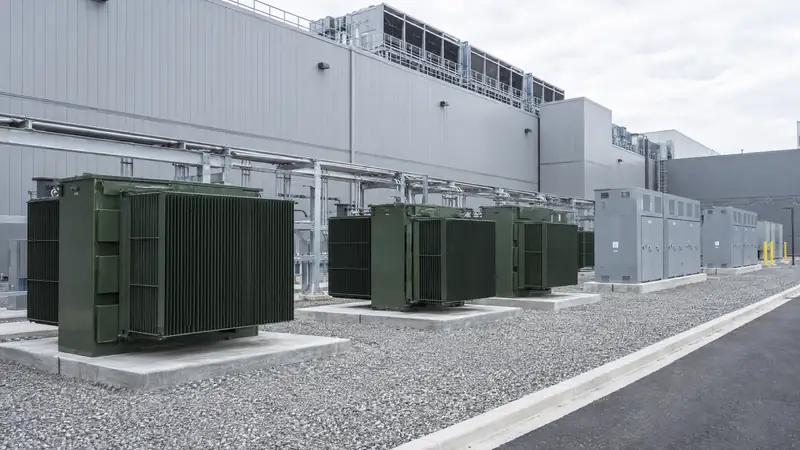
03Transformer types that may come from Roseville facilities
A manufacturing property may have a pad-mounted distribution transformer serving a building, a dry-type transformer indoors, or a unit substation coupled to switchgear. Larger sites can also have station-class equipment. Those are possible equipment configurations, not claims about a particular Roseville facility.
If the equipment is a pad-mounted unit, share its phase, kVA, primary and secondary ratings, and condition. If it is a substation or unit substation, note its MVA rating, cooling arrangement, fans, tap changer, and included accessories. See the pages for a pad-mount transformer buyer and a substation transformer buyer for equipment-specific details.
04Details that help assess used and surplus transformers
For used transformers, provide the known operating or removal history and any test reports. For new-surplus equipment, clarify that it has never been energized and whether it remains crated or on skids. State visible issues such as leaks, rust, damaged bushings, or missing parts; do not open compartments or handle the equipment to gather information.
Nameplate photographs are especially useful when they show the manufacturer, serial number, year, rating, voltage, phase, impedance, cooling, and fluid details. Include available factory tests, oil or PCB documentation, and a clear view of accessories. Records help distinguish a reusable unit from equipment that needs further assessment.
- Overall photos and readable nameplate photos
- Quantity, location, and current condition
- Test reports and fluid or PCB records, if available
- Whether the unit is used, removed, or never energized
05Plan Roseville pickup around access, rigging, and routes
For an offer, describe where the transformer sits and how a qualified removal crew could reach it: outside or indoors, ground-level or elevated, gate and doorway constraints, overhead clearance, loading area, and any site access rules. Mention whether rigging or special coordination may be needed. Do not move, disconnect, drain, or prepare the transformer yourself.
I-80 and SR-65 are useful regional route references for planning access to Roseville, but the actual pickup route depends on the site's location, load dimensions, and local restrictions. Oversize or overweight loads may require permits on state highways, and local roads can require separate approvals. The written offer identifies who handles rigging and freight before pickup is scheduled. More on planning is available in transformer removal and pickup guidance.
06Confirm ownership and share environmental records
The seller must own the transformer or have authority to sell it. Equipment owned by a utility cannot be sold by a property owner simply because it is located on the property. Roseville Electric is not affiliated with California Transformer Buyer, and a utility's presence at a site does not establish ownership.
For oil-filled equipment, share existing PCB labels, test results, and fluid-management records. PCB status and handling requirements depend on testing and documentation; California has stricter rules for PCB-containing oil, and the correct pathway depends on the facts. Rely on qualified environmental professionals for determinations. This information is general, not legal advice.
07Start a transformer sale review with Rocky
Call or text Rocky at (951) 403-5738, or use the get an offer contact form. Send the nameplate and overall photos from a safe position and only of equipment you are authorized to access, along with the unit count, Roseville location, and condition. A review costs nothing and creates no obligation to sell.
Rocky may ask follow-up questions about test reports, ownership, PCB or fluid records, and site access. If the equipment fits, you receive a written offer stating the price, what is included, who handles loading, rigging, and freight, and payment terms and timing. Those terms are agreed in writing before pickup. Read more about how to sell your transformer or selling new-surplus transformers.
FAQSelling a Transformer in Roseville: FAQ
Does California Transformer Buyer purchase one transformer from a Roseville site?
Yes, California Transformer Buyer reviews single units as well as multiple transformers and mixed lots from sellers in California. Whether a specific unit is suitable depends on its rating, voltage, condition, available records, and removal requirements. Send the details and photos for review; an offer is not guaranteed, and you are not obligated to accept one.
Can I sell equipment that is still installed at my facility?
You can request a review while a transformer is still installed, provided you own it or have authority to sell it. Do not disconnect or move it yourself. The owner's qualified electrical contractor or serving utility handles isolation and disconnection, and pickup arrangements should be agreed in writing after equipment and site details are reviewed.
What if the Roseville transformer nameplate is unreadable or missing?
Send clear overall photos and any available drawings, purchase records, test reports, or maintenance documents. Identify the equipment type, location, approximate dimensions if known, and any visible manufacturer or serial information without opening or handling the unit. The buyer may need follow-up information, and limited documentation can affect whether the equipment can be evaluated.
Will you buy a transformer with a leak or visible damage?
A leak, damaged bushing, corrosion, or missing accessory does not by itself answer whether a unit can be considered. Describe the issue and provide photos taken from a safe position, plus any inspection or environmental records. Failed or leaking equipment may require a different determination and appropriate handling, so do not drain, sample, or repair it for the review.
What does Roseville Electric service mean for my transformer?
Roseville Electric's verified system information lists 12 kV distribution and 60 kV. These are useful reference points, not proof of the voltage at an individual site or on a particular transformer. The nameplate and facility records control the equipment description. Include the actual primary and secondary ratings and connection when you submit the unit for review.
Do I need a PCB test before contacting you?
You can contact California Transformer Buyer with the PCB information you already have, such as a label, test result, or historical record. Do not open the tank or take an oil sample yourself. Unknown PCB status and oil management can involve specific requirements; rely on qualified environmental professionals to determine testing and handling needs.