01How to Identify a Data Center Transformer Before You Sell
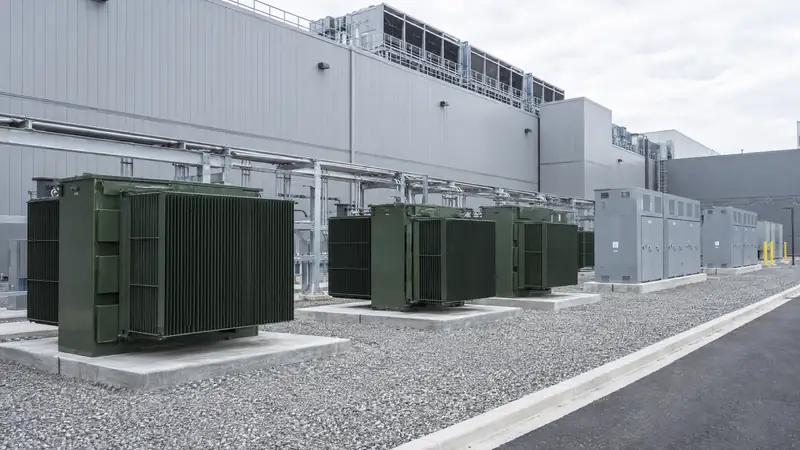
A data center transformer is identified by the role it serves in the facility’s electrical power train, not by one standard design. It may be a utility service transformer, a unit substation connected to switchgear, a medium-voltage dry-type transformer, or a lower-voltage unit associated with a UPS or PDU. The same site can have several types and ratings.
Start with safe-position photos of the complete unit and its visible nameplate. Look for labels or drawings that identify service, UPS, PDU, isolation or harmonic duty. The nameplate should show the manufacturer, serial number, year, kVA rating, phase, primary and secondary voltage, taps, impedance, cooling or insulation class, and connection diagram. K-factor, surge-hardening, acoustic or thermal-monitoring specifications may also be relevant.
Do not open compartments or approach equipment you are not authorized to access. A photo of the nameplate and exterior is usually a useful starting point; a qualified electrical contractor or the serving utility handles any work requiring access or electrical isolation. For related facility applications, see our overview of transformers used in data centers.
- Photograph the full exterior and legible nameplate
- Record the unit’s role and connected equipment
- Note visible fans, radiators, switches or gauges
- Identify whether it is indoors or outdoors
02Data Center Transformer Buyer: Typical Sizes and Voltage Combinations
Data center transformer sizes vary with the equipment’s place in the power path. Service and unit-substation blocks commonly fall in the 1,000–5,000 kVA range; 7,500–10,000 kVA units and central MVA-class substations also exist. Transformers serving LV or PDU loads are often rated in tens to hundreds of kVA. These are broad application ranges, not a substitute for the actual nameplate.
| Application | Typical rating pattern | Common voltage pattern | Construction examples |
|---|---|---|---|
| Service transformer | 1,000–5,000 kVA common | 12–34.5 kV to 480Y/277 V | Oil-filled pad-mount |
| Larger service or central substation | 7,500–10,000 kVA or MVA | Project-specific | Station-class oil-filled |
| Unit substation | Often in service-block range | Primary to facility distribution | Transformer close-coupled to switchgear |
| MV indoor transformer | Project-specific | Medium voltage to facility voltage | VPI or cast resin |
| UPS or PDU transformer | Tens to hundreds of kVA often | 480 V to 208Y/120 V, or other design | Low-voltage dry-type |
Confirm the Actual Nameplate Voltage
Common service configurations include 12–34.5 kV primary to 480Y/277 V, followed downstream by 480 V to 208Y/120 V. Facilities may also use 415Y/240 V or other IT power architectures, so do not infer a transformer’s voltage from its location or appearance.
California utility distribution voltages differ by service territory. Record the exact primary voltage, secondary voltage and connection shown on the nameplate. If useful, compare your unit with common 1,500 kVA transformer and 2,000 kVA transformer applications.
kVACommon Data Center Sizes We Buy
03Where These Transformers Work in California Facilities
Power typically enters a data center through a utility service transformer or substation, then passes through facility distribution equipment toward UPS systems, switchgear and IT loads. Additional transformers can serve UPS output, PDU distribution, isolation or voltage conversion. Redundant electrical paths and spare equipment are part of many facility designs, which is one reason used, project-surplus and spare units may become available.
California data centers include colocation and hyperscale facilities as well as enterprise server buildings. Their electrical designs are site-specific: utility service voltage, UPS topology, operating requirements and future expansion plans all affect transformer selection. A unit removed from one project may not be an exact match for another, even if the kVA rating is similar.
For outdoor service equipment, compare the visible configuration with our information on pad-mount transformers. For larger station-class equipment, see substation transformers. These are different construction families and may have different handling and resale considerations.
04Construction Types and Features That Affect Fit
Outdoor service transformers are commonly oil-filled pad-mounted units; mineral oil or natural ester fluid may be specified where approved for the installation. Larger substation transformers may have radiators, fans, gauges, bushings and tap-changing equipment. Indoor medium-voltage units may use VPI/VPE or cast-resin coils, while lower-voltage PDU transformers are often dry-type.
Data center duty can add important distinctions. A unit may have a K-factor or harmonic-duty specification, surge-hardening, low-loss design, acoustic requirements, thermal monitoring or fan options. Seismic or listing documentation may be important for a particular installation. These details can affect whether a transformer suits another project, so include drawings and specification sheets when available.
An application label does not establish the complete electrical design. Buyers need the voltage diagram, connection, kVA, phase and relevant options to distinguish a UPS-duty transformer from a general distribution unit. A new-surplus unit with documentation may be assessed differently from a previously energized unit with incomplete records.
05What Influences the Resale Value of a Used Data Center Transformer
Resale value depends on the specific unit and its reuse potential, not just its size. Rating, primary and secondary voltages, phase, taps, impedance, BIL, cooling class, temperature rise and connection all help determine whether a buyer can match it to a project. Common configurations may be easier to place than unusual voltage or duty combinations.
Condition and records matter. Buyers may review visible leaks, corrosion, damaged bushings, missing accessories, test reports and service history. For oil-filled equipment, fluid type, volume and available PCB documentation are important. For dry-type equipment, insulation construction, condition and test records help describe what is being offered. Copper or aluminum winding information, year of manufacture and new-surplus versus used status can also affect the assessment.
Data center-specific details can be as important as the kVA: K-rating, surge design, redundancy role, switching-transient protection, sound requirements and seismic compatibility may change the pool of potential applications. Efficiency claims also need context. A UPS-duty efficiency exclusion must meet the applicable regulatory definition; a label alone does not establish eligibility.
California Transformer Buyer reviews these details for used and surplus transformer equipment. No single feature sets an offer, and reviewing the information is not a guarantee that a particular unit can be purchased.
06What to Send for a Written Offer
Rocky can begin a review with the unit’s location, quantity, condition and clear photos. You can call or text (951) 403-5738, or use the website form. Send photos only from a safe position and only if you are authorized to access the equipment. Do not move, open, disconnect or otherwise handle a transformer to get information.
Include the full nameplate when possible, plus exterior photos that show the tank or enclosure, bushings, radiators, fans and visible accessories. Note whether the unit is used, pulled, new-surplus, crated or on skids. If available, add test reports, drawings, fluid or PCB records, ownership information and details about site access.
A complete information package helps clarify what is being offered and what questions remain. You can also review the steps to sell your transformer to California Transformer Buyer. The seller must own the equipment or have authority to sell it; utility-owned equipment at a property cannot be sold by the property owner.
- Nameplate and overall equipment photos
- Quantity and California site location
- Condition and new-surplus or used status
- Test reports and available fluid records
- Ownership authority and access details
07Removal Planning for Large or Installed Units
An installed data center transformer may be connected to utility service, switchgear, UPS equipment or other power sources. De-energizing and disconnecting are handled by the owner’s qualified electrical contractor or serving utility, with qualified clearance, isolation, voltage testing and grounding. Solar, battery or generator backfeed must also be considered. Sellers should not perform electrical work themselves.
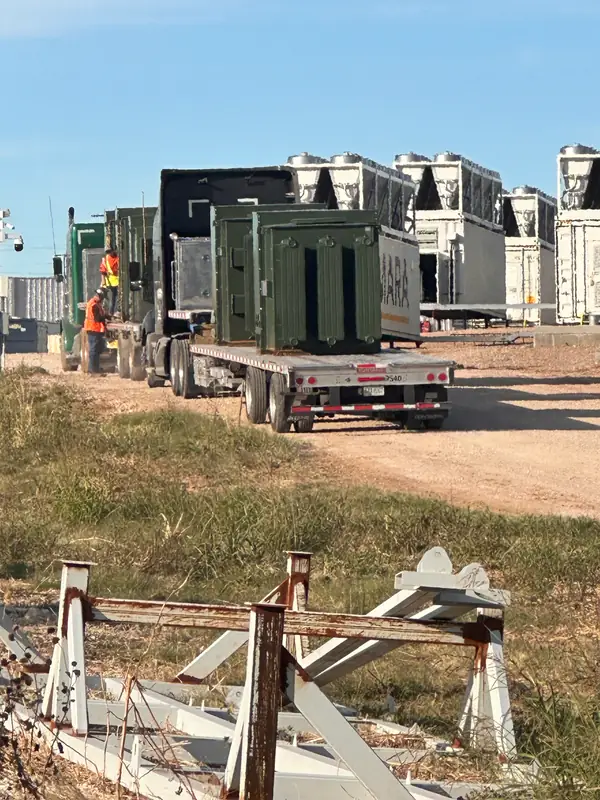
Before pickup, provide practical site details such as access routes, overhead or doorway constraints, loading conditions and any known rigging restrictions. Large substation transformers can require specialized transport planning; dimensions and gross weight matter, and oversized or overweight loads may require permits. Radiators and bushings may be removed for shipment in some cases, with appropriate preparation handled by qualified parties.
The written offer states what is included, who handles loading or rigging and freight, and the payment terms and timing. Removal is scheduled under those written terms. For more detail on responsibilities, see transformer removal and pickup.
08Why California Sellers Bring Data Center Transformers to Us
Facility owners, contractors and project teams may have a spare unit after a capacity change, an upgrade, a building decommissioning or a project redesign. Redundancy can leave equipment unused even when it remains in serviceable condition. New-surplus transformers can also be left over when a project changes its specification or schedule.
California Transformer Buyer reviews single units as well as multiple pieces of equipment and mixed lots from sellers located in California. We look at what the transformer is, where it is, its condition and documentation, and the responsibilities involved in removal. The written offer sets out the agreed scope before pickup; reviewing a transformer costs nothing and carries no obligation.
Call or text Rocky at (951) 403-5738 with the nameplate and site details to start. The unit’s duty, condition and documentation determine whether it is a fit for review; no purchase is guaranteed.
FAQData Center Transformer FAQ
Can I sell a data center transformer that is still installed?
Yes, an installed unit can be reviewed, but the owner’s qualified electrical contractor or serving utility must handle electrical isolation and disconnection. California Transformer Buyer will need clear information about the transformer, site access and removal conditions before an offer can define who handles loading, rigging and freight. Do not attempt to disconnect, open or move equipment to prepare it for sale.
Will you review a transformer without a test report?
You can send the available nameplate and exterior photos even if test records are missing. Test reports, service history and fluid or PCB documentation can help establish condition and intended reuse, but the review can begin with what you have. Be clear about missing records, known problems and visible damage so the equipment is assessed with accurate information.
What if the transformer’s PCB status is unknown?
Do not guess at PCB status based on appearance or age alone. Share any existing labels, oil records and testing documentation, and rely on qualified environmental professionals to determine the appropriate testing and management pathway. PCB categories and California requirements can depend on concentration, fluid, date and records; this information is general and is not legal advice.
Do you buy new-surplus data center transformers?
California Transformer Buyer reviews new-surplus equipment that has never been energized, including units that remain crated or on skids. Provide the nameplate, manufacturer documentation, quantity, storage condition and site location. If the equipment was specified for a particular UPS, PDU or service design, include that information because exact voltage and duty can affect potential reuse.
Can I offer a whole group of spare transformers at once?
Yes. Send a list of the units with each available rating, voltage, condition, quantity and location, along with photos of representative equipment and nameplates. Identify which pieces are installed, stored, new-surplus or incomplete. California Transformer Buyer reviews single transformers, multiple units and mixed lots, with the scope and pickup responsibilities documented in the written offer.
How do I know what is included in the offer and pickup?
The written offer states the price, what equipment or accessories are included, who handles loading or rigging and freight, and the payment terms and timing. Review those terms before pickup is scheduled. If the site has access limits or special handling requirements, provide them during the review so the responsibilities are clear in writing.