01Selling a Transformer in Santa Barbara Starts With the Equipment Details
If you need a transformer buyer in Santa Barbara, California Transformer Buyer reviews equipment from commercial properties, research facilities, hospitality sites, and other California locations. Santa Barbara County sellers can ask about a single unit, a project surplus transformer, or multiple units being cleared from a site.
The city’s documented industries include technology and software, aerospace-related research, biotechnology, and tourism and hospitality. Those operations may use pad-mounted distribution units, dry-type transformers, or campus-style unit substations, depending on the building and electrical design. These are possible equipment types, not a claim that every facility has them.
Santa Barbara Clean Energy supplies generation to participating customers, while Southern California Edison (SCE) remains the distribution utility. That distinction matters when confirming who owns a transformer: equipment serving a property is not automatically property-owner equipment. See the broader Central Coast and Ventura County service area for nearby coverage.
02Transformer Types Found at Santa Barbara Properties
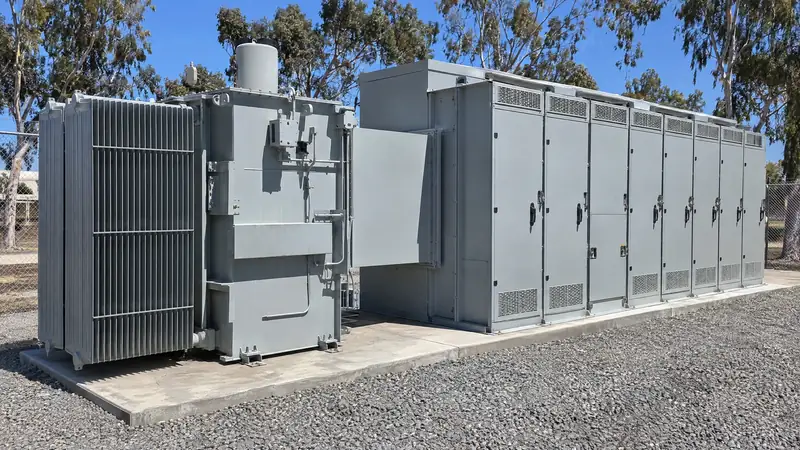
Hospitality properties, commercial buildings, and larger campuses may have pad-mounted units outdoors or dry-type transformers indoors. Technology, biotechnology, and research spaces may also have unit substations that couple a transformer with switchgear. A facility with its own solar or storage installation may have a step-up transformer, but its configuration and voltage must be confirmed from the nameplate.
- Pad-mount and pad-mounted distribution transformers
- Indoor dry-type transformers
- Unit substations and switchgear-connected units
- Solar or storage step-up transformers, when installed
- Spare, removed, or project-surplus equipment
When a Unit Substation Is a Better Fit
A unit substation typically combines a transformer and primary or secondary switchgear in a close-coupled arrangement. Share photos of the whole assembly and its nameplate; the transformer’s kVA or MVA rating alone may not describe what is included.
For equipment identification, compare your setup with the guide to unit substation transformers.
Pad-Mount Units Need Clear Configuration Details
A pad-mounted transformer may be single-phase or three-phase and may have different primary and secondary connections. California has multiple distribution voltage classes; do not assume the correct voltage from the city or utility name. Use the actual nameplate.
03What to Photograph on an SCE-Area Transformer
SCE serves Santa Barbara as the distribution utility. SCE’s broader system includes 4 kV, 12 kV, and 16 kV distribution, with 25 kV and 33 kV also documented. Those system figures do not establish the voltage at a particular property, so send legible nameplate images and let the listed primary and secondary ratings guide the review.
Photograph the nameplate and the complete transformer from a safe position, only if you are authorized to access the equipment. Useful fields include manufacturer, serial number, year, kVA or MVA rating, phase, primary and secondary voltage, connection, taps, impedance, cooling class, fluid type, and total weight. Send the configuration and accessories as visible; do not open compartments.
- Nameplate and overall equipment photos
- Quantity and Santa Barbara-area location
- Known condition and missing components
- Available test reports or service records
- Ownership or authority to sell
04Used, Surplus, and New-Surplus Units Can Be Reviewed
California Transformer Buyer considers used, pulled, decommissioned, spare, project-leftover, and new-surplus transformers. New-surplus generally means never energized and stored on a skid or in a crate; provide that status only when it is accurate. Used equipment may still be worth reviewing even if its age, condition, or test history is not fully documented.
Provide available factory test reports, oil test or dissolved gas analysis records, insulation resistance results, turns-ratio tests, and fluid or PCB documentation. Records help describe the unit, but a review does not guarantee that it will be purchased or establish its condition. For more detail on equipment previously in service, see how used transformers are evaluated.
05Pickup Planning for Santa Barbara Sites
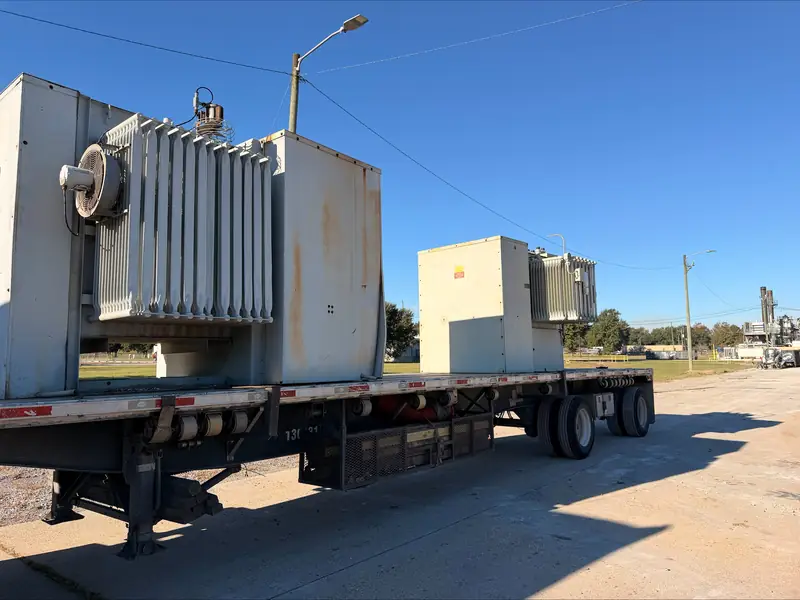
Pickup planning depends on the transformer’s dimensions and weight, loading access, site rules, and who will handle rigging and freight. US-101 is the main regional route listed for the city; SR-154 is nearby and SR-192 also serves the area. The exact route and equipment needed depend on the pickup location and load, so share site-access details early.
Mention narrow entrances, limited staging space, slopes, overhead restrictions, operating hours, security requirements, and whether a loading area is available. The written offer states what is included and who handles loading, rigging, and freight before pickup is scheduled. Read about transformer removal and pickup planning.
06Ownership, Electrical Safety, and Environmental Records
You must own the transformer or have authority to sell it. Utility-owned equipment located on private property cannot be sold by the property owner. If ownership is unclear, confirm it before proceeding.
Do not disconnect, de-energize, open, drain, sample, or move the transformer yourself. Your qualified electrical contractor or serving utility handles isolation and disconnection. Solar, battery, and generator backfeed must also be considered by qualified personnel.
For oil-filled equipment, rely on existing testing, records, and qualified environmental professionals to determine PCB status and handling requirements. Unknown documentation should not be treated as proof of non-PCB status. California’s rules for PCB-containing oil differ from the federal categories; the appropriate pathway depends on the equipment, testing, and records. This is general information, not legal advice.
07How to Request an Offer From Santa Barbara
Call or text Rocky at (951) 403-5738, or use the contact form to request an offer. You can text equipment photos to the same number. Include the nameplate, overall views, quantity, location, known condition, and whether the transformer is used or new-surplus.
Rocky may ask follow-up questions about test reports, ownership, fluid or PCB records, and access for removal. If the unit is a fit, you receive a written offer with the price, included scope, loading and freight responsibilities, and payment terms. Reviewing your transformer costs nothing and creates no obligation.
FAQSelling a Transformer in Santa Barbara: FAQ
Does California Transformer Buyer buy only transformers inside Santa Barbara city limits?
No. California Transformer Buyer buys transformers from sellers located in California. If your equipment is elsewhere in Santa Barbara County or another part of the state, send the location with the equipment details. Goleta is a separate city from Santa Barbara, so identify the actual pickup city and site when you ask for a review.
Can I sell an SCE transformer that sits on my property?
Not if the utility owns it. A transformer’s location does not establish ownership, and utility-owned equipment cannot be sold by a property owner. Confirm ownership or your authority to sell before sending it for review. If the equipment is customer-owned, provide any documentation you have along with photos and its nameplate.
What if the transformer nameplate is damaged or unreadable?
Send clear photos of the nameplate area and the full unit, including visible manufacturer markings, labels, and accessories. Add any records that might identify its rating, voltage, age, or service history. Do not open an enclosure to find information; only photograph equipment you are authorized to access from a safe position.
Will you review a transformer that leaks or has failed?
You can describe the known condition and submit photos for review, but purchase is not guaranteed. Do not drain, sample, move, or attempt repairs on a leaking or failed unit. Share available service, testing, and fluid records, and rely on qualified electrical and environmental professionals for safety and proper handling.
What information affects whether a transformer is a fit?
The review can consider rating, phase, voltage, connection, cooling, fluid or insulation type, age, condition, accessories, test history, and quantity. New-surplus status and site access can also matter. Manufacturer and serial number help identify equipment, but rating and condition are important details; include every legible nameplate field rather than guessing.
Can I submit several transformers or a whole project lot?
Yes. California Transformer Buyer reviews single units as well as mixed lots and multiple transformers. Send a count and separate photos or nameplate details for each unit when possible. If equipment differs by rating, condition, or storage status, identify those differences so the review can address the lot accurately.