01Sell a Federal Pacific Transformer: Brand Background
Federal Pacific appears as a current or legacy nameplate brand in the Electro-Mechanical family. Verified product categories include low-voltage dry-type transformers and distribution equipment. A Federal Pacific label can help identify the manufacturer and equipment, but it does not by itself tell a buyer the unit’s present condition, electrical suitability or resale value.
California Transformer Buyer is an independent California buyer and is not affiliated with Federal Pacific or Electro-Mechanical. Transformer identification also does not establish any relationship to, or safety judgment about, legacy Federal Pacific Electric Stab-Lok breakers. Those are separate equipment and identification questions.
02Which Federal Pacific Transformers We Review
We review California-owned used, pulled, surplus and new-surplus transformers, including spare units, project leftovers and equipment offered as part of a larger lot. A unit may be considered individually or with other electrical equipment. The seller must own it or have authority to sell it; utility-owned equipment on private property cannot be sold by the property owner.
Federal Pacific is documented for LV dry-type and distribution equipment. If your nameplate identifies a dry-type unit, compare its construction and insulation details with our guide to dry-type transformers. If you have a pad-mounted unit, send its actual nameplate and photos for review; our pad-mount transformer buyer information explains the details buyers assess for that configuration.
- Previously energized or pulled units
- New-surplus units, never energized
- Single transformers or mixed lots
- Dry-type and distribution equipment
03Where to Find a Federal Pacific Transformer Nameplate
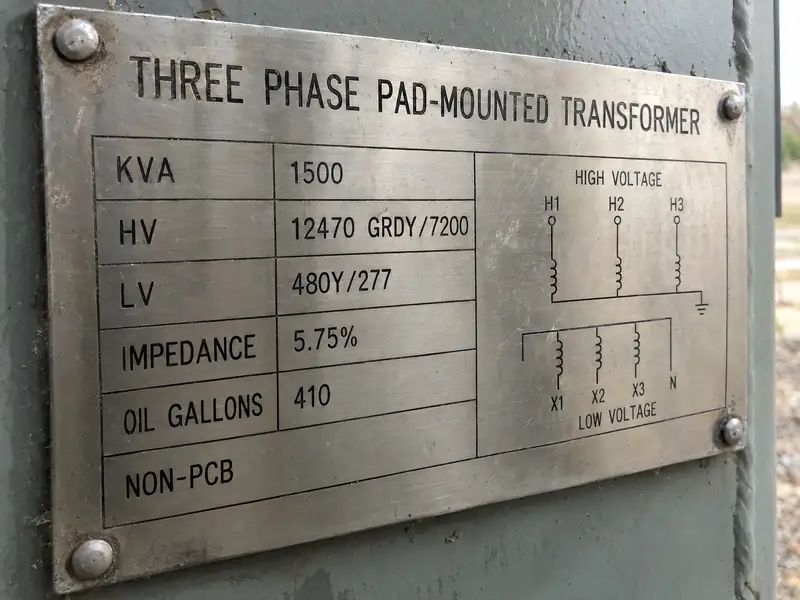
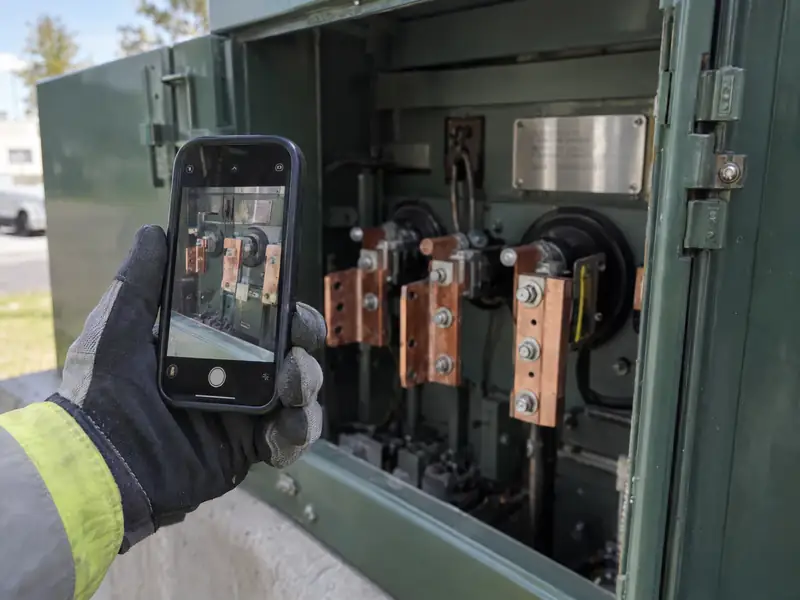
Look for the Federal Pacific transformer nameplate or rating label attached to the equipment enclosure. Its position and layout can vary by design and age. Take a readable photo of the full plate, plus close-ups of any smaller serial, catalog or style markings. Do not open compartments or approach equipment in a way that is unsafe or unauthorized.
Serial numbers, catalog or style numbers, and year of manufacture may appear in separate fields or be printed in a compact format. Do not assume a particular code format or try to infer a manufacture year from a serial number without supporting documentation. Our guide to reading transformer nameplates shows the kinds of rating and identification details buyers use.
04What to Send for a Federal Pacific Transformer Review
Send nameplate photos and overall photos that show the transformer’s configuration and visible condition. Include the quantity, California location and whether the equipment is used, pulled, surplus or new-surplus. Take photos only from a safe position and only where you are authorized to access the equipment.
If available, include test reports, ownership or sale-authority information, and relevant fluid or PCB records. A missing record is useful to disclose rather than guess about. Rocky may ask follow-up questions about testing, site access or what equipment is included.
- Manufacturer, serial number and year
- kVA or MVA rating and phase
- Primary and secondary voltage
- Tap positions and connection diagram
- Impedance, BIL and cooling class
- Dry insulation or fluid details
- Visible damage, missing parts or leaks
- Test reports and PCB documentation, if available
05How Rating, Age and Condition Affect Buyer Interest
The rating and electrical configuration help determine whether a transformer matches potential applications. Buyers review kVA or MVA, phase, primary and secondary voltages, taps, connection, impedance and cooling details. For a dry-type unit, insulation and temperature-rise information can also help establish what the nameplate specifies.
Age and condition matter alongside the rating. Rust, leaks, damaged bushings, missing components or uncertain service history may change the review. Test reports and complete records can help clarify condition, while a new-surplus unit’s never-energized status and storage condition should be stated accurately. Brand is useful for identification, but usually matters less than the unit’s specifications and condition.
There is no reliable value based on the brand name alone. For a practical overview of the factors that affect an offer, see how buyers assess a used transformer’s worth.
06California Location, Equipment Status and Handling
California Transformer Buyer reviews equipment located in California. The location and site access matter because the written offer identifies what is included and who handles loading, rigging and freight. Large or difficult-to-access equipment may require additional planning, so describe the site and any access limitations before pickup is scheduled.
Do not de-energize, disconnect, open, drain, sample or move a transformer yourself. Those tasks belong to the owner’s qualified electrical contractor or serving utility, as applicable. If oil or PCB status is unknown, do not make assumptions based on the brand or age; rely on testing, documentation and qualified environmental professionals. This information is not legal advice.
07How to Request an Offer for a Federal Pacific Unit
Call or text Rocky at (951) 403-5738, or submit the website contact form. Provide the photos, quantity, location and condition so the equipment can be reviewed. You can also read how the transformer review and offer process works before sending information.
If the unit fits, you receive a written offer stating the price, what is included, who handles rigging and freight, and payment terms and timing. Removal is scheduled under those written terms. Reviewing your transformer costs nothing and creates no obligation; an offer is not guaranteed for every unit. For other equipment types and sale situations, see our surplus transformer buying information.
FAQFederal Pacific FAQ
Does a Federal Pacific label mean my transformer will be purchased?
No. The brand helps identify the equipment, but it does not guarantee an offer or determine value by itself. California Transformer Buyer reviews the nameplate, rating, configuration, age, condition, records, quantity and location. Send clear photos and the available details so the unit can be evaluated; a written offer is provided only if the equipment fits.
Can I sell a Federal Pacific transformer without its nameplate?
You can still ask for a review, but missing identification makes it harder to confirm the rating and configuration. Send overall photos and any available records, such as test reports, purchase documents or equipment schedules. Do not remove covers or attempt to access hidden markings. If the nameplate is unreadable, say so rather than estimating its details.
How do I tell the manufacture year from the serial number?
Do not assume the year is encoded in the serial number. Federal Pacific nameplate layouts and markings can differ, and a serial number alone may not establish the manufacture date. Photograph the complete plate and any catalog or style number, then include supporting records if available. A buyer can review the information without treating an unverified code as a confirmed year.
Will you review a transformer that has been in service?
Yes. California Transformer Buyer reviews used and pulled equipment located in California, as well as surplus and new-surplus units. Describe whether it was previously energized and report visible leaks, corrosion, damaged bushings, missing parts or known operating issues. Do not move or alter the equipment to prepare it for review; site work must be handled by qualified personnel.
What if the transformer’s oil or PCB status is unknown?
State clearly that the status is unknown and share any existing labels, test results or records. Do not infer PCB status from the Federal Pacific name, and do not drain or sample the equipment yourself. PCB determinations and handling decisions should rely on applicable testing, documentation and qualified environmental professionals. The appropriate management pathway depends on the actual equipment and its records.
Can I sell a utility-owned Federal Pacific transformer on my property?
Not unless you have authority to sell it. Equipment located on private property may still belong to a serving utility or another party. Confirm ownership or obtain written authority before submitting it for sale. California Transformer Buyer reviews equipment from sellers who own it or are authorized to act for its owner.