01Sell an R.E. Uptegraff Transformer: Manufacturer Background
R.E. Uptegraff Manufacturing is a family-founded transformer and reactor manufacturer from Scottdale, Pennsylvania, operating since 1925. Its official history describes engineered-to-order equipment from 10 to 15,000 kVA, including custom power and distribution transformers, specialty transformers, and reactors.
Nameplates may carry a current or legacy version of the R.E. Uptegraff name. The company record identifies R.E. Uptegraff Manufacturing Company as the successor or parent name; it does not make R.E. Uptegraff the same manufacturer as Elliott Industries or Elliott Electric Supply. See the broader list of [transformer manufacturers]( transformer brands and manufacturer pages ).
02Which R.E. Uptegraff Transformers We Review
California Transformer Buyer considers California-located used, pulled, surplus, new-surplus, decommissioned, spare, and project-leftover equipment. A single transformer or a mixed group can be submitted for review. An offer depends on the unit’s specifications, condition, documentation, location, and removal requirements.
Send the complete plate for a custom power or distribution transformer, specialty unit, or reactor. If you have an R.E. Uptegraff pad mount transformer, include photos that show its configuration and plate; the name alone does not establish the unit’s design or current resale fit. For pad-mounted equipment details, see our [pad-mount transformer buying information]( pad-mount transformer buyer details ).
- Used and previously energized units
- New-surplus equipment that has never been energized
- Spare units and project leftovers
- Decommissioned equipment and mixed lots
03How to Read an R.E. Uptegraff Transformer Nameplate
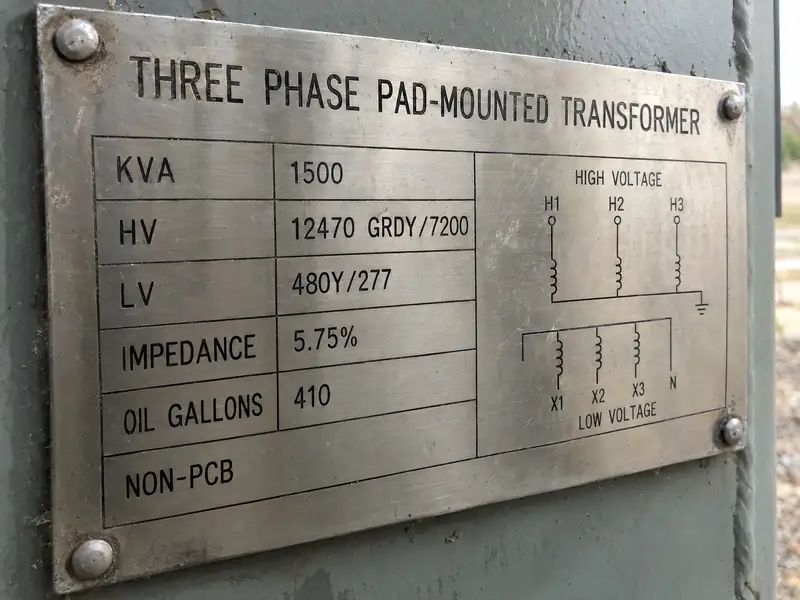
The R.E. Uptegraff transformer nameplate is the best starting point for identifying a unit. Depending on the equipment and plate format, look for the manufacturer, serial number, year of manufacture, kVA rating, phase, primary and secondary voltages, connection, taps, impedance, and cooling information. A catalog or style number may appear, but fields and layouts vary.
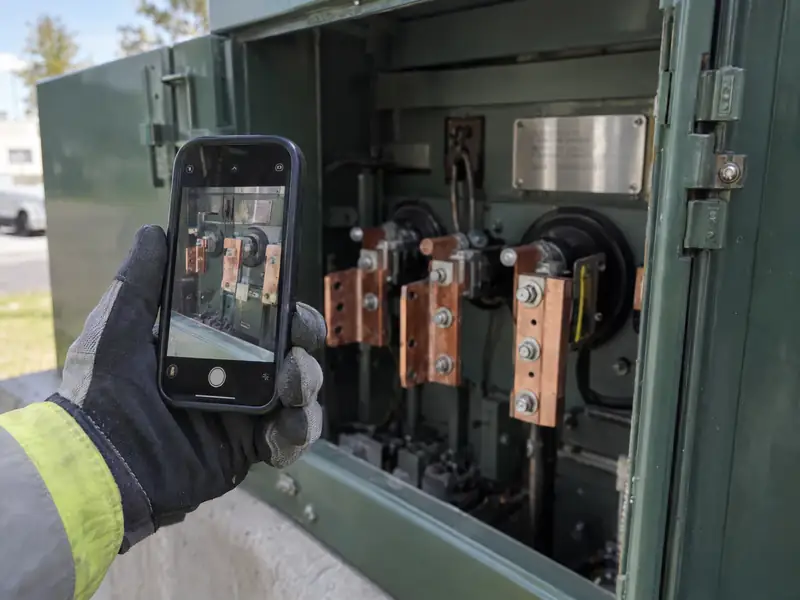
Photograph the full plate so its text and diagrams are legible, along with close-ups if glare or wear obscures details. Do not open compartments or approach equipment unless authorized and safe to do so. Our [transformer nameplate guide]( guide to reading transformer nameplates ) explains the common fields buyers use.
04What to Send for a Transformer Review
Along with the nameplate, send overall photos of the equipment taken from a safe position, the quantity available, its California location, and a brief condition description. Note visible leaks, rust, damaged bushings, missing parts, or whether the unit is crated or on skids. Share only information you are authorized to provide.
Include available test reports and records for oil or PCB status, plus ownership or selling-authority information when relevant. For a larger station unit, photos of the radiators, fans, bushings, and other accessories can help describe what is included. See the [substation transformer buyer page]( substation transformer evaluation details ) for information relevant to larger power units.
- Nameplate and overall equipment photos
- Quantity, location, and known condition
- Test reports and fluid records, if available
- Included accessories and loading constraints
05Rating, Age, and Condition Matter More Than Brand
The manufacturer helps confirm identity, but it does not determine an offer by itself. Buyers also consider kVA or MVA rating, phase, voltage and connection, year, condition, winding information if shown, available accessories, and how readily the configuration fits a buyer’s needs. New-surplus status and complete test records can also affect the review.
For liquid-filled units, fluid type, quantity, and available PCB documentation matter. For dry-type equipment, insulation and condition information may be useful; see our [dry-type transformer guide]( dry-type transformer information ). These factors vary by unit, so a reliable review starts with the plate and supporting records rather than assumptions based on brand. Read more about [factors affecting used transformer value]( what affects a used transformer’s value ).
- kVA or MVA rating and phase
- Primary and secondary voltage
- Age, condition, and completeness
- Test, fluid, and PCB documentation
06How a California Sale Review Works
Call or text Rocky at (951) 403-5738, or submit the details through the website contact form. After reviewing the photos and information, Rocky may ask about test reports, fluid or PCB records, ownership, site access, and removal needs. Reviewing a transformer costs nothing and creates no obligation.
If the unit is a fit, you receive a written offer describing the price, what is included, who handles loading or rigging and freight, and payment terms and timing. Terms are agreed in writing before pickup. Electrical isolation and disconnection must be handled by the owner’s qualified electrical contractor or serving utility; sellers should not attempt to move or disconnect equipment.
- Call or text (951) 403-5738
- Send nameplate and overall photos
- Answer any follow-up questions
- Review written terms before pickup
07Independent R.E. Uptegraff Transformer Buyer
California Transformer Buyer is an independent buyer serving sellers located in California. We are not affiliated with, endorsed by, or acting on behalf of R.E. Uptegraff Manufacturing, a utility, or any other manufacturer.
If your equipment is not an R.E. Uptegraff unit, use our [surplus transformer buyer page]( surplus transformer selling information ) or [submit transformer details for review]( how to sell your transformer ). Only the owner or someone authorized to sell the equipment can proceed; utility-owned equipment on private property cannot be sold by the property owner.
FAQR.E. Uptegraff FAQ
Where is the serial number on an R.E. Uptegraff transformer?
Look for the serial number on the equipment nameplate, which is typically fixed to the transformer enclosure or tank. Plate position and layout can vary, and older plates may be faded or damaged. Send a clear photo of the entire plate rather than relying on a number copied from a separate document; the full image helps confirm the manufacturer and related specifications.
Can you identify the manufacture year from a catalog or style number?
Not reliably from the catalog or style number alone. If the nameplate includes a manufacture date or year, photograph that field along with the serial and catalog or style number. If no year is shown, share the complete plate and any available factory paperwork; do not assume a date based on an undocumented code.
Do you buy R.E. Uptegraff reactors as well as transformers?
Reactors are among the product types associated with R.E. Uptegraff Manufacturing, so you can send reactor details for review. Include the full nameplate, overall photos, quantity, California location, and condition. Whether a particular reactor is a fit depends on its ratings, specifications, condition, documentation, and removal requirements.
Can I sell an R.E. Uptegraff transformer with unknown PCB status?
You can submit it for review, but disclose that its PCB status is unknown and provide any available records. Do not infer status from the manufacturer or appearance. PCB determinations and handling depend on testing and documentation; sellers should rely on qualified environmental professionals. This information is general and is not legal advice.
Is an Elliott-labeled transformer the same as an R.E. Uptegraff unit?
Do not treat the names as interchangeable. Verified records distinguish R.E. Uptegraff Manufacturing from Elliott Industries, while Elliott Electric Supply is a separate distributor. If a plate or paperwork mentions Elliott, send the complete transformer nameplate and any supporting documents before assigning a manufacturer or product line.
Will you buy a transformer that is still installed?
You may submit an installed unit for evaluation, but the owner’s qualified electrical contractor or serving utility must handle isolation and disconnection. Do not open, disconnect, or move it yourself. Provide photos only from a safe position and include information about access and site conditions so the written offer can state who is responsible for loading, rigging, and freight.