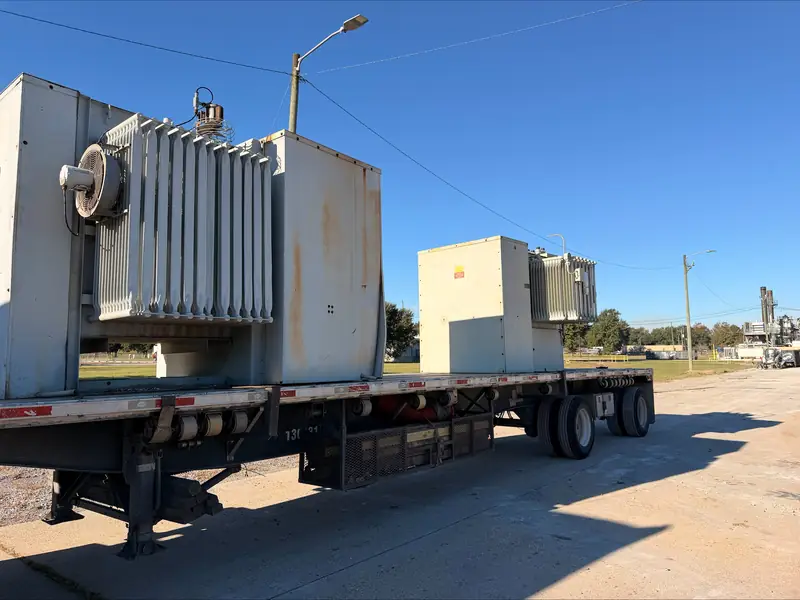
01How Transformer Oil Testing, DGA, and Records Affect Resale
Oil reports reduce uncertainty about a used transformer, but they do not establish its value by themselves. A buyer still needs to know whether the unit’s rating, voltage, configuration, and physical condition suit another installation. A clean report cannot make an unsuitable voltage configuration fit a project.
For example, a three-phase 1000 kVA pad-mounted transformer with a 12,470GrdY/7,200 V primary and 480Y/277 V secondary needs evaluation as that specific configuration. A station-class transformer rated 12/16/20 MVA needs its staged cooling ratings, accessories, and operating history considered as well.
Testing can support a reuse evaluation, identify questions requiring further investigation, or reveal conditions that complicate acceptance. California Transformer Buyer reviews used, surplus, and new-surplus units from California sellers; see the used transformer buying page for the basic information needed.
- Match each report to the transformer serial number.
- Include the sample date and fluid type.
- Provide earlier reports when available.
- Disclose known faults, leaks, repairs, and fluid treatment.
02What Dissolved Gas Analysis Can Tell a Buyer
Dissolved gas analysis, usually called DGA, measures gases dissolved in insulating fluid. Electrical and thermal stresses can generate different gas patterns. Laboratory interpretation considers gas concentrations, combinations, and changes over time—not merely whether a gas is present.
Hydrogen may be associated with partial discharge or other electrical activity. Methane, ethane, and ethylene can help characterize thermal conditions, while acetylene can indicate high-energy electrical discharge. Carbon monoxide and carbon dioxide can provide information about cellulose insulation degradation, although interpretation requires operating context.
These are diagnostic clues, not automatic fault declarations. Fluid type, transformer construction, loading, temperature, and previous maintenance all matter. A load tap changer may have a separate oil compartment where switching produces gases; its report should not be confused with the main-tank report.
A rising trend may be more significant than an isolated reading. Conversely, a low-gas report taken after oil replacement or degassing may not describe the unit’s earlier condition. Buyers need the maintenance history to understand what the numbers actually represent.
- Gas concentrations and laboratory comments
- Previous results and gas-generation trends
- Main tank versus tap-changer sample identification
- Loading, fault, and maintenance context
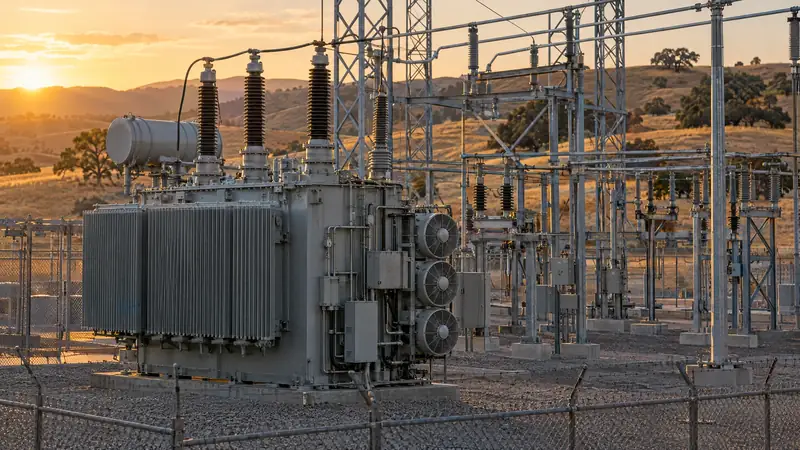
03Dielectric Breakdown, Moisture, and Acidity Measure Different Problems
An oil-quality panel answers different questions from DGA. Dielectric breakdown tests the fluid’s resistance to electrical breakdown under a specified laboratory method. Moisture and acidity results help evaluate contamination and aging, but none of these tests alone certifies the complete transformer.
Avoid comparing readings without checking the test method, units, fluid type, and laboratory guidance. Different dielectric test procedures use different electrode arrangements and conditions, so their numerical results are not interchangeable.
| Test | What it helps assess | Important limitation |
|---|---|---|
| DGA | Possible internal thermal or electrical activity | Needs trends and operating context |
| Dielectric breakdown | Fluid resistance to electrical breakdown | Does not prove winding insulation is sound |
| Moisture | Water present in the fluid | Does not directly measure all water in paper |
| Acidity | Acidic products associated with fluid aging | Must be interpreted for the fluid type |
| PCB analysis | PCB concentration and classification evidence | Not a test of electrical performance |
Why Moisture Needs Temperature Context
Water moves between insulating fluid and cellulose as conditions change. An oil moisture result, commonly reported in ppm, does not directly reveal the full moisture content of the paper insulation. Fluid temperature and relative saturation can help a qualified specialist interpret the result.
Why Fluid Type Matters
Mineral oil, natural ester, and silicone fluids have different properties and interpretation requirements. Natural ester results should not automatically be judged against mineral-oil limits. Identify the actual fluid and any documented changes before comparing reports.
04PCB Testing Is Separate From Transformer Condition Testing
DGA does not establish PCB concentration. Neither does a satisfactory dielectric breakdown result. A buyer needs applicable PCB laboratory results, manufacturer documentation, and service records to assess environmental status separately from electrical condition.
Federal classifications under TSCA and 40 CFR 761 distinguish non-PCB equipment from PCB-contaminated electrical equipment and PCB transformers. The exact boundaries matter, especially when laboratory results include decimals.
| Category | PCB concentration | Meaning for review |
|---|---|---|
| Non-PCB | <50 ppm | Not equivalent to zero PCB |
| PCB-contaminated electrical equipment | ≥50 and <500 ppm | Additional regulatory review required |
| PCB transformer | ≥500 ppm | Special regulated provisions may apply |
Unknown PCB Status Cannot Be Ignored
Under §761.2, pre-July 2, 1979 mineral-oil equipment with unestablished concentration must be assumed PCB-contaminated; an unknown manufacturing date also triggers that mineral-oil assumption. Pre-July 2, 1979 transformers with at least three pounds of non-mineral fluid and unestablished concentration must be assumed PCB transformers. If both date and fluid type are unknown, assume PCB transformer.
Section 761.2 permits a non-PCB assumption for equipment manufactured after July 2, 1979, but valid testing and complete manufacturer and service records are preferable for a buyer. The 1979 PCB manufacturing ban was not a ban on manufacturing all transformers, and later equipment is not guaranteed free of contamination.
05California PCB and Oil Rules Can Change the Resale Path
A federal non-PCB classification does not settle every California oil-management question. California Health & Safety Code 25250.1 excludes oil containing 5 ppm or more PCBs from the state’s “used oil” category. That does not mean California treats every transformer at 5 ppm as hazardous waste.
California Title 22 also lists PCB waste thresholds of 50 mg/kg total and 5 mg/L soluble extract. Under HSC 25250.4, used oil is generally managed as hazardous waste unless an exclusion or recycling pathway applies. Regulated waste hauling can require registered hazardous-waste transporters and manifests.
A working unit transferred for reuse is equipment, but leaks, drained oil, and failed equipment require proper determination. Federal §761.20 includes exceptions for intact, nonleaking electrical equipment, while §761.30 supplies use conditions; neither unrestricted resale nor a categorical transfer ban should be assumed.
Classification, leak status, authorized use, destination, marking, and transport need review before acceptance. Draining, diluting, or retrofilling alone does not establish lawful reclassification. Rely on testing, documentation, and qualified environmental professionals; this transformer guide is not legal advice. See PCB requirements for California transformer sellers for more context.
06Build a Report Package a Buyer Can Actually Use
Send complete laboratory reports rather than a cropped image showing only “pass” or “acceptable.” The report should identify the sampled equipment, methods, results, units, and laboratory interpretation. If a sample identifier differs from the serial number, explain the connection.
Pair the reports with a readable nameplate photo. The transformer nameplate guide explains the ratings and configuration fields that let a buyer match testing to the correct unit.
Include factory reports and available insulation-resistance or turns-ratio results. Oil tests and electrical tests complement each other; neither replaces a complete assessment of the tank, bushings, windings, and accessories.
- Manufacturer, serial number, and year
- kVA or MVA, phase, primary and secondary voltages
- Fluid type, quantity, and PCB documentation
- DGA and oil-quality reports with dates
- Known faults, repairs, oil changes, and storage history
- Current condition, California location, and ownership authority
07Safe Documentation Before You Arrange Additional Testing
Start with records you already have and photos taken from a safe position where you are authorized to access the equipment. Do not open compartments or obtain oil samples yourself. Sampling and equipment access belong to qualified personnel using appropriate procedures.
If additional testing is needed, have your qualified electrical contractor or appropriate specialist determine the safe approach. Any required isolation, voltage testing, grounding, or disconnection is the responsibility of qualified personnel or the serving utility. Solar, batteries, and generators can create backfeed hazards.
Do not move equipment simply to improve a photo. Use the photo checklist for a transformer quote to document what is safely visible. Physical condition and site access affect the review even when laboratory results appear favorable.
08Request a California Offer With the Records You Have
You do not need to commission a new test panel before starting a conversation. Call or text Rocky at (951) 403-5738 with the location, quantity, nameplate photos, condition, and available reports. Reviewing your transformer costs nothing and there is no obligation.
California Transformer Buyer may ask follow-up questions about fluid records, ownership, accessories, or site access. For large units, the substation transformer buying page explains the equipment details relevant to that category.
If an offer is made, the written terms state what is included, who handles loading or rigging and freight, and payment terms and timing. Review the transformer buying process or request an offer from Rocky with your existing documentation. Testing supports the decision; it does not guarantee a purchase.
FAQTransformer Oil Testing (DGA) and Resale Value FAQ
How recent should an oil test be when I sell a transformer?
There is no single report age that makes every transformer acceptable. A buyer considers whether the unit continued operating, experienced a fault, received fluid treatment, or remained in storage after the sample date. Send the latest report and earlier results if available. Rocky can review the records before you decide whether additional testing is worth arranging.
Does an abnormal DGA result mean my transformer has only scrap value?
Not automatically. An abnormal result may call for expert interpretation, additional records, or further condition assessment. The significance depends on the gases involved, their trend, the sampled compartment, and the operating history. Disclose the report rather than withholding it. California Transformer Buyer evaluates the specific unit and does not promise acceptance of every condition.
Can oil filtration make a transformer’s test history irrelevant?
No. Filtration, drying, degassing, or fluid replacement can change current test results without resolving every underlying problem. Earlier reports may still show important fault or aging evidence. Provide treatment dates, the work performed, and results before and afterward when available. Fluid processing also does not automatically establish lawful PCB reclassification.
Do unused surplus transformers need oil testing?
Never-energized status is useful information, but it does not answer every condition question. Storage conditions, seal integrity, fluid records, factory reports, and visible damage can affect the assessment. A buyer may review existing documentation first and then decide whether additional evidence is needed. Do not assume either that testing is always required or that unused equipment needs no review.
Can a good oil report replace turns-ratio or insulation-resistance testing?
No. Oil analysis examines fluid condition and diagnostic indicators, while electrical tests investigate other aspects of transformer condition. A good fluid report cannot independently verify winding connections, ratio, or the integrity of the complete insulation system. Send whatever electrical test records are available, and let qualified specialists determine the appropriate evaluation for the equipment.
Can I sell a transformer serving my property if I have its oil reports?
Reports do not establish ownership. You must own the transformer or have authority to sell it; a property owner cannot sell utility-owned equipment merely because it is on the property. Confirm ownership through the appropriate records or serving utility. Tell Rocky whether the unit remains installed, is disconnected, or has already been removed by qualified personnel.