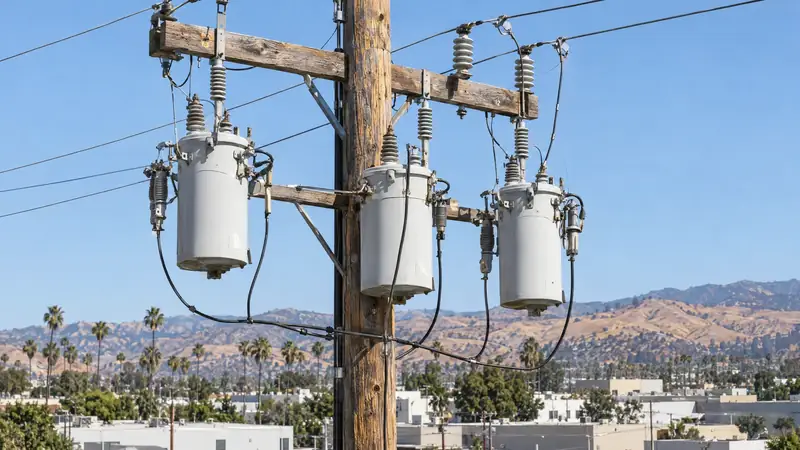
01Why Utilities & Municipal Utilities Surplus Transformers Accumulate
Utilities & municipal utilities surplus transformers can come from storage-yard inventory, system upgrades, project changes, spare-equipment programs and retired substations. A unit may still be serviceable even when it no longer fits a utility’s current standard or operating plan. New-surplus equipment left over from a project can also be worth reviewing if it has never been energized.
Inventory can include one transformer or a mixed group of units collected over time. California Transformer Buyer reviews surplus, used and new-surplus equipment from sellers across California; start with the unit’s actual condition and available records rather than assuming age alone determines whether it is a fit. See what a surplus transformer buyer reviews when considering an offer.
- Retired or replaced substation units
- Spare units no longer required
- Project leftovers and new-surplus stock
- Equipment displaced by voltage or system upgrades
02Transformer Types and Ratings Common in Utility Inventory
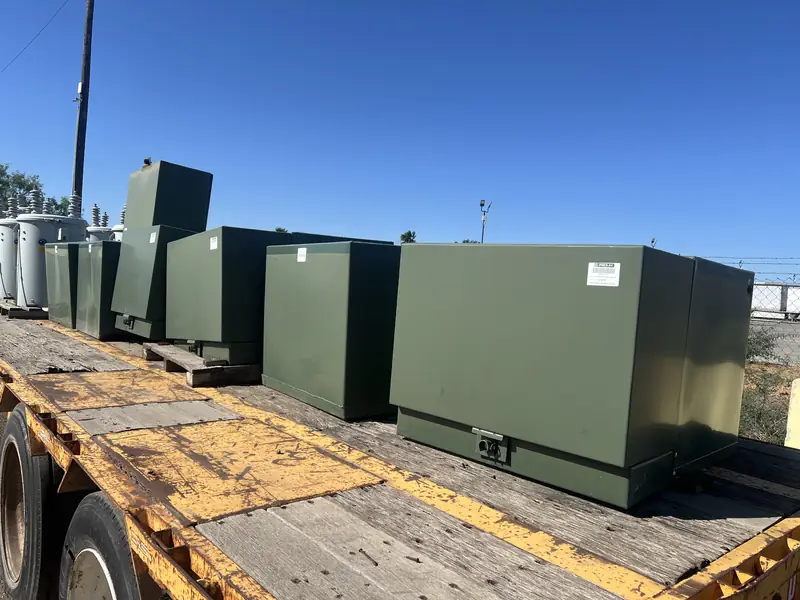
Utility and municipal inventories may include pole-mount units, single- and three-phase pad-mounted transformers, vault or network equipment, unit substations and station-class power transformers. Distribution equipment ranges from small kVA ratings to multi-megawatt units; larger substation transformers may have multiple cooling-stage ratings, radiators, fans and load-tap-changing or de-energized tap equipment.
For substation equipment, record every stated MVA stage and cooling designation, such as ONAN/ONAF, along with voltage, taps and accessories. For distribution units, include phase and kVA rating. A substation transformer buyer’s equipment overview and information on pad-mount transformers can help identify the configuration before you send details.
- Pole-mount: conventional or CSP
- Pad-mount: single- or three-phase
- Substation: station-class, often multi-MVA
- Unit substations and vault or network units
03California Utility Voltages Need to Be Checked on the Nameplate
Voltage compatibility can affect whether a unit suits another system, so use the nameplate rather than relying on a yard label or remembered service voltage. California systems vary by utility, service area and equipment vintage. For example, PG&E and SMUD use 12 kV and nominal 21 kV primary distribution in documented areas, while SCE distribution includes 4 kV, 12 kV and 16 kV systems.
Other documented examples include 12 kV distribution for SDG&E and 4.8 kV and 34.5 kV systems for LADWP. These examples are not a substitute for checking the individual transformer’s primary and secondary voltage, connection and taps. See the guide to common transformer voltages and configurations when organizing your records.
- Record HV and LV voltages
- Include delta or grounded-wye connection
- List tap positions and available configurations
- Note frequency and phase
04Records That Help Review a Surplus Utility Transformer
A clear nameplate photo is a useful starting point. Capture manufacturer, serial number, year, kVA or MVA ratings, phase, primary and secondary voltage, taps, impedance, BIL, cooling class and temperature rise. For liquid-filled units, include fluid type and gallons if documented; total weight and winding material can also help identify the unit.
Add available factory test reports, oil test or DGA records, insulation-resistance or turns-ratio results, and details about condition or missing accessories. Include PCB labels and supporting fluid records if available. PCB status should be based on testing and documentation, with interpretation handled by qualified environmental professionals; this information is not legal advice. An electrical transformer buyer’s review checklist can help you assemble the equipment details.
- Overall photos and nameplate photos
- Test reports and maintenance records
- Fluid and PCB documentation, if available
- Accessories, known defects and missing parts
05Confirm Ownership and Follow Public Surplus Procedures
Before requesting an offer, confirm that your organization owns the transformer or has authority to sell it. Equipment located on municipal property may still belong to an investor-owned utility or another party; possession or location alone does not establish ownership. Utility-owned equipment cannot be sold by the property owner.
Public agencies and municipal utilities should follow their applicable surplus-asset, procurement, approval and disposition procedures. Keep the approval or sale documentation with the equipment records and be ready to confirm who is authorized to represent the owner. Review the utility transformer ownership checklist before submitting equipment that may be owned by another utility.
06Plan Access, Rigging and Pickup Around Utility Operations
Pickup planning for utility equipment can involve more than reaching a storage yard. Site access rules, operating schedules, escorts, loading space, security requirements, heavy-haul routing and road restrictions may affect how a removal is arranged. Large substation transformers can require specialized transport planning; some may ship with radiators or bushings removed and may require a nitrogen or dry-air fill.
Do not open compartments, move equipment or attempt electrical work to prepare a transformer for sale. De-energizing, isolation, testing and disconnection are handled by the owner’s qualified electrical contractor or serving utility. For equipment that needs coordinated removal, review transformer removal and pickup planning and establish responsibilities before scheduling.
- Identify site contact and access requirements
- Share loading-area and route constraints
- Confirm who handles rigging and freight
- Coordinate removal with qualified personnel
07How to Request a Written Offer
Call or text Rocky at (951) 403-5738, or submit the website contact form. Send the equipment location in California, quantity, condition, overall photos and nameplate photos. You can text photos from a safe position and only of equipment you are authorized to access.
Rocky reviews the details and may ask follow-up questions about test reports, fluid or PCB records, ownership and site access. If the equipment is a fit, the written offer states the price, what is included, who handles loading, rigging and freight, and payment terms and timing. Removal is scheduled after terms are agreed in writing. Reviewing your transformer costs nothing and creates no obligation; see how the transformer sale process works or get an offer from California Transformer Buyer.
FAQUtilities & Municipal Utilities FAQ
Can a municipal utility sell a transformer that is still installed?
A sale can be considered, but the transformer must be owned by the seller or the seller must have authority to sell it. Equipment on a municipal site may belong to another utility or owner. The owner’s qualified electrical contractor or serving utility must handle any required isolation, testing and disconnection. Confirm ownership and operating approvals before arranging a sale or pickup.
Will you consider a single transformer, or only a full storage yard?
California Transformer Buyer considers single units as well as multiple transformers and mixed lots from California sellers. Include the number of units, their locations and any differences in condition or ratings. For a yard inventory, a simple list paired with representative nameplate and overall photos can help begin the review; additional details may be requested for individual units.
Can you review a transformer without complete test reports?
Yes, you can submit the information you have. A nameplate photo, overall photos, condition notes and location are useful starting points even if test reports are unavailable. State clearly which records are missing rather than estimating results. Rocky may ask follow-up questions or request any available factory, oil or electrical test documentation before deciding whether to make an offer.
Do you buy leaking or failed utility transformers?
Condition matters, and an offer is not guaranteed for every unit. Describe leaks, rust, bushing damage, missing components or known failures, and share relevant test or fluid records. Leaking equipment, drained oil and failed units may need an environmental or waste determination; sellers should rely on documentation, testing and qualified environmental professionals for that assessment.
What if the unit’s PCB status is unknown?
Share the records and labels you have, including manufacture date and any oil testing or prior handling documentation. Do not assume an unknown status means the equipment is non-PCB. Classification and management depend on applicable rules and the evidence available, so rely on qualified environmental professionals for testing and interpretation. California Transformer Buyer does not provide legal or environmental determinations.
Can a utility sell a transformer to a buyer outside its service territory?
The seller must be located in California for California Transformer Buyer to review the equipment. A utility’s service territory does not by itself establish ownership or authority to sell; confirm the owner and follow the organization’s applicable surplus procedures. Include the physical equipment location in your inquiry, especially if units are stored away from the utility’s primary operating area.