01Agriculture & water districts surplus transformers in California
Agriculture & water districts surplus transformers can come from irrigation pumping upgrades, packing-house changes, water and wastewater plant renovations, or equipment held as a spare after a project. California Transformer Buyer considers equipment located in California, including used, removed, decommissioned, surplus, and new-surplus units.
A transformer may still be useful after a facility changes its electrical service or replaces a pump, motor control system, or process line. A spare that was never installed can also be worth reviewing. Start with the equipment details rather than assuming age or application alone decides whether there is a buyer.
- Irrigation and agricultural pumping facilities
- Produce packing, cooling, and processing buildings
- Water treatment and wastewater facilities
- District-owned electrical infrastructure and spare inventories
02Why pumping, processing, and plant projects leave extra units
Pump replacements and capacity changes can leave a transformer that no longer matches the new motor load or electrical arrangement. A facility may retain a spare for reliability, then decide to sell it after standardizing equipment or reorganizing its maintenance inventory. Packing houses may also have units left over when refrigeration, sorting, or processing systems are upgraded.
Water and wastewater projects can produce surplus equipment during phased construction, service upgrades, or replacement of aging electrical gear. A transformer removed from service is not automatically scrap; its nameplate, condition, supporting records, and the seller’s authority to transfer it all matter. California operations comparing industrial plant or agricultural assets can also review our [manufacturing and industrial transformer buying information](transformers from manufacturing and industrial plants).
03Transformer types and ratings found at agricultural and water sites
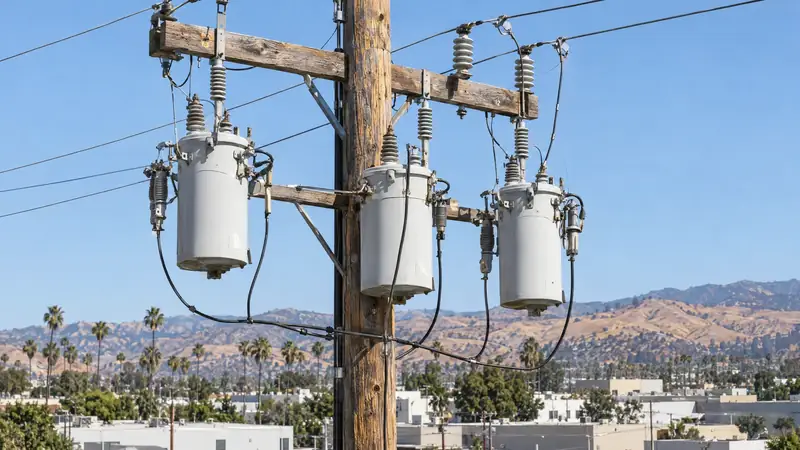
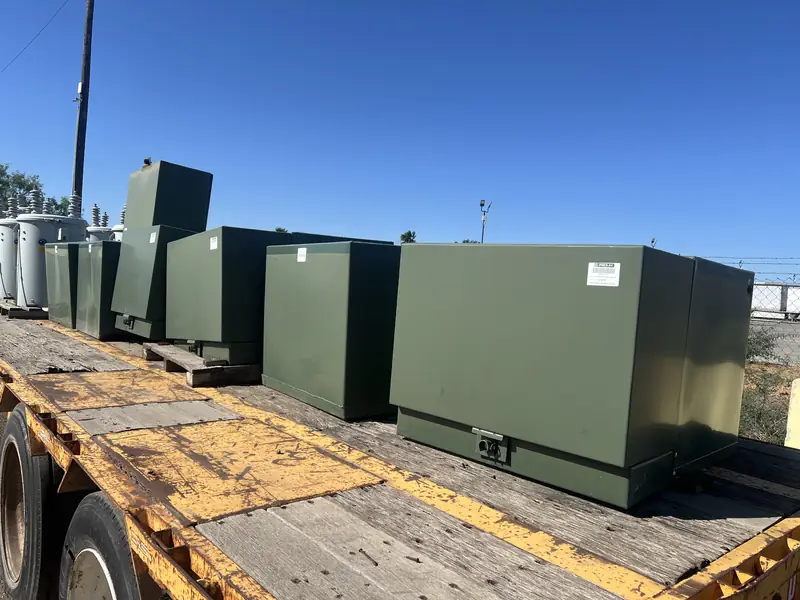
The right description depends on the installation. Sites may have pad-mounted distribution transformers serving pumps or buildings, pole-mounted units on distribution systems, dry-type transformers indoors, or larger substation equipment serving a plant or district. Three-phase units are common where equipment serves larger motors and process loads, but the nameplate—not the facility label—establishes the actual rating and voltage.
Standard three-phase ratings include 75, 112.5, 150, 225, 300, 500, 750, 1,000, 1,500, and 2,000 kVA, with larger sizes extending into MVA ratings. Single-phase ratings include 25, 37.5, 50, 75, and 100 kVA, among others. These are examples of standard ratings, not a claim that every size is typical for a particular farm or district.
- Pad-mounted, pole-mounted, dry-type, and substation units
- Single-phase or three-phase configurations
- Liquid-filled or dry insulation
- Used equipment and never-energized new-surplus units
| Installation | Possible transformer type | Useful nameplate details |
|---|---|---|
| Irrigation pump site | Pad-mount or pole-mount | Phase, kVA, primary and secondary voltage |
| Packing or processing building | Pad-mount or dry-type | Voltage, connection, cooling or insulation |
| Water or wastewater plant | Distribution or substation | MVA/kVA, cooling class, impedance |
| Spare equipment inventory | New-surplus or used unit | Serial number, year, condition, test records |
04Records and nameplate details that help a buyer review a unit
Take clear photos of the nameplate and the overall transformer from a safe position, and only photograph equipment you are authorized to access. Useful plate fields include manufacturer, serial number, year, kVA or MVA, phase, primary and secondary voltage, tap positions, impedance, cooling class, and connection. For liquid-filled equipment, fluid type and gallons are useful when shown.
Agricultural and public utility facilities may have maintenance files, acceptance or factory test reports, oil test results, insulation-resistance or turns-ratio tests, and PCB or fluid records. Records are helpful even when incomplete; do not assume a missing document means a particular test result. More detail on what a buyer may need is available in our [used transformer buyer guide](used transformer buyer information).
- Nameplate and overall equipment photos
- Quantity, California location, and known condition
- Test reports and service or fluid records, if available
- Ownership or written authority to sell
05Plan around irrigation seasons, plant access, and heavy equipment
Timing can be as important as the transformer details. A pump station may be needed during an irrigation or operating season, while a treatment plant may have strict access windows and ongoing service requirements. Share any known shutdown or project dates early so the review and potential pickup can be considered against the site’s schedule.
Large units may require coordinated rigging, freight, and access planning. Mention gate or road limitations, overhead obstructions, loading areas, and whether the transformer is inside a building or at a remote pump site. Do not disconnect, open, drain, or move equipment to prepare it for sale; the owner’s qualified electrical contractor or serving utility handles electrical isolation and disconnection.
- Identify the operating or shutdown window
- Describe access and loading constraints
- Disclose known leaks, damage, or missing parts
- Confirm who is authorized to coordinate site work
06Confirm ownership and handle PCB records carefully
A district or facility can sell a transformer only if it owns the equipment or has authority to sell it. Property owners should not treat utility-owned equipment located on their land as their own asset. If ownership is uncertain, check asset records and the relevant service or project documents before proceeding; see the [utility-owned transformer ownership checklist](checklist for selling utility-owned equipment).
For liquid-filled units, share available PCB labels, test results, and fluid documentation. PCB classifications and California rules depend on the equipment, oil, test information, and applicable pathway; “non-PCB” does not mean zero PCBs. Rely on testing, records, and qualified environmental professionals to determine status and handling. This information is general and is not legal advice.
07How California Transformer Buyer reviews a sale
Call or text Rocky at (951) 403-5738, or use the website contact form. Send nameplate and overall photos, quantity, California location, and known condition. Photos should be taken from a safe position without entering restricted areas or touching the equipment.
Rocky reviews the information and may ask about test reports, fluid or PCB records, ownership, and site access. If the unit is a fit, the written offer states the price, what is included, who handles loading or rigging and freight, and payment terms. Removal is scheduled and payment follows the written terms. Reviewing a transformer costs nothing and creates no obligation; see [how the transformer sale process works](transformer review, offer, and pickup steps).
- Call, text photos, or submit the contact form
- Share equipment and site details
- Review written terms before pickup
- Coordinate the agreed removal responsibilities
FAQAgriculture & Water Districts FAQ
Can you review a transformer that is still installed at a pump station?
Yes. You can send photos and equipment details while the transformer remains installed, provided you can take those photos safely and are authorized to access the area. Do not disconnect or move it to prepare for a review. Any electrical isolation and disconnection must be handled by the owner’s qualified electrical contractor or the serving utility.
Do you buy only large water district substation transformers?
No. California Transformer Buyer reviews a range of electrical transformers, from distribution equipment to larger station-class units, along with new-surplus equipment and spare units. Whether a particular transformer is suitable depends on its rating, voltage, phase, condition, documentation, quantity, and removal circumstances. Send the nameplate details rather than ruling out a unit based on size alone.
What if the transformer has no recent test report?
Send the information you have, including the nameplate, overall photos, and any maintenance or older test records. A current report is useful but is not the only information considered. Be accurate about what is known and what is missing; do not infer test results or PCB status from appearance or age. Rocky may ask follow-up questions during the review.
Can a district sell a transformer supplied by its electric utility?
Only if the district owns it or has authority to sell it. Equipment installed on district property may still belong to a serving utility, so location alone does not establish ownership. Check asset inventories, purchase or project records, and applicable utility documents before requesting an offer. California Transformer Buyer is not affiliated with utilities.
Can you consider a transformer with a leak or damaged parts?
You can disclose the condition and send photos taken safely from outside the equipment. Leaks, rust, bushing damage, missing accessories, and other defects can affect a review, but do not attempt repairs, open compartments, drain fluid, or move the unit. Any condition or environmental determination should be handled with qualified electrical and environmental professionals.
What should we send if a site has several surplus units?
Provide the quantity and location, then send a nameplate photo and overall photo for each identifiable unit where practical. Include any list of ratings, condition notes, test records, and access details you already have. A mixed lot or multiple-unit inventory can be reviewed together, but each transformer’s specifications and condition still help establish what can be included in written terms.