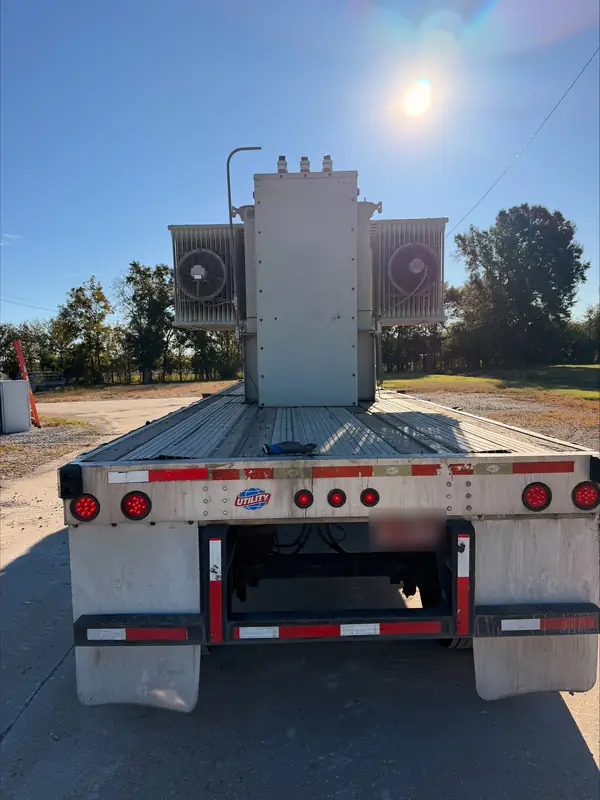
01What 66 kV, 69 kV and 115 kV Mean on a Transformer
A 66 kV, 69 kV or 115 kV transformer is generally a station-class unit used in subtransmission or transmission service, rather than an ordinary building or pad-mounted distribution transformer. The voltage identifies a winding or system class; it does not tell you the unit’s capacity, condition or exact output voltage.
The nameplate may show a rated high-voltage winding, one or more lower-voltage windings, tap positions and connection details. Read the full ratio and connection rather than relying on a single rounded kV label. For example, 66 kV and 69 kV are distinct ratings, not interchangeable names for the same transformer.
For a field-by-field explanation of voltage, taps, impedance and other data, see our transformer nameplate reading guide.
02California Utilities and Where These Voltages Appear
The verified California examples differ by utility. SCE uses 66 kV subtransmission; SDG&E documents 69 kV system supply to substations, and SMUD documents 69 kV subtransmission. PG&E has 115 kV transmission and subtransmission, while 115 kV is also documented within LADWP’s overhead transmission range.
These references describe system voltages, not a promise that a particular transformer will fit a utility’s current specifications or be accepted for a specific project. California distribution voltage on the lower-voltage side varies by system and station design. Check the actual nameplate and the project’s engineering documents before drawing conclusions about compatibility.
For a broader look at voltage classes, compare this equipment with other transformer voltages used in California.
| Voltage | Documented utility example |
|---|---|
| 66 kV | SCE subtransmission |
| 69 kV | SDG&E and SMUD subtransmission |
| 115 kV | PG&E transmission/subtransmission; LADWP overhead range |
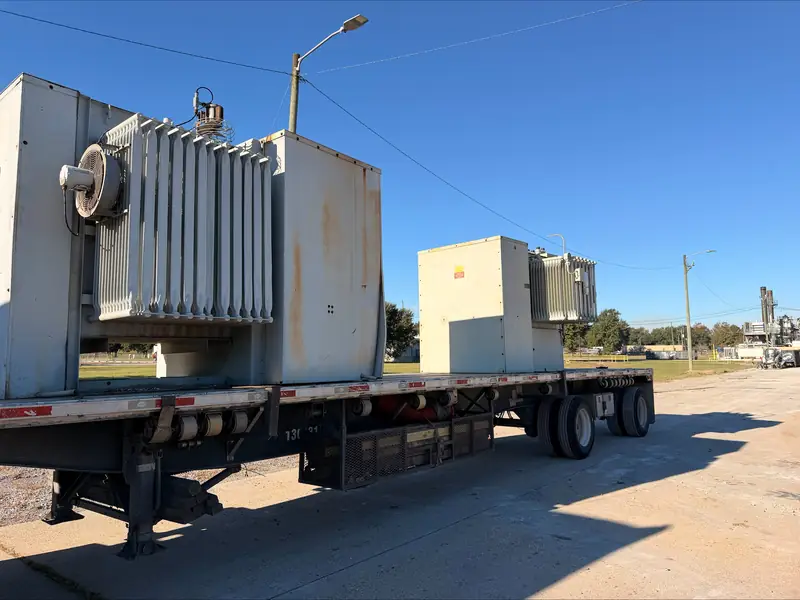
03Transformer Types and Capacity Ratings in This Voltage Range
These voltages are commonly associated with oil-filled power and substation transformers, including station units with radiators, fans, a tap changer and other large-unit accessories. Some may be autotransformers or have multiple windings, so appearance alone cannot confirm the electrical arrangement. See our overview of substation and power transformers for common equipment features.
Capacity is stated in kVA or MVA, separately from voltage. Station-class equipment spans a broad range; power and substation transformers are generally larger than distribution units, often in the multi-MVA range. A nameplate may show different capacity stages tied to cooling ratings, such as ONAN and ONAF, so provide every listed stage rather than one rounded figure.
Liquid-filled units may use mineral oil or another insulating fluid, and cooling and accessory arrangements differ. A buyer needs the fluid type and available records as well as voltage and MVA. Learn more about liquid-filled transformer configurations and transformer kVA and MVA ratings.
04What Determines Whether a Used Unit Can Be Reused
A matching high-side voltage is only a first screening point. A prospective application also needs to suit the low-side voltage, winding connections, phase, frequency, tap range, impedance, BIL and grounding arrangement. The receiving utility or project engineer must determine whether the complete design fits the intended system.
Physical condition and documentation matter too. Buyers review age, leaks, corrosion, bushing and radiator condition, missing parts, test reports, fluid and PCB records, and whether the transformer is used or new-surplus. Factory test reports and available oil or electrical test records can help establish its condition; environmental questions should be evaluated using documentation, testing and qualified environmental professionals.
A transformer designed for one station is not automatically a replacement for another, even when both are labeled 69 kV or 115 kV. Differences in ratio, taps, connection, impedance, cooling and layout may make a unit unsuitable or require a detailed engineering review.
- High- and low-voltage ratings, including taps
- Phase, frequency and winding connection
- kVA/MVA stages and cooling class
- Impedance, BIL and temperature rise
- Fluid type, PCB records and test reports
- Condition, accessories and completeness
05Information to Send for a 66 kV, 69 kV or 115 kV Transformer
Start with clear nameplate photos taken from a safe position and only where you are authorized to access the equipment. Include overall photos of the transformer and visible accessories. Do not open compartments or attempt to access energized equipment for pictures.
Send the transformer’s California location, quantity, condition and ownership or authority-to-sell details. Include available test reports, fluid or PCB documentation, and information about site access. If nameplate data is incomplete or unreadable, say so and provide whatever records you have.
Rocky uses this information to review the unit and ask follow-up questions. You can learn what to include when selling a transformer or send the details through the contact form for an offer review.
- Nameplate and overall equipment photos
- Manufacturer, serial number and year
- Voltage ratio, taps, connection and phase
- All kVA/MVA and cooling ratings
- Condition, quantity and California location
- Test reports and fluid/PCB documentation
06Written Offer, Site Access and Removal Planning
California Transformer Buyer buys from California sellers and considers used, pulled, surplus, new-surplus and decommissioned equipment. Reviewing the information costs nothing and creates no obligation. A written offer states the price, what is included, who handles loading or rigging and freight, and payment terms and timing.
Large substation transformers can require specialized transport planning. Weight, dimensions, access routes and site conditions affect how pickup is arranged; oversize or overweight moves may also require permits or local approvals. The written terms identify who is responsible for rigging and freight before pickup is scheduled.
Do not de-energize, disconnect or move the equipment yourself. The owner’s qualified electrical contractor or serving utility handles isolation and disconnection. For removal planning details, see transformer removal and pickup information.
07Request a Review for Equipment Located in California
If you have a 66 kV, 69 kV or 115 kV transformer to sell, call or text Rocky at (951) 403-5738. You can also submit the contact form and share the available photos and records. California Transformer Buyer reviews single units, spare transformers and larger surplus lots located in California.
The more complete the voltage ratio, capacity, condition and documentation, the easier it is to assess the equipment for potential reuse. Only the owner or someone with authority to sell can proceed; utility-owned equipment on a property cannot be sold by the property owner.
FAQ66 kV, 69 kV & 115 kV Transformer FAQ
Are 66 kV and 69 kV transformers interchangeable?
No. They are separate voltage ratings, and the nameplate ratio, tap range and winding connections must be checked rather than treating the terms as synonyms. A project may also have utility-specific requirements beyond nominal voltage. Have the receiving utility or project engineer confirm suitability before treating one rating as a replacement for the other.
Does 115 kV tell me the transformer’s MVA capacity?
No. The kV rating describes voltage, while MVA or kVA describes capacity. A transformer nameplate can also list multiple capacity stages for different cooling conditions. When you send information for a review, include all voltage and capacity fields and any cooling designations instead of estimating from the transformer’s size or appearance.
Can you review a transformer with a missing or unreadable nameplate?
Yes, you can still send overall photos and any records available, such as drawings, test reports or prior maintenance information. Explain which nameplate fields are missing or unreadable, and include the unit’s location, condition and quantity. Additional documentation may be needed to establish the electrical configuration and evaluate the equipment.
Do you buy a 66 kV, 69 kV or 115 kV transformer that has been removed?
California Transformer Buyer considers pulled and decommissioned transformers located in California, but purchase interest depends on the unit’s specifications, condition, records and other project details. Send photos and disclose known damage, missing parts, leaks and available testing. Do not move or handle the transformer to prepare it for a review.
What if the transformer’s PCB status is unknown?
Share all existing labels, fluid records and test documentation, and do not assume that an unknown unit is non-PCB. PCB determinations and management depend on applicable rules, test results and qualifying records. Rely on qualified environmental professionals for the appropriate evaluation; this information is not legal advice.
Can I sell utility-owned equipment installed on my property?
A property owner cannot sell equipment owned by a utility. Before requesting an offer, confirm that you own the transformer or have authority to sell it. If ownership is unclear, check the relevant property, project or utility records first. California Transformer Buyer reviews equipment offered by its owner or an authorized seller.