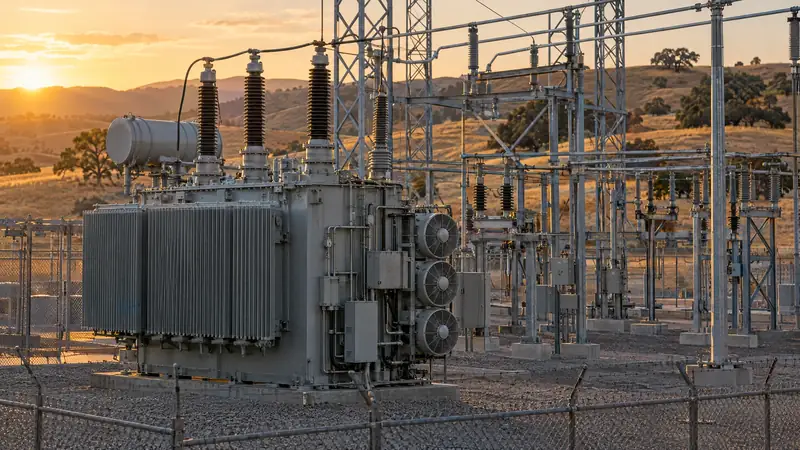
01What a 20 MVA Transformer Is Commonly Used For
A 20 MVA transformer is a large power transformer, usually installed in a utility or industrial substation. It may serve as a network supply transformer or connect generation to a transmission or subtransmission system. California Transformer Buyer considers used, surplus, and new-surplus units located in California.
At this capacity, a three-phase assembled unit is most common. Single-phase power transformers or banks can also have a 20 MVA rating, so confirm whether the stated capacity applies to one transformer, a bank, or a particular cooling stage. For adjacent capacities, compare our 15 MVA transformer and 25 MVA transformer pages.
FLAFull-Load Amps for a 20 MVA Transformer
Rated full-load current at common California voltages. Single-phase: amps = kVA × 1000 ÷ volts. Three-phase: amps = kVA × 1000 ÷ (1.732 × volts). Use the nameplate voltage of your unit.
| Phase | Voltage | Full-load amps |
|---|---|---|
| Three-phase | 4.16 kV | 2,776 A |
| Three-phase | 12.47 kV | 926 A |
| Three-phase | 20.78 kV | 556 A |
| Three-phase | 34.5 kV | 335 A |
| Three-phase | 66 kV | 175 A |
| Three-phase | 69 kV | 167 A |
| Three-phase | 115 kV | 100 A |
02Which 20 MVA Transformer Types May Be Available
The types most associated with this rating include station-class substation power transformers, generator step-up (GSU) transformers, autotransformers, and mobile-substation transformers. Each has a different electrical arrangement and likely buyer pool. Configuration, voltage, cooling, and the intended service matter as much as the MVA rating. See our pages on substation and power transformers, generator step-up transformers, autotransformers, and mobile substation transformers.
A standard distribution-style 20 MVA pad-mount is not typical: standard three-phase pad-mount scope generally reaches 10 MVA. A specialized enclosed unit may be described as pad-mounted, but verify the actual nameplate and construction rather than relying on the enclosure. Pole-mount and ordinary low-voltage dry-type transformers are not typical at 20 MVA; send details if you have an unusual design.
03Voltage Combinations and Nameplate Details to Check
A 20 MVA transformer may have transmission, subtransmission, or medium-voltage windings, with combinations determined by the substation or generation project. The full-load amps chart rendered on this page shows example three-phase currents at 4.16, 12.47, 20.78, 34.5, 66, 69, and 115 kV. These are chart examples, not a substitute for the unit’s actual rated voltages.
For a useful review, photograph the complete nameplate. Buyers need the high- and low-side voltages and connections, tap positions, impedance, BIL, cooling class, temperature rise, frequency, and all listed MVA stages. A rating such as 12/16/20 MVA may indicate different capacity by cooling stage; record the full designation instead of shortening it to 20 MVA.
- Manufacturer, serial number, and year
- Phase and winding connection
- Voltage ratings and tap range
- MVA stages and cooling class
- Impedance, BIL, and temperature rise
04How to Read the 20 MVA Full-Load Amps Chart
Choose the chart row for the winding voltage and phase you are checking. For a three-phase transformer, the listed current is the approximate full-load current at that voltage when operating at the stated MVA rating. The high-side and low-side currents differ because the voltage changes across the transformer.
Use the chart as a reference, not as a condition report or a complete specification. Confirm the nameplate rating, winding voltage, phase, and cooling stage; a unit’s permissible loading depends on its design and operating conditions. For more on the relationship between capacity and current, see how to read transformer kVA and amps.
05Size, Weight, and Removal Planning for a 20 MVA Unit
A 20 MVA power transformer is substantial equipment, but its dimensions and weight vary by manufacturer, design, accessories, and transport configuration. The nameplate or shipping records may show total weight as well as separate tank-and-fittings and core-and-coil weights. Share those records if available rather than estimating from appearance.
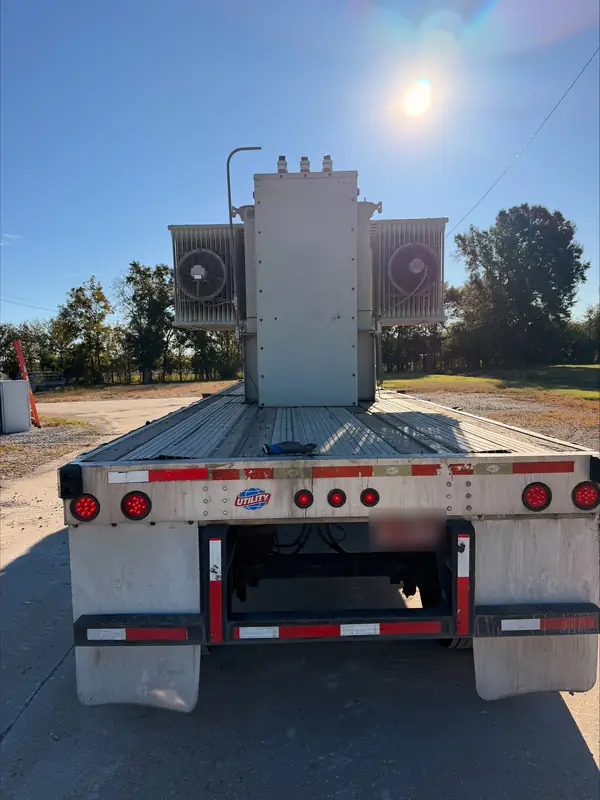
Radiators, bushings, and other components can affect the shipping configuration. Large units may require specialized heavy-haul planning, and oversize or overweight loads can involve state or local approvals. Do not move, disconnect, open, or prepare the transformer yourself; the owner’s qualified electrical contractor or serving utility handles electrical isolation, and pickup arrangements are stated in writing.
06What Affects the Value of a Used 20 MVA Transformer
The rating alone does not establish value. Buyers assess the exact voltage and connection, taps, impedance, cooling stages, winding material, age, condition, and whether the unit is used or new-surplus. A complete, documented transformer may have a different market than a unit with missing accessories, damage, leaks, or uncertain specifications.
Test reports and environmental records are useful. Factory test results, oil test or dissolved-gas analysis records, insulation resistance, turns-ratio results, fluid type, and PCB documentation can help clarify condition and handling requirements. PCB status should be supported by testing and records; rely on qualified environmental professionals for interpretation and management decisions. Review other factors in our used-transformer value guide.
- Voltage and configuration fit for resale
- Condition, completeness, and test records
- Fluid, PCB documentation, and winding material
- Quantity, access, and removal complexity
07What to Send California Transformer Buyer for an Offer
To sell a 20 MVA transformer, send clear nameplate photos, overall photos taken from a safe position, the number of units, the site location, and a brief condition description. Include available test reports, fluid and PCB records, ownership or sale authority, and information about site access. Do not enter restricted areas or approach equipment unless authorized and safe.
Rocky reviews the information and may ask follow-up questions. Any written offer states the price, what is included, who handles loading, rigging, and freight, and the payment terms and timing. Call or text (951) 403-5738, or use get an offer for your transformer. Reviewing a transformer costs nothing and creates no obligation; California Transformer Buyer serves California sellers only.
kVANearby Transformer Sizes We Buy
FAQ20 MVA Transformer FAQ
Can I sell a 20 MVA transformer that is still installed?
Yes, you can ask for an offer while the transformer remains installed. Send photos from a safe position, the site location, nameplate information, and a description of access and condition. Do not disconnect or prepare the equipment yourself. Electrical isolation and disconnection are handled by the owner’s qualified electrical contractor or the serving utility, and loading and pickup responsibilities should be clear in the written terms.
Do you buy a single-phase 20 MVA transformer?
California Transformer Buyer can review a single-phase unit or a single-phase bank. At this rating, three-phase assembled transformers are more common, but single-phase power units and banks also occur. Make clear whether 20 MVA is the rating of one transformer or the combined bank, and send the nameplate for each unit so the configuration and ratings can be evaluated accurately.
Will you buy a 20 MVA transformer with no test reports?
You can still submit it for review if reports are unavailable. Provide the nameplate, photos, known operating history, condition details, and any records you do have. Test documentation can help establish condition and may affect the assessment, so disclose what is missing rather than assuming a test result. Rocky may ask follow-up questions about the unit, fluid records, or ownership before preparing written terms.
Do you buy a transformer with leaks or missing parts?
A unit with leaks, corrosion, damaged bushings, missing components, or other known issues can be submitted for review, but purchase depends on the specific equipment and circumstances. Describe the issue and include clear photos if they can be taken safely. Do not open compartments or drain fluid to inspect it. For failed or leaking equipment, rely on qualified electrical and environmental professionals for safe handling and determinations.
Can a property owner sell utility-owned transformer equipment?
Only the owner or someone authorized by the owner can sell a transformer. Equipment located on private property may still belong to a utility, so verify ownership before requesting an offer. California Transformer Buyer is not affiliated with utilities and cannot purchase equipment from someone who lacks authority to sell it. Include ownership or sale-authority information when you send the transformer details.
How do I know whether my 20 MVA unit is new-surplus or used?
New-surplus equipment has never been energized and is commonly stored crated or on skids. Used equipment has previously been energized, even if it is now disconnected or held as a spare. Tell us the unit’s history and current storage condition, and provide available records or photographs. If the operating history is uncertain, describe what you know rather than labeling it as new-surplus.