01Sell a Howard Industries Transformer: What California Sellers Should Know
California Transformer Buyer, run by Rocky, reviews Howard Industries equipment from California sellers, including operating spares, project leftovers, pulled units and new-surplus inventory. Used units may have been energized; new-surplus units have not been energized and may remain crated or on skids.
Howard Industries is a U.S. producer of utility distribution and substation/power transformers. Its nameplates may identify the manufacturer as Howard Industries or use the power-business identity Howard Power Solutions. The manufacturer’s current medium-power capability is advertised up to 300 MVA and 345 kV; that does not mean every Howard unit has those ratings.
The company is an independent buyer and is not affiliated with Howard Industries. To understand what information helps buyers verify a unit, see this guide to reading transformer nameplate fields.
02Howard Industries Transformer Types and Ratings We Review
We review Howard Industries transformers across utility distribution and power applications. The exact configuration and nameplate matter more than the manufacturer’s name when determining whether a particular unit fits current demand.
- Overhead distribution transformers, including single- and three-phase units
- Single- and three-phase pad-mounted transformers
- Substation and station-class transformers
- Generator step-up (GSU) transformers
- Autotransformers
- Used, pulled, surplus, new-surplus, spare and decommissioned equipment
Distribution and pad-mounted units
For a pad-mount unit, share whether it is single- or three-phase, its kVA rating, primary and secondary voltages, and any available switch, fuse or accessory details. California installations can use different primary voltages, so the actual nameplate is more useful than an assumed utility standard. See what matters for a pad-mounted transformer sale.
Substation and power transformers
Larger units may have multiple cooling-stage ratings, radiators, fans, tap changers or other accessories. Include all stated MVA ratings and cooling designations, and note whether the unit is a GSU or autotransformer if known. Our substation transformer buying information covers the details that help describe larger equipment.
03Where to Find the Howard Industries Transformer Nameplate
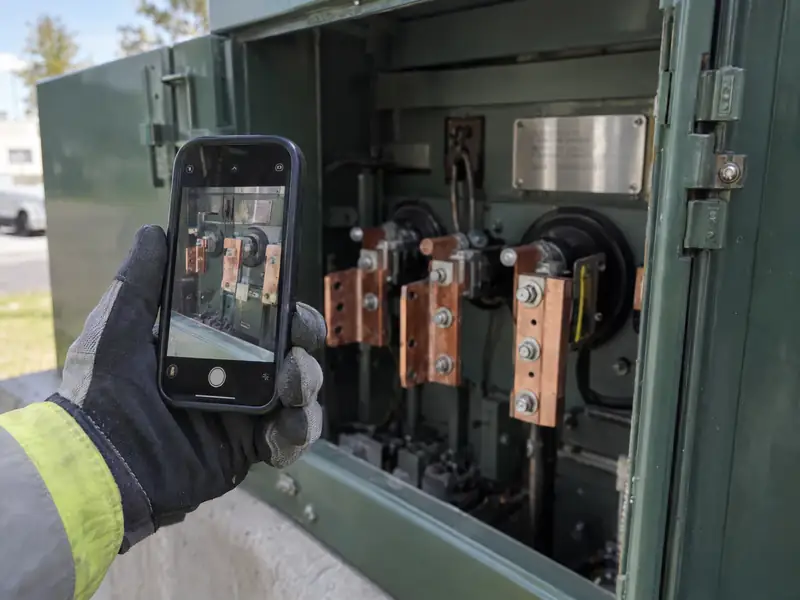
Look for the equipment identification plate attached to the transformer tank or enclosure. Its position and layout can vary by unit type and age. Take a clear photo from a safe position of equipment you are authorized to access; do not open compartments or approach equipment that is not safe to photograph.
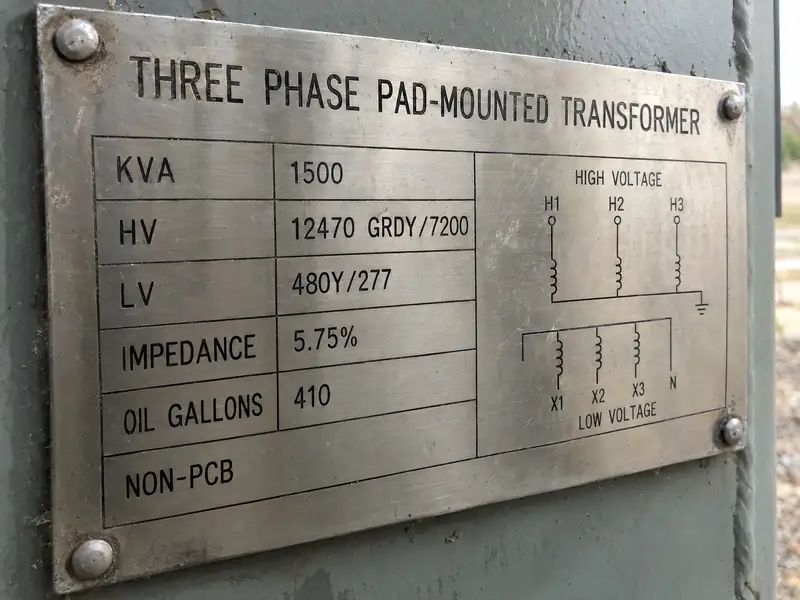
Howard Industries transformer nameplates may show the manufacturer or power-business identity alongside the serial number, catalog or style number, and year of manufacture. Send the entire plate if possible, even if some fields are difficult to read. A separate close-up of a faint serial or rating field can help, provided the photo can be taken safely.
- Serial number, catalog or style number, and year
- kVA or MVA rating, including each cooling stage
- Phase, frequency, primary and secondary voltages
- Tap positions, connection and impedance
- Cooling class, temperature rise and BIL
- Fluid type and gallons, if liquid-filled
- Weight, winding material and PCB label, if shown
04What to Send for a Howard Industries Transformer Review
Start with the nameplate photo and overall views of the unit. Include the quantity, California location, whether the transformer is used or new-surplus, and a brief condition description. Mention visible leaks, rust, damaged bushings, missing parts or other known issues without touching or opening the equipment.
If available, provide test reports, oil test or dissolved gas analysis (DGA), insulation resistance or turns-ratio results, factory test reports, fluid and PCB records, and accessory lists. You can text photos to Rocky at (951) 403-5738 or use the contact form to request an offer.
- Confirm that you own the unit or have authority to sell it
- Note whether the transformer is installed, removed or crated
- Describe known site access or removal constraints
- Include records that establish test and environmental status
05Age, Condition and Rating Matter More Than the Howard Name
Brand can help confirm the equipment identity, but it does not set resale value by itself. Buyers also consider kVA/MVA, phase, primary and secondary voltage, taps, connection, impedance, cooling, age, condition, fluid, available test records, included accessories, quantity and demand for that configuration.
A newer unit with clear documentation may be more useful than an older unit of the same brand, but there is no single rule: a well-documented older transformer may still suit a buyer, while damage or missing components can limit options. This overview of factors that affect used transformer value explains why offers vary by unit.
06PCB Records, Safety and Removal Planning
Share existing PCB labels, test results and environmental records; do not assume a transformer is PCB-free based on appearance or age. “Non-PCB” does not mean zero PCBs. Unknown equipment may require testing or qualifying documentation to establish its status. Sellers should rely on records, testing and qualified environmental professionals for determinations; this information is not legal advice.
Only the owner’s qualified electrical contractor or serving utility should handle isolation and disconnection. Sellers should not de-energize, disconnect, open, drain, sample or move equipment. Large substation units can also require specialized transport planning; we state in the written offer who handles rigging and freight.
07How a Howard Industries Transformer Sale Is Reviewed
Send the equipment details and photos by text or through the website. Rocky reviews the information and may ask follow-up questions about test reports, fluid or PCB records, ownership, quantity and site access. Reviewing a transformer costs nothing and creates no obligation.
If we make an offer, it is provided in writing with the price, what is included, responsibility for loading or rigging and freight, and payment terms and timing. Pickup is scheduled under the agreed terms. For broader selling steps and equipment types, see how to sell your transformer.
FAQHoward Industries FAQ
Does California Transformer Buyer purchase every Howard Industries transformer?
No. Each unit is reviewed individually, and an offer depends on its specifications, condition, records, location and current buyer demand. We consider used, surplus and new-surplus equipment, but do not promise to purchase every transformer or every condition. Send clear photos and the available nameplate details so Rocky can determine whether the unit is a fit for review.
What if the Howard Industries serial number or year is unreadable?
Send the clearest safe photo you can take, along with overall equipment photos and any other readable plate fields. Catalog or style number, rating, voltage and configuration may still help identify the unit. Do not open an enclosure or handle the transformer to improve a photo. If records or drawings are available, include them so the buyer can compare the information.
Will you review a Howard Industries transformer without test reports?
Yes, you can submit a unit for review even if test reports are unavailable. Clearly state which records you have and which you do not; do not represent an untested transformer as tested or operational. Existing factory reports, field tests and maintenance records can help establish condition, but the equipment will be evaluated using the information that is actually available.
Can I sell a Howard Industries transformer that is still installed?
An installed transformer can be reviewed, but ownership and removal responsibilities must be clear. You must own the equipment or have authority to sell it; utility-owned equipment on a property cannot be sold by the property owner. Qualified electrical personnel or the serving utility handle isolation and disconnection. Describe access constraints and the unit’s current status when requesting an offer.
Do you buy Howard Industries units that are leaking or missing parts?
You can send information about a leaking, damaged or incomplete unit for review, but its condition may affect whether it can be purchased and how it is handled. Describe visible issues and list missing accessories or components. Do not drain fluid, sample oil, open compartments or attempt repairs. Environmental and waste determinations should be made with appropriate records and qualified professionals.
How do I know whether the offer includes transformer removal?
The written offer states what is included and who handles loading or rigging and freight, along with payment terms and timing. Review those terms before pickup and ask questions if the site responsibilities are unclear. Do not arrange or perform electrical disconnection or move the transformer yourself; that work must be handled by qualified personnel or the serving utility.