01Sell a Square D (Schneider Electric) Transformer in California
California Transformer Buyer, run by Rocky, reviews Square D equipment from sellers located anywhere in California. We consider previously energized, removed, surplus, new-surplus, spare, and project-leftover units, including individual transformers and mixed lots. New-surplus equipment means it has never been energized and is typically crated or on skids.
Call or text (951) 403-5738, or use the website contact form. Send photos taken from a safe position and only of equipment you are authorized to access. We review the information and may ask for test reports, ownership details, or site-access information before providing a written offer.
- Include the quantity and California location.
- Describe whether the unit is installed, removed, crated, or on skids.
- Mention visible damage, missing parts, or known test history.
02Square D Transformer Lines and Schneider Electric Ownership
Square D is a familiar US name on low-voltage general-purpose, control, drive-isolation, and medium-voltage dry-type transformers. Schneider Electric acquired Square D in 1991 and continues to market Square D transformer lines in the United States. Equipment may therefore carry a Square D nameplate, a Schneider Electric reference, or other legacy branding.
Commonly encountered lines include LV dry-type, control and buck-boost transformers, VPI Power-Dry II, and Power-Cast II. The broader portfolio includes MV VPI and cast-coil equipment, as well as instrument and control transformers. For cataloging a used unit, retain the brand exactly as printed on its nameplate and use Schneider Electric as a parent-brand cross-reference.
California Transformer Buyer is an independent buyer and is not affiliated with Square D or Schneider Electric. For a general comparison of dry insulation types and equipment, see our guide to dry-type transformers.
03Which Square D Transformers We Consider
We review Square D and Schneider Electric equipment across a range of applications, including dry-type distribution, control, buck-boost, drive-isolation, VPI, and cast-coil units. We also consider other transformer configurations when the nameplate and available information identify the equipment clearly. A unit’s application and specifications matter more than its product-family name.
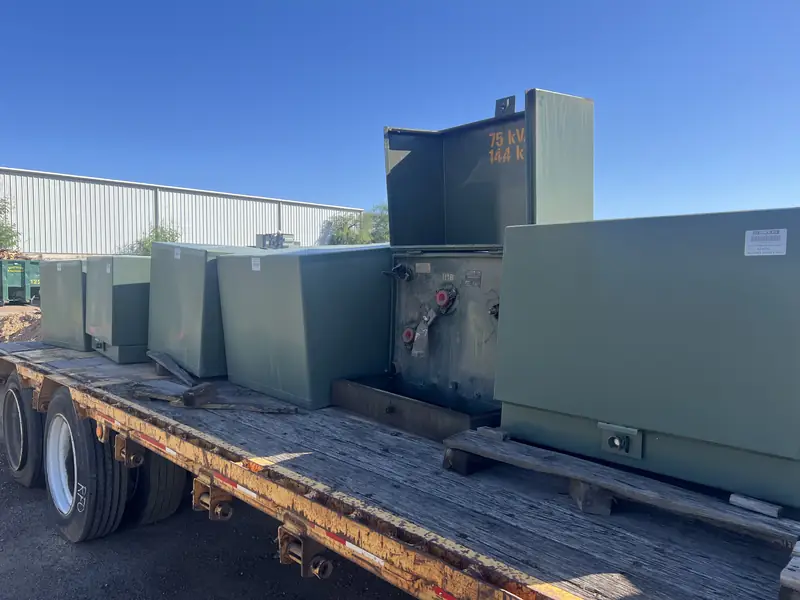
For a Square D pad mount transformer, include clear views of its cabinet and nameplate without opening compartments or disturbing the equipment. For larger station-class or substation equipment, provide the available shipping, accessory, and test information. We also review pad-mounted and substation units from other brands through our pad mount transformer buyer and substation transformer buyer pages.
- Low-voltage dry-type and general-purpose units
- Control, buck-boost, and drive-isolation transformers
- VPI Power-Dry II and Power-Cast II equipment
- Medium-voltage VPI and cast-coil transformers
- New-surplus units, spares, and mixed lots
04How to Read a Square D Transformer Nameplate
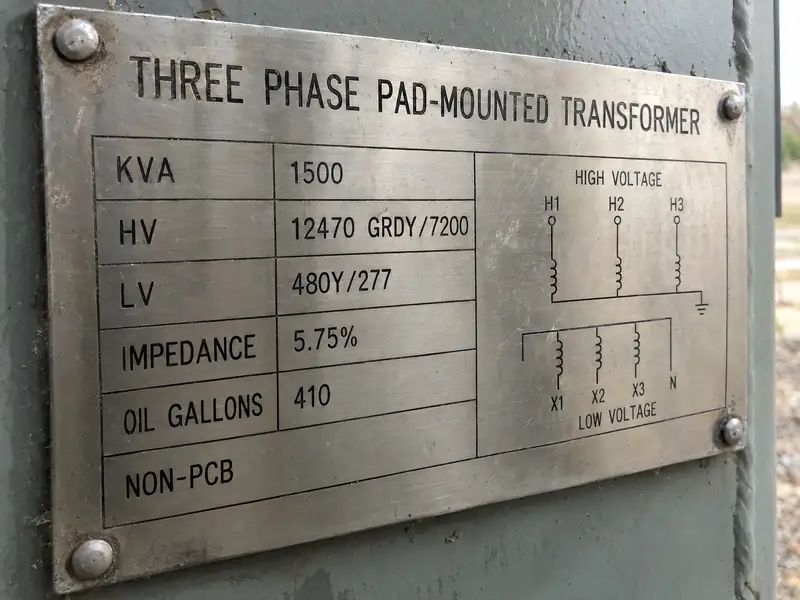
Nameplate layouts vary by product line and age. Look for the serial number, catalog or style number, and manufacture date or year wherever they appear; do not assume they occupy the same spot on every Square D plate. A clear, straight-on photo of the full nameplate is more useful than a cropped image of only the brand.
Also capture the kVA rating, phase, primary and secondary voltages, taps, connection, impedance, BIL, temperature rise, and cooling information when listed. For liquid-filled equipment, photograph fluid type and gallons if shown. Total weight and any PCB wording can also help identify the unit and its handling records. Our transformer nameplate guide explains common fields.
- Photograph the entire plate, including small print.
- Send a second close-up if the serial or catalog number is hard to read.
- Include the connection or wiring diagram if separately labeled.
05What to Send for a Square D Transformer Review
Along with nameplate photos, send overall photos of the transformer and its visible condition. Tell us how many units are available, where they are located in California, whether they are installed or stored, and whether they are used or new-surplus. Do not enter restricted areas or approach equipment unless you are authorized and can take photos safely.
Available documentation can make an evaluation more informed. Depending on the unit, useful records may include factory test reports, insulation-resistance or turns-ratio results, oil tests or DGA, PCB documentation, maintenance history, and ownership records. We may follow up about access and removal conditions. Review our transformer selling steps for the information to prepare.
- Nameplate and full-unit photos
- Quantity, location, and condition
- Test reports and available environmental records
- Accessories present or known to be missing
- Confirmation that you own the equipment or can sell it
06Rating and Condition Matter More Than the Brand Name
A Square D label helps identify a transformer, but it does not establish a unit’s value by itself. Buyers consider kVA or MVA, phase, voltage and connection, age, condition, and whether the unit is used or new-surplus. Winding material, impedance, cooling, accessories, test history, and demand for the configuration can also affect buyer interest.
Leaks, corrosion, damaged bushings, missing components, and limited documentation can change how a unit is evaluated. A current or legacy nameplate is useful, but the actual specifications and condition need to be reviewed. For more detail, see what affects a used transformer’s value.
If a unit contains oil or its PCB status is unknown, rely on existing testing and records and consult qualified environmental professionals about appropriate handling. PCB determinations and California oil-management requirements depend on the equipment, documentation, and test results; this information is not legal advice.
07Written Offer and Pickup Arrangements
After reviewing the information, Rocky may ask follow-up questions before making an offer. If a purchase is agreed, the written offer states the price, what is included, who handles loading or rigging and freight, and the payment terms and timing. The arrangements are set out in writing before pickup.
Do not disconnect, open, drain, move, or otherwise prepare a transformer yourself. The owner’s qualified electrical contractor or serving utility handles electrical isolation and disconnection. If you are not the equipment owner, confirm that you have authority to sell it; utility-owned equipment on private property cannot be sold by the property owner.
- Call or text Rocky at (951) 403-5738.
- Send the equipment information and photos.
- Review the written offer and pickup responsibilities before proceeding.
FAQSquare D (Schneider Electric) FAQ
Can I sell a Square D transformer if the nameplate is damaged or unreadable?
You can still send photos and explain which information is missing. Include any legible serial or catalog numbers, labels on the enclosure, and records that may identify the rating or history. Do not remove covers or access restricted compartments to find another plate. Without reliable specifications, evaluation may be limited, and additional documentation or qualified inspection information may be needed.
Do you buy older Square D transformers with legacy nameplates?
Yes, we review equipment with current or legacy nameplates, but age alone does not determine whether a unit can be considered. The rating, voltage, condition, completeness, and available records are important. Send the nameplate and overall photos, including any readable date or serial information, so the equipment can be assessed on its actual details.
Will you consider a single Square D control or buck-boost transformer?
We consider individual units as well as larger quantities and mixed lots. For a smaller control or buck-boost transformer, send its nameplate, overall condition, quantity, and California location. Include any related equipment available with it and whether it is used or new-surplus. Review is not a guarantee of purchase, and the available specifications help determine whether there is buyer interest.
Can I sell a Square D transformer that is still installed?
An installed unit can be reviewed from information and photos you are authorized to provide, but electrical work and preparation are not the seller’s task unless performed by qualified personnel. Do not disconnect or move it yourself. If an offer is made, the written terms will identify who handles loading or rigging and freight, and pickup arrangements must account for site access.
What if I cannot confirm whether a Square D transformer is non-PCB?
Send any existing labels, test results, and environmental records, and describe what is unknown. Do not infer PCB status from the brand or a general description. PCB classification and oil management depend on applicable testing and documentation, so rely on qualified environmental professionals for determinations and handling advice. The information provided here is general guidance, not legal advice.
Can a property owner sell a transformer that appears to belong to a utility?
Only the owner or someone with authority to sell the equipment can offer it for sale. A transformer located on private property may still be utility-owned, so location alone does not establish ownership. Confirm ownership or sale authority before requesting an offer. If the unit belongs to a serving utility, the property owner cannot sell it as their own equipment.