01Plan Decommissioning a Substation Transformer Before the Outage
A transformer retirement has several separate workstreams: electrical clearance, equipment evaluation, environmental review, transport preparation and sale. Treating them as one demolition task can leave an otherwise usable transformer without the records or accessories a buyer needs. Start the commercial review while the unit is still intact, when practical.
First establish who owns the transformer and who has authority to sell it. Equipment serving a property may belong to the utility rather than the property owner. Identify the contractor or utility responsible for electrical isolation, the environmental professional responsible for fluid questions, and the parties responsible for rigging and transport.
Set decision points before committing to an outage or crane date. A purchase review is not a guarantee of acceptance, and reuse versus disposal can change the entire removal plan. Use the transformer removal checklist for facility managers to organize site information and assigned responsibilities.
- Confirm ownership and sale authority.
- Identify the proposed reuse or disposal destination.
- Gather technical and fluid records before dismantling.
- Assign responsibility for each contractor’s scope.
- Coordinate access dates with the outage schedule.
02Build a Technical Record That Preserves Resale Options
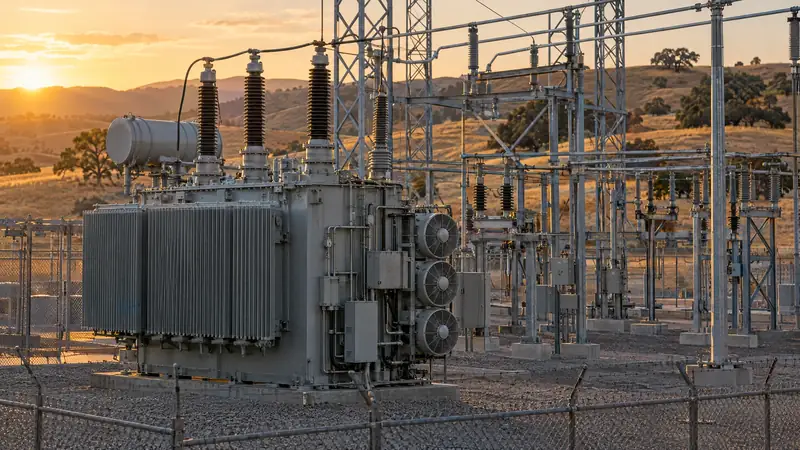
Photograph accessible nameplates and the overall equipment only from a safe position you are authorized to access. Existing drawings and maintenance records can supply information that is not safely visible. Include the transformer, radiators, bushings, control cabinets, fans and any separately stored accessories.
Record every cooling-stage rating. A 12/16/20 MVA ONAN/ONAF/ONAF unit should not be described simply as a 20 MVA transformer: the higher ratings depend on its cooling equipment. Capture HV and LV voltages, delta or wye connections, impedance, BIL, tap range, temperature rise, fluid type and quantity, and listed weights.
A buyer also needs an honest operating history: last energized date, reason for retirement, known leaks, protection trips, bushing damage and missing components. Available factory reports, turns-ratio results, insulation-resistance tests and oil or dissolved-gas analysis can support review, but no single test proves complete fitness for reuse.
The substation and power transformer guide helps distinguish station-class equipment from smaller distribution units. Use the actual nameplate specifications rather than assuming that a nearby utility’s nominal voltage matches the transformer.
- Manufacturer, serial number and manufacturing year
- All kVA/MVA ratings and cooling classes
- HV/LV voltages, connections, taps and impedance
- Fluid quantity, total weight and component weights
- LTC or de-energized tap changer details
- Test reports, service history and accessory inventory
03Coordinate Qualified Isolation and Site Clearance
The owner’s qualified electrical contractor or serving utility handles de-energizing and disconnecting. Sellers should not open compartments, remove connections or attempt to establish that equipment is safe. California electrical safety requirements call for qualified clearance, isolation, voltage testing and grounding as applicable; Cal/OSHA Title 8 includes requirements such as 8 CCR 2940.14 for distribution equipment.
The electrical team must consider every possible source, including backfeed from generators, solar systems and battery storage. An upstream outage alone does not establish a safe work condition. The approved clearance procedure also needs to address adjacent energized equipment and the boundaries for rigging personnel.
Keep electrical release separate from lifting authorization. Before the transport crew arrives, the project team should confirm who documents completed electrical work, who controls site access, and what nearby equipment remains energized. Resolve conflicts involving replacement equipment, temporary power and occupied-building access before mobilization.
04Establish PCB Classification and the Correct Oil Pathway
Fluid status is a planning input, not a detail to settle after loading. Federal PCB requirements under TSCA and 40 CFR 761, particularly §§761.2, 761.3, 761.20 and 761.30, affect assumptions, classification, use and transfers. Rely on valid testing, manufacturer documentation, complete service records and qualified environmental professionals; this guide is not legal advice.
For mineral-oil equipment made before July 2, 1979 with unestablished concentration, the required assumption is PCB-contaminated; an unknown manufacturing date also triggers that assumption. Pre-July 2, 1979 transformers containing at least three pounds of non-mineral fluid with unestablished concentration must be assumed PCB transformers. If both date and fluid type are unknown, assume PCB transformer.
Section 761.2 permits a non-PCB assumption for equipment manufactured after July 2, 1979, but tests and complete records are preferable for a buyer. A manufacturing label does not necessarily account for subsequent servicing or contamination. The 1979 PCB manufacturing ban was not a ban on manufacturing all transformers.
Do not assume that every unit at or above 50 ppm is freely resalable—or that all existing PCB equipment is categorically prohibited from transfer. Section 761.20 includes exceptions for intact, nonleaking electrical equipment, while §761.30 supplies use conditions. Classification, leak status, authorized use, destination, marking and transport require review before acceptance.
| Category | PCB concentration | Planning significance |
|---|---|---|
| Non-PCB | <50 ppm | Not zero PCB; other waste rules can apply |
| PCB-contaminated electrical equipment | ≥50 and <500 ppm | Review applicable use and transfer conditions |
| PCB transformer | ≥500 ppm | Special regulatory provisions may apply |
California Oil Rules Need a Separate Review
California HSC 25250.1 excludes oil containing 5 ppm or more PCBs from the state’s used-oil category. Title 22, 22 CCR 66261.24, lists a PCB total threshold of 50 mg/kg and soluble threshold of 5 mg/L in the extract. These are different criteria, not a rule that every transformer at 5 ppm is hazardous waste.
Under HSC 25250.4, used oil is generally managed as hazardous waste unless an exclusion or recycling pathway applies. Regulated used oil or waste hauling requires registered hazardous-waste transporters and manifests. A working transformer sold for reuse is equipment, but leaking units, drained oil and failed equipment need a proper determination.
05Specify Oil Handling and Component Removal for Transport
Some large transformers travel intact; others require radiator or bushing removal to meet transport dimensions and weight limits. Have the qualified preparation team develop a unit-specific plan using manufacturer guidance and the carrier’s requirements. Do not assume that a transformer’s total operating weight is its proposed shipping weight.
Oil handling belongs to qualified personnel with the appropriate containment, equipment and documented destination. If fluid must be removed, the plan should identify its classification, custody, transport and intended reuse or disposal. Draining, diluting or retrofilling alone does not automatically establish lawful PCB reclassification; §761.30 contains specific processes.
Component removal creates preservation obligations. The preparation scope should cover moisture protection, protected openings, component identification, packing, and any manufacturer-specified nitrogen or dry-air shipping condition. Required methods vary by transformer; this is not a field disassembly procedure.
Inventory removed bushings, radiators, fans, gauges, hardware and controls against the sale scope. Missing cooling equipment or damaged bushings can affect reuse potential. For differences in fluid-dependent handling, see dry-type versus oil-filled transformer considerations.
06Match Heavy-Haul Planning to the Prepared Load
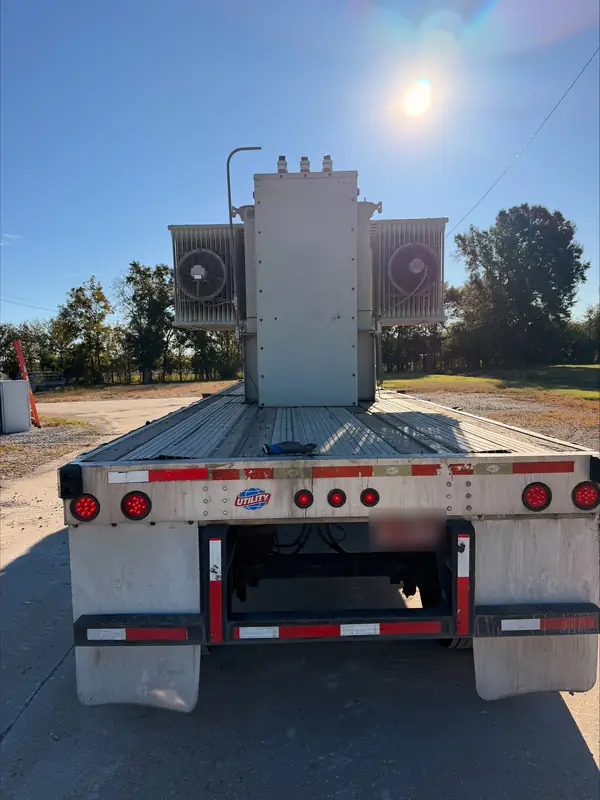
Give the rigging contractor and carrier both nameplate weights and the proposed transport configuration. They need confirmed shipping dimensions, component weights, approved lifting information and site conditions—not merely the MVA rating. Equipment condition and available drawings may require further engineering review.
Caltrans issues oversize or overweight permits for state-highway loads exceeding common limits such as 8 feet 6 inches wide, 14 feet high or 80,000 pounds gross. These are screening limits, not a complete determination of legality. Axle loading, route restrictions and local-road approvals also matter.
Site access can govern the schedule as much as highway permits. The qualified team should assess ground support, crane setup, trailer positioning, overhead obstructions, gates and the path from the foundation. Clarify whether the scope includes foundation work, spill cleanup or site restoration rather than assuming these are part of pickup.
Review transformer removal and pickup responsibilities before committing to equipment or transport dates. Preparation, permits and loading must fit the agreed purchase terms.
07Put the Sale Scope and Handover Records in Writing
To sell a transformer, provide California Transformer Buyer with nameplate photos, overall photos, quantity, California location and condition. Rocky reviews the information and may request test reports, fluid records, ownership details and access information. The substation transformer purchase review is equipment-specific.
A written offer should establish what is included, who handles preparation, rigging and freight, and payment terms and timing. Identify separately shipped accessories and whether oil remains with the unit. Agree on any conditions that must be satisfied before pickup.
Keep a handover file containing the accepted terms, equipment identifiers, accessory list, available test and fluid records, and applicable shipping documentation. Environmental shipping records depend on the material and destination; an equipment sale does not replace required waste documentation. The transformer selling process explains the review-to-pickup sequence.
08Request Review Before Committing to Dismantling
California Transformer Buyer buys used, surplus and new-surplus electrical transformers from California sellers, including decommissioned units. Acceptance depends on specifications, condition, documentation and removal requirements. A retired used transformer may have reuse potential, but retirement alone does not establish its value or suitability.
Call or text Rocky at (951) 403-5738, or submit transformer details for an offer review. Send existing records and safely obtained photos; do not perform electrical or fluid work to generate information yourself. Reviewing your transformer costs nothing and carries no obligation.
FAQDecommissioning a Substation Transformer FAQ
Can I request an offer while the transformer is still operating?
Yes. An initial review can begin with safely obtained photos, existing records and the planned retirement date. State clearly that the transformer remains energized and identify any information that is unavailable without qualified access. Early review can help establish what documentation and accessories need to remain with the unit, but it does not guarantee a purchase.
What if the nameplate is unreadable or missing?
Look for existing asset records, drawings, factory reports or maintenance files tied to the serial number. Provide what you have and identify uncertain specifications rather than estimating them. Missing ratings, voltage connections or weights may require additional verification by qualified personnel and can limit purchase review. Do not open equipment or enter restricted areas to find another identification plate.
Does a transformer that operated normally need new testing before sale?
Normal operation is useful history, but it does not establish every aspect of condition or fluid classification. Share existing reports first. Depending on the unit, its history and the proposed destination, additional evaluation may be requested. Any testing or sampling must be arranged through qualified personnel; the scope should be agreed before incurring work specifically for the sale.
Should we remove valuable accessories and sell them separately?
Discuss that decision before separating the equipment. Cooling fans, radiators, bushings, tap-changing equipment and controls can be important to a complete, reusable transformer. Removing them may change the review or the written offer. Identify spare accessories separately and make clear which components belong to the operating assembly and which are additional inventory.
Can a failed substation transformer still be considered?
A failed unit can be submitted for review, but acceptance is not guaranteed. Describe the failure, leaks, fire damage and any available investigation or fluid records. Its destination may differ from that of working equipment, so environmental classification and transport requirements need attention. Do not describe failed equipment as ready for reuse merely because its tank appears intact.
Who pays for a crane, fluid preparation and heavy-haul permits?
Those responsibilities must be established in the written terms before pickup. Do not assume that purchase includes every removal expense or that a carrier’s scope includes oil handling and electrical work. The agreement should distinguish equipment preparation, rigging, freight, permits and any site restoration, with payment timing stated separately.