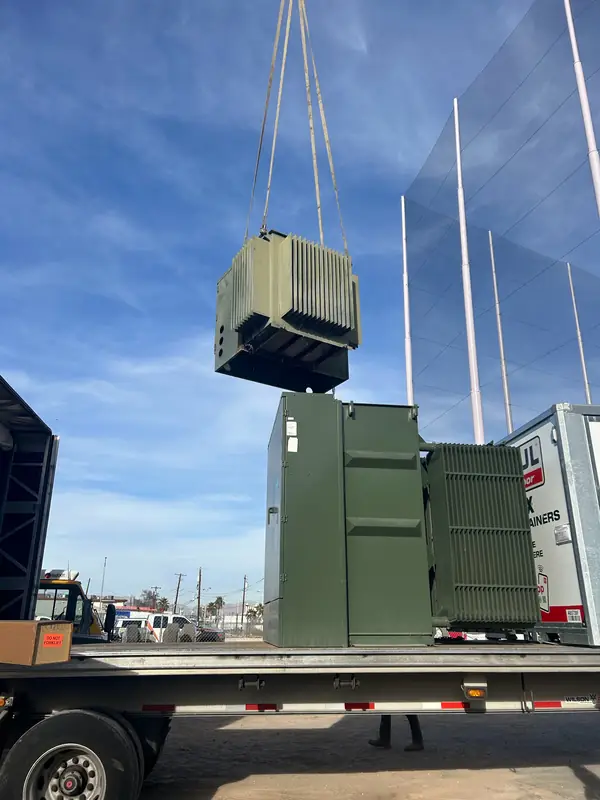
01Start the Transformer Removal Checklist with Ownership and Scope
For facility managers, transformer removal starts with a decision about what is being sold and who controls it—not with a crane reservation. Identify each unit by location and serial number, and confirm that your organization owns it or has authority to sell it. Utility-owned equipment cannot be sold merely because it sits on your property.
Define whether the project covers one used transformer, several spare units or an entire installation. Record which associated items belong with the sale, including radiators, fans, gauges, switches and other accessories. Close-coupled switchgear, cables, foundations and building repairs should not be assumed to be included.
Start a project file with an equipment list, authorized contacts and the expected outage window. The transformer selling process explains how initial equipment information leads to review, a written offer and an agreed pickup schedule.
- Confirm ownership and approval authority.
- Identify each transformer and included accessory.
- Assign electrical, rigging and environmental contacts.
- Record outage constraints and facility operating needs.
02Assign Electrical Clearance and Lockout/Tagout to Qualified Personnel
The owner's qualified electrical contractor or the serving utility must handle de-energizing and disconnecting. Facility managers should coordinate responsibilities and obtain the required clearance documentation; they should not perform switching, open compartments or attempt to prove equipment safe.
Cal/OSHA requirements for distribution equipment, including Title 8 section 2940.14 where applicable, address qualified clearance, isolation, voltage testing and grounding. The applicable lockout/tagout and clearance procedures belong in the contractor's or utility's work plan. A facility shutdown announcement alone does not establish a safe electrical condition.
Solar arrays, battery systems, standby generators and alternate feeds can create backfeed risks. Make their existence known to the qualified personnel planning the isolation. Shared circuits and adjoining energized equipment also need attention, especially where removal work occurs inside an operating substation.
Separate the outage schedule from the pickup schedule. Loading should proceed only after the responsible parties confirm electrical work is complete and the equipment is released for removal. For larger installations, use the substation decommissioning guide to identify additional coordination needs.
- Name the party responsible for electrical clearance.
- Disclose all known alternate energy sources.
- Confirm work boundaries around energized equipment.
- Document the release point before rigging begins.
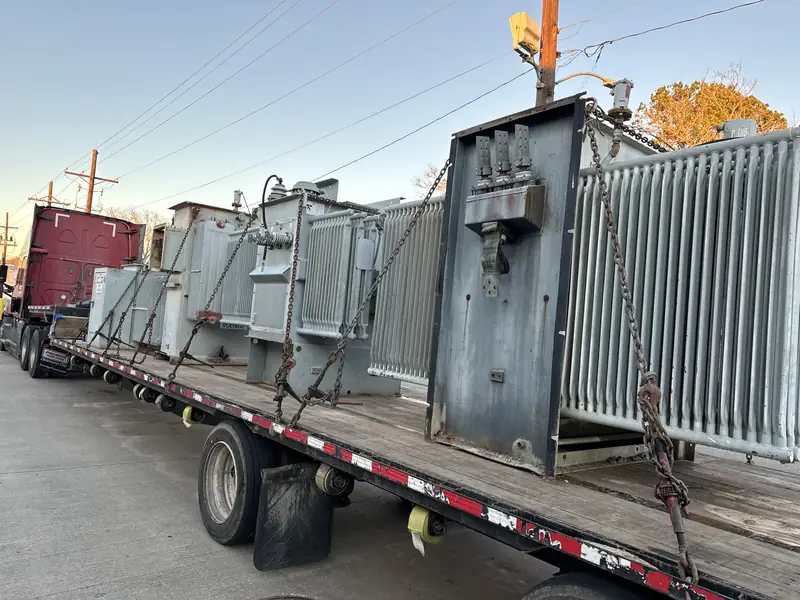
03Build a Nameplate and Condition File Before the Outage
Gather existing records before equipment access becomes restricted. Sellers may take photos only from a safe position and only where they are authorized to access the equipment. If a nameplate is not safely visible, use drawings or maintenance records initially and tell the buyer which details remain unverified.
Record manufacturer, serial number, year, phase, frequency, all kVA or MVA ratings, actual primary and secondary voltages, taps, impedance, BIL and cooling class. Include fluid type, gallons and available weight information. A 480Y/277 V secondary does not identify the primary voltage or establish interchangeability with another unit.
Describe condition plainly: operating when last used, stored indoors or outdoors, leaking, corroded, missing parts or showing bushing damage. Supply existing factory reports, insulation-resistance results, turns-ratio reports and oil or DGA records when available. The transformer cooling-class guide explains why every stage of an ONAN/ONAF rating matters.
- Nameplate and overall photographs, taken safely.
- Quantity, site location and current installation status.
- Known defects and missing accessories.
- Existing test reports and fluid records.
- Dimensions and documented weight.
04Check the Entire Access Route, Not Just the Transformer Pad
Access planning should follow the equipment from its installed location to the proposed loading position. Document gates, doorways, overhead obstructions, slopes, tight turns and areas where vehicles or lifting equipment could conflict with facility operations. Provide available dimensions rather than describing access as simply 'good.'
Tell the rigging contractor about known underground utilities, vaults, trenches, tanks and pavement limitations. That contractor must evaluate equipment placement and support requirements; a paved surface is not proof that it can support a crane or loaded trailer. Indoor removals may also involve door restrictions and floor-capacity questions.
Identify parking restrictions, security procedures, escort requirements and permitted work hours. Include these details when discussing transformer removal and pickup arrangements, because restricted access can change the scope even when the transformer itself is straightforward to handle.
- Route measurements and recent site photos.
- Loading location and vehicle approach.
- Known ground or floor limitations.
- Security, escorts and work-hour restrictions.
- Space to keep other personnel outside the work area.
05Give the Rigging Contractor Reliable Weight and Configuration Data
The rigging plan requires more than a kVA rating. Provide documented total weight, dimensions and the installed configuration. Nameplates may separately list total weight, tank-and-fittings weight and core-and-coil weight; those figures are not interchangeable. Flag missing or conflicting information for professional verification.
A three-phase pad-mounted transformer presents different handling questions from a dry-type unit inside a building or a station-class transformer with radiators and a load tap changer. Existing lifting provisions also need professional evaluation. Do not treat a visible lifting point as permission for facility staff to move the equipment.
Large substation units may require transport preparation involving radiators or bushings, and sometimes nitrogen or dry-air protection. Qualified specialists should determine whether that work is needed and how it affects testing, preservation and reassembly. Keep those responsibilities explicit in the removal scope.
| Configuration | Planning information |
|---|---|
| Outdoor pad mount | Total weight, pad access, nearby energized equipment |
| Indoor dry type | Dimensions, door clearances, floor limitations |
| Unit substation | Interfaces with switchgear and included components |
| Large station-class unit | Shipping configuration, accessories, route constraints |
06Review Fluid Records, Containment and California Waste Requirements
For liquid-filled equipment, identify the fluid and gather existing PCB labels, laboratory reports and maintenance history. Mineral oil, natural ester and silicone should not be treated as interchangeable. Have qualified environmental professionals review unknown fluid status, active leaks and the applicable management pathway; sellers should not drain or sample equipment themselves.
Federal TSCA classifications distinguish non-PCB equipment below 50 ppm, PCB-contaminated equipment from 50 to below 500 ppm, and PCB Transformers at 500 ppm or more. 'Non-PCB' does not mean zero PCBs. Certain older mineral-oil units with unknown status, or equipment with unknown fluid and manufacture date, may require regulatory assumptions until testing or qualifying documentation establishes concentration.
California has stricter rules for PCB-containing oil. Health and Safety Code section 25250.1 excludes oil containing 5 ppm or more PCBs from the state's used-oil category. That does not mean every transformer at 5 ppm is automatically hazardous waste; the correct pathway depends on testing, documentation and the material involved.
Used oil is generally managed as hazardous waste in California unless an exclusion or recycling pathway applies. DTSC requires registered hazardous-waste transporters and manifests when regulated used oil or waste is hauled. A working transformer sold for reuse is equipment, but leaking units, drained oil and failed equipment need proper determination. This is planning information, not legal advice.
- Provide existing fluid and PCB documentation.
- Disclose leaks and known contamination.
- Assign containment and spill-response responsibilities.
- Confirm required transport and waste records with professionals.
07Confirm Transport Permits and Put Pickup Responsibilities in Writing
The transport provider should assess the loaded dimensions, gross weight and route—not just the transformer's dimensions. Caltrans issues oversize or overweight permits for state-highway loads exceeding common limits such as 8 feet 6 inches in width, 14 feet in height or 80,000 pounds gross. Local roads may require separate approvals.
Ask the responsible contractor which site or local permits apply to the actual work. Crane placement, road occupation and associated electrical or construction work can require different reviews. Do not assume that a hauling permit authorizes every activity at the facility.
California Transformer Buyer's written offer states what is included, who handles loading or rigging and freight, and the payment terms and timing. Review those terms before pickup. The information needed to sell your transformer helps organize the initial submission, but the written agreement should settle the specific responsibilities.
- Identify the rigging and freight providers.
- Assign permit applications and route approvals.
- Confirm included equipment and accessories.
- Record payment terms and timing.
- Agree on delay handling and site restoration scope.
08Use a Final Release Check Before the Pickup Appointment
Before confirming the appointment, check that electrical clearance, access arrangements, rigging scope and environmental questions have been resolved by the responsible parties. Match the pickup equipment list to the written offer by serial number where available. Keep facility security and operations informed of the approved schedule.
Retain the written offer, existing test records, applicable clearance documents, shipping paperwork and any required environmental records. Record what equipment and accessories actually left the site. This helps prevent confusion when several similar units are being removed.
To request a review, call or text Rocky at (951) 403-5738 or use the transformer offer request form. Send safely obtained photos, quantity, California location, condition and known access constraints. Reviewing your transformer costs nothing and carries no obligation.
FAQTransformer Removal Checklist for Facility Managers FAQ
Should I request an offer while the transformer is still energized?
Yes. Initial review can begin with existing records and photos taken from a safe, authorized position. Tell Rocky that the transformer remains connected and provide the expected availability date. Do not open compartments or arrange an outage solely to obtain photographs. An offer review does not replace the qualified contractor's or utility's electrical clearance process.
Can a building owner sell a transformer that serves the property?
Only if the owner owns the transformer or has authority to sell it. Equipment serving a building may belong to the utility, a tenant or another entity. Check ownership records and service agreements before committing to a sale. If ownership is uncertain, resolve it with the relevant parties rather than assuming that location establishes ownership.
What if the nameplate weight is missing or unreadable?
Provide any existing manufacturer documents, drawings or shipping records, and clearly mark the weight as unverified. The buyer and rigging provider need to know about that uncertainty before scheduling. Similar appearance or matching kVA does not establish equal weight. Verification and handling decisions belong to qualified professionals, not facility staff estimating a lift.
Does a new-surplus transformer need the same removal planning?
Some checks still apply even if the unit was never energized. Ownership, specifications, storage condition, weight, access and loading responsibilities remain important. An installed spare may also have electrical connections that require professional review. For never-energized equipment, the new-surplus transformer selling page explains the category; disclose whether the unit is crated, on skids or installed.
Will a leak prevent California Transformer Buyer from reviewing the unit?
Disclose the leak and provide existing fluid records and safely obtained photos. Review does not guarantee purchase or establish that the equipment can travel as ordinary freight. A qualified environmental professional should determine containment, testing and any regulated transport requirements. Do not drain the transformer to make it easier to sell or prepare it for pickup yourself.
What should I do if the outage date changes after terms are agreed?
Notify Rocky and the responsible contractors before the scheduled pickup, then confirm the revised arrangements in writing. Electrical availability, rigging availability and transport approvals may need separate updates. Keep the equipment in its authorized condition and let qualified personnel manage any electrical changes. The existing written terms should be reviewed for how delays and revised responsibilities are handled.