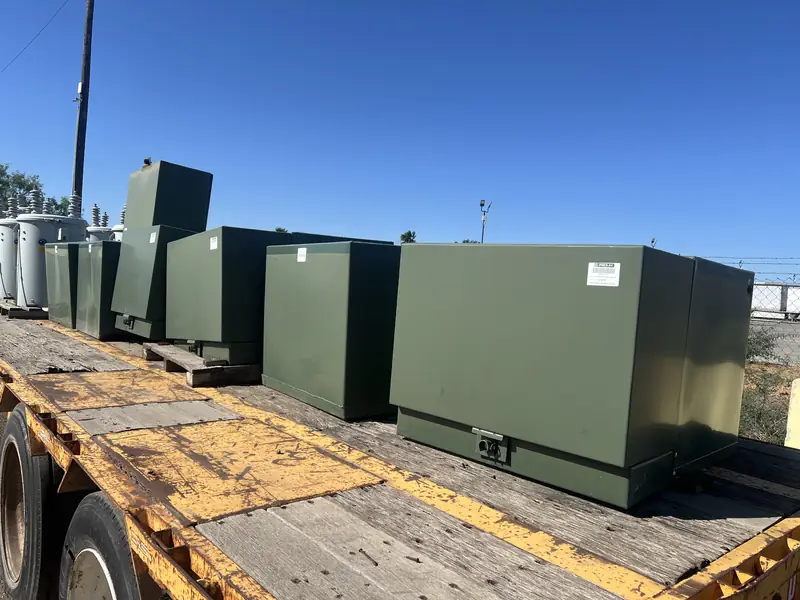
01FR3 Natural Ester vs Mineral Oil: What Actually Changes
Both fluids provide electrical insulation and carry heat away from transformer windings. Mineral insulating oil is petroleum-derived. Natural ester is a different fluid chemistry, commonly described as vegetable-based; FR3 is Cargill's branded natural ester, not a transformer manufacturer and not a name for every ester fluid.
The fluid affects fire performance, moisture behavior, maintenance interpretation and compatibility. It does not, by itself, establish the transformer's kVA capacity, voltage suitability or condition. A natural-ester pad-mounted transformer and a mineral-oil unit can serve similar electrical duties when each is correctly designed and approved for its installation.
| Review item | Natural ester / FR3 | Mineral oil |
|---|---|---|
| Fluid identity | Confirm FR3 or other named ester | Confirm mineral insulating oil |
| Fire performance | Higher fire point; less-flammable documentation matters | Combustible; installation requirements differ |
| Cooling designation | Often KNAN or KNAF | Often ONAN/ONAF or OA/FA |
| Service history | Original fill versus retrofill is important | Oil changes and contamination history matter |
| Buyer review | Ratings, tests, condition and records | Ratings, tests, condition and records |
02Fire Point Is Not an Installation Approval
Natural ester commonly has a fire point exceeding 300°C. Fire point describes the temperature at which a fluid sustains combustion under specified test conditions; it is different from flash point, where vapors can ignite briefly. A higher fire point supports less-flammable liquid applications, but does not mean the transformer cannot burn.
For indoor or near-building installations, buyers need the actual fluid identification, applicable listing or approval paperwork, and equipment details. Required separation, containment and fire protection depend on the installation and applicable requirements. Replacing mineral oil with ester does not automatically preserve or create an approval.
Cooling letters provide another clue. KNAN/KNAF commonly appears on ester-filled equipment, while ONAN/ONAF and older OA/FA markings commonly appear on mineral-oil equipment. Use the actual plate and supporting records; the guide to transformer cooling classes explains how cooling stages relate to rated capacity.
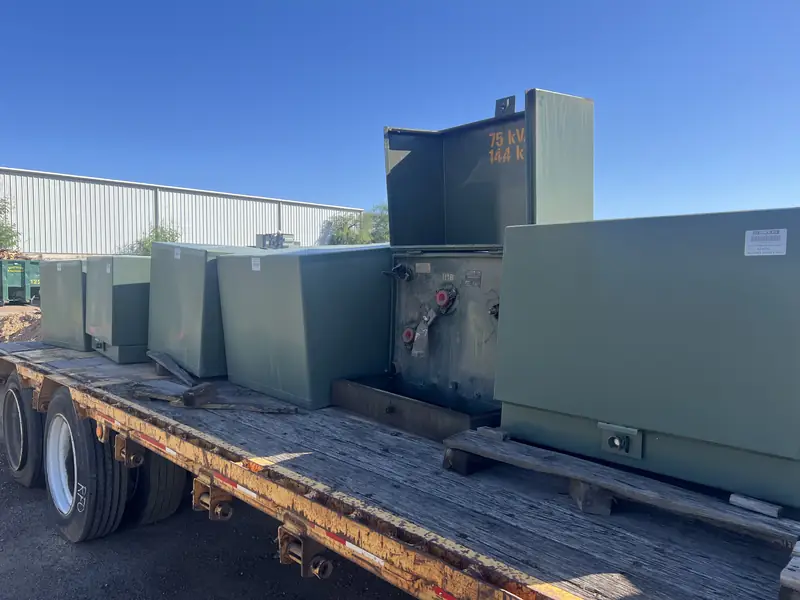
03Original Ester Fill and Retrofilled Transformers Need Different Records
An original-fill ester transformer was designed and supplied with that fluid. A retrofilled transformer originally contained another liquid and was later converted. Both may be candidates for resale, but a retrofill needs additional engineering and service documentation.
Compatibility is not simply a question of whether two liquids mix. Fluid viscosity, cooling performance, seals, gaskets, insulation and the equipment's approved construction all matter. Residual original fluid can affect the resulting mixture's properties, including fire performance.
Buyers should review the conversion date, previous fluid identity, engineering authorization and post-conversion tests. Do not assume that an FR3 sticker establishes the current mixture, less-flammable status or rated capacity. A silicone-liquid unit also requires its own compatibility review rather than being treated as interchangeable with mineral oil.
- Identify original fill or documented retrofill.
- Provide the retrofill label and conversion report.
- Include available before-and-after fluid tests.
- Confirm approved ratings and any operating restrictions.
04Read Moisture and Fluid Tests in the Right Context
Natural ester and mineral oil handle moisture differently. Ester can dissolve more water than mineral oil, so a water result expressed in parts per million cannot be compared directly between the two fluids as though the limits were identical. Temperature, relative saturation and the manufacturer's guidance matter.
Fluid condition also involves dielectric performance, oxidation and contamination. Natural ester can oxidize with prolonged air exposure, making tank construction and service practices important. A professional should interpret the test results for the specific liquid and transformer design.
Available dissolved gas analysis, dielectric tests, insulation resistance and turns-ratio reports help buyers assess a used transformer. A single favorable fluid result does not prove that windings, bushings, switches or other components are sound. For broader condition distinctions, see new, used and rebuilt transformer differences.
05Biodegradability Does Not Remove PCB or California Waste Obligations
Natural ester's biodegradability does not authorize an uncontrolled release or remove spill-control responsibilities. Fluid branding also does not establish PCB status. Buyers should rely on valid laboratory results, manufacturer documentation and complete service records, with qualified environmental professionals reviewing uncertainty.
Under TSCA and 40 CFR 761, non-PCB means below 50 ppm—not zero PCB. PCB-contaminated electrical equipment has a concentration of at least 50 but below 500 ppm; a PCB transformer has at least 500 ppm. Use those exact inequalities when results contain decimals.
Unestablished concentrations require careful classification. Pre-July 2, 1979 mineral-oil equipment, or mineral-oil equipment with an unknown manufacturing date, must be assumed PCB-contaminated. Pre-July 2, 1979 transformers containing at least three pounds of non-mineral fluid must be assumed PCB transformers when concentration is unestablished. Unknown date and unknown fluid type also trigger the PCB-transformer assumption.
Section 761.2 permits a non-PCB assumption for equipment manufactured after July 2, 1979, but records and valid tests are preferable and may reveal later contamination. Draining, dilution or retrofilling alone does not automatically establish lawful reclassification. Sections 761.20 and 761.30 govern relevant transfer exceptions and use conditions; acceptance requires review of classification, leaks, destination, marking and transport.
California has separate requirements. HSC 25250.1 excludes oil containing 5 ppm or more PCBs from the state's used-oil category; this does not mean every transformer at 5 ppm is hazardous waste. Title 22 lists a PCB total threshold of 50 mg/kg and soluble threshold of 5 mg/L extract. Qualified professionals should determine the correct pathway from testing and documentation. This guide is not legal advice.
06Resale Depends on Electrical Fit, Not Just the Fluid
Natural ester may suit a project seeking documented less-flammable equipment, while mineral oil remains common in utility distribution and outdoor substations. Neither fluid guarantees a purchase or a stronger offer. Voltage, capacity, configuration, condition and available records determine whether a particular unit fits another application.
For example, a 1000 kVA, three-phase unit with a 12,470GrdY/7,200 V primary and 480Y/277 V secondary must still match the project's connection, impedance, BIL and accessories. Fluid type cannot correct the wrong primary voltage or terminal arrangement. See three-phase pad-mount transformer specifications for configuration details.
Substation and station-class equipment requires review of every cooling-stage rating, such as separate natural-air and forced-air MVA capacities. Fans, radiators and tap-changing equipment affect usability. Our substation transformer purchase guide covers these larger configurations.
Winding material is a separate specification, not something that can be inferred from FR3 or mineral-oil fill. The copper versus aluminum winding guide explains what records help establish it.
07Build a Fluid-Specific Seller Documentation Packet
Start with clear existing records and photos taken from a safe position where you are authorized to be. Do not open compartments, sample liquid or move equipment to obtain information. Ask your qualified contractor or records custodian for information that is not safely accessible.
Include enough information to connect each report to the correct serial number. For mixed lots, separate the units by fluid type and identify missing records rather than assuming one test covers every transformer. The used transformer seller guide provides additional condition information.
- Manufacturer, serial number, year and quantity.
- All kVA/MVA stages, phase and frequency.
- HV/LV voltages, connections, taps, impedance and BIL.
- Cooling class, temperature rise, fluid identity and gallons.
- PCB records, fluid tests and electrical test reports.
- Retrofill history, approval paperwork and service records.
- Overall photos showing leaks, corrosion or damaged parts.
- California location, ownership and site-access details.
08Request a California Review Before Planning Removal
To sell a transformer in California, call or text Rocky at (951) 403-5738 with nameplate photos, overall photos, quantity, location and condition. California Transformer Buyer reviews used, surplus and new-surplus units, including both mineral-oil and natural-ester equipment. Reviewing your transformer costs nothing and there is no obligation.
Use the transformer sale submission page to send details. Rocky may request fluid records, tests, ownership confirmation or access information before preparing a written offer. The offer states what is included, who handles loading or rigging and freight, and payment terms and timing.
Electrical isolation and disconnection belong to the owner's qualified electrical contractor or serving utility, including consideration of solar, battery and generator backfeed. Review transformer removal and pickup planning before committing to access arrangements. Utility-owned equipment cannot be sold by a property owner.
FAQFR3 Natural Ester vs Mineral Oil Transformer FAQ
Will an FR3-filled transformer automatically receive a better offer?
No. Documented natural-ester fill may fit a particular buyer's requirements, but an unsuitable voltage, damaged bushing or incomplete conversion history can limit interest. A well-documented mineral-oil transformer may be more useful for another project. California Transformer Buyer reviews the complete equipment specification, condition, records and removal requirements rather than assigning an automatic premium to a fluid name.
Can I describe my transformer as FR3 if the plate only says natural ester?
Describe it as natural ester unless manufacturer or service records identify FR3 specifically. FR3 is a branded fluid, and other natural esters exist. Send the fluid plate and any available factory or maintenance documentation. If the fluid identity is uncertain, state that clearly instead of relying on the tank's appearance, color or an informal description from a previous owner.
Does natural ester let an existing transformer carry more load?
Do not advertise additional capacity based only on fluid type. Loading capability depends on the winding insulation system, temperature limits, cooling arrangement and engineering evaluation. A conversion does not automatically change the nameplate rating. Give the buyer the actual rated stages and any manufacturer-approved revised ratings or restrictions, rather than presenting an assumed overload allowance as usable capacity.
Does a non-PCB label eliminate the need for laboratory records?
A label is useful evidence, but its wording and date matter. 'No PCBs at time of manufacture' does not establish what happened during later servicing. Non-PCB also means below 50 ppm, not necessarily zero. Provide available laboratory reports and service history; a qualified environmental professional can assess whether the documentation establishes current status and what additional verification is appropriate.
Is a leaking ester transformer easier to sell because the fluid is biodegradable?
Biodegradability does not make a leaking transformer automatically acceptable for purchase or transport. Leakage affects condition, spill responsibilities and the determination of reuse versus waste handling. Disclose visible leaks and provide existing environmental records. Qualified professionals should assess the release and applicable requirements; do not drain or attempt to contain internal fluid by servicing the transformer yourself.
What if the transformer is new-surplus but has no recent fluid tests?
Start with factory reports, fluid identification, manufacturing date, storage history and photographs. Never-energized status is helpful, but storage damage, missing accessories or lost paperwork can still affect review. Tell Rocky which records are unavailable. Additional testing may be appropriate depending on age, condition and intended reuse, and any testing should be arranged through qualified personnel.