01Transformer Cooling Classes Explained: ONAN Letter by Letter
Cooling codes describe the heat-removal system, not the transformer's voltage, efficiency or overall condition. For liquid-filled equipment, the four letters identify the insulating liquid, its internal circulation, the external cooling medium and that medium's circulation. Read the code together with the rating and temperature-rise entries.
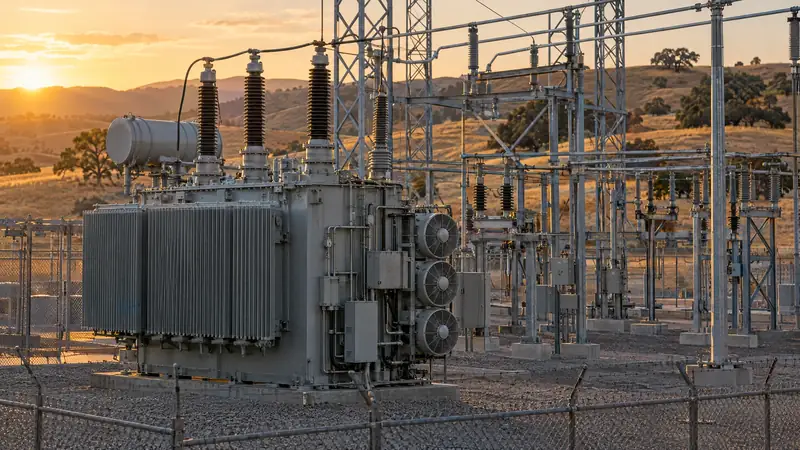
In ONAN, O identifies insulating liquid with a fire point at or below 300°C. The first N means natural internal circulation, A means external air, and the final N means natural external air circulation. Typical mineral-oil self-cooled transformers use this designation.
Natural circulation does not mean the liquid stands still. Heat creates circulation within the liquid, while heat leaves the tank or radiators through surrounding air. A pad-mounted unit and a large station-class transformer can both use natural cooling, despite looking very different.
- First letter: insulating-liquid fire-point class.
- Second letter: internal liquid circulation.
- Third letter: external cooling medium.
- Fourth letter: external cooling circulation.
02ONAN, ONAF and the Older OA, FA and FOA Codes
Older North American nameplates often use OA for oil-immersed self-cooling and FA for a forced-air liquid-filled stage. Current four-letter terminology makes the circulation arrangement more explicit. Preserve the original nameplate wording when preparing a listing rather than replacing it with an assumed equivalent.
FA needs context: it also appears on dry-type AA/FA plates. It does not establish whether the transformer contains oil. The enclosure, fluid information and complete cooling designation help resolve that distinction.
Pumped and directed liquid circulation are also different. OFAF uses forced liquid circulation that is not specifically directed through the windings; ODAF uses forced directed circulation through specified cooling paths. Do not substitute one label for the other.
| Code | Cooling arrangement | Seller's reading note |
|---|---|---|
| ONAN / legacy OA | Natural liquid; natural air | Self-cooled rating |
| ONAF / legacy FA | Natural liquid; forced air | Fans support the named stage |
| OFAF / legacy FOA | Forced liquid; forced air | Pumps and fans both matter |
| ODAF | Directed forced liquid; forced air | Not interchangeable with OFAF |
| OFWF | Forced liquid; forced water | Water-cooled heat exchanger |
| KNAN / KNAF | K-class liquid; natural / forced air | Confirm actual fluid |
03How to Read a 12/16/20 MVA ONAN/ONAF/ONAF Rating
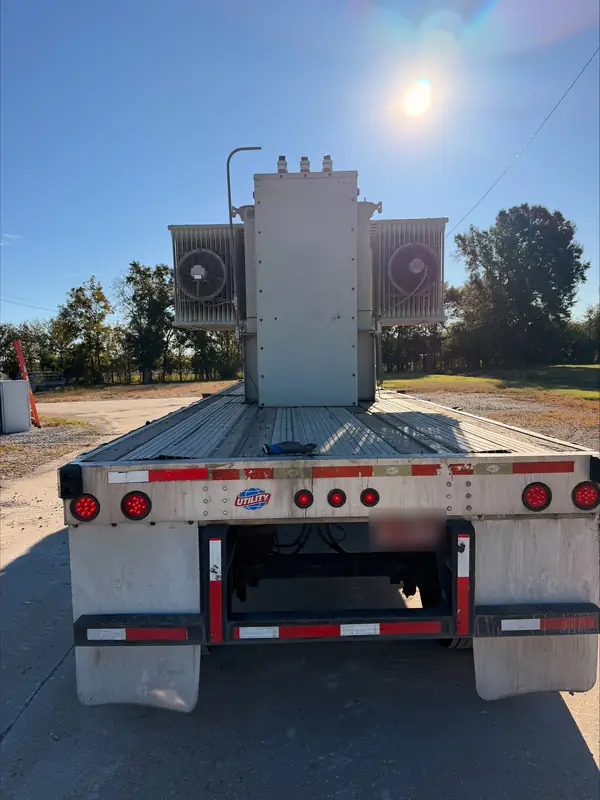
A plate reading 12/16/20 MVA ONAN/ONAF/ONAF describes three operating ratings of one transformer. In this illustrative example, natural cooling supports 12 MVA, the first forced-air stage supports 16 MVA, and the second supports 20 MVA at the stated temperature rise and ambient conditions.
The repeated ONAF does not mean duplicate information. It identifies two distinct fan stages. The ratings are not added together, and the largest number should not be advertised as an unconditional continuous capacity.
Not every 12 MVA unit follows this progression. Use the actual plate values, including any separate temperature-rise ratings, and identify which cooling components are supplied. Our substation and power transformer guide covers the equipment families where these staged ratings commonly appear.
- Report 12/16/20 MVA, not simply 20 MVA.
- Include ONAN/ONAF/ONAF exactly as marked.
- Note whether both fan stages are complete.
- Preserve the associated rise and ambient information.
04Dry-Type AA/FA and AN/AF Ratings Are a Separate System
AA is an older IEEE/North American designation for self-cooled, air-cooled dry-type equipment. AA/FA identifies a natural-air rating and a higher forced-air rating. AN/AF is common modern or IEC-style wording, but dry-type codes are not the liquid-filled four-letter scheme.
An illustrative 2500/3333 kVA AA/FA plate describes one transformer with two ratings, not two transformers. The higher rating depends on the specified fan equipment and controls. Use the exact figures rather than rounding them into a presumed standard increase.
Adding fans to an unnameplated design does not establish an authorized uprating. Manufacturer documentation must support the fan-assisted rating and its operating requirements. For a used transformer, disclose missing fans, sensors or control components rather than treating them as optional extras.
- Record both natural-air and forced-air kVA.
- Identify supplied fans, sensors and controls.
- Include manufacturer rating documentation if available.
- Do not assume every dry type has fan-upgrade capability.
05KNAN and KNAF Identify a Liquid Class, Not K-Factor
K identifies an insulating liquid with a fire point above 300°C. KNAN uses natural internal circulation and natural external air cooling; KNAF uses natural internal circulation with forced external air cooling. These designations commonly appear on natural-ester or other less-flammable liquid designs.
The letter does not identify a brand or establish the exact fluid chemistry. It also has no connection to a dry-type transformer's K-factor rating for harmonic loading. Confirm the fluid from the nameplate and records; see our natural ester versus mineral oil guide for the distinction.
Neither an O nor a K cooling code establishes PCB status. Sellers should rely on testing, documentation and qualified environmental professionals. California has stricter rules for PCB-containing oil, and the correct management pathway depends on the records and circumstances; this guide is not legal advice.
06Temperature Rise Is Not Cooling Class or Insulation Class
Temperature rise describes average winding temperature above the specified ambient. A 55°C or 65°C liquid-filled rise is not the fluid's flash point or the maximum winding temperature. Dual 55/65°C designs may have separate ratings at each rise, so keep each kVA value paired with its stated condition.
Common dry-type winding-rise designs include 80°C, 115°C and 150°C. A 150°C rise is frequently associated with a 220°C insulation system, but 80°C and 115°C designs can also use that insulation class. Ambient temperature, hot-spot allowance and insulation class remain distinct.
A lower rise does not automatically authorize higher continuous kVA. Likewise, cooling class alone does not establish efficiency compliance or winding material. Those are separate review items covered in our DOE efficiency guide for used transformers and copper versus aluminum winding guide.
07How Fans, Radiators and Pumps Affect Buyer Review
Complete cooling equipment helps a buyer evaluate whether a transformer can support its documented operating stages. Missing fans, damaged radiators, leaking connections or incomplete controls create questions about repair scope and available capacity. They do not justify assuming either full serviceability or scrap-only value.
Radiators are heat-transfer surfaces; their presence alone does not prove forced-air cooling. An ONAN transformer may have radiator banks without fans. Conversely, visible fans do not establish a higher rating unless the plate and documentation support it.
For OFAF, ODAF and OFWF equipment, review also includes the supplied pumps and heat-exchanger system. Cooling accessories are only part of value: voltage, impedance, BIL, winding material, condition, test reports and removal access matter too.
Take exterior photos only from a safe position on equipment you are authorized to access. Do not open compartments or run cooling equipment to demonstrate operation. The transformer removal checklist explains preparation and responsibilities for qualified contractors.
- Photograph visible radiator banks and fan assemblies safely.
- Disclose known missing or damaged cooling components.
- Share existing cooling-control drawings and maintenance records.
- Identify loose accessories already stored with the unit.
08What to Send Rocky Before You Sell a Transformer
California Transformer Buyer buys used, surplus and new-surplus transformers from sellers located in California only. To request a review, call or text Rocky at (951) 403-5738 or use the transformer offer request form. Reviewing your transformer costs nothing and there is no obligation.
Start with a readable nameplate photograph, overall exterior photos, quantity, location and known condition. Include every cooling-stage rating and list supplied accessories. Existing factory reports, electrical test reports, fluid records and ownership documentation help resolve follow-up questions without guessing.
You must own the equipment or have authority to sell it; a property owner cannot sell utility-owned equipment merely because it is on the property. De-energizing and disconnecting belong to the owner's qualified electrical contractor or serving utility.
If an offer is made, written terms identify what is included, who handles loading, rigging and freight, and payment terms and timing. See how transformer review and purchase work before planning removal.
- Manufacturer, serial number and year.
- All kVA/MVA ratings, cooling codes and temperature rises.
- Phase, frequency, HV/LV voltages, connections and taps.
- Impedance, BIL, fluid type and gallons.
- Total weight, accessory inventory and site-access details.
FAQTransformer Cooling Classes Explained (ONAN, ONAF, AA, FA) FAQ
Can I describe an OA/FA transformer as ONAN/ONAF?
OA/FA commonly corresponds to natural liquid cooling followed by fan-assisted air cooling on older liquid-filled equipment. For a sale listing, retain the original OA/FA wording and provide the nameplate photo. A modern-code explanation can accompany it, but should not replace manufacturer information or imply that undocumented circulation details have been verified.
If one fan is missing, should I list only the self-cooled rating?
Provide the complete nameplate rating and clearly disclose the missing fan. That preserves the transformer's design information without claiming its higher cooling stage is presently available. Whether any stage can operate with incomplete cooling equipment requires a qualified engineering assessment and manufacturer documentation, not a seller's estimate.
Does a transformer with more fans have greater resale value?
Not necessarily. Fans may support a higher nameplated rating, but buyers also consider the base rating, voltages, condition, controls and demand for that configuration. Extra or aftermarket fans without supporting rating documentation do not establish additional capacity. A complete, documented cooling system is more informative than fan count alone.
Can cooling class tell me whether my transformer is pad mount or substation type?
No. Cooling class describes heat removal rather than the equipment's installation family. Pad-mount and substation transformers can both be liquid-filled and naturally cooled. Enclosure arrangement, bushings, connections, ratings and installation configuration establish the family. Send overall photos along with the plate so the buyer can assess both.
What if the cooling code or staged rating is unreadable?
Send the clearest safely obtainable exterior nameplate photo and any existing manufacturer drawings, factory reports or equipment schedules. Include the serial number if readable. Do not infer a rating from radiator size or fan count, and do not open energized compartments for another label. Missing information should be identified as unknown until documentation resolves it.
Should stored radiators and fans be included with a surplus transformer?
Identify all accessories intended to be included and show their known condition in photos. Stored radiators, fans, pumps and controls may be necessary to complete the documented cooling arrangement. Keep the accessory inventory tied to the correct transformer, especially in mixed lots. The written offer should specify included equipment and responsibilities for loading and freight.