01DOE Efficiency Standards and Used Transformers: What Changes for Sellers
The important distinction is manufacture versus resale. DOE’s distribution-transformer efficiency requirements are tied to covered equipment and its manufacture date; they are not a blanket requirement to retrofit every older transformer already installed or held as a spare.
A used transformer does not become newly manufactured simply because its owner sells it. Likewise, a never-energized surplus unit does not acquire a new manufacture date when it leaves storage. Older inventory should still be evaluated for condition, application suitability and any project-specific obligations.
That distinction does not mean every used unit qualifies for every replacement project. A buyer’s engineer may need to review installation requirements, procurement specifications and documentation. Our guide to new, used and rebuilt transformers explains why these condition categories should not be treated as interchangeable.
02The 2016 Standards, 2024 Rule and April 2029 Compliance Date
The governing provisions are 10 CFR 431 Subpart K, especially §§431.192 and 431.196. For covered transformers manufactured on or after January 1, 2016 and before April 23, 2029, the corresponding 2016 efficiency tables apply.
DOE published its amended final rule on April 22, 2024. The rule became effective July 8, 2024, but the amended efficiency standards have a later compliance date: April 23, 2029. The effective date and manufacturing compliance date serve different purposes.
Do not select an efficiency table using the sale date alone. Identify the manufacturing era, equipment category and relevant transition provisions first. The 2024 rule also expands coverage from the older 2,500 kVA upper limit to 5,000 kVA; that expansion must be read with the rule’s transition dates.
| Date | Meaning | Seller takeaway |
|---|---|---|
| January 1, 2016 | 2016-level compliance begins for covered manufacture | Verify the applicable model and table |
| April 22, 2024 | Amended final rule published | Publication is not the new manufacturing deadline |
| July 8, 2024 | Final rule effective | Do not confuse with amended-standard compliance |
| April 23, 2029 | Amended-standard manufacturing compliance begins | Check new tables and expanded scope |
03Which Transformers Fall Within DOE Distribution Coverage?
The current eCFR definition identifies distribution transformers with input line voltage of 34.5 kV or less, output line voltage of 600 V or less, and a frequency of 60 Hz. Its rating ranges are 10–5,000 kVA for liquid-immersed equipment and 15–5,000 kVA for dry-type equipment, subject to explicit exclusions and transition provisions.
Use the regulation rather than an outdated summary showing only the older 2,500 kVA scope. Also remember that a physical description—pad mount, padmount, unit substation or station class—does not establish regulatory coverage by itself.
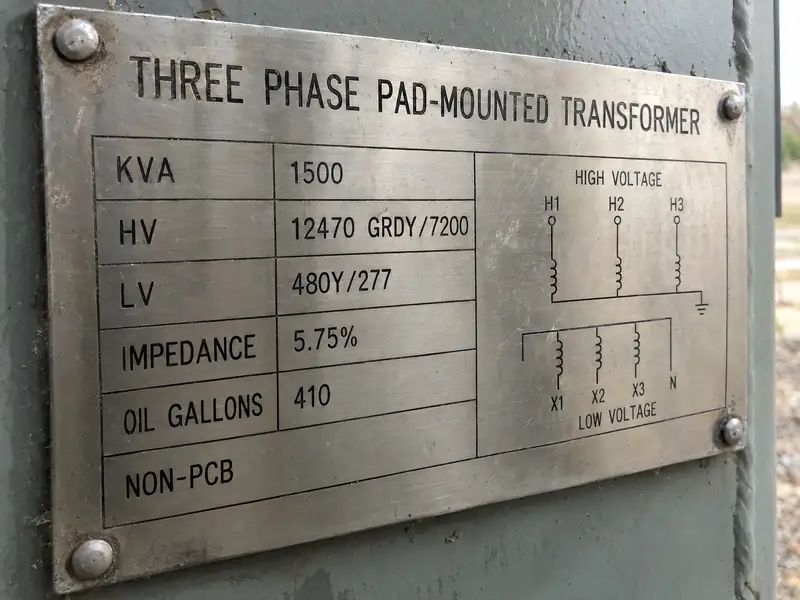
A 12,470 V to 480Y/277 V three-phase pad-mounted transformer may fit the voltage portion of the definition. A solar step-up transformer delivering medium-voltage output above 600 V generally does not. Check the actual input, output and intended duty, not merely which voltage appears under an HV heading.
For larger equipment, convert ratings consistently: 5 MVA equals 5,000 kVA. Our guide to transformer kVA, MVA and amps helps sellers read capacity ratings, while the transformer voltage reference helps distinguish primary and secondary configurations.
04Exclusions Require More Than a Specialty Equipment Label
The regulation lists specific excluded transformer types. An exclusion should be supported by the actual construction, function and regulatory definition—not a seller’s broad description of the equipment.
A sealed oil tank is not automatically an excluded “sealed transformer.” That exclusion refers to a defined dry-type construction. Similarly, installation at a solar facility, battery energy storage system or data center does not itself create an exemption.
- Listed exclusions include autotransformers, grounding transformers and machine-tool control transformers.
- Drive isolation, rectifier, regulating, testing and welding transformers have specifically identified exclusions.
- Nonventilated, defined sealed and special-impedance transformers are also listed.
- Transformers with a tap range of 20 percent or more and uninterruptible power supply transformers are listed exclusions.
Cooling Labels Are Not an Exemption Test
Cooling class describes how a transformer handles heat; it does not independently establish a DOE exclusion. Use the transformer cooling-class guide to interpret ONAN, ONAF, AA and FA, then review the applicable regulatory definition separately.
05How to Read Efficiency Percentages Without Misleading Buyers
DOE efficiency thresholds are measured under a defined test method. Low-voltage dry-type efficiency is evaluated at 35 percent of nameplate load; liquid-immersed and medium-voltage dry-type efficiency is evaluated at 50 percent. A listed percentage is not a promise of identical efficiency at every operating load.
The applicable threshold depends on phase, kVA and insulation category. Medium-voltage dry-type tables also use basic impulse insulation level, or BIL, groupings. For the amended liquid-immersed standards, submersible units have separate tables; the non-submersible table must not be applied indiscriminately.
The examples below illustrate particular categories, not universal minimums. The 2024 final rule sets performance thresholds rather than requiring every covered transformer to use an amorphous-metal core.
| Equipment | 2016 minimum | 2029 minimum | Test load |
|---|---|---|---|
| 75 kVA three-phase LV dry-type | 98.60% | 98.88% | 35% |
| 2,500 kVA three-phase liquid-immersed; non-submersible for 2029 comparison | 99.53% | 99.55% | 50% |
| Other ratings or configurations | Applicable category table | Applicable amended table | DOE test-method basis |
Efficiency and Operating Cost Are Different Questions
Real operating losses depend on loading and operating conditions. No-load losses occur while a transformer is energized, and winding losses increase with current. A project engineer should evaluate the expected load profile rather than estimate annual energy use from one efficiency percentage.
06Records That Support a Used or Surplus Transformer Review
Start with a readable nameplate photo and any existing factory documentation. A nameplate helps identify the model and manufacturing era, but it may not contain enough information to substantiate a compliance claim. A factory test report tied to the correct serial number can provide valuable supporting evidence.
For multiple units, keep photos and records matched to each serial number. Do not assume that identical enclosures or the same kVA rating mean every unit has identical losses, manufacturing dates or certification information.
Never advertise new-surplus stock as DOE compliant solely because it has not been energized. Our new-surplus transformer selling page describes the inventory information needed for a review.
- Manufacturer, model, serial number and manufacture year.
- kVA or MVA, phase, frequency and input/output voltages.
- Liquid-immersed or dry-type construction and submersible status.
- BIL, impedance, taps, connections and cooling class.
- Factory efficiency or loss data and existing test reports.
- Used, never-energized, repaired or rebuilt history.
07California Resale Decisions Include More Than DOE Efficiency
Electrical fit remains central to a buyer’s review. A transformer with suitable capacity but the wrong primary voltage, winding connection or impedance may not serve the intended project. Common California secondaries include 208Y/120 V and 480Y/277 V, but the actual nameplate always controls.
Condition and environmental records also matter. DOE efficiency compliance does not establish PCB status or determine how leaking equipment, failed units or oil must be managed. Sellers should rely on testing, documentation and qualified environmental professionals; California has stricter rules for PCB-containing oil, and the correct management pathway depends on the facts.
A working transformer sold for reuse is equipment, but regulated waste and used oil require a separate determination. This transformer guide is educational, not legal advice. Rebuilt, remanufactured or imported equipment, and proposed new installations, warrant project-specific compliance review.
California Transformer Buyer considers specifications, condition, records and removal requirements together when reviewing used transformers for purchase. Efficiency is one part of that assessment, not a guarantee of an offer.
08Send Rocky the Information Needed to Review Your Transformer
To sell a transformer in California, call or text Rocky at (951) 403-5738. Send safely accessible nameplate and overall photos, quantity, California location and an honest condition description. Reviewing your transformer costs nothing and carries no obligation.
Include existing factory reports, efficiency documentation and repair history when available. Say when a record is missing rather than guessing at compliance. Rocky may ask about ownership, fluid or PCB records, site access and available test reports.
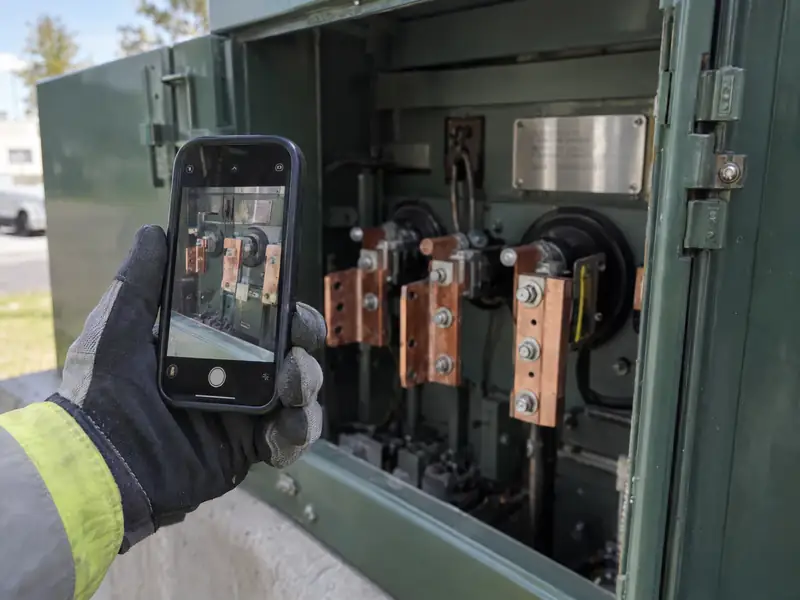
You must own the equipment or have authority to sell it; a property owner cannot sell a utility-owned transformer. Take photos only from a safe position where you are authorized to be. Qualified electrical contractors or the serving utility handle de-energizing and disconnecting—not the seller acting on this guide.
If an offer is made, the written terms identify what is included, who handles loading or rigging and freight, and payment terms and timing. See how the transformer buying process works or request a transformer review from Rocky before arranging pickup.
FAQDOE Efficiency Standards and Used Transformer FAQ
Can I sell a transformer manufactured before 2016?
Potentially, yes. The 2016 efficiency standards do not automatically prohibit resale of an older used transformer. Purchase interest still depends on the unit’s specifications, condition, documentation and suitability for reuse. Provide the actual manufacture year if known, and let the prospective buyer’s project team determine whether the equipment meets the intended installation’s requirements.
Does selling a stored transformer after April 23, 2029 change its applicable standard?
The sale date alone does not reset the manufacture date. A transformer genuinely manufactured earlier should be evaluated under its applicable manufacturing-era requirements and the rule’s transition provisions. However, substantial rebuilding, remanufacturing or importing can raise additional questions. Keep the original records and obtain a project-specific review rather than treating all stored inventory alike.
What if the manufacture year is missing or unreadable?
Send the readable portions of the nameplate, serial number and any existing purchase or factory records. Manufacturer documentation may help establish the production era and exact model. Do not substitute the installation date for the manufacture date without evidence. Missing information should be disclosed, and a DOE compliance claim should wait until adequate model and era documentation is available.
Can a routine field test prove that my transformer meets DOE efficiency standards?
Not by itself. Insulation resistance and turns-ratio tests address different aspects of transformer condition and electrical performance; they do not establish the prescribed DOE efficiency result. Existing factory loss or efficiency records may be more relevant, but they must correspond to the equipment and applicable test method. Have qualified technical personnel assess what the available reports actually demonstrate.
Will a copper-wound transformer automatically meet the efficiency requirement?
No. Winding material alone does not establish efficiency compliance. Core losses, winding losses, design and the applicable test conditions all affect performance. Copper or aluminum winding information is useful for a buyer’s specification review, but neither material replaces model-specific evidence. The same caution applies to core-material claims: meeting a performance threshold requires more than naming the material.
Should I order new testing before requesting an offer?
Start by sharing the records you already have. Rocky can review the specifications and identify follow-up questions before you decide whether additional evaluation is appropriate. Never open compartments, sample fluid or perform electrical testing yourself based on this page. Any needed work should be planned by qualified electrical or environmental professionals, with responsibilities agreed in advance.