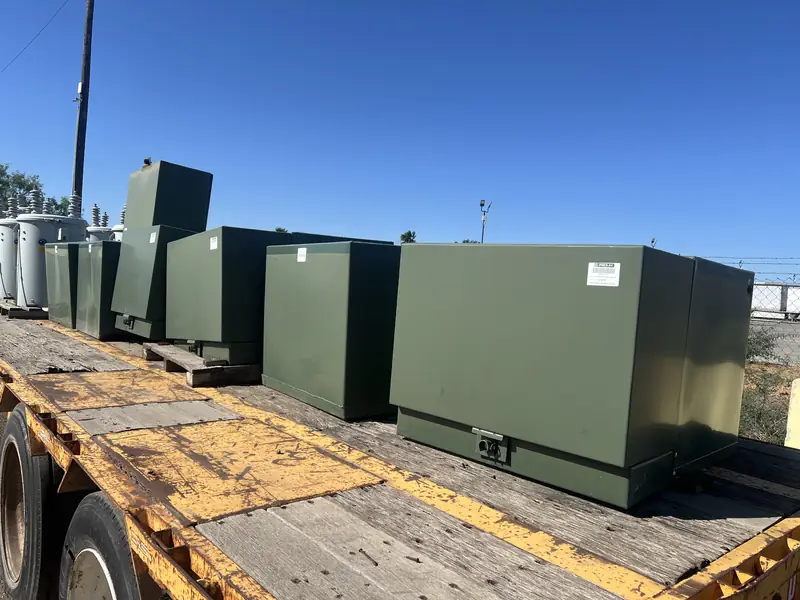
01New vs Used vs Rebuilt: Define the Condition Before Selling
The new vs used vs rebuilt comparison starts with operating history. A transformer can look clean and still have years of service behind it. Conversely, a never-energized spare may have weathered paint or damaged packaging after extended storage.
New equipment generally comes directly through a manufacturer or supplier. New-surplus equipment was purchased but never energized and is now excess inventory, a canceled-project asset or an unused spare. Factory acceptance testing does not, by itself, make a transformer a used service unit.
Used means previously energized in service. Rebuilt describes work performed on an existing transformer, but the term alone does not identify what was replaced. Reconditioned and refurbished are also used inconsistently; sellers should describe the work rather than rely on a label.
| Category | Operating history | Records to request |
|---|---|---|
| New | No prior field service | Factory tests and supplier warranty terms |
| New-surplus | Never energized in service | Purchase, storage and factory records |
| Used | Previously energized | Service history and available condition tests |
| Rebuilt | Existing unit repaired | Work scope and post-repair test reports |
02When Each Transformer Category Makes Sense
A newly manufactured transformer makes sense when a project needs a specific design, accessories or documented performance that available inventory cannot provide. The tradeoff is that manufacturing and delivery may not fit the project schedule.
A new-surplus unit may suit a project that can use its exact configuration. However, never energized does not mean recently manufactured, correctly stored or covered by a transferable warranty. Sellers can use the new-surplus transformer selling guide to organize the evidence behind that condition claim.
A used transformer can be a practical replacement or spare when ratings match and inspection and testing support reuse. A rebuilt unit may fit when its repair scope addresses known defects and post-repair results meet the intended application. Neither category should be selected solely because it is available.
For sellers, these distinctions help set realistic expectations. An unused but unusual voltage configuration may attract less interest than a documented used unit with a common application. The used transformer buyer page explains the information needed for previously energized equipment.
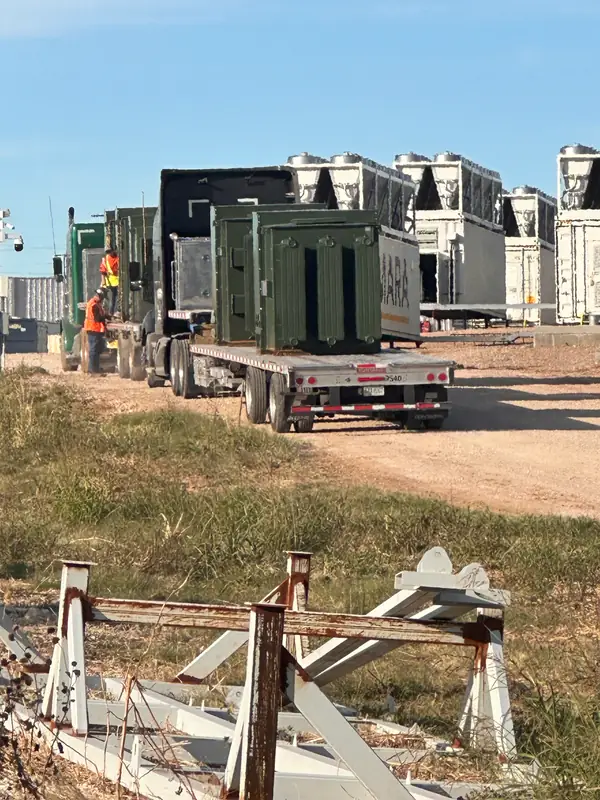
03Electrical Fit Matters More Than the Condition Label
New, used and rebuilt equipment must satisfy the same basic electrical requirements. Capacity, voltage, phase and connections come first. Impedance, BIL, taps, cooling class and temperature rise can also determine whether a unit fits a replacement application.
For example, a 1000 kVA three-phase pad-mounted transformer with a 12,470GrdY/7,200 V primary and 480Y/277 V secondary is not interchangeable with every 1000 kVA transformer. A different primary connection, secondary voltage, impedance or compartment arrangement may rule it out. See the guide to transformer kVA and amp ratings for interpreting capacity.
California has multiple utility systems and voltage configurations. Use the actual nameplate—not an assumption based on the city or serving utility. For larger substation or station-class units, report all MVA cooling stages; a 12/16/20 MVA rating describes different cooling capabilities, not three separate transformers.
- Record HV and LV voltages, phase, frequency and connection diagram.
- Include impedance percentage, BIL and available tap positions.
- Identify cooling class, temperature rise and winding material if stated.
- Document switches, fuses, elbows, gauges, fans and tap-changing equipment.
- Provide dimensions and weight when available.
04Testing Should Match the Equipment and Its History
A test report is useful only when it can be tied to the transformer being sold. Look for the serial number, test date, methods, results and any stated limitations. An old factory report establishes original test results; it does not prove present condition after service, storage or shipping.
Testing should be selected and interpreted by qualified professionals. No single test establishes remaining life or guarantees future reliability. Buyers may request additional information depending on the unit's size, insulation system, repair history and proposed use.
- Turns-ratio testing checks the relationship between windings and can help identify connection or winding issues.
- Insulation-resistance testing provides information about insulation condition under the recorded test conditions.
- Winding-resistance testing can help assess winding and connection consistency.
- Oil testing and dissolved gas analysis can provide condition information for liquid-filled equipment.
- Factory and post-repair reports can document additional electrical performance tests.
Liquid-Filled and Dry-Type Units Need Different Evidence
Liquid-filled equipment requires attention to fluid identity, leaks and available fluid records. Mineral oil and natural ester are not interchangeable descriptions; the natural ester versus mineral oil guide explains the distinction. Dry-type units have no insulating-oil report, so inspection and electrical testing focus on their insulation system, windings, connections and enclosure condition.
05Rebuilt Claims and Warranties Need Written Scope
Rebuilding can range from replacing damaged components to substantial winding or insulation work. Cleaning, repainting and replacing gaskets should not be presented as equivalent to rewinding. Ask what failed, what was retained, what was replaced and which tests were completed afterward.
Warranty language is a separate issue from physical condition. A new-surplus transformer may have an expired or nontransferable original warranty. A rebuilt transformer may carry coverage from the repair provider rather than the original manufacturer. Used equipment may be offered without a warranty.
When selling, provide the actual warranty document if one exists. Do not describe coverage as transferable unless the terms support that claim. California Transformer Buyer's purchase review does not, by itself, establish any manufacturer or repair-provider warranty.
- Identify the party responsible for warranty coverage.
- Check duration, start date and transfer restrictions.
- Review exclusions, testing requirements and installation conditions.
- Distinguish parts coverage from labor, freight or field-service coverage.
- Keep repair invoices with the matching serial-number records.
06Lead Times Can Favor Available Inventory, but Fit Still Comes First
Long manufacturing lead times can create demand for available transformers. NREL reported in 2024 that distribution-transformer lead times had reached up to about two years, roughly four times pre-2022 levels. That is dated market context, not a current delivery commitment.
Used, new-surplus or rebuilt inventory may avoid part of the manufacturing wait, but inspection, testing, engineering approval, repairs and freight still take time. Availability should mean more than a seller saying the unit exists: buyers need to know where it is, whether it remains in service and what must happen before pickup.
Efficiency requirements also need careful interpretation. DOE standards apply to manufacture; they do not automatically make existing used or surplus units illegal to resell. The DOE efficiency standards guide for used transformers covers the distinction. A buyer's project specifications can still impose requirements beyond basic resale eligibility.
07Ownership, PCB Records and Safe Access Apply to Every Category
Before discussing a sale, establish ownership or written authority to sell. A transformer on private property may belong to the serving utility. The utility-owned transformer ownership checklist helps identify questions to resolve before offering equipment.
For liquid-filled units, keep PCB labels, laboratory reports and fluid-service records together. Federal classifications distinguish non-PCB below 50 ppm, PCB-contaminated from 50 to below 500 ppm, and PCB Transformers at 500 ppm or more. Non-PCB does not mean zero PCBs, and unknown status can trigger presumptions until testing or qualifying documentation establishes concentration.
California has stricter rules for PCB-containing oil, including excluding oil containing 5 ppm or more PCBs from its used-oil category. The correct management pathway depends on testing, documentation and whether the material is equipment for reuse or regulated waste. Sellers should rely on qualified environmental professionals; this guide is not legal advice.
Photograph only equipment you are authorized to access, from a safe position. Do not open compartments, sample fluid, disconnect or move a transformer yourself. Isolation and disconnection belong to the owner's qualified electrical contractor or serving utility, including evaluation of possible solar, battery or generator backfeed.
08Prepare a Clear Condition Package Before Requesting an Offer
To sell a transformer, describe what you know and identify what remains unknown. A clear package lets Rocky distinguish a never-energized spare from a removed service unit or a repaired transformer without relying on appearance.
California Transformer Buyer reviews single units and mixed lots from sellers throughout California. Send safely obtained nameplate and overall photos, quantity, location, operating status and known defects. Add factory reports, service records, repair scope and fluid documentation when available.
Call or text Rocky at (951) 403-5738, or request a transformer offer through the contact form. Reviewing your transformer costs nothing and there is no obligation. Any purchase terms are set out in a written offer, including who handles loading or rigging and freight, and payment terms and timing.
- State whether the unit was ever energized in service.
- Report leaks, corrosion, bushing damage and missing parts.
- Describe storage conditions and known repair work.
- Identify access restrictions and whether the unit remains installed.
- List each transformer separately when selling a mixed lot.
FAQNew vs Used vs Rebuilt Transformer FAQ
Does a new-surplus transformer lose that status if its crate is missing?
Missing packaging does not prove that a transformer was used. The key question is whether it was energized in service. However, missing packaging may leave uncertainty about storage, handling or completeness. Provide purchase records, serial-number documentation and clear photos, and disclose any outdoor storage or shipping damage rather than treating the condition label as proof of readiness.
Can I sell a used transformer without recent test reports?
You can submit it for review without recent reports, but missing records create uncertainty. Rocky may ask about the last operating date, reason for removal, known faults and available maintenance history. Additional professional testing may be needed depending on the equipment. A nameplate and condition description support an initial review; they do not replace a technical assessment.
Does rebuilding reset a transformer's age?
No. Rebuilding does not automatically make the entire transformer new or erase its manufacturing date. Some components may be replaced while the core, tank or other parts remain original. Keep the original identity and record the repair date separately. The useful description is the documented scope of work, together with post-repair results and any applicable warranty.
Should I pay for repairs before offering my transformer?
Request an initial review before committing to repairs solely for resale. Repair expense does not guarantee stronger buyer interest, especially if the voltage or configuration has limited demand. Disclose existing defects and provide available records so the equipment can be evaluated as it stands. Any repair decision should involve qualified professionals and a clear understanding of the intended outcome.
Are older copper-wound transformers always more desirable than newer aluminum-wound units?
No. Winding material is one factor, not a ranking system. A buyer also evaluates capacity, voltages, impedance, insulation condition, losses, accessories and application fit. A well-documented aluminum-wound unit may suit a project better than an older copper-wound transformer with incompatible ratings or uncertain condition. Report winding material only when the nameplate or reliable documentation identifies it.
Can I describe a removed working transformer as ready to install?
Avoid that claim unless a qualified assessment supports it for the intended installation. Working before removal is useful history, but transport, storage, missing accessories or a different application can introduce issues. Describe it more precisely: previously operating, date removed, known condition and available tests. The receiving project's qualified electrical professionals determine installation suitability.