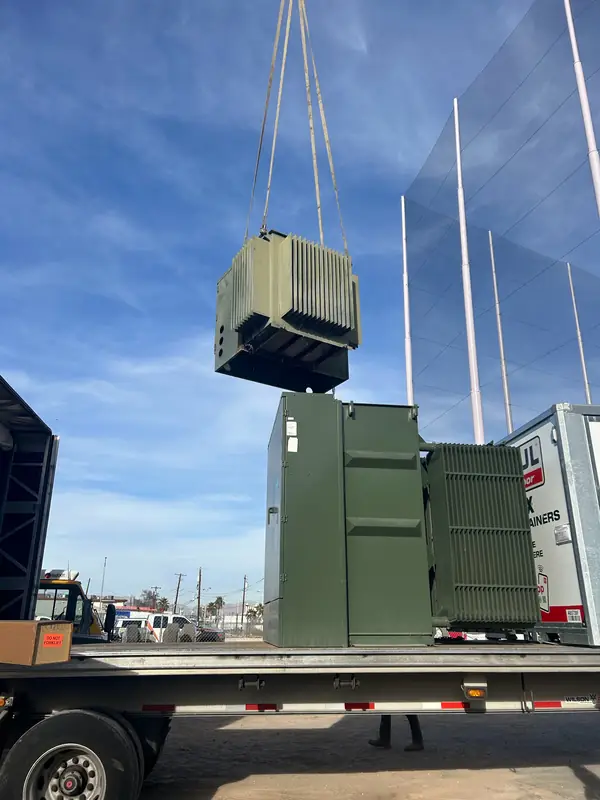
01Transformer Buyer Chula Vista: What Local Sellers Can Offer
If you are looking for a transformer buyer in Chula Vista, California Transformer Buyer reviews individual units and mixed lots from commercial properties, contractors and other authorized sellers. Equipment may be used, pulled, decommissioned, spare, project surplus or new-surplus that has never been energized. A review does not obligate you to sell.
Chula Vista’s documented activity includes waterfront redevelopment, hospitality and convention facilities, and marina-related commercial operations. Those settings can involve pad-mounted distribution units, dry-type transformers serving buildings, or unit substations feeding larger electrical loads. The actual equipment on a site depends on its design; share the nameplate rather than assuming a rating or configuration.
- Single-phase or three-phase distribution transformers
- Pad-mounted, pole-mounted or dry-type units
- Unit substations and larger power transformers
- New-surplus equipment on skids or in crates
- Spare units, project leftovers and mixed lots
02Match the Equipment to Chula Vista’s Utility and Site Context
San Diego Gas & Electric (SDG&E) serves Chula Vista. The verified utility context includes 12 kV distribution and 69 kV system supply to substations. These are useful reference points when identifying equipment, not a substitute for the transformer’s own nameplate: service voltage and connection can vary by installation.
Waterfront, hospitality and convention properties may have building distribution equipment as well as larger units serving site loads. Marina-related commercial sites may also have equipment exposed to demanding outdoor conditions. If a property has solar, battery storage or backup generation, include that context because connected generation can affect safe isolation and may help explain a specialized transformer’s role. Only qualified personnel should handle isolation and electrical work.
Identify the Actual Voltage and Configuration
A three-phase pad-mount might serve a commercial building, while a dry-type transformer may be installed indoors near switchgear. Send readable photos showing the primary and secondary voltage, phase, kVA or MVA rating, taps and connection. California’s common secondary voltages include 208Y/120 V and 480Y/277 V, but the nameplate is the deciding record.
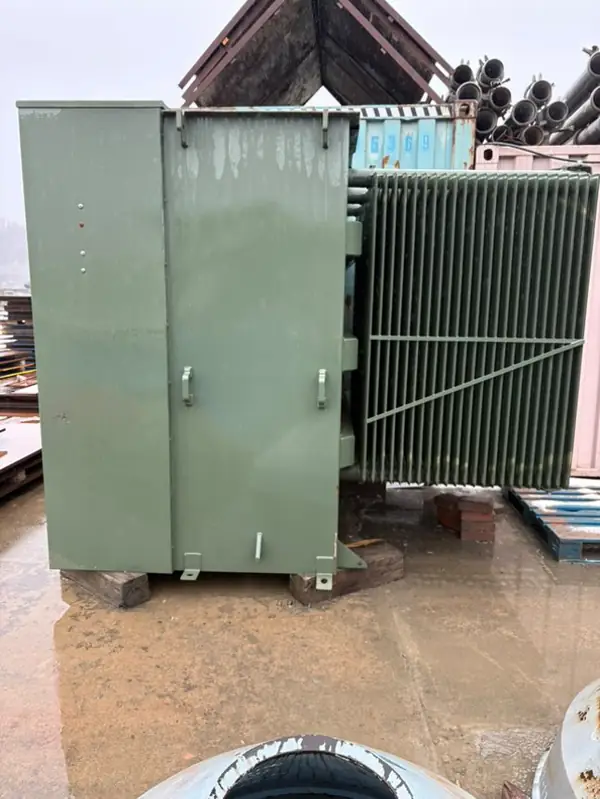
03Nameplate and Condition Details That Help Review a Unit
A clear nameplate photo is the fastest way to establish what is being offered. Include a wider view of the transformer and any visible accessories, but take photos only from a safe position and only where you are authorized to access the equipment. Do not open a compartment or move covers to get a better image.
The rating, voltage, phase, condition, fluid information, documentation and removal requirements all affect a buyer’s review. Test reports and records can clarify condition and environmental status. If available, send them along with the photos; do not drain, sample or otherwise handle transformer fluid yourself.
- Manufacturer, serial number and year
- kVA or MVA, phase and frequency
- HV/LV voltage, connection and tap positions
- Impedance, BIL and cooling class
- Fluid type, gallons and PCB documentation, if available
- Visible leaks, rust, bushing damage or missing parts
- Test reports, weight and accessory details
04Plan Chula Vista Pickup Around Access and Rigging
Pickup planning starts with the location and equipment details, not with a seller moving the transformer. Tell us whether the unit is indoors or outdoors, how a qualified contractor will make it available, and what access constraints may affect loading. Share site restrictions such as gates, limited turning space, overhead obstructions, operating hours or coordination requirements.
I-5, I-805, SR-54 and SR-125 are the main route context for Chula Vista, but the practical pickup route depends on the site, load and destination. A large or heavy transformer may require specialized rigging and freight planning; oversized loads can also require permits or approvals. Before pickup, the written offer states what is included and who handles loading, rigging and freight. See the [transformer pickup and removal process](Transformer Removal & Pickup) for more detail.
05How to Start a Transformer Sale in Chula Vista
Call or text Rocky at (951) 403-5738, or submit the website contact form. To start a review, provide the transformer’s location, quantity, condition and nameplate and overall photos. Texting photos is an option when you can take them safely.
Rocky reviews the information and may ask about test reports, fluid or PCB records, ownership, site access and removal needs. If the equipment is a fit, you receive a written offer stating the price, what is included, who handles rigging and freight, and payment terms and timing. Reviewing the transformer costs nothing, and there is no obligation. Start through [request an offer for your transformer](Contact / Get an Offer) or review [how the selling process works](How It Works).
06Ownership, Safety and Environmental Records Matter
The seller must own the equipment or have authority to sell it. A property owner cannot sell a utility-owned transformer simply because it is located on the property. If ownership is unclear, resolve that question with the responsible owner or utility before proceeding.
Do not disconnect, de-energize, open, drain or move a transformer. The owner’s qualified electrical contractor or serving utility handles isolation and disconnection; solar, batteries and generators can create backfeed risks. PCB status also requires care: rely on testing, documentation and qualified environmental professionals to determine the correct handling pathway. California’s rules for PCB-containing oil are specific, and this information is not legal advice.
07Compare Nearby Service and Equipment Information
California Transformer Buyer serves sellers throughout California, but the equipment must be located in the state. For broader local context, see [transformer buying across San Diego and Imperial Counties](San Diego & Imperial Counties) or nearby service pages for [San Diego](San Diego, CA) and [Oceanside](Oceanside, CA).
If your equipment is a commercial pad-mount, review what buyers look for in a [pad-mount transformer](Pad Mount Transformer Buyer) or in [three-phase pad-mount units](Three-Phase Pad-Mount Transformers). Those guides can help you gather useful details, but the individual nameplate and condition determine how a specific unit is evaluated.
FAQSelling a Transformer in Chula Vista: FAQ
Can I sell a transformer that is still installed?
You can ask California Transformer Buyer to review an installed unit, but do not disconnect or move it yourself. The equipment owner’s qualified electrical contractor or the serving utility must handle required isolation and disconnection. Share photos taken safely, the site location, ownership information and any known access limits so pickup responsibilities can be considered before terms are agreed.
What if the transformer has no readable nameplate?
Send the clearest photos you can take safely, including overall views, visible labels, bushings, gauges and accessories. Include any records that may identify the unit, such as purchase documents, test reports or maintenance files. A missing or unreadable nameplate may limit identification, so do not guess at voltage or capacity; Rocky may ask follow-up questions before deciding whether the equipment can be evaluated.
Does California Transformer Buyer purchase failed or leaking units?
A failed or leaking transformer can be submitted for review, but a purchase is not guaranteed. Condition, completeness, fluid information, available testing, ownership and removal requirements all matter. Leaking equipment and drained oil can require proper environmental determinations and handling. Rely on qualified environmental professionals and existing documentation; do not drain or sample the transformer to prepare it for sale.
Can I offer several transformers from one project?
Yes. Include the quantity and provide a nameplate and overall photo for each unit when possible. For a mixed lot, identify which transformers are used, new-surplus, damaged or incomplete, and note where each is stored. Sharing the lot’s location and access conditions helps Rocky review the equipment together and determine whether separate pickup or handling arrangements may be needed.
What happens after I receive a written offer?
Review the offer’s price, included work, rigging and freight responsibilities, and payment terms and timing before agreeing to a pickup. The written terms should make clear what each party is responsible for. If the scope or site conditions change, raise that before removal is scheduled. Pickup proceeds according to the agreed terms; do not prepare or move the transformer yourself.
Can I sell equipment that belongs to SDG&E?
Not unless you have authority from the equipment owner to sell it. A transformer on private property is not necessarily owned by the property owner, and utility-owned equipment cannot be sold by a host property without authorization. Check ownership records or contact the responsible party first. California Transformer Buyer may ask for ownership information during its review.