01Transformer Buyer Oceanside: What Local Sellers Can Offer
If you need a transformer buyer in Oceanside, California Transformer Buyer reviews equipment from manufacturing sites, industrial business parks and technology-related facilities. Units may be operating spares, project leftovers, removed equipment or assets from a facility upgrade. We consider individual transformers as well as mixed lots; the unit’s specifications and condition determine whether it fits current demand.
Oceanside’s documented employment districts include the Airport Industrial Area, Ocean Ranch and Rancho del Oro Technology Center. Facilities in these settings may have distribution pad-mounts serving buildings, dry-type units near indoor switchgear, or unit substations that combine a transformer with secondary switchgear. These are examples of equipment types, not claims about a specific site.
California Transformer Buyer is run by Rocky and buys only from sellers located in California. For a broader view of local industry and service coverage, see transformer buying across San Diego and Imperial Counties.
02Oceanside Equipment Types and Their Facility Uses
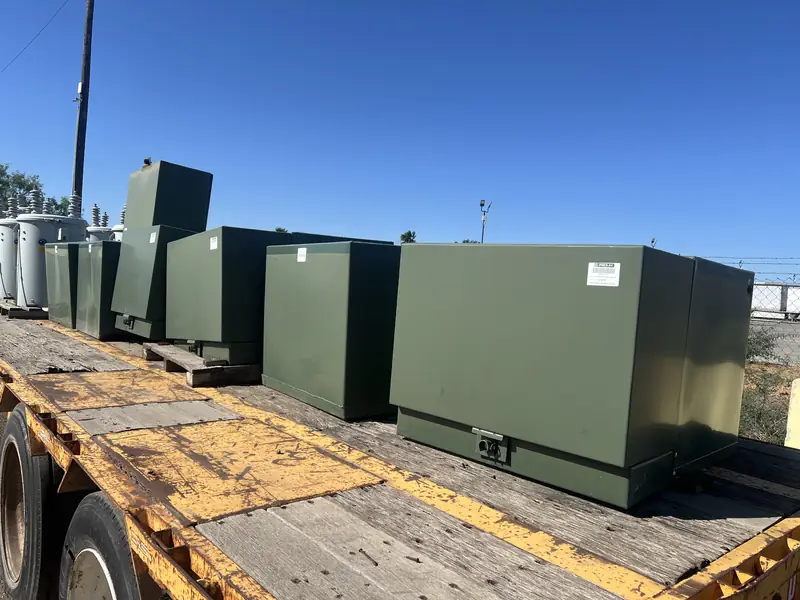
A warehouse or industrial building may use a three-phase pad-mounted transformer, commonly paired with building distribution equipment. A campus or larger facility may have a unit substation or medium-voltage dry-type transformer. Technology facilities can also have standby or spare units; the actual configuration and nameplate—not the facility label—show what the transformer is.
Solar installations and battery projects may use step-up transformers between inverters and a collection system. Pole-mounted units can also be present in distribution systems. Camp Pendleton is adjacent regional military activity, not a location that should be assumed to be within Oceanside; any equipment offered must be owned by the seller or offered by someone authorized to sell it.
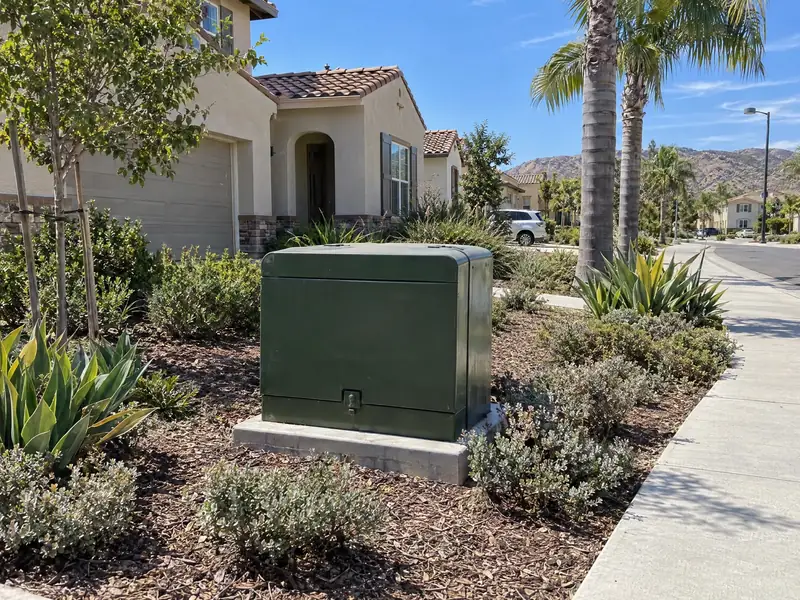
For a pad-mounted unit, include whether it is single-phase or three-phase, its kVA rating, and primary and secondary voltage. Compare configurations with the pad-mount transformer buying information if you are unsure what details to send.
- Three-phase pad-mount distribution units
- Indoor dry-type transformers
- Unit substations and switchgear combinations
- Solar or battery step-up transformers
- Spare, pulled or new-surplus units
03SDG&E Voltage Context and Nameplate Details
San Diego Gas & Electric (SDG&E) serves Oceanside. The verified distribution context for SDG&E is 12 kV distribution and 69 kV system supply to substations. That does not identify the voltage of a particular service or transformer; use the nameplate and site records rather than assuming a unit matches a utility-standard configuration.
For a useful first review, photograph the manufacturer, serial number, year, kVA or MVA rating, phase, primary and secondary voltages, connection, taps, impedance and cooling class. For liquid-filled equipment, include fluid type and gallons if listed. A photo of the PCB label and available test reports can also help establish condition and documentation.
A clear, legible nameplate photo is often more useful than a model description alone. If the rating is multi-stage, capture every kVA/MVA and cooling designation shown, such as ONAN/ONAF stages.
What Can Affect Buyer Review
Rating, voltage, phase, winding material, year, test records, condition and included accessories all help determine whether a unit can be resold or reused. Leaks, damaged bushings, missing parts and unknown fluid or PCB status may affect review.
Do not open compartments or take photos from an unsafe position. Take pictures only from a safe location and only of equipment you are authorized to access.
04Plan Oceanside Pickup Around Access and Equipment Size
Site access affects pickup planning. Tell us whether the transformer is indoors or outdoors, its approximate dimensions and weight if known, whether a loading area is available, and whether there are gates, overhead obstructions, narrow drives or other access limits. Share site rules and any restrictions on pickup hours or vehicle entry.
I-5, SR-76 and SR-78 are relevant routes for planning transportation to and from Oceanside, but the actual route and equipment needed depend on the load and the pickup site. Large or heavy equipment may require specialized rigging or haul arrangements. Identify constraints early so the written offer can state who handles loading, rigging and freight.
Removal is scheduled after the offer and terms are agreed. For more detail on responsibilities and coordination, review transformer removal and pickup planning.
05How to Start a Transformer Sale in Oceanside
Call or text Rocky at (951) 403-5738, or use the get an offer contact form. Send the nameplate and overall photos, the number of units, the Oceanside location and a brief description of condition. You can also note whether the transformer is used, pulled, surplus or new-surplus and whether test or fluid records are available.
Rocky reviews the information and may ask about ownership, documentation, site access or removal needs. If the equipment is utility-owned, the property owner cannot sell it; confirm authority to sell before proceeding. See how to prepare a transformer for buyer review for additional submission guidance.
The written offer states the price, what is included, who handles loading, rigging and freight, and payment terms and timing. Reviewing a transformer costs nothing and carries no obligation. Pickup is arranged according to the terms agreed in writing.
06Used, Surplus and New-Surplus Units
Used transformers have previously been energized; pulled equipment has been removed from service. Surplus may include spare units or project leftovers, while new-surplus means never energized equipment that may be crated or on skids. Describe the status accurately and provide available records rather than inferring condition from appearance.
Test reports, fluid and PCB records, and evidence of storage can help clarify what is being offered. A missing record does not establish a particular test result or PCB classification. Sellers should rely on testing, documentation and qualified environmental professionals for environmental determinations; this information is not legal advice.
California Transformer Buyer also reviews surplus transformer inventory and new-surplus transformers from California sellers. Whether a particular unit is a fit depends on its specifications, condition and documentation.
07Serving Oceanside and Nearby San Diego County Cities
Oceanside is part of a wider San Diego County service area with manufacturing, military, trade and technology activity. California Transformer Buyer serves California sellers only and can review equipment from Oceanside as well as nearby locations. Other local pages include transformer buyers in Escondido, San Diego transformer buying and Chula Vista transformer buying.
For help identifying a unit type before sending details, consult the transformer type guide. Photos and nameplate information remain the best starting point for a specific offer.
FAQSelling a Transformer in Oceanside: FAQ
Does California Transformer Buyer buy just one transformer in Oceanside?
Yes, a seller can submit one unit for review. California Transformer Buyer also considers multiple units and mixed lots. Whether a particular transformer is a fit depends on its rating, voltage, condition, documentation and other details, so send the nameplate and overall photos rather than assuming a unit will or will not qualify.
What if the nameplate is faded or hard to read?
Send the clearest photos you can take safely, including close views of any readable sections and a wider view showing the transformer. Do not open a compartment or approach energized equipment to get a better image. If you have factory records, test reports, purchase documents or an inventory list, those may help fill in missing nameplate information.
Can a property owner sell a transformer that appears to belong to SDG&E?
Only the owner or someone authorized to sell the equipment can offer it. A transformer on private property is not automatically property of the site owner; utility-owned equipment cannot be sold by the property owner. Confirm ownership and authority before submitting it, and do not have anyone disconnect or move the unit to establish ownership.
Who disconnects the transformer before pickup?
The seller should coordinate de-energizing and disconnection with the owner’s qualified electrical contractor or the serving utility. California Transformer Buyer does not ask sellers to perform electrical work. Solar, batteries or generators can create backfeed hazards, so qualified personnel must address isolation and safety before removal is considered.
Can you review a transformer with unknown PCB status?
You can disclose that the status is unknown and provide any available label, fluid or testing records. Unknown status should not be treated as proof that equipment is non-PCB. PCB classification and the appropriate handling pathway depend on testing and documentation; sellers should rely on qualified environmental professionals for determinations rather than guessing from the unit’s age or appearance.
What should I tell you about pickup access at my Oceanside site?
Describe the unit’s location, approximate dimensions and weight if known, entrance and loading-area limits, overhead obstructions, and any site rules for vehicle access. Mention whether the unit is inside a building or behind a gate. These details help clarify handling needs and who is responsible for rigging and freight in the written offer.