01Transformer Buyer Corona: What Local Sellers May Have
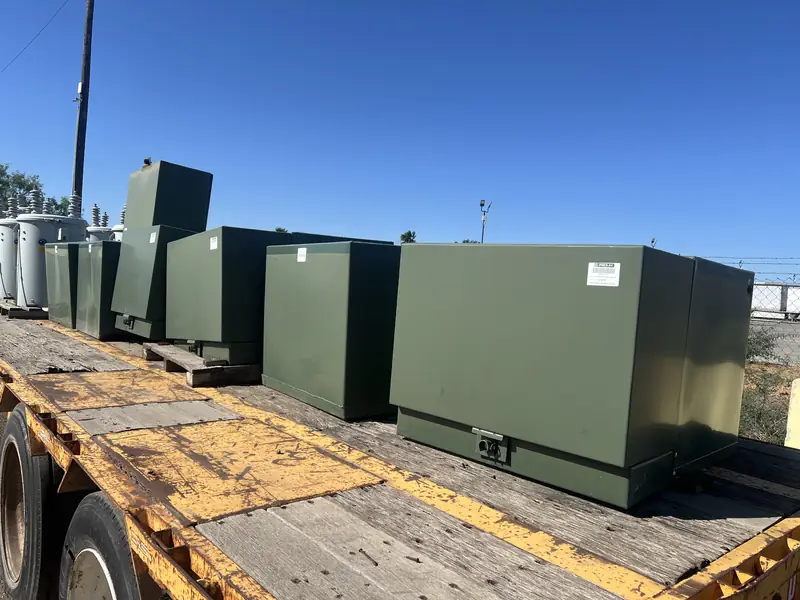
Corona’s established manufacturing base and industrial facilities use transformers for plant services, process equipment, building distribution and site expansions. A facility may have a pad-mounted transformer outdoors, a dry-type unit inside, or a unit substation serving switchgear. The exact equipment varies by property and electrical design.
Corona is connected to the wider Inland Empire, a major warehousing, distribution and freight region. Businesses with changing loads, completed projects or replaced equipment may have a spare, pulled unit or new-surplus transformer to sell. See the broader [Inland Empire market](Inland Empire transformer buying area) for regional context.
02Transformer Types Found at Corona Industrial Sites
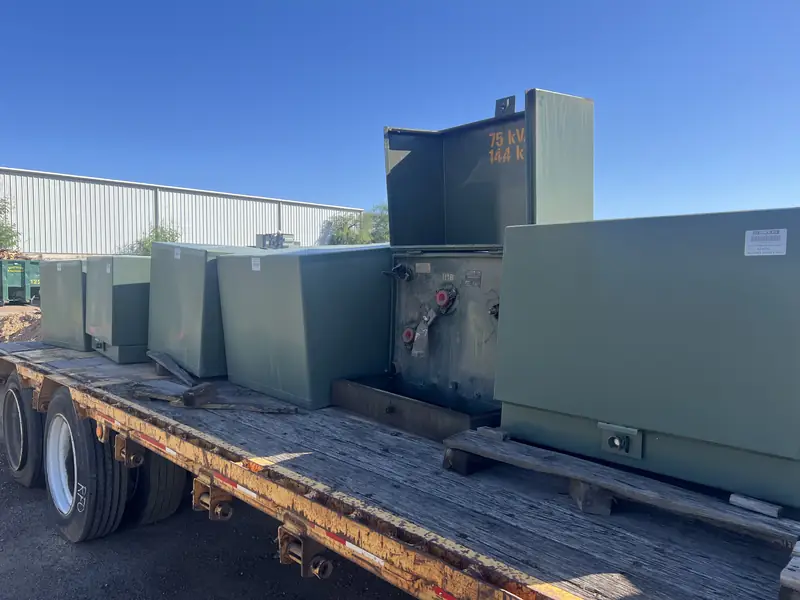
Outdoor three-phase pad-mounts commonly serve commercial and industrial loads; ratings can range from hundreds of kVA to several MVA. For an overview of the enclosed, tamper-resistant equipment found in distribution settings, see our guide to [pad-mount transformer buyers](pad-mount transformer buyers).
Manufacturing properties can also use unit substations close-coupled to switchgear, medium-voltage dry types, or larger station-class equipment. Solar or battery projects may use step-up transformers, but share the actual unit details rather than assuming a particular configuration or voltage applies in Corona.
- Three-phase pad-mount transformers
- Unit substations and switchgear transformers
- Medium-voltage dry-type units
- Spare, pulled and project-surplus equipment
- Larger power or step-up transformers
Tell Us the Configuration, Not Just the Size
A 1,000 kVA unit can differ substantially from another with the same rating. Phase, primary and secondary voltages, winding connection, impedance, cooling and condition all help identify its use and resale options.
If the equipment is a three-phase pad-mount, include the nameplate and overall views; our [three-phase pad-mount guide](three-phase pad-mount transformer information) explains common configurations.
03Corona Utility Service and Transformer Nameplate Details
Southern California Edison serves much of Corona, while municipal electric service covers defined Greenfield areas rather than the entire city. Corona also has separate generation and direct-access offerings. Confirm the serving utility for the specific property; do not assume a municipal service area or a particular distribution voltage based on the city name alone.
SCE distribution systems include 4 kV, 12 kV and 16 kV classes, but the actual service and transformer requirements depend on the location and equipment. Use the unit’s nameplate as the source of its ratings, and have your electrical contractor or utility confirm compatibility for a reuse project.
- Manufacturer, serial number and year
- kVA or MVA rating and phase
- High- and low-voltage ratings and connections
- Tap positions, impedance and cooling class
- Fluid type, gallons and PCB documentation, if available
04Photos and Records That Help Evaluate Used Transformers in Corona
Start with clear photos of the nameplate and the transformer as a whole, taken only from a safe position and where you are authorized to be. Include the number of units, Corona site location and a short description of condition, such as visible leaks, corrosion, damaged bushings or missing accessories. Do not open compartments or approach equipment that is not safe to photograph.
Send test reports or supporting records if you already have them. Factory reports, oil test or DGA results, insulation-resistance and turns-ratio tests, maintenance records, and fluid or PCB documentation may help Rocky assess the unit. For pulled equipment, also clarify that you own it or have authority to sell it.
- Overall photos and nameplate close-up
- Quantity and current condition
- Available test and maintenance records
- Known fluid and PCB records
- Ownership or authority to sell
05Plan Transformer Pickup Around the Corona Site
Access affects the pickup plan, especially for heavy pad-mounted or substation equipment. Note gate width, turning room, ground conditions, overhead obstructions, loading-area limits and any site scheduling requirements. I-15 and SR-91 connect Corona with the region, but the appropriate transport route and any permits depend on the load and its actual origin and destination.
Do not disconnect, de-energize, open, drain or move the transformer yourself. The owner’s qualified electrical contractor or serving utility must handle safe isolation and disconnection. Before pickup, California Transformer Buyer states in writing who is responsible for rigging, loading and freight; see the [transformer removal and pickup process](transformer removal and pickup planning) for more detail.
06How to Request an Offer for Surplus Transformers in Corona
Call or text Rocky at (951) 403-5738, or use the website contact form. Send the nameplate and overall photos, quantity, location and condition. You can also provide the available records and describe site access so that follow-up questions can focus on the equipment and removal requirements.
After reviewing the information, Rocky may ask about testing, fluid or PCB records, ownership and access. If the unit is a fit, you receive a written offer describing the price, what is included, who handles rigging and freight, and payment terms and timing. Reviewing a transformer costs nothing and carries no obligation; see [how the selling process works](steps for selling a transformer) before you get started.
- Call or text (951) 403-5738
- Send photos, location and quantity
- Share available records and access details
- Review the written terms before pickup
07Selling Equipment from a Corona Facility or Project
A single operating spare, a transformer removed during an upgrade, and a group of project leftovers each need a clear inventory. List the rating and condition for every unit when possible. Mixed lots can include different phases, voltages and manufacturers, so individual nameplate photos help avoid treating unlike equipment as interchangeable.
If an electrical contractor is coordinating a replacement or surplus disposition, they can help confirm which equipment belongs to the property and what records are available. California Transformer Buyer buys from California sellers only and is not affiliated with SCE or Corona’s municipal electric service.
FAQSelling a Transformer in Corona: FAQ
Can I sell a transformer in Corona if the property is served by a municipal utility?
Potentially, but first confirm who owns the equipment and who has authority to sell it. Corona’s municipal electric service applies to defined areas, not the whole city, and utility-owned equipment on private property cannot be sold by the property owner. If ownership is unclear, check property and utility records before submitting it for review.
What if the transformer nameplate is difficult to read?
Send the clearest photograph you can take safely, along with overall equipment photos and any records that identify the unit. Do not open an enclosure or approach unsafe equipment to improve a picture. Include the manufacturer, serial number, approximate rating if known, and a description of where the unit is installed; Rocky can ask follow-up questions if needed.
Will California Transformer Buyer consider a transformer that has already been removed?
Removed equipment can be reviewed if you own it or are authorized to sell it. Explain whether it is stored on a skid, still assembled, or missing accessories, and share its current location and condition. Include test reports and fluid or PCB documentation if available. The equipment’s condition and the loading arrangements are considered as part of the review.
Can I submit a new-surplus transformer that was never energized?
Yes. New-surplus units, including equipment that is crated or on skids and has never been energized, are among the types California Transformer Buyer reviews. Provide the nameplate, photos of packaging and condition, quantity, and any factory test report or purchase documentation you have. Do not assume a unit is suitable for a project without confirming its specifications.
Do you need test reports before you can review my transformer?
Send test reports if they are available, but begin with the nameplate, overall photos, quantity, location and condition. Reports such as factory tests, oil tests or DGA, insulation resistance and turns ratio can provide useful evidence about the unit. Rocky may ask for additional records during review; rely on qualified testing and environmental professionals for technical determinations.
Does a Corona transformer pickup use a particular route or require permits?
There is no single route or permit answer for every pickup. I-15 and SR-91 are major connections in the area, while the load size, dimensions, weight, destination and local road conditions determine transport planning. Share site access information early. The written offer will state who handles rigging and freight, and any required transport arrangements must be planned for the specific load.