01A Transformer Buyer in Riverside for Industrial and Property Surplus
Riverside’s manufacturing, logistics, aeronautics and research businesses use transformers for building service, production equipment and specialized loads. Hunter Park, Sycamore Canyon and Airport Business Park are documented employment areas where equipment changes can leave owners with spare units, removed transformers or unused project purchases.
California Transformer Buyer is based in Riverside County and reviews single units through full yards of equipment. Sellers can include facility managers, contractors and property owners, provided they own the equipment or have authority to sell it. Our Inland Empire transformer buying page covers the wider regional service area.
02Transformer Types That Fit Riverside’s Facilities
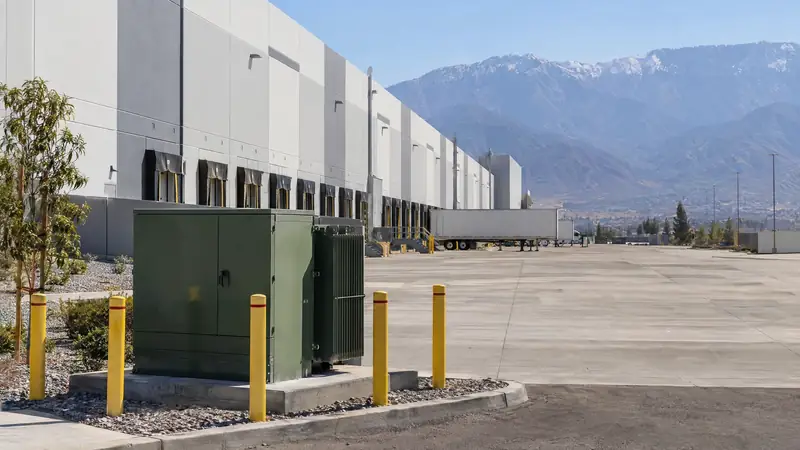
The facility’s electrical load helps explain its equipment, but the nameplate determines what is offered. A warehouse may have a three-phase pad-mounted service transformer and smaller indoor dry-type units; a manufacturing facility may also have isolation transformers or a unit substation.
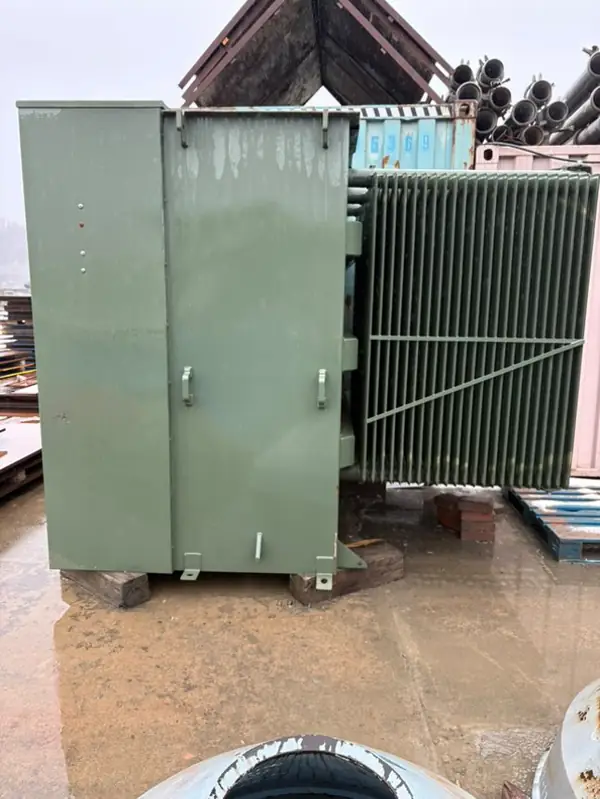
For outdoor service equipment, see our pad-mount transformer buying requirements. Larger industrial installations can be reviewed through our substation and station-class transformer buying page, including units with multiple cooling-stage ratings.
| Facility use | Possible transformer equipment | Helpful identifying detail |
|---|---|---|
| Logistics and distribution | Three-phase pad mount; indoor dry type | kVA, primary voltage, secondary connection |
| Manufacturing | Unit substation; drive isolation | Impedance, winding connection, accessories |
| Aeronautics facilities | Building-service or specialty units | Application and complete nameplate |
| Research and development | Dry type; specialized supply units | Voltage, phase, frequency, test records |
03RPU Service, Voltage Conversion and Equipment Ownership
Riverside Public Utilities is the principal city utility, with documented 4 kV and 12 kV distribution and an ongoing 4 kV-to-12 kV conversion. That context makes primary voltage especially important when reviewing older equipment. Do not assume a transformer matches today’s service simply because it previously operated at a Riverside site.
Confirm the serving utility for boundary parcels rather than treating every Riverside mailing address as an RPU customer. Also verify ownership: a transformer on private property may belong to the utility and cannot be sold by the property owner.
Send the actual HV and LV ratings, including delta or grounded-wye notation. Common three-phase secondaries include 208Y/120 V and 480Y/277 V, but neither should be assumed. Our transformer voltage guide explains why the complete connection matters.
04Photos and Records Needed for a Riverside Offer
Photograph only equipment you are authorized to access, from a safe position. An existing readable nameplate photo and overall photos are the best starting point; do not open compartments or approach energized components to obtain missing information.
The review considers rating, condition, configuration and documentation—not just physical size. A 1000 kVA unit with complete specifications is easier to evaluate than an unidentified transformer. Never-energized equipment should be described accurately; our new-surplus transformer page explains the records useful for unused purchases.
- Manufacturer, serial number, year, kVA or MVA and phase
- HV/LV voltages, connections, taps, impedance and BIL
- Cooling class, temperature rise, fluid type and gallons
- Listed weight, winding material and accessories
- Quantity, operating history, leaks, damage or missing parts
- Available factory tests, electrical tests and fluid/PCB records
05Planning Pickup Around Riverside Site Access
Riverside’s SR-91, SR-60 and I-215 connections are useful freight context, but highway proximity alone does not establish a workable pickup. Gate clearance, loading space, equipment weight, overhead obstructions and the route from the transformer to the loading area all affect planning.
Tell Rocky whether the unit is installed, already removed or stored on a skid. Identify appointment requirements, shared driveways and restrictions on crane or trailer access. The written offer states who handles rigging and freight; our transformer removal and pickup guide describes the coordination involved.
Large loads may require Caltrans oversize or overweight permits on state highways and separate local-road approvals. Electrical isolation and disconnection belong to the owner’s qualified electrical contractor or serving utility, with possible solar, battery or generator backfeed considered.
06Oil-Filled Units Need Documented Environmental Status
For oil-filled used transformers in Riverside, include available PCB labels, fluid records and laboratory reports. A “non-PCB” designation does not mean zero PCBs: the federal non-PCB category is below 50 ppm. Unknown status requires further review rather than an assumption based on appearance.
California has stricter rules for PCB-containing oil, including excluding oil with 5 ppm or more PCBs from its used-oil category. A working transformer sold for reuse is equipment, while leaking units, drained oil and failed units need a proper determination. Rely on testing, documentation and qualified environmental professionals; this is not legal advice.
07Start With Rocky Before Scheduling Removal
To sell a transformer in Riverside, CA, call or text (951) 403-5738 or use the transformer offer request form. Provide the location, quantity, condition and available photos. Reviewing your transformer costs nothing and there is no obligation.
Rocky reviews the information and may request test reports, ownership details or access clarification. If an offer is made, review what is included, loading and freight responsibilities, and payment terms before pickup is scheduled. Equipment from nearby sites can also be submitted through our Corona transformer buying page.
FAQSelling a Transformer in Riverside: FAQ
Can I submit several transformers with different ratings?
Yes. California Transformer Buyer reviews mixed lots as well as individual units. Give each transformer an identifier and pair its photos with its rating, condition and location. Distinguish installed equipment from removed stock, and identify which units were never energized. That helps Rocky evaluate the lot without confusing specifications or pickup requirements.
Does a missing test report prevent me from requesting an offer?
You can begin with the records and photos you already have. Missing reports may leave questions about condition or suitability, and Rocky may ask for further information before making an offer. Do not perform electrical testing yourself. Any testing needed should be handled by qualified personnel, with its scope agreed before proceeding.
Can I sell a transformer that is still supplying my building?
You can submit information about owner-owned equipment while planning a replacement or shutdown. Explain that it remains in service and give the anticipated project schedule. Pickup depends on appropriate electrical clearance and agreed removal arrangements. Do not disconnect it yourself, and confirm ownership before including any service transformer in the proposed sale.
Does an older 4 kV transformer have resale potential?
Age and primary voltage alone do not determine whether a unit can be purchased. A 4 kV transformer needs review of its exact ratings, connections, condition and documentation, along with demand for that configuration. RPU’s voltage-conversion context is a reason to verify specifications carefully, not evidence that every older unit is unusable.
Are unused transformers automatically more valuable than used ones?
Not automatically. Never-energized condition is useful information, but storage damage, missing accessories, uncommon voltages and incomplete records can affect suitability. A documented used unit may fit a buyer’s application better than an unused unit with incompatible specifications. Identify storage conditions and provide original factory records where available; each offer remains unit-specific.
Can a Riverside mailing address be outside RPU service?
Yes. The mailing city is not enough to establish the serving utility, especially for boundary parcels. Check the account information and equipment ownership records for the actual site. California Transformer Buyer is not affiliated with RPU or another utility, and utility-owned equipment must not be offered by a property owner without authority to sell it.