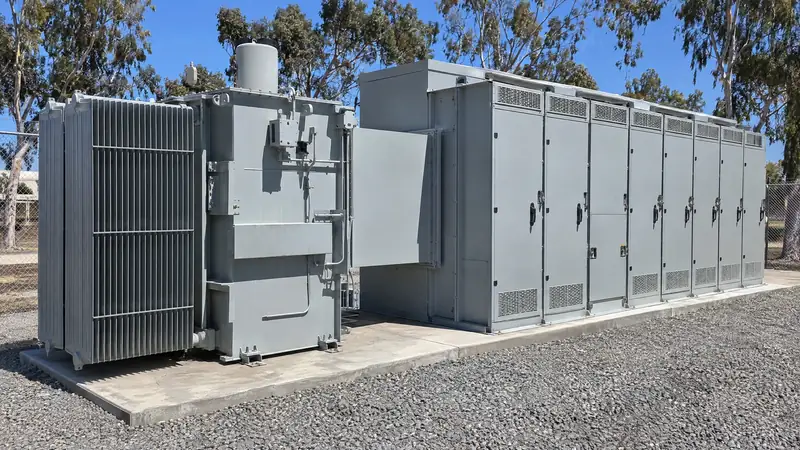
01How a Transformer Buyer in San Jose Evaluates Local Equipment
San Jose’s technology, hardware and electronics, manufacturing, and data-center development activity can mean different kinds of electrical equipment are found at commercial and industrial properties. Sellers may have a pad-mounted unit serving a warehouse or production building, a dry-type transformer in a facility, or a unit substation associated with a larger campus. The equipment type and its actual condition matter more than assumptions based on the property’s industry.
Some properties may also have solar or storage-related step-up equipment, but each unit needs to be identified from its nameplate and records. Data-center development is part of the city’s economic activity; do not assume a particular project or transformer is operating or available for sale. For broader Bay Area context, see the [San Francisco Bay Area transformer buying guide](San Francisco Bay Area transformer buying guide).
02Used, Surplus and New-Surplus Transformers We Review
California Transformer Buyer considers used transformers, removed equipment, spare units, decommissioned assets, project leftovers and mixed lots from California sellers. New-surplus units are equipment that has never been energized, often still crated or on skids. A single transformer can be submitted, as can multiple units from a property or equipment yard.
San Jose sellers may have three-phase pad-mount units, single-phase distribution transformers, pole-mount equipment, vault or network units, dry-type transformers and station-class equipment. Unit substations that are close-coupled to switchgear are also worth identifying clearly. See what information helps with a [pad-mount transformer offer](pad-mount transformer offer) or a [data-center transformer review](data-center transformer review).
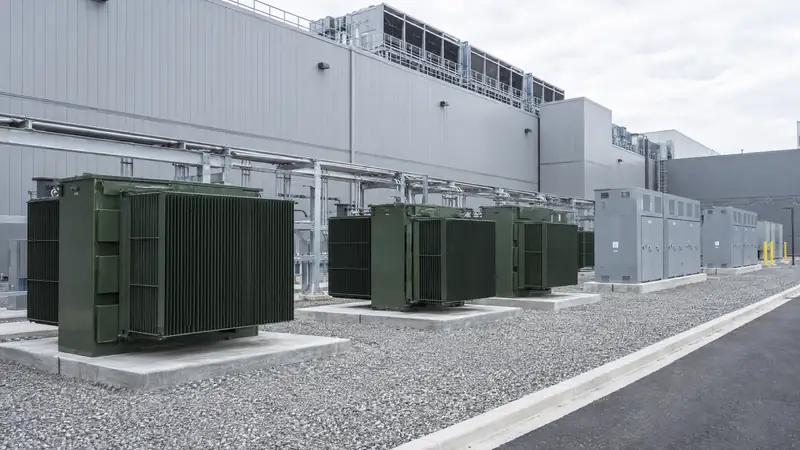
03PG&E Service and Voltage Details to Check on the Nameplate
Pacific Gas and Electric (PG&E) serves San Jose. PG&E distribution configurations include 12 kV and nominal 21 kV classes; documented primary configurations include 12,000 V, 17,200 V and 20,780 V, among others. These are system and configuration references, not a way to identify an individual transformer without its nameplate.
Record the primary and secondary voltages exactly as shown, including delta or grounded-wye connection and tap positions. Common low-voltage secondaries include 208Y/120 V and 480Y/277 V three-phase. A transformer may have a different rating or serve a private system, so do not infer its voltage from the address or assume the serving utility owns it. The [transformer voltage guide](transformer voltage guide) explains common nameplate terminology.
04Nameplate and Condition Details That Help Assess a Unit
Send clear, authorized-access photos of the nameplate and the transformer’s exterior from a safe position. Include the quantity, San Jose location, whether the unit is installed or already removed, and a brief description of visible condition. Do not open compartments or approach equipment that you are not authorized to access.
Useful nameplate fields include manufacturer, serial number, year, kVA or MVA rating, phase, frequency, primary and secondary voltage, impedance, cooling class and fluid type. Total weight, connection diagram, winding material, accessories and PCB label can also help. Test reports and records may help clarify condition and reuse potential; [kVA size information](transformer kVA and MVA size guide) can help interpret the rating.
05Plan San Jose Pickup Around Access, Loading and Route
Pickup planning starts with the equipment’s location and the path from its current position to the loading area. Tell us about gate or dock restrictions, limited turning space, overhead obstructions, ground conditions, and any site scheduling or escort requirements. Photos of the approach and loading area can help identify questions early; do not move the transformer to make it easier to photograph.
San Jose’s freeway network includes US-101, I-280, I-680, I-880, SR-85, SR-87 and SR-237. The appropriate route depends on the load, pickup site and destination, so no single corridor should be assumed. Oversize or overweight loads may require Caltrans permits on state highways, and local roads can have separate requirements. Review [transformer removal and pickup planning](transformer removal and pickup planning) before coordinating site access.
06Ownership, Safe Isolation and Environmental Records
The seller must own the transformer or have authority to sell it. Utility-owned equipment located on private property is not automatically the property owner’s to sell. If ownership is unclear, resolve that question before arranging a transaction.
Only the owner’s qualified electrical contractor or serving utility should handle isolation and disconnection. Solar, batteries and generators can create backfeed hazards, so qualified personnel must account for all sources. For oil-filled units, provide available fluid and PCB documentation. PCB status should be established from testing and records with qualified environmental professionals; unknown status may require careful determination. California requirements for PCB-containing oil and used oil depend on the facts and documentation. This is not legal advice.
07How to Start a San Jose Transformer Submission
Call or text Rocky at (951) 403-5738, or submit the website contact form. You can text equipment photos to that number. Include the nameplate, exterior, quantity, location and condition, then share available test reports, ownership information, fluid or PCB records and access details if requested.
Rocky reviews the information and may ask follow-up questions. If the unit is a fit, you receive a written offer stating the price, what is included, who handles loading, rigging and freight, and the payment terms and timing. Reviewing a transformer costs nothing and creates no obligation; removal is scheduled only after terms are agreed in writing. Read [how to sell your transformer](how to sell your transformer) or [how the buying process works](how the transformer buying process works).
FAQSelling a Transformer in San Jose: FAQ
Does California Transformer Buyer buy one transformer, or only lots?
A seller can submit a single transformer or a larger group of units. The review depends on the equipment details, condition, documentation and pickup requirements, not just the quantity. Send the nameplate and overall photos along with the location and number of units. Rocky can then ask for any additional information needed to evaluate the submission.
Can I sell equipment that is still installed at my San Jose property?
You can submit installed equipment for review, but do not disconnect, open or move it yourself. The owner’s qualified electrical contractor or serving utility must handle any required isolation and disconnection. Include whether the transformer is installed or already removed, and describe site access so loading and rigging responsibilities can be considered in the written terms.
What if I cannot read the transformer nameplate?
Send the clearest photo you can take from a safe, authorized position, along with overall photos and any available asset records or test reports. Do not approach unsafe equipment or open a compartment to find a label. If key details remain unclear, Rocky may ask follow-up questions. A unit’s rating, voltage, condition and documentation can affect whether it can be evaluated.
Can a property owner sell a PG&E transformer on the site?
Location alone does not establish ownership. A transformer on private property may be utility-owned, and the property owner cannot sell equipment they do not own or have authority to sell. Check asset or ownership records and confirm authority before proceeding. California Transformer Buyer is not affiliated with PG&E or any other utility.
How should I handle a transformer with unknown PCB status?
Share the records and labels you have, but do not treat an unknown status as proof that the oil is non-PCB. Testing, documentation and qualified environmental professionals should guide the determination and handling pathway. PCB rules distinguish different concentration classes, and California has specific requirements for PCB-containing oil. This general information is not legal advice.
Do you arrange the crane, rigging and freight for San Jose pickup?
The written offer states what is included and who handles loading, rigging and freight before pickup is scheduled. Requirements vary with transformer weight and dimensions, access, loading conditions and transport route. Share site photos and any access restrictions early, and do not arrange or perform equipment movement yourself unless you are the qualified party responsible for that work.